

Service Dog Etiquette Simulator
You are in a public space. A person enters with a dog. Based on the situation, choose the most appropriate action according to US Federal Law (ADA) and best practices.
Scenario 1: The Coffee Shop
A person walks in with a small dog wearing a bright yellow vest. The dog is calm but looking around. You are curious if it's a real service dog.
Scenario 2: The Grocery Store
You see a large dog without a vest lying calmly next to a shopper. The shopper is navigating the aisle. You want to know if you can bring your own pet later.
Key Takeaways
- The Two Questions: Is this a service animal required because of a disability? What work or task has the animal been trained to perform?
- No Documentation Required: Handlers do not need to carry ID cards, certificates, or medical records.
- Vests are Optional: Federal law does not require vests, though many handlers use them for clarity.
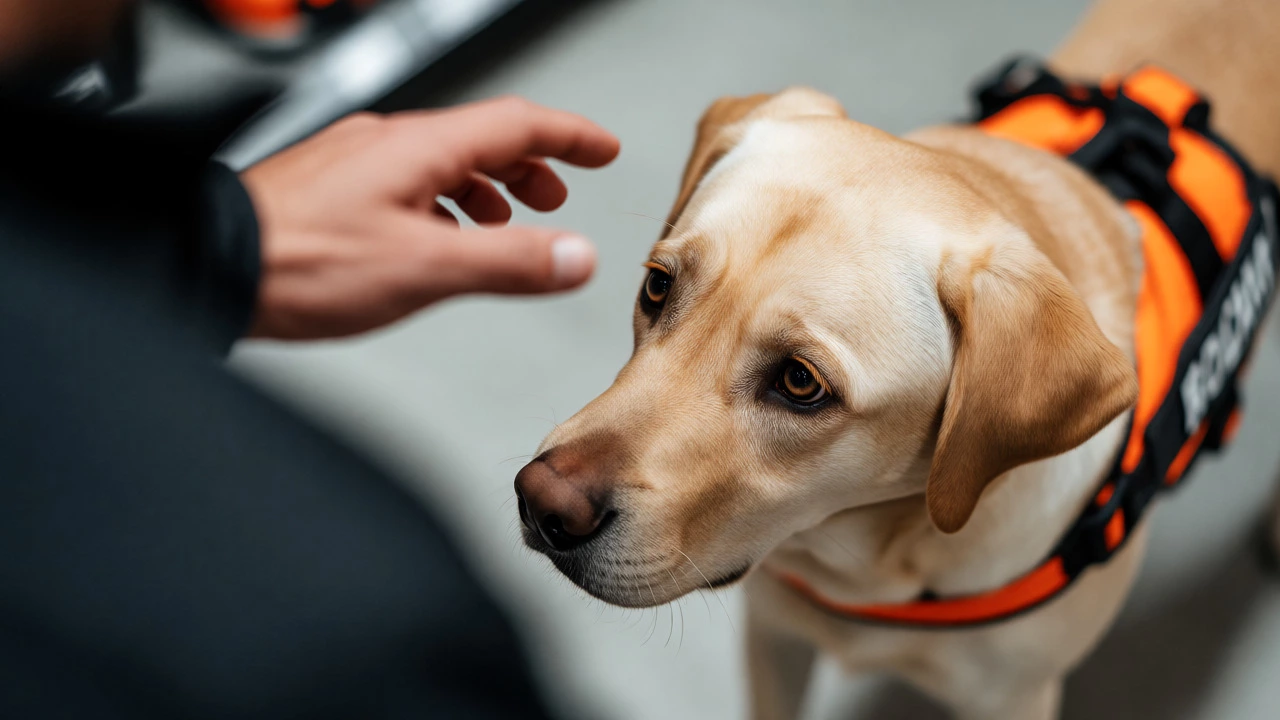
- Don't Pet/Feed: Always ask permission before touching a working dog.
You’re at a coffee shop, and someone walks in with a dog that looks like it’s just there for the vibes. Maybe it’s wearing a vest, maybe it’s not. Your brain starts racing: Is that a service dog? Can I ask? Should I ask? It’s one of the most common social dilemmas for anyone navigating public spaces with pets or without them. The short answer is yes, you can ask-but only two specific questions are legally protected under federal law in the United States. Everything else? That’s where things get tricky, awkward, and sometimes legally risky.
The Two Questions You Are Allowed to Ask
Under the ADA regulations, if a dog's status isn't obvious, staff and members of the public may ask only two questions:
- Is this a service dog required because of a disability?
- What work or task has the dog been trained to perform?
That’s it. You cannot ask about the person’s disability, demand medical documentation, require a special ID card, or ask to see a demonstration of the task. Why? Because privacy laws protect the handler’s medical history. A person might have PTSD, diabetes, or epilepsy-none of which are visible. Asking "What's wrong with you?" puts them on the spot and invades their privacy.
Think of it this way: You wouldn’t walk up to someone using a wheelchair and ask, "What happened to your legs?" You’d just let them pass. The same courtesy applies here. The question about the task is functional-it confirms the dog is doing work, not just hanging out. But even then, keep it polite. "Excuse me, does your dog help you with anything?" is better than an interrogative stare.
Why People Ask: The Rise of Fake Service Vests
Let’s be real. The reason this question exists is because of the "pet in a vest" phenomenon. Since 2015, online stores have sold thousands of cheap service dog vests, harnesses, and certificates that mean absolutely nothing legally. Many people buy these to bring their anxious Chihuahuas into restaurants without paying pet fees or dealing with restrictions.
This abuse of the system frustrates those who genuinely rely on their dogs. When every small dog in a yellow jacket claims service status, skepticism grows. However, acting on that skepticism by aggressively questioning strangers often backfires. Most handlers won’t carry proof because they don’t need to. If you push too hard, you risk violating the ADA yourself by harassing a person with a disability.
| Type | Legal Status (USA) | Public Access | Vest Required? |
|---|---|---|---|
| Service Dog | Federal Protection (ADA) | All public areas | No |
| Emotional Support Animal (ESA) | Housing/Air travel only (historically) | No public access right | No |
| Pet | None | Store policy dependent | N/A |
When You Should Not Ask (And What To Do Instead)
If the dog is clearly working-wearing a harness, focused on the handler, ignoring distractions-do not interrupt. Service dogs are trained to ignore people, but constant pats, treats, and eye contact break their concentration. If a diabetic alert dog misses a blood sugar drop because someone was trying to feed it a piece of bacon, that’s a health emergency waiting to happen.
Instead of asking questions, try these alternatives:
- Observe: Is the dog calm? Is it blocking the path? If it’s behaving well, mind your business.
- Ask Permission to Pet: Even if it’s a service dog, some handlers allow interaction during breaks. Always ask first: "May I pet your dog?" Never touch without permission.
- Respect the Space: Don’t step over the dog’s leash. Don’t stand directly in front of the dog’s face.
There is also a subtle etiquette rule: Do not offer unsolicited advice. Saying "Are you sure that’s a service dog?" implies you think they’re lying. Unless the dog is barking uncontrollably or relieving itself indoors, assume it’s legit. Most people aren’t willing to deal with the hassle of faking a disability just to bring a dog to Target.
State Laws vs. Federal Law: Know Your Local Rules
While the ADA sets the baseline, individual states can add stricter protections or clarify definitions. For example, California requires that service dogs be identifiable by a vest or tag in some contexts, though this is debated among legal experts. Other states have laws against misrepresenting pets as service animals, carrying fines ranging from $100 to $1,000.
If you are traveling, check local statutes before confronting someone. In New York City, for instance, police can intervene if a dog is out of control, but private businesses generally cannot deny entry based on breed or size. Understanding this nuance prevents you from becoming the aggressor in a situation where you thought you were enforcing the rules.
The Emotional Toll of Being Questioned
Imagine having severe anxiety. Going to the grocery store is already a monumental task. Now imagine having to justify your existence-and your dog’s presence-to every cashier, security guard, and stranger who wants to quiz you. Handlers report feeling exhausted by the constant scrutiny. Some stop going out altogether to avoid the confrontation.
This is why the "two-question limit" exists. It balances the public’s curiosity with the handler’s dignity. When you ask more than two questions, you shift the burden onto the disabled person to prove their worthiness. Remember, the goal of the ADA is inclusion, not interrogation.
Practical Tips for Dog Owners and Handlers
If you own a service dog, you hold power in these interactions. Here’s how to handle questions smoothly:
- Stay Calm: Answer briefly. "Yes, he helps me manage my seizures." Then move on.
- Use a Vest (Optional but Helpful): While not legally required, a bright orange or blue vest reduces the number of questions you’ll get. It signals "working" to the average person.
- Carry a Card (Not a Requirement): Some handlers print a simple card citing the ADA guidelines. Handing this over can end debates quickly without escalating tension.
- Know Your Rights: If a manager asks for papers, politely state, "The ADA does not require certification. Would you like me to describe his task?"
For non-handlers, the best strategy is empathy. Assume good faith. If the dog is well-behaved, let it be. If you’re curious, wait until the handler looks approachable-not while they’re navigating a crowded aisle.

What Happens If You Ask Too Many Questions?
Legally, nothing dramatic happens immediately. You won’t get arrested for asking three questions. However, if your questioning becomes persistent, hostile, or discriminatory, you could be seen as interfering with the person’s ability to use public accommodations. In extreme cases, if you physically block the dog or handler, you might face civil liability.
Socially, you risk looking rude. Most people recognize that prying into someone’s medical life is intrusive. Keep your curiosity in check. If you really want to know, look up information later rather than demanding answers in real-time.
FAQ: Common Concerns About Service Dogs
Do service dogs have to wear a vest?
No. Under the ADA, there is no requirement for service dogs to wear a vest, harness, or patch. However, many handlers choose to use them to reduce confusion and minimize interruptions from the public.
Can I ask to see their service dog certificate?
You can ask, but they are not obligated to show it. There is no official government registry for service dogs. Certificates bought online are not legally binding documents. Asking for them can be seen as intrusive if done aggressively.
What is the difference between a service dog and an emotional support animal?
A service dog is trained to perform specific tasks related to a disability (e.g., pulling a wheelchair, alerting to sounds). An emotional support animal provides comfort through companionship but has no task training. ESAs do not have public access rights under the ADA, meaning stores and restaurants can refuse them entry.
Can a business deny entry to a service dog?
Only in rare cases. A business can exclude a service dog if it is out of control and the handler doesn't take effective action, or if the dog is not housebroken. They cannot deny entry based on breed, size, or fear of other customers.
Is it rude to pet a service dog?
It can be distracting. While not always rude, it interferes with the dog's job. Always ask the handler first. If they say no, respect it immediately. Touching a working dog without permission can compromise its focus.
Final Thoughts: Navigating With Respect
So, can you ask? Yes. But should you? Only if you stick to the script. The world is full of invisible struggles, and service dogs are lifelines for many people. By limiting your questions to the two permitted ones, you balance your curiosity with respect for their privacy. Next time you see a dog in a vest-or without one-pause. Observe. And remember: kindness costs nothing, but ignorance can cost someone their peace of mind.