

Professional Dog Trainer Shock Collar Guide
Walk into any online forum or local park, and the debate over shock collars is electronic devices that deliver an electric stimulus to a dog's neck as a form of punishment or correction during training is usually heated. One side argues they are cruel tools of control; the other claims they are necessary for safety. But what do the professionals actually do? If you hire a certified trainer today, will they reach for a remote with a zap button?
The short answer is: it depends on who you call a "professional." The landscape of dog training has shifted dramatically in recent years. While shock collars were once standard issue for military and police K9 units, their use among civilian professionals has dropped significantly. Today, the majority of reputable, science-based trainers avoid them entirely, favoring methods that build trust rather than fear.
The Divide Between Certification Types
To understand why some trainers use shock collars and others don't, you have to look at their credentials. Not all certifications are created equal. In the world of professional dog training, there are two main camps: those who adhere to force-free, positive reinforcement principles, and those who rely on dominance theory or balanced (aversive) techniques.
Trainers certified by organizations like the Certification Council for Professional Dog Trainers (CCPDT) is a non-profit organization that certifies dog trainers based on ethical standards and knowledge of learning theory are strictly prohibited from using aversive tools like shock collars, prong collars, or choke chains. Their code of ethics emphasizes animal welfare and evidence-based practices. If a trainer holds a CCPDT-KA (Knowledge Assessed) or KA-CA (Applied Knowledge and Skills Assessed) credential, you can be confident they will not use a shock collar.
On the other hand, some older schools of thought, often associated with "balanced" training, may still incorporate electronic collars. These trainers might argue that a low-level stimulation can get a dog's attention faster than a whistle or treat, especially at a distance. However, even within this group, opinions vary. Some use them only as a last resort for dangerous behaviors, while others have moved away from them due to growing scientific evidence against their efficacy.
| Philosophy | Primary Method | Stance on Shock Collars | Typical Credentials |
|---|---|---|---|
| Positive Reinforcement (R+) | Rewarding desired behavior | Strictly Avoided | CPDT-KA, IAABC, KPA-CTP |
| Balanced / Aversive | Mix of rewards and corrections | Sometimes Used | Varies, often self-proclaimed or older certs |
| Dominance Theory | Establishing hierarchy | Frequently Used | Often unaccredited or informal |
Why Most Professionals Are Ditching the Zap
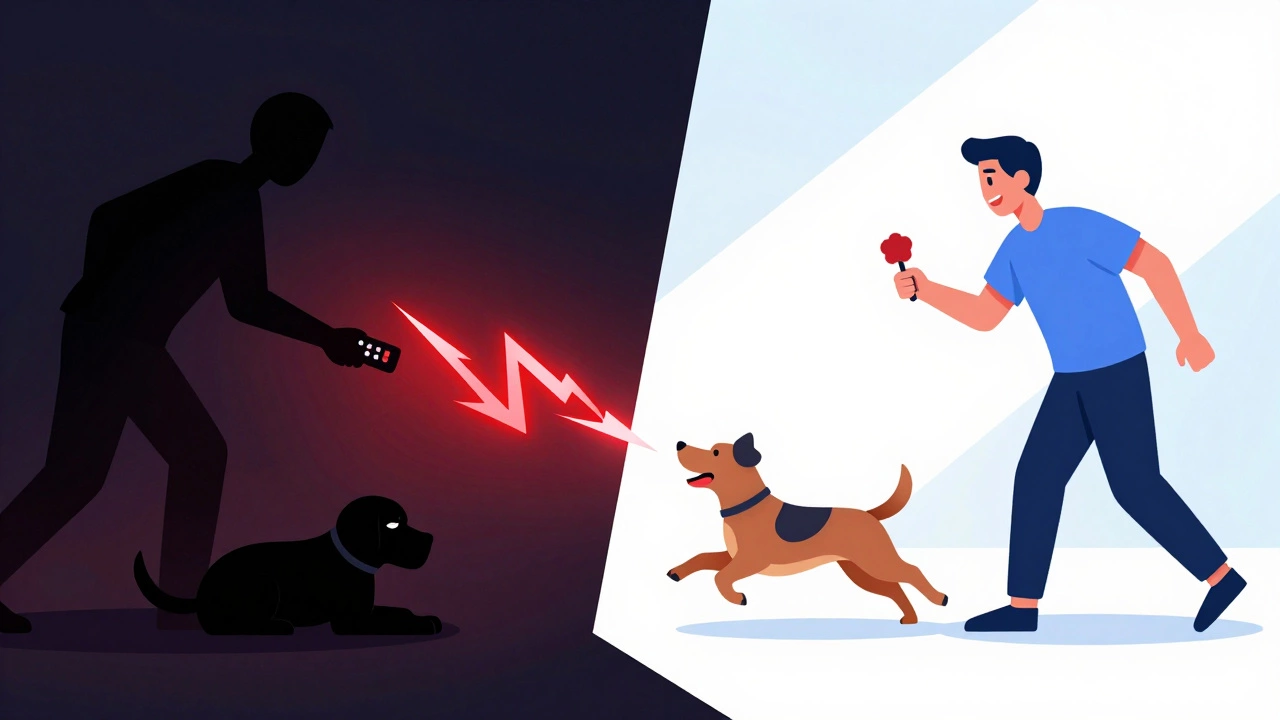
If you're wondering why the industry is moving away from electronic collars is remote-controlled devices that deliver stimuli such as vibration, sound, or static electricity to train dogs, the answer lies in modern behavioral science. Studies published in journals like *Applied Animal Behaviour Science* have consistently shown that aversive training methods can increase stress levels in dogs. This stress doesn't just make the dog unhappy; it can lead to new problems.
When a dog associates a shock with a specific trigger—like seeing another dog—they might stop barking, but they also learn to fear that trigger. This can manifest as aggression later on. A dog that is afraid of other dogs is more likely to snap if one gets too close. Positive reinforcement, by contrast, changes the dog's emotional response. Instead of fearing the sight of a passerby, the dog learns to expect a treat when they see one. This builds confidence and reliability without the side effects of anxiety.
Furthermore, shock collars require precise timing. If the shock happens even a second after the unwanted behavior, the dog might associate the pain with something else entirely—perhaps your presence, or the leash, or the environment. For the average owner, getting that timing perfect is incredibly difficult. Professionals recognize that this margin for error makes shock collars risky tools for general public use.
When Might a Pro Still Consider Them?
Despite the shift toward force-free methods, there are niche scenarios where a professional might still recommend an electronic collar. These are rare, but they exist. One common example is recall training for high-drive hunting dogs. A Labrador Retriever working in dense brush needs to come when called, even when distracted by a scent. In these cases, some professionals use e-collars not to punish, but to interrupt focus and redirect attention. The key difference is intent and application. It’s used as a communication tool, similar to a loud noise, rather than a punitive measure.
Another scenario involves safety-critical situations where immediate compliance is non-negotiable. For instance, a dog with a history of chasing cars might be fitted with a collar as a temporary safety measure while alternative training methods take hold. Even here, most ethical professionals would pair the collar with extensive positive reinforcement training to teach the dog what to do instead of running.
It is crucial to note that legitimate professionals who use these tools undergo rigorous training themselves. They understand canine body language and stress signals intimately. They never use the highest settings, and they always prioritize the dog's well-being. If a trainer suggests a shock collar without explaining their methodology, assessing your dog's temperament, or offering alternatives, proceed with caution.
Alternatives That Actually Work
You don't need a shock collar to train a reliable dog. Modern technology offers several humane alternatives that are highly effective. Vibration collars is electronic collars that deliver a buzzing sensation to the dog's neck without electric shock are a popular choice. They provide a physical cue that can interrupt unwanted behavior without causing pain. Many dogs respond well to the buzz, especially if it's paired with a command like "leave it" or "come."
Another excellent option is the citronella spray collar is a device that releases a burst of citronella-scented spray when the dog barks. Originally designed to stop excessive barking, these collars work on the principle of negative punishment—removing something pleasant (quiet) and adding something unpleasant (smell) to decrease a behavior. While not ideal for all training goals, they are far less controversial than shock collars and can be effective for nuisance barking.
Perhaps the most powerful tool in a trainer's arsenal isn't a device at all—it's management. Using long lines, fences, and baby gates to prevent rehearsal of bad behaviors allows you to reward good choices. When a dog can't practice jumping on guests, you can teach them to sit for greetings. This proactive approach prevents the need for corrective tools altogether.
How to Spot a Red Flag Trainer
Not everyone who calls themselves a "professional" has your dog's best interests at heart. Here are some signs that a trainer might be relying on outdated or harmful methods:
- Promises quick fixes: Real behavior change takes time. Anyone promising results in a single session is likely using suppression tactics rather than teaching.
- Uses terms like "alpha" or "dominance": Modern ethology has debunked the idea that dogs view humans as pack leaders to be dominated. Trainers who still use this language often employ coercive methods.
- Lacks transparency: If a trainer won't explain how they plan to address a problem before starting, or refuses to show you the tools they use, walk away.
- Disregards medical issues: Pain or illness can cause behavioral problems. A good trainer will always recommend a vet check-up first.
Always ask for references and check reviews. Look for testimonials that mention patience, empathy, and long-term success, not just immediate obedience.
The Legal Landscape in 2026
The conversation around shock collars isn't just about ethics; it's increasingly about legality. By 2026, several countries and regions have banned or restricted the sale and use of electronic collars. In parts of Europe, such as Switzerland and Germany, the use of shock collars is illegal. In the United States, legislation varies by state and city. Some municipalities have passed ordinances banning the sale of aversive training devices. Before purchasing or using a shock collar, check your local laws. Ignorance of the law is no excuse, and fines can be steep.
This legal shift reflects a broader societal change in how we view animals. Dogs are no longer seen merely as property or tools, but as sentient beings with rights. As awareness grows, so does the pressure on the training industry to adopt humane practices.
Finding the Right Trainer for You
If you're looking for help with your dog, start by defining your values. Do you want a relationship built on mutual respect and joy, or one based on compliance through fear? Once you know your stance, search for trainers who share it. Look for credentials from recognized bodies like the CCPDT, IAABC (International Association of Animal Behavior Consultants), or KPA (Karen Pryor Academy). These organizations require ongoing education and adherence to ethical guidelines.
Don't be afraid to interview potential trainers. Ask them directly: "Do you use shock collars?" Listen to their answer. A force-free trainer will say no, and explain why. A balanced trainer might say yes, but should be able to articulate exactly when and how they use them, and why they believe it's necessary for your specific case. Trust your instincts. If something feels off, keep looking.
Remember, training is a partnership. Your dog looks to you for guidance and security. Choosing methods that strengthen that bond leads to a happier, healthier dog—and a more enjoyable life for you both.
Trainer Philosophy Checker
Select a trainer's credentials or stated philosophy to see their likely stance on shock collars.
Walk into any online forum or local park, and the debate over shock collars is electronic devices that deliver an electric stimulus to a dog's neck as a form of punishment or correction during training is usually heated. One side argues they are cruel tools of control; the other claims they are necessary for safety. But what do the professionals actually do? If you hire a certified trainer today, will they reach for a remote with a zap button?
The short answer is: it depends on who you call a "professional." The landscape of dog training has shifted dramatically in recent years. While shock collars were once standard issue for military and police K9 units, their use among civilian professionals has dropped significantly. Today, the majority of reputable, science-based trainers avoid them entirely, favoring methods that build trust rather than fear.
The Divide Between Certification Types
To understand why some trainers use shock collars and others don't, you have to look at their credentials. Not all certifications are created equal. In the world of professional dog training, there are two main camps: those who adhere to force-free, positive reinforcement principles, and those who rely on dominance theory or balanced (aversive) techniques.
Trainers certified by organizations like the Certification Council for Professional Dog Trainers (CCPDT) is a non-profit organization that certifies dog trainers based on ethical standards and knowledge of learning theory are strictly prohibited from using aversive tools like shock collars, prong collars, or choke chains. Their code of ethics emphasizes animal welfare and evidence-based practices. If a trainer holds a CCPDT-KA (Knowledge Assessed) or KA-CA (Applied Knowledge and Skills Assessed) credential, you can be confident they will not use a shock collar.
On the other hand, some older schools of thought, often associated with "balanced" training, may still incorporate electronic collars. These trainers might argue that a low-level stimulation can get a dog's attention faster than a whistle or treat, especially at a distance. However, even within this group, opinions vary. Some use them only as a last resort for dangerous behaviors, while others have moved away from them due to growing scientific evidence against their efficacy.
| Philosophy | Primary Method | Stance on Shock Collars | Typical Credentials |
|---|---|---|---|
| Positive Reinforcement (R+) | Rewarding desired behavior | Strictly Avoided | CPDT-KA, IAABC, KPA-CTP |
| Balanced / Aversive | Mix of rewards and corrections | Sometimes Used | Varies, often self-proclaimed or older certs |
| Dominance Theory | Establishing hierarchy | Frequently Used | Often unaccredited or informal |
Why Most Professionals Are Ditching the Zap
If you're wondering why the industry is moving away from electronic collars is remote-controlled devices that deliver stimuli such as vibration, sound, or static electricity to train dogs, the answer lies in modern behavioral science. Studies published in journals like *Applied Animal Behaviour Science* have consistently shown that aversive training methods can increase stress levels in dogs. This stress doesn't just make the dog unhappy; it can lead to new problems.
When a dog associates a shock with a specific trigger-like seeing another dog-they might stop barking, but they also learn to fear that trigger. This can manifest as aggression later on. A dog that is afraid of other dogs is more likely to snap if one gets too close. Positive reinforcement, by contrast, changes the dog's emotional response. Instead of fearing the sight of a passerby, the dog learns to expect a treat when they see one. This builds confidence and reliability without the side effects of anxiety.
Furthermore, shock collars require precise timing. If the shock happens even a second after the unwanted behavior, the dog might associate the pain with something else entirely-perhaps your presence, or the leash, or the environment. For the average owner, getting that timing perfect is incredibly difficult. Professionals recognize that this margin for error makes shock collars risky tools for general public use.
When Might a Pro Still Consider Them?
Despite the shift toward force-free methods, there are niche scenarios where a professional might still recommend an electronic collar. These are rare, but they exist. One common example is recall training for high-drive hunting dogs. A Labrador Retriever working in dense brush needs to come when called, even when distracted by a scent. In these cases, some professionals use e-collars not to punish, but to interrupt focus and redirect attention. The key difference is intent and application. It’s used as a communication tool, similar to a loud noise, rather than a punitive measure.
Another scenario involves safety-critical situations where immediate compliance is non-negotiable. For instance, a dog with a history of chasing cars might be fitted with a collar as a temporary safety measure while alternative training methods take hold. Even here, most ethical professionals would pair the collar with extensive positive reinforcement training to teach the dog what to do instead of running.
It is crucial to note that legitimate professionals who use these tools undergo rigorous training themselves. They understand canine body language and stress signals intimately. They never use the highest settings, and they always prioritize the dog's well-being. If a trainer suggests a shock collar without explaining their methodology, assessing your dog's temperament, or offering alternatives, proceed with caution.
Alternatives That Actually Work
You don't need a shock collar to train a reliable dog. Modern technology offers several humane alternatives that are highly effective. Vibration collars is electronic collars that deliver a buzzing sensation to the dog's neck without electric shock are a popular choice. They provide a physical cue that can interrupt unwanted behavior without causing pain. Many dogs respond well to the buzz, especially if it's paired with a command like "leave it" or "come."
Another excellent option is the citronella spray collar is a device that releases a burst of citronella-scented spray when the dog barks. Originally designed to stop excessive barking, these collars work on the principle of negative punishment-removing something pleasant (quiet) and adding something unpleasant (smell) to decrease a behavior. While not ideal for all training goals, they are far less controversial than shock collars and can be effective for nuisance barking.
Perhaps the most powerful tool in a trainer's arsenal isn't a device at all-it's management. Using long lines, fences, and baby gates to prevent rehearsal of bad behaviors allows you to reward good choices. When a dog can't practice jumping on guests, you can teach them to sit for greetings. This proactive approach prevents the need for corrective tools altogether.
How to Spot a Red Flag Trainer
Not everyone who calls themselves a "professional" has your dog's best interests at heart. Here are some signs that a trainer might be relying on outdated or harmful methods:
- Promises quick fixes: Real behavior change takes time. Anyone promising results in a single session is likely using suppression tactics rather than teaching.
- Uses terms like "alpha" or "dominance": Modern ethology has debunked the idea that dogs view humans as pack leaders to be dominated. Trainers who still use this language often employ coercive methods.
- Lacks transparency: If a trainer won't explain how they plan to address a problem before starting, or refuses to show you the tools they use, walk away.
- Disregards medical issues: Pain or illness can cause behavioral problems. A good trainer will always recommend a vet check-up first.
Always ask for references and check reviews. Look for testimonials that mention patience, empathy, and long-term success, not just immediate obedience.

The Legal Landscape in 2026
The conversation around shock collars isn't just about ethics; it's increasingly about legality. By 2026, several countries and regions have banned or restricted the sale and use of electronic collars. In parts of Europe, such as Switzerland and Germany, the use of shock collars is illegal. In the United States, legislation varies by state and city. Some municipalities have passed ordinances banning the sale of aversive training devices. Before purchasing or using a shock collar, check your local laws. Ignorance of the law is no excuse, and fines can be steep.
This legal shift reflects a broader societal change in how we view animals. Dogs are no longer seen merely as property or tools, but as sentient beings with rights. As awareness grows, so does the pressure on the training industry to adopt humane practices.
Finding the Right Trainer for You
If you're looking for help with your dog, start by defining your values. Do you want a relationship built on mutual respect and joy, or one based on compliance through fear? Once you know your stance, search for trainers who share it. Look for credentials from recognized bodies like the CCPDT, IAABC (International Association of Animal Behavior Consultants), or KPA (Karen Pryor Academy). These organizations require ongoing education and adherence to ethical guidelines.
Don't be afraid to interview potential trainers. Ask them directly: "Do you use shock collars?" Listen to their answer. A force-free trainer will say no, and explain why. A balanced trainer might say yes, but should be able to articulate exactly when and how they use them, and why they believe it's necessary for your specific case. Trust your instincts. If something feels off, keep looking.
Remember, training is a partnership. Your dog looks to you for guidance and security. Choosing methods that strengthen that bond leads to a happier, healthier dog-and a more enjoyable life for you both.
Are shock collars illegal in the US?
As of 2026, shock collars are not federally illegal in the United States. However, several states and cities have enacted bans or restrictions on their sale and use. Laws vary widely, so it is essential to check your local ordinances. In contrast, many European countries have strict nationwide bans.
Can shock collars hurt my dog physically?
Yes, improper use of shock collars can cause physical injury, including burns, skin irritation, and nerve damage. Even at lower settings, the electrical current can cause discomfort and pain. More commonly, the harm is psychological, leading to increased stress, anxiety, and fear-based aggression.
What is the difference between a shock collar and a vibration collar?
A shock collar delivers an electric stimulus that causes pain or discomfort. A vibration collar simply buzzes, providing a tactile cue without pain. Vibration collars are considered a much safer and more humane alternative for getting a dog's attention or interrupting behavior.
Do professional dog trainers recommend shock collars for puppies?
No reputable professional trainer recommends shock collars for puppies. Puppies are still developing physically and emotionally. Introducing aversive tools during this critical socialization period can have lasting negative effects on their behavior and trust in humans. Positive reinforcement is the gold standard for puppy training.
How can I tell if a trainer uses positive reinforcement?
Look for trainers who carry treats, clickers, or toys during sessions. Watch how they interact with dogs: do they reward calm behavior? Do they ignore unwanted actions or redirect them? Force-free trainers focus on motivating the dog to choose the right behavior, rather than forcing compliance through intimidation.