
Dog's "Home Alone" Environment Planner
Create Your Pup's Comfort Zone
Tailor the audio and activities to your dog's specific needs
Environment Assessment:
Key Takeaways for Busy Pet Parents
- Audio is more important than visuals; dogs respond better to sound than high-def images.
- Certain frequencies and genres (like classical music) are proven to lower cortisol levels.
- TV can help mask scary outside noises that trigger barking.
- It is not a cure for severe anxiety but a helpful management tool.
- Interactive toys combined with audio provide the best mental stimulation.
How Dogs Perceive the Screen
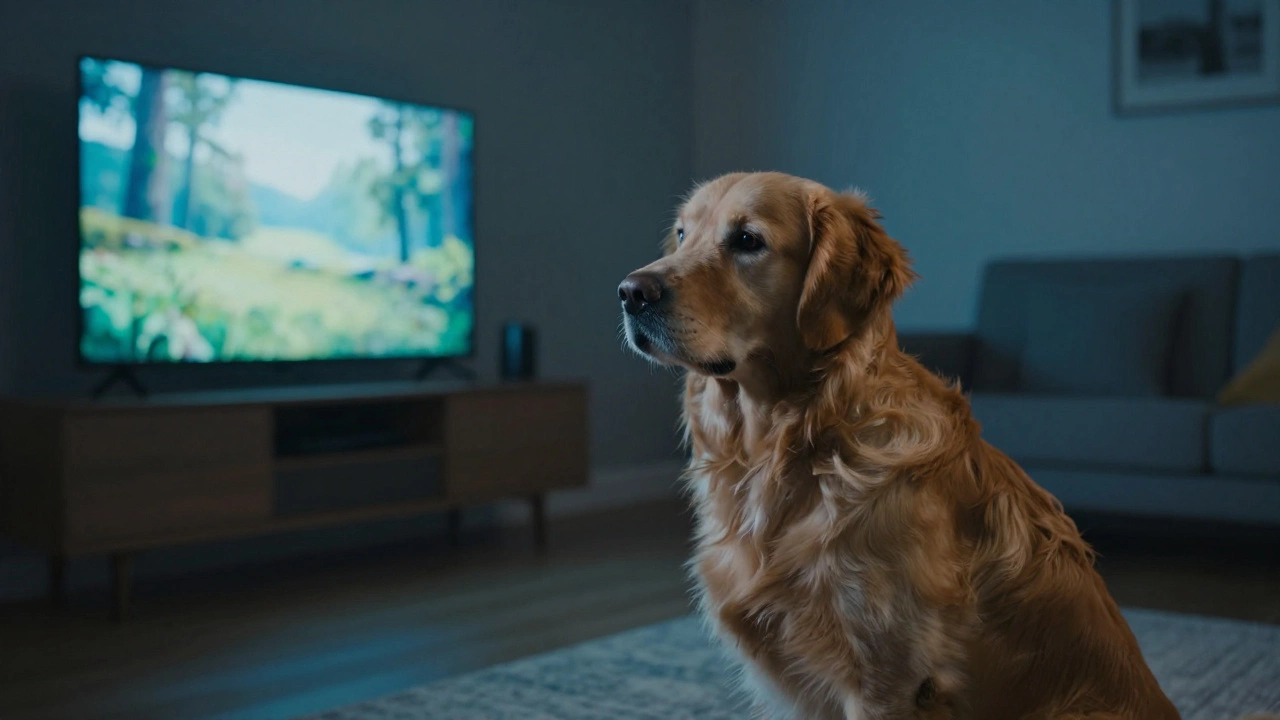
Before you start a marathon of your favorite sitcom, you need to understand how your dog sees the world. For a long time, people thought dogs only saw in black and white. We now know that's not true. They see mostly blues and yellows, but they struggle with reds and greens.
More importantly, their
Frame Rate is
the speed at which a camera captures images, measured in frames per second (fps). Older TVs had a slow frame rate, which made the image look like a flickering strobe light to a dog. Modern LED and 4K screens have much higher refresh rates, meaning the images look smoother and more like real life to them. So, while they might not care about the plot of a movie, they can definitely see the movement of a squirrel or another dog on screen.
The Power of Auditory Masking
The real magic of leaving the TV on isn't the picture-it's the
Auditory Stimulation is
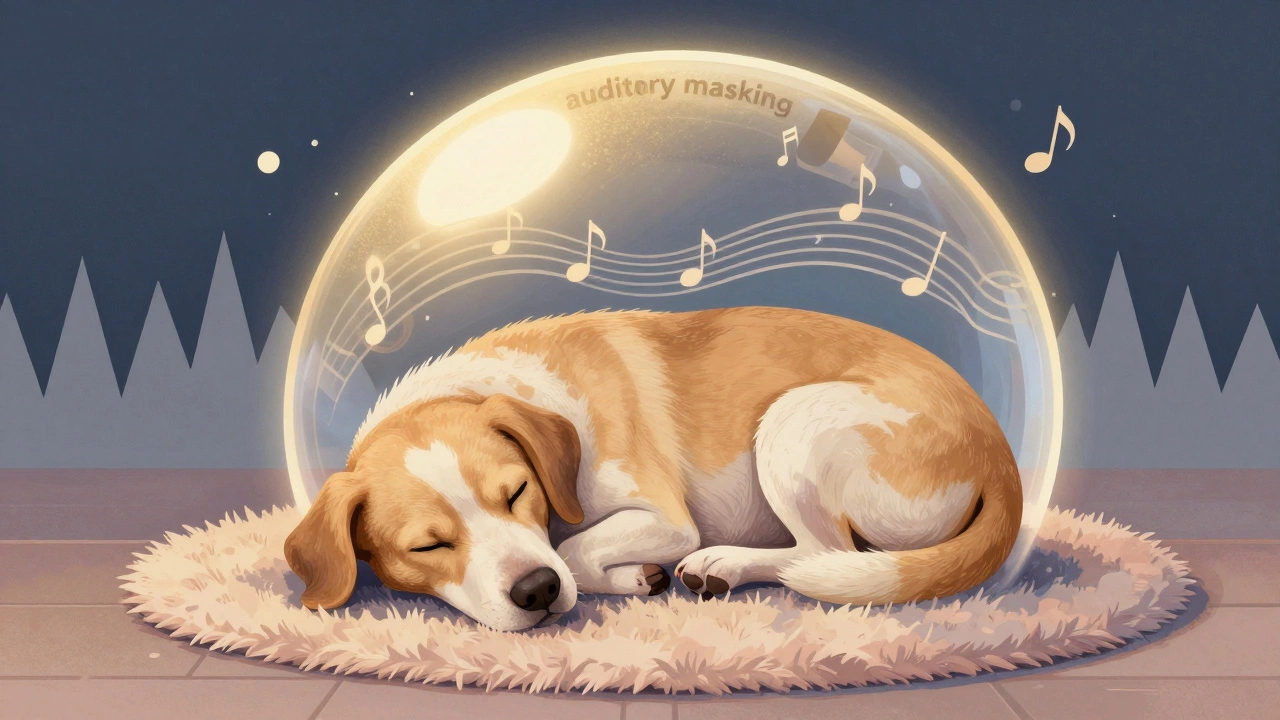
the process of engaging a dog's hearing to provide mental enrichment or reduce stress. In a quiet home, a dog's hearing becomes hyper-sensitive. A neighbor closing a car door can sound like a gunshot. By providing a steady stream of sound, you're essentially creating a "sound blanket."
This is why some dogs stop barking at the mailman when the TV is up. The background noise lowers the contrast between the silence of the house and the sudden noise outside, making the trigger less shocking. For a puppy, this can prevent the development of fear-based reactivity.
What Should You Actually Play?
Not all channels are created equal. Blasting a heavy metal concert or a loud action movie with explosions might actually increase your dog's stress levels. You want a steady, predictable rhythm.
Research on
Classical Music is
a genre of Western art music known for its complex harmony and structural form, often used in therapeutic settings for animals. Studies have shown that classical music, specifically slow-tempo pieces, can lower a dog's heart rate and reduce cortisol-the stress hormone. Reggae and soft rock also rank surprisingly high in calming canine nerves.
On the flip side, avoid news channels. The fast-paced talking, sudden shouting, and alarming sirens can put a dog on high alert, making them think there is an emergency happening in the living room.
| Audio Type | Effect on Dog | Recommended? |
|---|---|---|
| Classical/Ambient | Lowers heart rate, promotes sleep | Yes (Best) |
| Reggae/Soft Rock | Reduces stress and anxiety | Yes | White Noise/Rain | Masks outdoor triggers effectively | Yes |
| Action Movies | Can cause startling and alertness | No |
| Breaking News | High stress due to erratic tones | No |
Combining TV with Mental Enrichment
Let's be honest: a TV is a passive experience. If your dog is bored, just hearing music won't stop them from chewing your favorite sneakers. To truly help a dog, you need to pair audio with active engagement. This is where separation anxiety in dogs management meets the concept of "work."
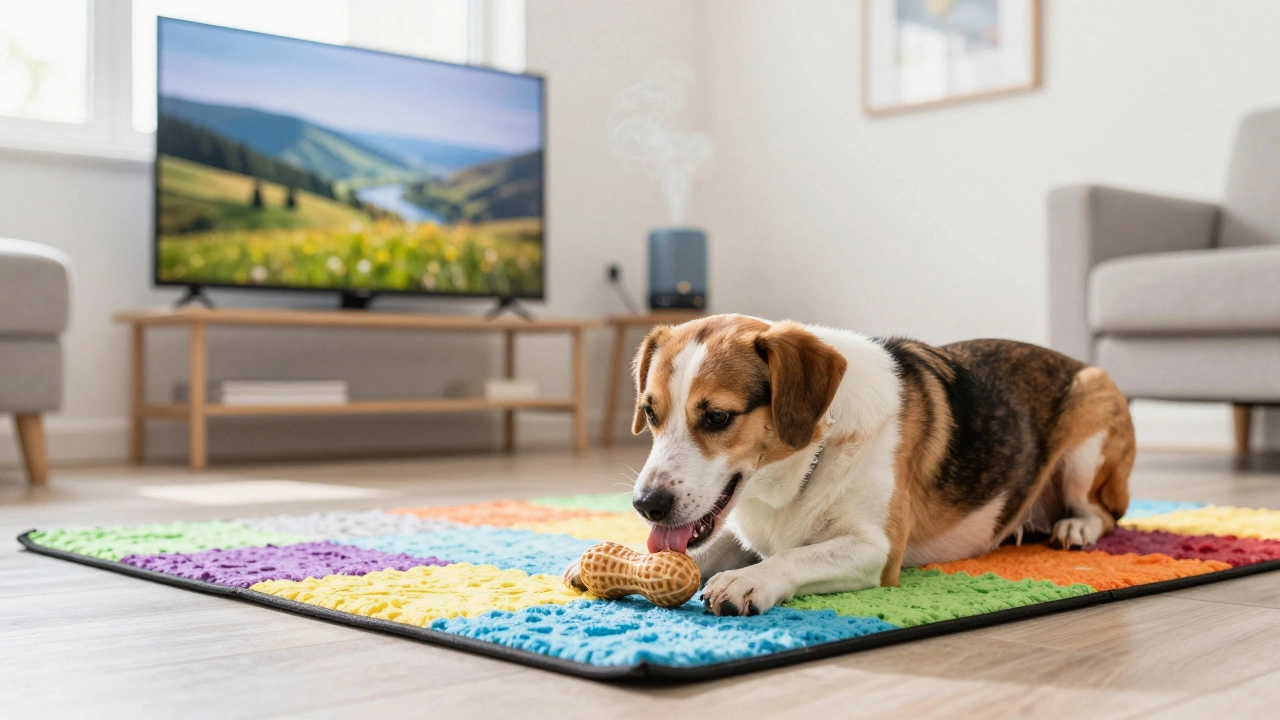
Instead of just leaving the TV on, give them a puzzle toy. A frozen Kong filled with peanut butter or a snuffle mat requires the dog to use their brain. When you combine a calming soundtrack with a high-value treat, you're creating a positive association with being alone. The dog thinks, "When the humans leave and the music starts, I get the best snack of the day." This shifts their emotional state from panic to anticipation.
Potential Pitfalls to Watch Out For
While helpful, there are a few things to keep in mind. First, don't turn the volume up too high. A dog's hearing is significantly more sensitive than ours. What sounds like a comfortable level to you might be an annoying roar to them.
Second, don't rely on the TV as a total substitute for exercise. A tired dog is a happy dog. If you haven't taken them for a walk or played fetch, no amount of "Dog TV" will stop them from finding a way to entertain themselves-usually by rearranging your throw pillows.
Lastly, be aware of "TV triggers." Some dogs become obsessed with chasing the images on the screen. If your dog is frantically lunging at the TV and barking at the birds on screen, the TV is actually increasing their arousal levels rather than calming them down. In this case, turn off the screen and stick to a radio or a dedicated white noise machine.
Creating the Ultimate "Home Alone" Setup
If you want to set your pup up for success, think of it as an environment design project. Start with a comfortable bed in a spot where they can see the door but aren't right in the draft. Set your TV or speaker to a low, consistent volume playing ambient nature sounds or classical music.
Add a scent-based calmer, like a pheromone diffuser, to target their olfactory senses. Then, provide a rotation of toys so they don't get bored with the same one every day. By addressing sight, sound, smell, and taste (via treats), you're creating a sensory bubble that makes the world feel safe and predictable.
Will the TV make my dog feel like they aren't alone?
While dogs don't perceive a TV show as a real person, the presence of human voices and consistent sound can trick their brain into feeling that the environment is active. This reduces the "scary silence" that often leads to panic in anxious dogs.
Can I just use YouTube videos for dogs?
Yes, there are many channels specifically designed for dogs with slow-moving imagery and calming frequencies. These are often better than standard TV because they avoid the jarring commercials and loud volume shifts found in regular programming.
How loud should the TV be?
Keep it at a conversational level or lower. Since dogs hear frequencies we can't, a volume that seems moderate to us can be overwhelming for them. If you can hear it clearly from the next room, it's probably too loud.
Does the type of TV matter?
Modern LED, OLED, and LCD screens are much better because they have higher refresh rates. Old tube TVs (CRTs) flicker in a way that dogs find distracting or irritating, whereas new screens look more natural to their eyes.
Will this stop my dog from barking at the mailman?
It can help by masking the sound of the mail slot or the footsteps on the porch. However, it's a management tool, not a cure. For a permanent fix, you'll need to combine this with counter-conditioning training.
Next Steps for Pet Owners
If you're not sure if the TV is helping, try a simple experiment. Spend one week leaving the house in silence and note how many "incidents" (chewed shoes, howling, barking) occur. Then, spend a week with a calming playlist on the TV. You'll likely see a difference in the intensity of their behavior.
If the TV doesn't seem to work, it might be time to look into a professional trainer or a veterinary behaviorist. Some dogs have such deep-rooted anxiety that audio masking isn't enough, and they may need a structured desensitization plan or medication to help them relax. In the meantime, keep the music low, the treats high, and the walks long.