
Dog Feeding Schedule Calculator
Calculate Your Dog's Best Feeding Schedule
Answer these questions to get personalized feeding recommendations
Recommended Feeding Schedule
Portion Size Guide
Use measuring cup for accuracy: 1 cup = ~200-250g food
Total daily food: 2-3% of body weight
Why This Matters
Feeding at the right frequency supports digestion, energy levels, and early illness detection. For example:
- Puppies: Need 3-4 meals daily to prevent low blood sugar
- Deep-chested breeds: Two smaller meals reduce bloat risk
- Senior dogs: May benefit from smaller, more frequent meals
Feeding your dog the right amount at the right times isn’t just about filling a bowl-it’s about keeping them healthy, energetic, and avoiding digestive problems. So how many times a day should a dog eat? The answer isn’t one-size-fits-all. It depends on their age, size, breed, activity level, and health. But here’s the simple truth: most dogs do best with two meals a day. Let’s break down what that looks like for every stage of your dog’s life.
Puppies Need More Frequent Meals
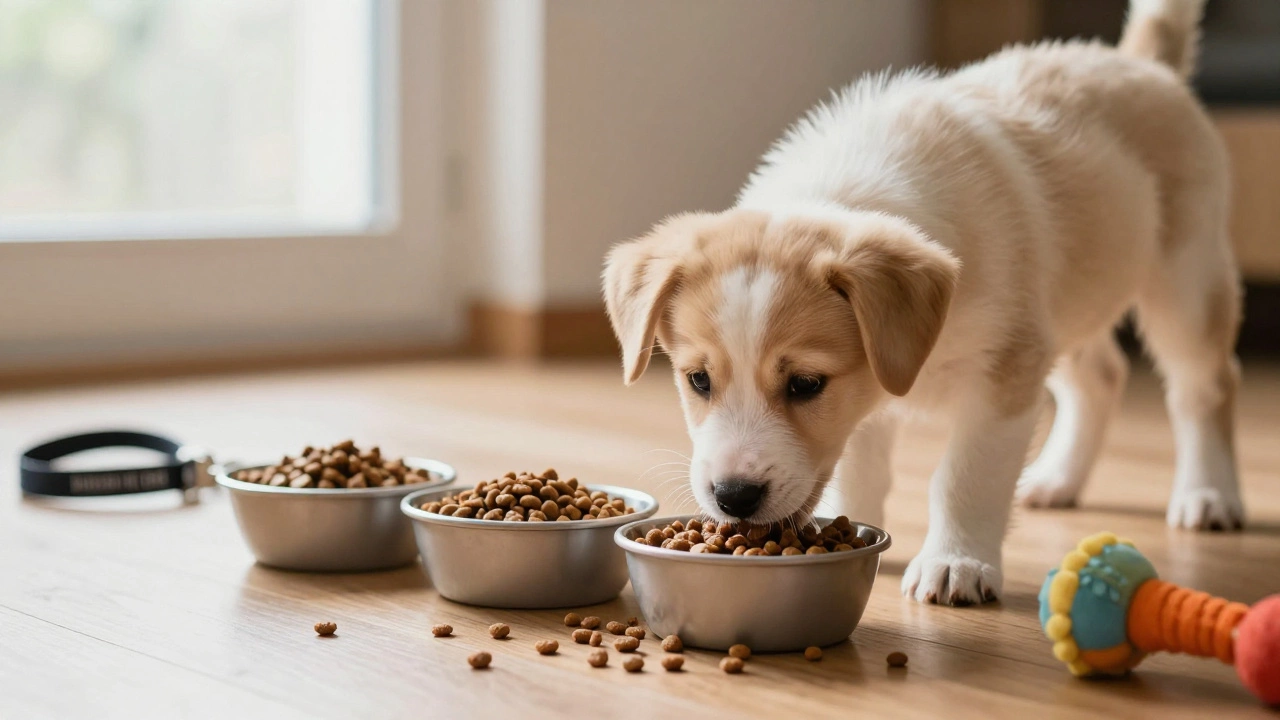
Puppies grow fast, and their tiny stomachs can’t hold much food at once. A 2-month-old puppy needs to eat three to four times a day. Skipping a meal can drop their blood sugar dangerously low, especially in small breeds like Chihuahuas or Yorkshire Terriers. By 4 months, you can start cutting back to three meals. At 6 months, most puppies can transition to two meals a day. This isn’t just about hunger-it’s about steady energy. Puppies who eat too infrequently may become lethargic, shaky, or even vomit from low blood sugar.
Feeding your puppy at the same times every day helps with house training too. If you feed at 7 a.m., 12 p.m., and 5 p.m., you’ll start to predict when they need to go outside. That’s a game-changer for busy households.
Adult Dogs Do Best with Two Meals
Once your dog hits one year old (or 18 months for large breeds), two meals a day is the sweet spot. Morning and evening works for most families. This schedule keeps energy levels stable, reduces the risk of bloat (especially in deep-chested breeds like Great Danes or German Shepherds), and helps with digestion.
Some owners think feeding once a day is fine because their dog doesn’t beg. But that’s misleading. Dogs who eat only once daily are more likely to develop stomach upset, acid reflux, or even behavioral issues like food guarding. A 2021 study from the University of Guelph found that dogs fed twice daily had significantly better stool consistency and lower stress hormone levels than those fed once.
Splitting the daily food amount into two portions also makes it easier to spot changes. If your dog skips dinner one night, you’ll notice right away. If they only eat once a day and miss that meal? You might not realize something’s wrong until they’re clearly sick.
Senior Dogs May Need Adjustments
As dogs enter their senior years-usually around 7 for small breeds, 5 for large ones-their metabolism slows. Some older dogs do fine with two meals. Others benefit from smaller, more frequent meals if they have dental issues, arthritis, or digestive sensitivity.
If your senior dog seems to lose interest in food, try warming their meal slightly. The smell becomes stronger, which can spark appetite. If they’re gaining weight despite eating less, talk to your vet about switching to a lower-calorie senior formula. Don’t assume they’re just being picky. Changes in eating habits can signal kidney disease, thyroid problems, or even cancer.
Big Dogs and Deep-Chested Breeds Need Special Care
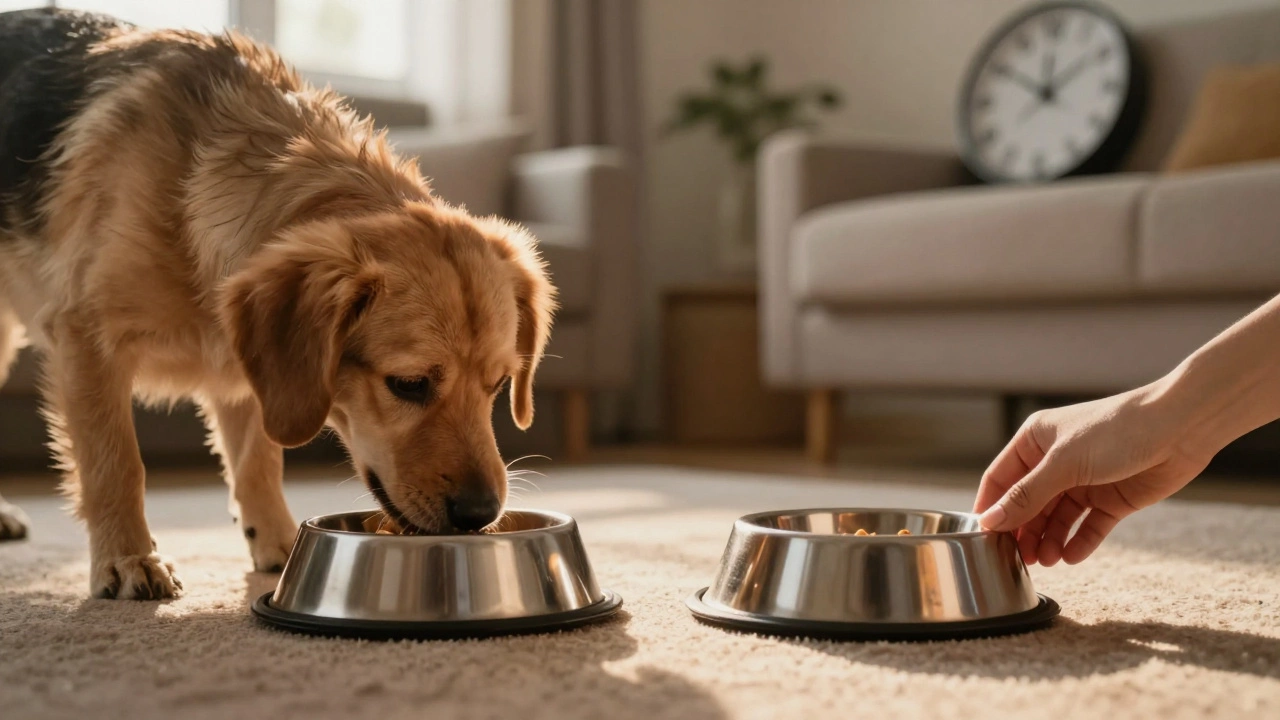
Great Danes, Irish Wolfhounds, Boxers, and other large, deep-chested breeds are at higher risk for gastric dilatation-volvulus (GDV), commonly called bloat. This is a life-threatening condition where the stomach twists and fills with gas. Feeding one large meal a day increases the risk. Feeding two smaller meals, avoiding exercise right after eating, and using slow-feed bowls can cut the danger significantly.
Even if your dog seems fine, if they gulp food fast, they’re more likely to swallow air. A slow-feeder bowl or puzzle feeder isn’t a luxury-it’s a preventive tool. These tools force your dog to eat slower, which reduces air intake and helps digestion.
What About Free Feeding?
Some owners leave food out all day, thinking it’s convenient. But free feeding rarely works well. It’s hard to know how much your dog actually eats. It encourages overeating, especially in dogs who are bored or anxious. It also makes it impossible to monitor appetite changes-a key early warning sign of illness.
Free feeding might seem okay for one dog in a quiet home, but in multi-dog households, it leads to competition. One dog might eat twice as much as the other. You won’t know who’s getting too much or too little. Scheduled meals give you control, clarity, and peace of mind.
How Much Food Per Meal?
Meal frequency matters, but so does portion size. Most dog food bags list feeding guidelines based on weight. But those are starting points. A 50-pound Labrador who runs 5 miles a day needs more than one who naps on the couch.
Check your dog’s body condition. You should be able to feel their ribs with light pressure but not see them. Their waist should tuck in behind the ribs when viewed from above. If they look like a sausage, cut back. If their ribs stick out like a harp, add a little more.
Use a measuring cup. Don’t eyeball it. A cup of kibble can vary by 20% depending on the brand. Weighing food on a kitchen scale is even better. Most adult dogs need 2-3% of their body weight in food per day, split into two meals. A 60-pound dog? That’s about 1.2 to 1.8 cups daily, divided into two portions.
Special Cases: Working Dogs, Pregnant Dogs, and Sick Dogs
Working dogs-like herding breeds, police dogs, or hunting dogs-burn more calories. They may need three meals a day or extra snacks during long workdays. Pregnant dogs need more food starting around week 5 of gestation. Their meals should increase gradually, and by the last week, they may need three smaller meals to fit food around their growing puppies.
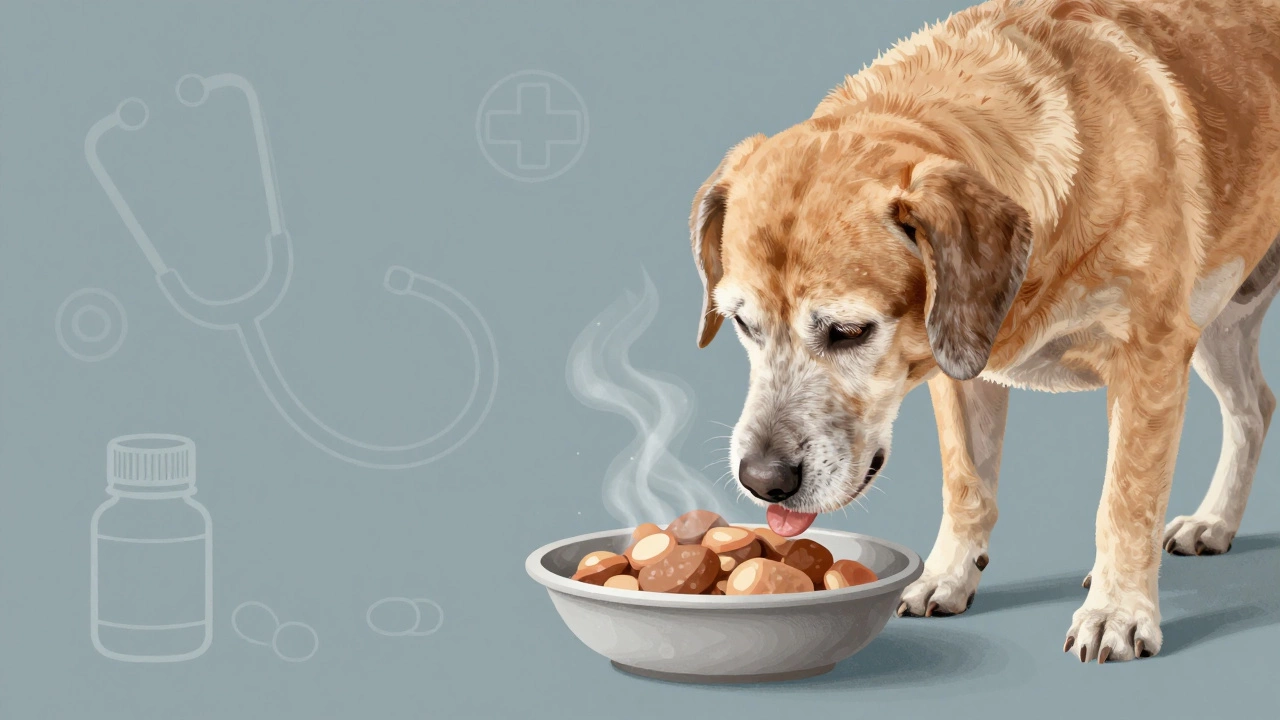
If your dog is sick, recovering from surgery, or on medication, their feeding schedule might change. Some medications cause nausea, so smaller, more frequent meals help. Others require food to be taken with meals. Always follow your vet’s advice here. Never assume what worked before still works now.
What to Do If Your Dog Refuses to Eat
One skipped meal? Probably nothing. Two skipped meals? Pay attention. Three? Call your vet.
Dogs don’t fast like humans. If they’re not eating, something’s off. It could be stress from a new home, a toothache, a bad batch of food, or something more serious. Don’t try to force-feed or switch brands immediately. Wait 24 hours. If they still won’t eat, or if they’re also vomiting, lethargic, or have diarrhea, get help.
Some dogs act picky because they’ve learned begging works. If you give them table scraps every time they stare at your plate, they’ll keep doing it. Stick to the schedule. Skip the treats. In 24 hours, hunger will win. They won’t starve. But they’ll learn that mealtime is the only time food shows up.
Final Rule: Consistency Beats Perfection
You don’t need to be exact to the minute. But try to feed at the same times each day. Dogs thrive on routine. If you feed at 7 a.m. and 6 p.m. Monday through Friday, don’t switch to 9 a.m. and 8 p.m. on weekends. That confuses their internal clock and digestive rhythm.
Keep a feeding log for a week. Note the time, amount, and any changes in energy or stool. You’ll spot patterns you never noticed. Maybe your dog gets hyper after dinner. Maybe they’re sluggish after lunch. That’s data. And data helps you make better choices.
There’s no magic number for every dog. But two meals a day works for most. Puppies need more. Seniors might need tweaks. Big dogs need caution. Sick dogs need vet guidance. And every dog deserves a routine that keeps them healthy, happy, and full.
Can I feed my dog once a day?
Yes, but it’s not ideal for most dogs. Once-a-day feeding increases the risk of stomach upset, bloat in large breeds, and makes it harder to notice appetite changes that signal illness. Two meals a day is better for digestion, energy stability, and health monitoring.
How many times a day should I feed a puppy?
Puppies under 4 months should eat four times a day. From 4 to 6 months, reduce to three meals. By 6 months, most puppies can switch to two meals a day. Always follow your vet’s advice based on breed and size.
Should I free-feed my dog?
Free feeding is not recommended for most dogs. It makes portion control difficult, encourages overeating, and hides changes in appetite that could signal health problems. Scheduled meals give you control and help you spot issues early.
What if my dog won’t eat their food?
Skip one meal and wait. If they still refuse after 24 hours-or show signs like vomiting, lethargy, or diarrhea-contact your vet. Don’t switch food immediately or offer treats. Sometimes, it’s stress. Other times, it’s illness. Don’t guess.
How do I know if I’m feeding my dog enough?
Check their body condition. You should feel their ribs with light pressure but not see them. Their waist should tuck in behind the ribs. If they’re gaining weight, reduce portions. If they’re too thin, increase slightly. Use a measuring cup-not a scoop or your hand.