

Cat Moisture Calculator
Calculate the ideal moisture amount for your cat's dry food based on weight and daily intake. Follow the article guidelines for safe hydration.
Recommended Moisture
Add tablespoons
Based on article guidelines: 3-4 tbsp per 10lbs cat eating 0.5 cups dry food
Most cats don’t drink enough water. It’s not laziness - it’s biology. In the wild, cats get most of their moisture from prey, not from standing water. But when you feed them dry food, you’re removing that natural source. That’s why so many cats end up with urinary issues, kidney problems, or just seem perpetually dehydrated. The good news? You don’t need to switch to wet food to fix this. You can boost moisture right in their dry food bowl.
Why Moisture Matters More Than You Think
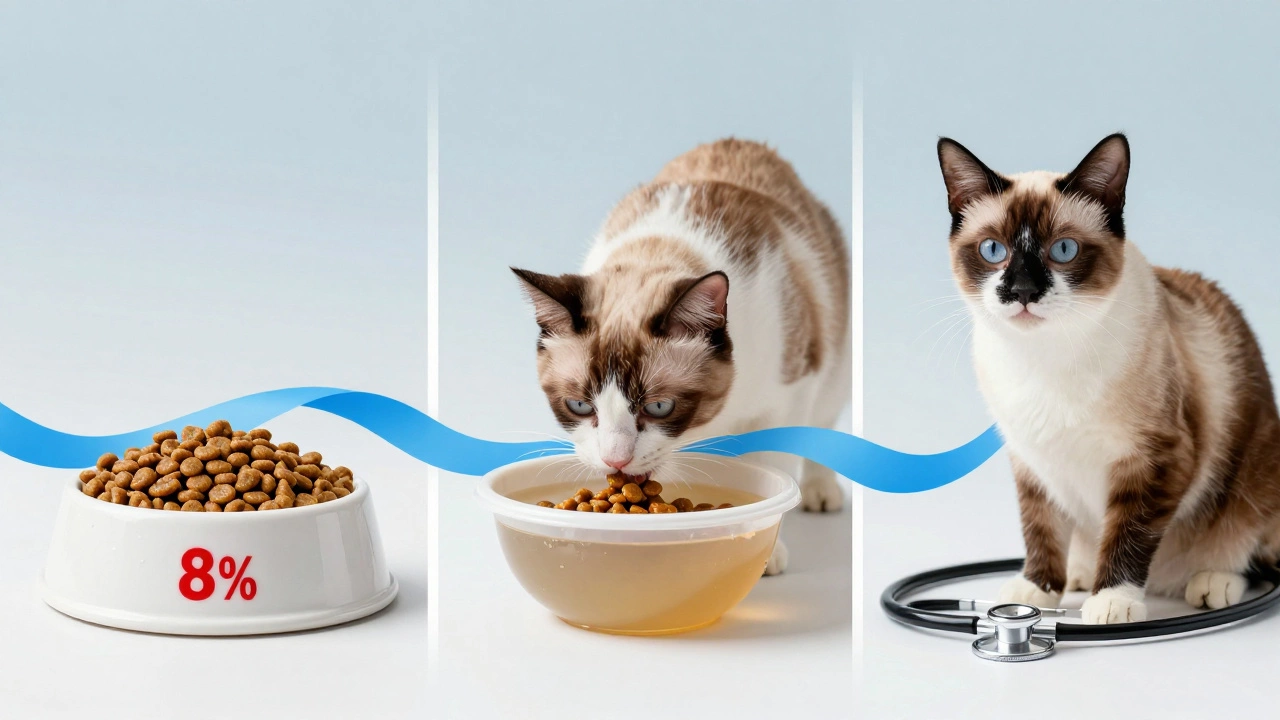
Cats are designed to get 70% of their water from food. Dry kibble? It’s usually 8-10% water. That’s like eating a bag of chips every meal and never sipping a drop of water. Over time, this puts serious strain on their kidneys and bladder. A 2021 study from the University of Edinburgh found that cats fed only dry food had 2.5 times higher risk of developing lower urinary tract disease than those eating moisture-rich diets.
It’s not just about health - it’s about comfort. Cats with low moisture intake often strain to urinate, lick their genital area excessively, or avoid the litter box altogether. These aren’t behavioral issues. They’re signs of physical discomfort caused by dehydration.
Simple Ways to Add Moisture to Dry Food
You don’t need fancy gadgets or expensive supplements. Here’s what actually works:
- Warm water - Add 2-4 tablespoons of warm (not hot) water to each serving. Let it sit for 5 minutes. The kibble softens, smells stronger, and becomes more appealing. Many cats who turn their noses up at dry food will eat it happily after it’s moistened.
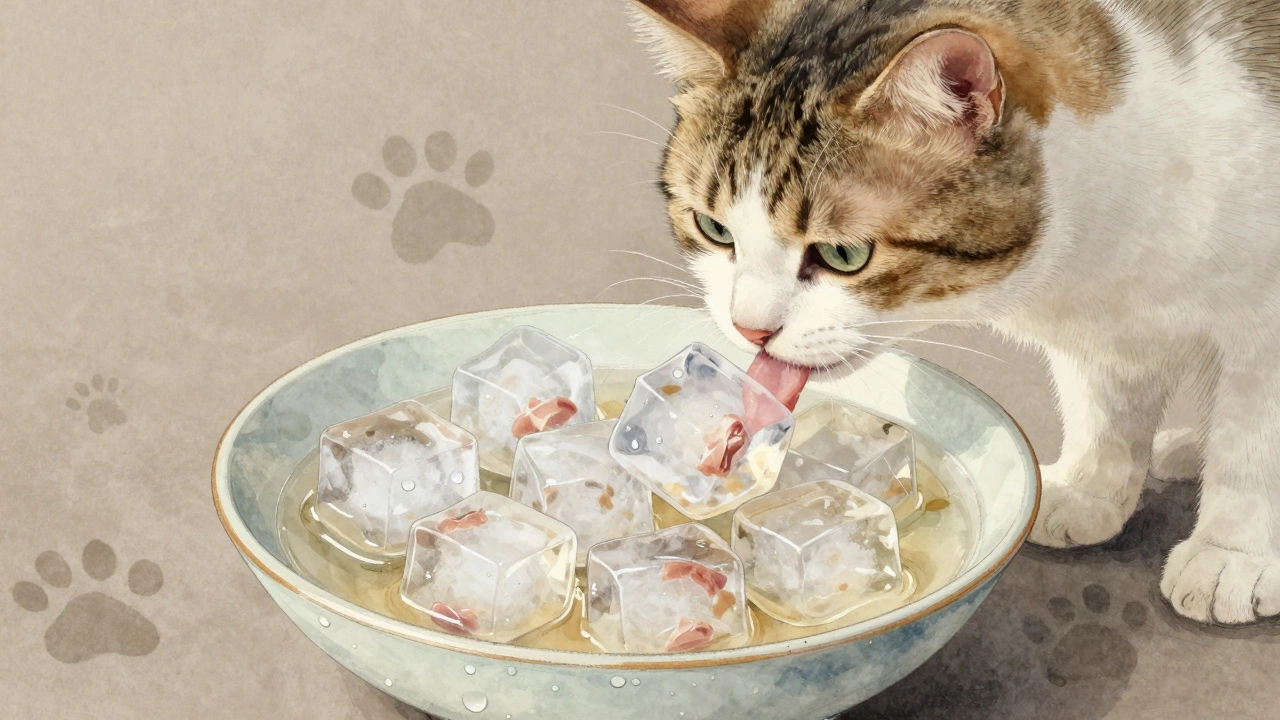
- Low-sodium broth - Use homemade chicken or turkey broth with no onions, garlic, or salt. Store-bought broths often contain harmful additives. Simmer chicken bones for 2 hours, skim the fat, and freeze in ice cube trays. One cube per meal adds flavor and hydration.
- Canned food topper - Mix in 1-2 tablespoons of wet cat food per cup of dry. It’s not a full switch, but it adds moisture, protein, and aroma. Choose grain-free, high-meat-content options.
- Cat-safe gravy - Some brands make cat-specific gravies made from meat juices and water. Look for ones labeled “100% natural” and free of xylitol or artificial preservatives.
Start slow. Add just a teaspoon of water or broth at first. Watch how your cat reacts. Some cats love it right away. Others need a week to adjust. Never force it - coax them with patience.
What NOT to Add
Not everything that seems helpful is safe.
- Tap water with chlorine - Some cats dislike the taste. If your water smells strong, use filtered or bottled water.
- Milk or cream - Most adult cats are lactose intolerant. It can cause diarrhea and upset stomachs.
- Human broth or stock - Onions, garlic, salt, and spices are toxic to cats. Even “low sodium” store-bought broths often contain hidden dangers.
- Coconut water or juice - High in potassium and sugar. Can upset electrolyte balance.
- Any dairy alternatives - Almond, oat, or soy milk aren’t safe either. Cats don’t need plant-based liquids.
Stick to plain water or meat-based liquids. No shortcuts. No guesswork.
How Much Moisture Should You Add?
There’s no one-size-fits-all number, but here’s a practical guide:
- For a 10-pound cat eating 1/2 cup dry food daily: Add 3-4 tablespoons of water or broth.
- For a 15-pound cat eating 3/4 cup: Add 5-6 tablespoons.
You’re aiming to make the food damp, not soupy. Think oatmeal consistency - moist enough to stick together when pressed, but not dripping wet. If your cat leaves puddles in the bowl, you’ve added too much.
Measure it. Don’t guess. Use a measuring spoon. Consistency matters more than quantity. A cat that gets 4 tablespoons of water every day will be better hydrated than one that gets 6 tablespoons one day and none the next.
When to Skip This Method
There are exceptions. If your cat has:
- Chronic kidney disease - Your vet may recommend specific wet food formulas or subcutaneous fluids. Moistening dry food isn’t enough.
- Severe dental pain - Softened food might help, but if they’re avoiding the bowl entirely, see a vet. Broken teeth or gum disease could be the real issue.
- Diabetes - Adding broth or gravy can affect blood sugar. Always check with your vet first.
If your cat has any health condition, talk to your vet before changing their diet. What helps one cat could hurt another.
Other Ways to Boost Hydration
Moistening food helps - but it’s not the only tool. Combine it with these habits:
- Use a cat fountain - Cats prefer running water. A fountain increases water intake by up to 40% compared to a still bowl, according to a 2023 study in the Journal of Feline Medicine and Surgery.
- Place water bowls away from food - In the wild, cats avoid drinking near where they eat. Move the water bowl to another room.
- Try ice cubes - Some cats love to play with and lick ice cubes. Freeze a little broth into cubes for extra flavor.
- Wet food rotation - Even one wet meal a day makes a difference. Try a small can of tuna in water (not oil) or chicken pâté twice a week.
Hydration isn’t one fix. It’s a system. Moistening dry food is the easiest first step. Build from there.
Signs Your Cat Is Still Dehydrated
Even after adding moisture, watch for these red flags:
- Dry, sticky gums - Press gently on the gum above the tooth. It should turn white, then pink again in under 2 seconds. If it stays white, your cat is dehydrated.
- Loose skin - Gently pinch the skin at the back of the neck. It should snap back quickly. If it stays tented, that’s a sign of dehydration.
- Less frequent urination - Less than 1-2 times per day? That’s a problem.
- Weakness or lethargy - Not just lazy. A cat that won’t move, hide, or respond to you needs vet attention.
If you see any of these, don’t wait. Call your vet. Dehydration can turn into kidney failure fast in cats.
Final Tip: Make It Routine
Don’t do this once a week. Do it every meal. Make it part of your feeding ritual. Put the water or broth next to the food bowl. Measure it. Mix it. Let it sit. Serve it. Your cat doesn’t need to understand why - they just need to feel better.
Within a week, you might notice changes: more energy, shinier coat, cleaner litter box habits. It’s not magic. It’s biology. Your cat was built for moisture. Give it to them - and they’ll thank you with purrs, not problems.
Can I just mix wet food with dry food instead of adding water?
Yes, mixing wet food with dry is one of the most effective ways to add moisture. A tablespoon or two of wet food per cup of dry adds hydration, flavor, and texture. Just make sure the wet food is high-quality, meat-based, and free of fillers like corn or soy. It’s a great middle ground if your cat won’t eat fully wet food.
How long can moistened dry food sit out?
Moistened food should be eaten within 30 minutes to an hour, especially in warm weather. Bacteria grow fast in damp kibble. If your cat doesn’t finish it, throw it away. Don’t save it for later. It’s not worth the risk of stomach upset or food poisoning.
Is it okay to add broth every day?
Yes, if it’s homemade and free of salt, garlic, onions, or spices. Store-bought broth is usually too salty or contains harmful additives. If you make your own - simmer chicken or turkey bones for 2 hours, strain, and freeze in portions - daily use is safe and beneficial. Just keep portions small: 1-2 tablespoons per meal.
Will adding water make my cat gain weight?
No. Water and broth add zero calories. In fact, moistening food can help cats feel fuller with less kibble, which may help with weight management. Some cats eat slower when food is soft, which reduces overeating. But if you’re adding wet food as a topper, watch the total calories - wet food has more energy than dry.
My cat won’t eat moistened food. What do I do?
Start with less moisture. Try just a teaspoon of water and let it sit overnight in the fridge. The next day, warm it slightly before serving. Some cats prefer cold, moist food. You can also try a different liquid - a tiny bit of tuna water (from canned tuna in water, not oil) might entice them. Be patient. It can take 7-10 days for a cat to adjust. Never force it - that creates negative associations.