
Pet Carrier Fit Calculator
Check if your carrier meets the most common airline requirements for in-cabin pet travel in 2025. Based on the article "What Size Dog Carrier Is TSA Approved? Complete Guide for 2025".
Enter Your Carrier Details
Carrier Fit Results
If you're planning to fly with your dog in 2025, you’ve probably asked yourself: What size dog carrier is TSA approved? The answer isn’t as simple as picking the biggest carrier that fits in your closet. Airlines and the TSA have specific rules-and if you get it wrong, you could be turned away at the gate, forced to check your dog, or even pay a last-minute fee. This guide cuts through the noise with clear, up-to-date rules for 2025, real-world examples, and what actually fits under the seat.
TSA Doesn’t Set Carrier Size Rules-Airlines Do
First, clear up a big misunderstanding: TSA doesn’t approve dog carrier sizes. The Transportation Security Administration handles security screening, not pet travel policies. The real rulemakers are the airlines. Each one sets its own size, weight, and type requirements for in-cabin pet carriers. TSA just makes sure the carrier can go through the X-ray machine without blocking the view of your dog’s face or creating a safety hazard. That means if you’re flying with Delta, you need to check Delta’s rules. If you’re flying with Southwest, you need to check Southwest’s rules. There’s no single TSA-approved size. But most airlines follow similar standards, and here’s what you’ll see across the board.What Size Dog Carrier Fits Under an Airplane Seat?
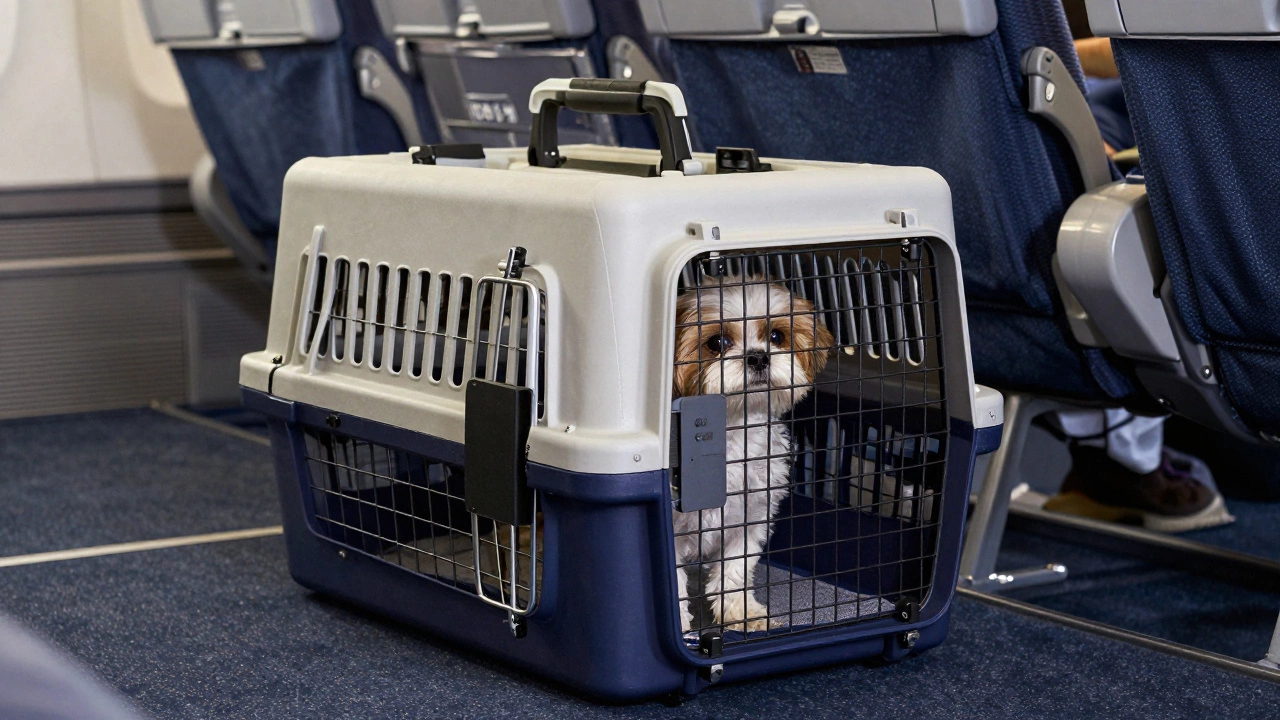
The universal standard for in-cabin pet carriers is that they must fit completely under the seat in front of you. No wheels sticking out. No part of the carrier hanging over the aisle. No exceptions. Most airlines require carriers to be no larger than:- 18 inches long
- 11 inches wide
- 11 inches tall
Weight Limits Matter Too
Size isn’t the only factor. Airlines also limit the combined weight of your dog and carrier. Most carriers cap this at 20 pounds total. Some, like JetBlue, allow up to 25 pounds. Others, like United, stick to 20 pounds even for service animals. That means if your dog weighs 18 pounds, your carrier can’t weigh more than 2 pounds. A heavy hard-shell carrier might push you over the limit. Soft-sided carriers made of lightweight mesh and nylon usually weigh under 1.5 pounds, making them the smart choice. Pro tip: Weigh your dog and carrier together at home before you leave. Use a bathroom scale: stand on it holding the carrier, then step on it without the carrier. The difference is your total weight. Don’t rely on the carrier’s label-it’s often inaccurate.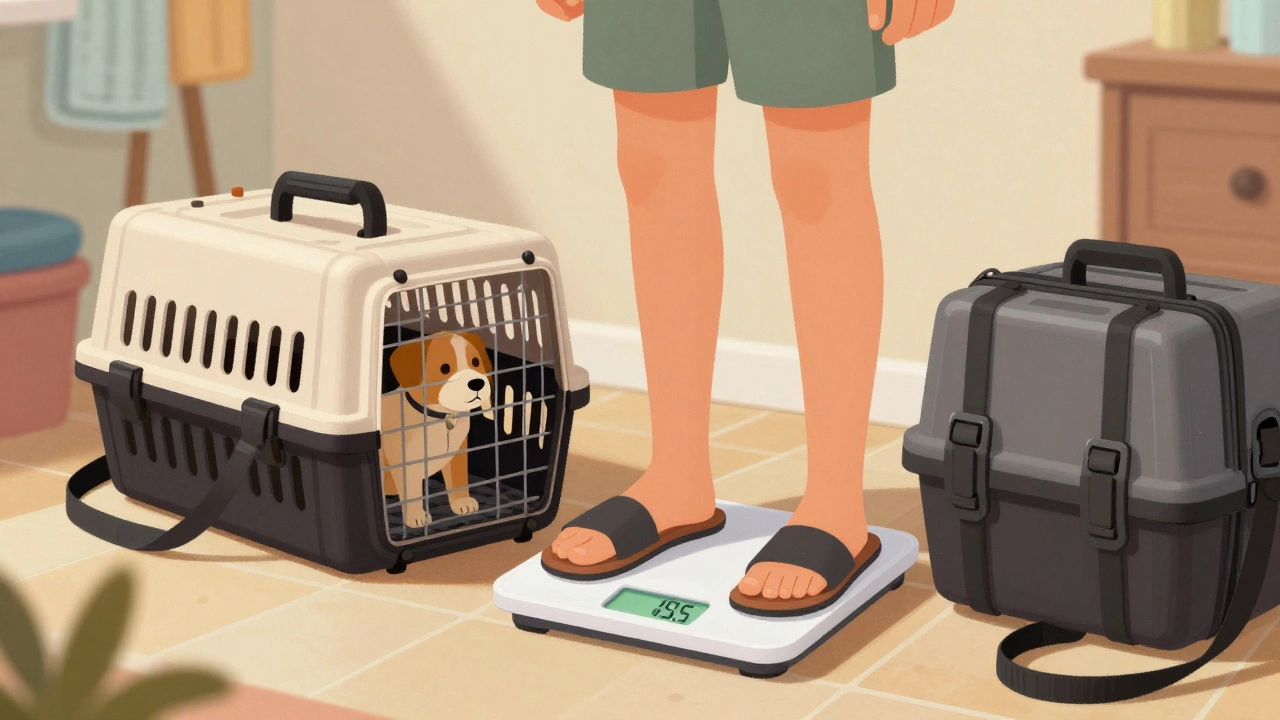
Hard vs. Soft Carriers: Which Should You Choose?
There are two main types of in-cabin pet carriers: hard-shell and soft-sided. Both can be used, but one is far more practical.| Feature | Hard-Shell Carrier | Soft-Sided Carrier |
|---|---|---|
| Weight | 3-6 pounds | 0.8-1.8 pounds |
| Fit Under Seat | Often too rigid or bulky | Flexible, molds to space |
| Comfort for Dog | Less ventilation, cramped | Mesh sides, better airflow |
| TSA Screening | Hard to fold flat, may block X-ray | Easily flattened for scan |
| Airline Acceptance Rate | Low to moderate | High |
What Happens If Your Carrier Is Too Big?
If your carrier doesn’t fit under the seat, you’ll likely be asked to check your dog. That’s not just inconvenient-it’s risky. Checked baggage holds can get extremely hot or cold, and delays can mean hours of waiting in unregulated conditions. Some airlines let you pay a fee to upgrade your dog to checked status (usually $100-$200), but that’s not a solution-it’s a backup plan. You still lose access to your pet during the flight, and you’re exposed to more stress and potential injury. What to do if you’re turned away: Ask if you can check the carrier and keep your dog with you until boarding. Some gate agents will let you do this if the carrier is only slightly too big. Others won’t. Don’t argue-just accept the situation and plan better next time.How to Test Your Carrier Before You Fly
Don’t wait until you’re at the airport to find out your carrier doesn’t fit. Here’s how to test it at home:- Find a chair with a seat depth of about 18 inches (most standard chairs are close enough).
- Place your empty carrier under the chair. Can you slide it all the way in without lifting or tilting?
- Now place your dog inside (if they’re calm). Can you still close the door? Is their head above the top edge?
- Stand up. Does the carrier stay completely under the seat? Do any corners or wheels stick out?
2025 Updates: What’s Changed?
In 2025, airlines have tightened enforcement due to rising numbers of pets traveling and more incidents of oversized carriers blocking aisles or causing delays. Here’s what’s new:- Delta now requires carriers to be labeled with the owner’s name and flight number.
- Southwest limits pets to one per passenger, and only one pet carrier per row.
- Alaska Airlines requires a health certificate for all pets, even if they’re not service animals.
- United has added a pre-check system: you can upload a photo of your carrier online before your flight to get pre-approval.
What to Pack Inside the Carrier
Even if your carrier fits, packing the wrong things can cause problems:- Do: Add a soft blanket, a familiar toy, and a water bottle with a spout (attach it to the door).
- Don’t: Put food, treats, or absorbent pads inside. They can spill, smell, or trigger allergies.
- Never: Put a leash or collar on your dog inside the carrier. It can get caught.
Final Checklist Before You Fly
Use this simple checklist to avoid last-minute surprises:- Carrier dimensions: ≤18 x 11 x 11 inches
- Total weight (dog + carrier): ≤20 pounds
- Carrier is soft-sided with a rigid bottom
- Carrier has ventilation on at least three sides
- Dog is calm and used to the carrier
- Health certificate required? (Check airline and destination rules)
- Carrier labeled with name, phone, flight number
Can I use a hard-shell dog carrier on a plane?
Yes, but only if it fits under the seat and doesn’t exceed the airline’s size and weight limits. Most hard-shell carriers are too heavy and rigid, making them hard to fit. Soft-sided carriers are far more likely to be accepted and are the preferred choice for 90% of travelers.
Does TSA approve specific dog carrier brands?
No, TSA does not approve or certify any brands. Airlines do. A carrier labeled “TSA approved” is just marketing. What matters is whether it fits under the seat of the specific airline you’re flying with. Always check the airline’s pet policy directly.
Can my dog sit on my lap during the flight?
No. All pets must remain in their carrier under the seat for the entire flight. Even small dogs, like Chihuahuas or Pomeranians, must be in a carrier. This is a safety rule enforced by all U.S. airlines.
What if my dog is a service animal?
Service animals are allowed to sit at your feet, but they still must be under control and not block the aisle. You may still need to provide documentation, and some airlines require advance notice. Emotional support animals are no longer recognized as service animals under U.S. federal law as of 2021.
Can I bring two dogs in one carrier?
No. Most airlines allow only one pet per carrier, and only one carrier per passenger. Even if your two small dogs fit physically, airlines will not allow it. This is for safety and space reasons. Each dog needs its own carrier.