
Budget Dog Meal Planner & Cost Calculator
Build Your Bowl
Select ingredients based on the recommended ratio: 50% Protein, 25% Veggies, 25% Carbs.
Ready to Calculate
Enter ingredient quantities on the left to see your estimated costs and nutritional balance.
Running out of money for kibble is stressful. You look at your dog, see that hopeful stare, and feel the weight of every euro in your wallet. It happens to more people than we admit. But here is the good news: you do not need expensive commercial brands to keep your dog healthy. In fact, many affordable human foods are safer and more nutritious than cheap, grain-heavy dry food.
The goal isn't just to fill their stomach; it's to prevent malnutrition while stretching your budget. This guide cuts through the noise. We will look at exactly what you can buy at a standard supermarket, how to combine these items into balanced meals, and which "free" foods are actually dangerous traps. Let’s get your dog fed safely without breaking the bank.
Quick Summary / Key Takeaways
- Protein is king: Eggs, chicken thighs, and sardines offer high-quality protein at a fraction of the cost of premium kibble.
- Fillers are friends (in moderation): Rice, oats, and potatoes provide necessary carbohydrates for energy and bulk up meals cheaply.
- Veggies add nutrients: Carrots, green beans, and spinach boost fiber and vitamins without costing much.
- Avoid the "junk": Never feed a diet consisting solely of bread, pasta, or processed meats like bacon.
- Balance matters: Aim for a rough ratio of 50% protein, 25% vegetables, and 25% grains/starches.
The Foundation: High-Value Proteins That Won't Break the Bank
Dogs are omnivores with a strong carnivorous bias. They need protein to maintain muscle mass, repair tissues, and support immune function. When budgets are tight, skip the fancy raw meat packages and look at the poultry and fish aisles.
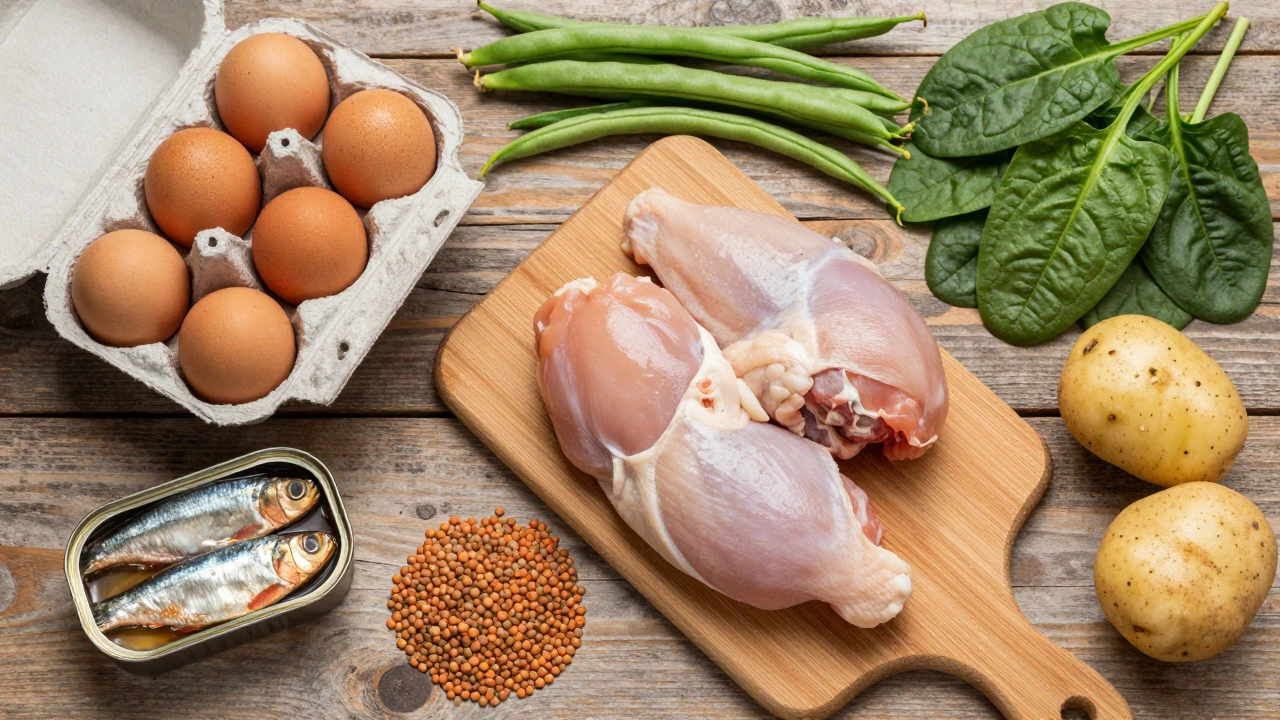
Eggs are arguably the best bang-for-your-buck protein source available. They contain all essential amino acids in perfect proportions. Boil them hard or scramble them plain-no oil, no salt. One egg provides about 6 grams of protein. For a small dog, this might be half their daily protein need. For larger breeds, use two or three. If you find cracked eggs at the store marked down, they are perfectly safe if cooked thoroughly.
Chicken Thighs are cheaper than breasts and often more flavorful for dogs. Buy whole chickens if possible; you can roast the bird, shred the meat for your dog, and save the bones for making broth (never feed cooked bones directly). Remove excess fat, as too much can cause pancreatitis, but leave some skin on if your dog needs extra calories. A whole chicken costs significantly less per kilogram than pre-packaged thigh fillets.
Sardines in water or olive oil are a superfood staple. They are rich in Omega-3 fatty acids, which help with coat health and joint inflammation. Canned sardines are inexpensive, especially when bought in multipacks. Just ensure they are unsalted. The bones in canned sardines are soft enough to eat and provide calcium, so you don’t need to remove them.
| Protein Source | Approx Cost (per kg) | Nutritional Highlight | Preparation Tip |
|---|---|---|---|
| Eggs | €2.50 - €4.00 | Complete amino acid profile | Boil or scramble plain |
| Chicken Thighs | €4.00 - €6.00 | High calorie, high protein | Bake or boil, remove large bones |
| Canned Sardines | €1.50 - €3.00 | Omega-3s, Calcium | Rinse if oily, serve whole |
| Lentils (Cooked) | €1.00 - €2.00 | Plant-based protein, fiber | Boil until soft, mash slightly |
Filling the Plate: Affordable Carbohydrates and Grains
Protein is expensive. To make meals last longer and provide sustained energy, you need carbohydrates. These act as fillers that keep your dog feeling full. However, not all carbs are created equal. You want complex carbohydrates that digest slowly, preventing blood sugar spikes.
White Rice is the easiest option. It is gentle on the stomach and highly digestible. If your dog has an upset tummy, rice mixed with boiled chicken is the gold standard remedy. Brown rice is healthier due to higher fiber content, but white rice is often cheaper and easier for older dogs to process. Cook it in water, not milk or butter.
Oats are another excellent choice. Rolled oats, not instant sugary packets, provide beta-glucan, a soluble fiber that supports heart health and digestion. Soak them overnight or cook them into a porridge consistency. Mix in a spoonful of peanut butter (unsweetened, xylitol-free) for extra flavor and fats.
Potatoes must be cooked thoroughly. Raw potatoes contain solanine, which is toxic to dogs. Boiled or baked potatoes are great sources of vitamin C and potassium. Sweet potatoes are even better, offering beta-carotene for eye health, but regular white potatoes work fine if sweet ones are out of budget. Mash them and mix with protein to create a palatable meal.
Vitamins and Fiber: The Vegetable Basket
You might think vegetables are a luxury, but they are essential for micronutrients. Without them, your dog may develop deficiencies over time, leading to dull coats, lethargy, or digestive issues. Frozen vegetables are often cheaper than fresh and retain more nutrients because they are flash-frozen at peak ripeness.
Carrots are crunchy, sweet, and packed with beta-carotene. Dogs love them raw as a treat or cooked and mashed into meals. They also help clean teeth mechanically when chewed raw.
Green Beans are low-calorie and high-fiber. They are perfect for dogs who need to lose weight or for adding bulk to a small amount of meat. Steam them lightly to soften them up. Avoid canned green beans with added sodium.
Spinach and Kale are nutrient-dense greens. Use them sparingly (less than 10% of the diet) because they contain oxalates, which can interfere with calcium absorption in large quantities. Chopped finely and cooked, they blend well into rice and meat mixes.
Zucchini and pumpkin (puree, not pie filling) are also fantastic. Pumpkin aids digestion and can help with both diarrhea and constipation. A tablespoon of pure pumpkin mixed into dinner is a simple health booster.
What to Avoid: The Hidden Dangers
When you are desperate to feed your dog, it is tempting to give them whatever is in the pantry. Some of these items are harmless in tiny amounts but dangerous as staples. Others are outright toxic.
- Onions and Garlic: These are strictly forbidden. They damage red blood cells and can cause anemia. Even powdered onion in soup mixes is risky.
- Grapes and Raisins: Even a few grapes can cause acute kidney failure in dogs. Keep them away from the table entirely.
- Chocolate and Caffeine: Theobromine in chocolate is toxic. Coffee grounds are equally dangerous.
- Xylitol: Check labels on peanut butter, yogurt, and gum. This artificial sweetener causes rapid insulin release and liver failure.
- Cooked Bones: Chicken and beef bones splinter when cooked, causing internal punctures or blockages. Never feed cooked bones.
- Alcohol and Yeast Dough: Both are toxic. Rising dough can expand in the stomach, causing bloat and releasing alcohol during fermentation.
Also, avoid relying on bread or pasta alone. While not toxic, they offer little nutritional value. A diet of only pasta leads to severe protein deficiency and muscle wasting. If you have leftover pasta, mix it heavily with meat and veggies to make it viable.
Building a Balanced Meal Plan
You don’t need to be a nutritionist to put together a decent meal. Follow this simple framework for each bowl:
- Base (50%): Protein. Think eggs, chicken, lentils, or sardines.
- Fiber/Vitamins (25%): Vegetables. Carrots, green beans, spinach, zucchini.
- Energy/Bulk (25%): Carbs. Rice, oats, potatoes.
For example, a single meal for a medium-sized dog could look like this:
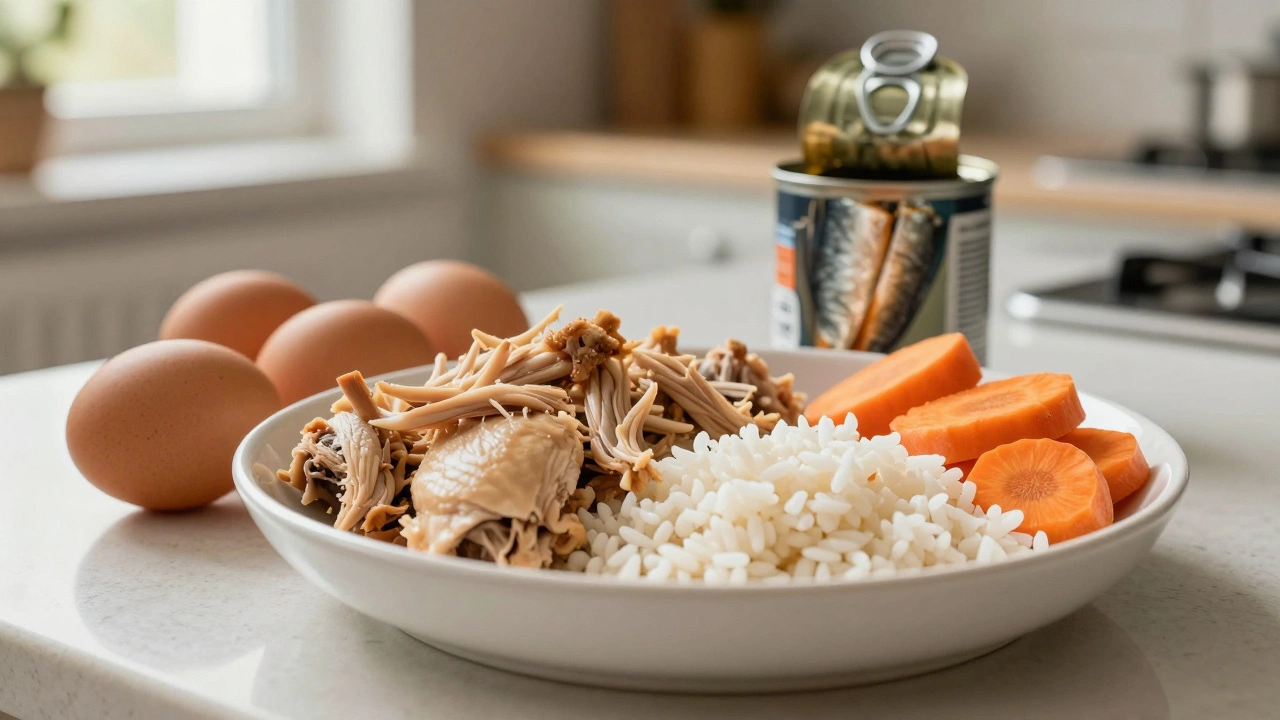
- 1 cup of boiled white rice
- 1/2 cup of shredded boiled chicken thigh
- 1/2 cup of steamed carrots and green beans
- 1 scrambled egg mixed in
This meal costs less than €1.50 to make and provides a complete balance of macronutrients. Adjust portions based on your dog’s size and activity level. Puppies and working dogs need more calories; senior dogs need fewer.
Supplements and Nutrient Gaps
Homemade diets lack certain fortified elements found in commercial kibble, such as specific levels of Vitamin D, Zinc, and Calcium. If you cannot afford a commercial multivitamin, focus on natural sources.
Calcium is critical. If you are not feeding raw bones (which requires careful handling), add a pinch of crushed eggshells to the food. Dry an eggshell in the oven, grind it into a powder, and add 1/4 teaspoon per pound of meat. This mimics the calcium-to-phosphorus ratio found in bone-in meat.
Vitamin E can be sourced from sunflower seeds or almonds (unsalted, chopped finely). Just a few nuts a day provide antioxidants that protect cell membranes.
If your dog shows signs of deficiency-such as brittle nails, slow wound healing, or tremors-consult a vet. Sometimes, a small dose of a generic supplement is cheaper than treating a disease later.
Community Resources and Assistance
In Dublin and across Ireland, there are resources available if you are struggling financially. Do not hesitate to reach out.
- SPCA and RSPCACA: These organizations sometimes offer food banks or emergency assistance for pets.
- Local Shelters: Many shelters have partnerships with local pet stores to distribute donated food.
- Online Communities: Facebook groups like "Dublin Dog Owners" often have members giving away surplus food or coupons.
- Food Banks: Some human food banks now accept or distribute pet food donations. Ask local charities.
Asking for help is not a failure. It is a responsible step to ensure your companion stays healthy.
Troubleshooting Common Issues
My dog refuses to eat the new food. Dogs can be picky. Try warming the food slightly to release aromas. Mix a small amount of the new food with their old kibble (if you have any left) and gradually increase the ratio. Adding a splash of low-sodium chicken broth can also enhance flavor.
My dog has loose stools. This usually means too much fat or too much change too quickly. Transition over 7 days. Start with 25% new food, 75% old food, increasing by 25% each day. If diarrhea persists, stick to a bland diet of boiled chicken and rice for 24-48 hours before reintroducing other ingredients.
I’m worried about long-term health. A varied homemade diet is generally healthier than cheap kibble. However, monitor your dog’s weight and coat condition. Regular check-ups are vital. If you can, budget for one annual vet visit to run basic blood work, ensuring no hidden deficiencies exist.
Can I feed my dog only rice and chicken?
No. While rice and chicken are safe, they lack essential vitamins, minerals, and fatty acids. Over time, this diet will lead to nutritional deficiencies. Always add vegetables and consider a calcium supplement like crushed eggshells.
Is dry kibble always better than homemade food?
Not necessarily. Cheap kibble often contains low-quality fillers and preservatives. A balanced homemade meal using affordable ingredients like eggs, rice, and seasonal vegetables can be more nutritious and easier to digest.
How much food should I give my dog on a budget diet?
Amounts vary by size and age. A general rule is 2-3% of their body weight per day for adult dogs. Split this into two meals. Monitor their waistline; you should be able to feel their ribs without seeing them. Adjust portions accordingly.
Are there any fruits I can feed my dog cheaply?
Yes. Apples (without seeds), bananas, and blueberries are safe and affordable. Avoid grapes, raisins, and cherries. Fruits should be treats, not main meal components, due to sugar content.
Can I use leftovers from my own meals?
Only if they are plain. Avoid foods with onions, garlic, excessive salt, or spices. Plain roasted turkey, grilled fish, or steamed veggies with rice are good options. Never give seasoned meats or sauces.