
Dog Pawing Behavior Decoder
Is your dog resting a paw on your leg? Answer these three questions about their current state to decode the message.
Analyzing...
Please select an option for each step above.
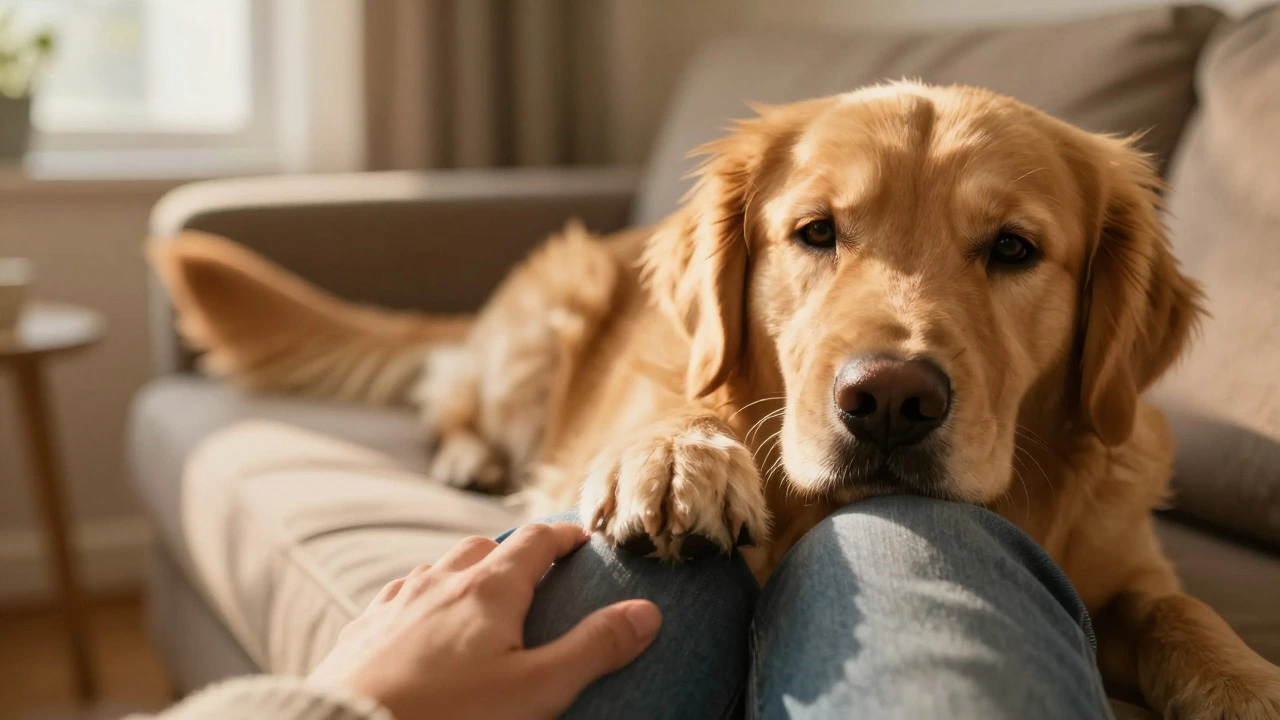
You are sitting on the sofa, reading a book or watching TV, and suddenly you feel a heavy weight press against your thigh. You look down to see your dog resting one paw on your leg, staring at you with those big, soulful eyes. It feels intimate, almost like a handshake. But what is actually going on in that furry brain?
Most people assume it is just pure love. And while affection is a huge part of it, dog pawing behavior is a complex mix of communication, comfort-seeking, and sometimes even anxiety. Understanding these signals helps you respond correctly, strengthening your bond without accidentally reinforcing unwanted habits.
The Core Reason: Communication and Attention
Dogs do not speak human language, so they rely heavily on body language to get their point across. When a dog puts a paw on you, it is often a direct request for attention. Think of it as a gentle nudge. Your dog might be bored, hungry, or simply wants to be near you because you are the center of their social world.
Canine communication is a system of visual, auditory, and tactile cues used by dogs to interact with humans and other animals. In this context, the paw acts as a tool. If your dog has learned that placing a paw on your knee results in a pet, a treat, or a "good boy" comment, they will repeat the action. This is classic operant conditioning. The paw becomes the button that gets them what they want.
However, not all pawing is about demands. Sometimes, it is purely social. Dogs are pack animals by nature. They seek physical contact to reinforce social bonds. Resting a paw on you is a low-effort way to maintain proximity. It says, "You are my person, and I am right here."
Affection vs. Anxiety: Reading the Context
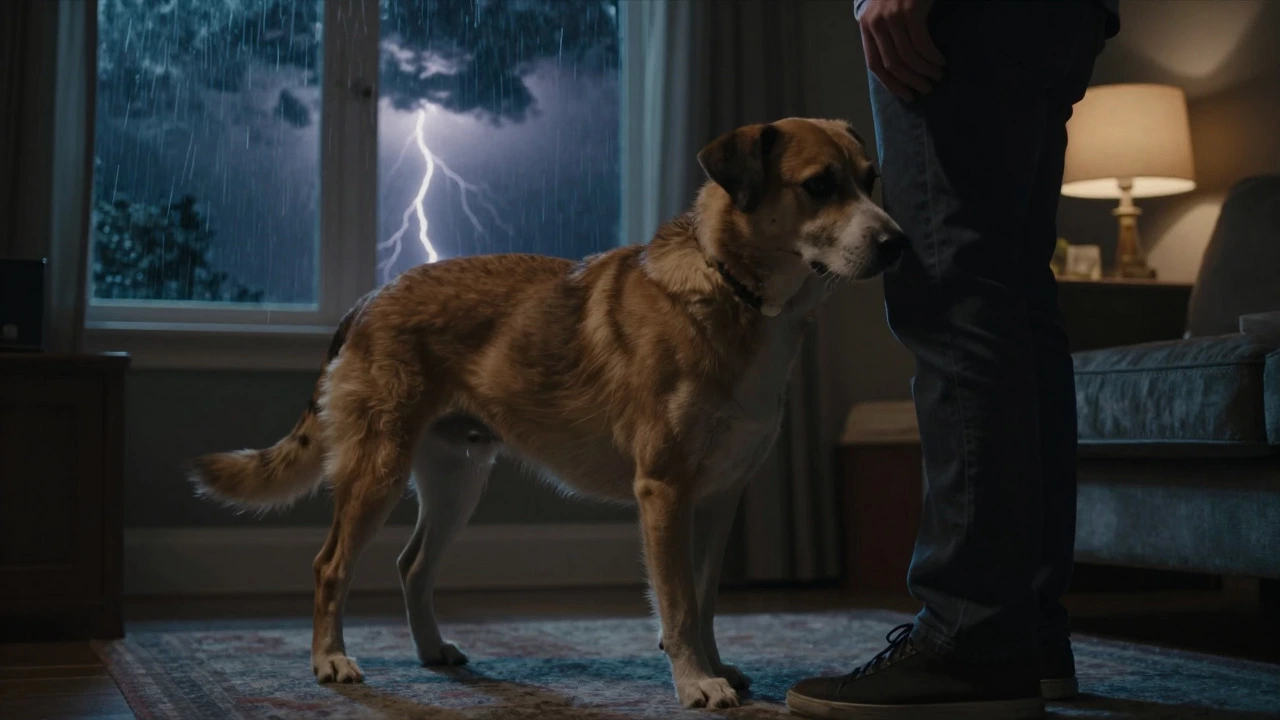
Here is where it gets tricky. A paw on your lap can mean "I love you," but it can also mean "I am worried." To figure out which one applies, you need to look at the rest of the body, not just the foot.
If your dog is relaxed, their tail might be wagging loosely, their ears are soft, and their breathing is steady. This is likely affection or a request for pets. But if the air changes, watch for tension. Stiff legs, pinned-back ears, rapid panting, or a tucked tail suggest anxiety. In these cases, the paw on you is a grounding mechanism. Your dog is using your body as an anchor to calm themselves down during stressful events like thunderstorms or loud noises.
This distinction matters because responding differently to each scenario helps your dog feel secure. Petting an anxious dog gently can help, but ignoring a bored dog who is pawing for treats teaches boundaries.
When Pawing Becomes a Problem
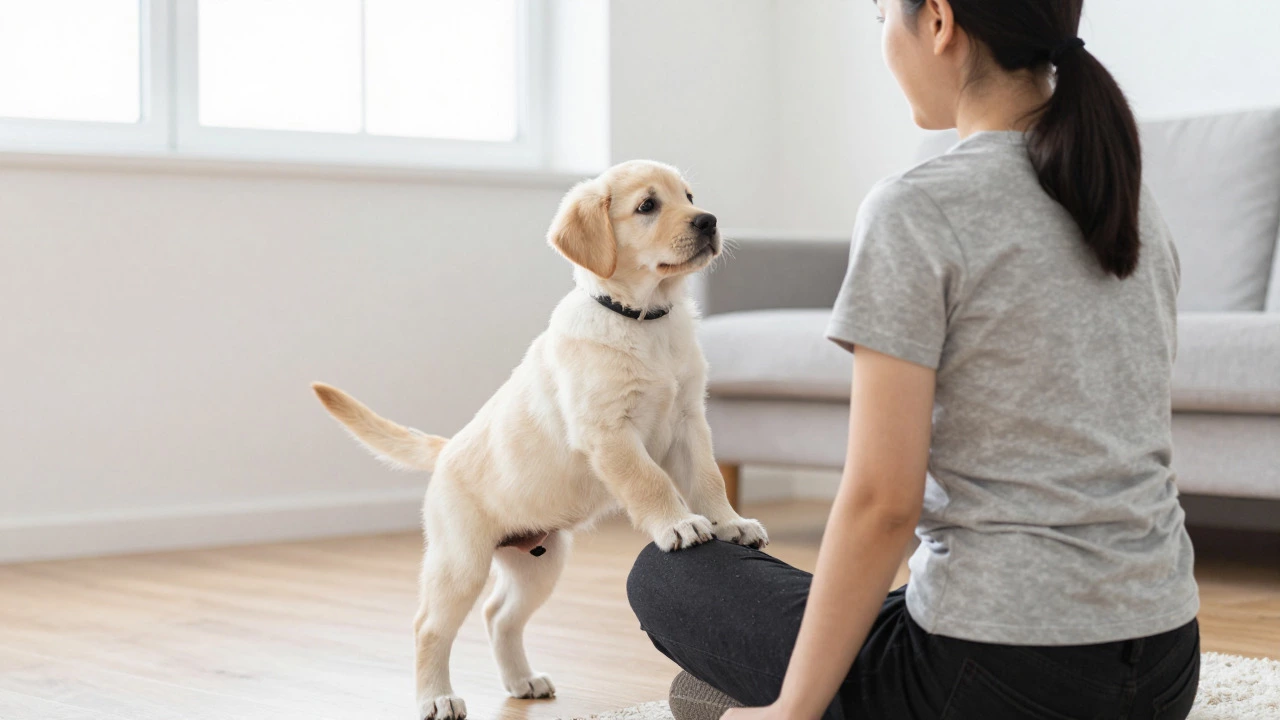
Is there such a thing as too much pawing? Absolutely. If your dog jumps up on you, places both front paws on your chest, and barks, you are dealing with a combination of excitement and poor impulse control. This is common in younger dogs or breeds with high energy levels.
Impulse control is the ability of a dog to pause before acting on a stimulus, such as jumping or pawing. Training this skill takes consistency. If you push the dog away, they might interpret it as play. Instead, turn your back. No eye contact, no talking, no touch. Only when all four paws are on the floor do you acknowledge them. This teaches that calm behavior earns attention, while frantic pawing leads to isolation.
Another issue is overstimulation. Some dogs love being petted, but after thirty seconds, it becomes annoying. If your dog starts licking your hand or pulling away while you are scratching their belly, they are signaling that enough is enough. Ignoring these subtle signs can lead to snap bites, especially in sensitive individuals.
Breed and Temperament Factors
Your dog's breed plays a significant role in how they express affection. Breeds known for close bonding, such as Poodles, an intelligent and hypoallergenic breed known for their strong attachment to owners or Golden Retrievers, a friendly and devoted breed that thrives on human interaction, tend to be more physically clingy. They may frequently place paws on you to stay connected.
In contrast, independent breeds like Basenjis or Shiba Inus might only offer a paw when they specifically want something, like food or a walk. Their body language is often more reserved. If a Shiba Inu rests its head on your foot, take it as a major compliment. For a Labrador, it might be Tuesday.
| Reason | Body Language Cues | Recommended Response |
|---|---|---|
| Affection/Bonding | Relaxed posture, slow blinks, loose tail | Gentle petting, verbal praise | Attention Seeking | Staring, whining, repeated tapping | Ignore until calm, reward stillness | Anxiety/Stress | Stiff body, tucked tail, rapid breathing | Stay calm, offer safe space, avoid sudden movements | Hunger/Thirst | Pawing near bowl, lip licking, pacing | Check feeding schedule, provide water |
How to Respond: Best Practices
So, what should you do when that paw lands on your knee? It depends on your goal. If you want to encourage calm companionship, keep your hands still for a few seconds. Let the dog settle. Then, offer a gentle scratch behind the ears. This reinforces that staying calm is rewarding.
If you want to reduce excessive pawing, use the "four-on-the-floor