
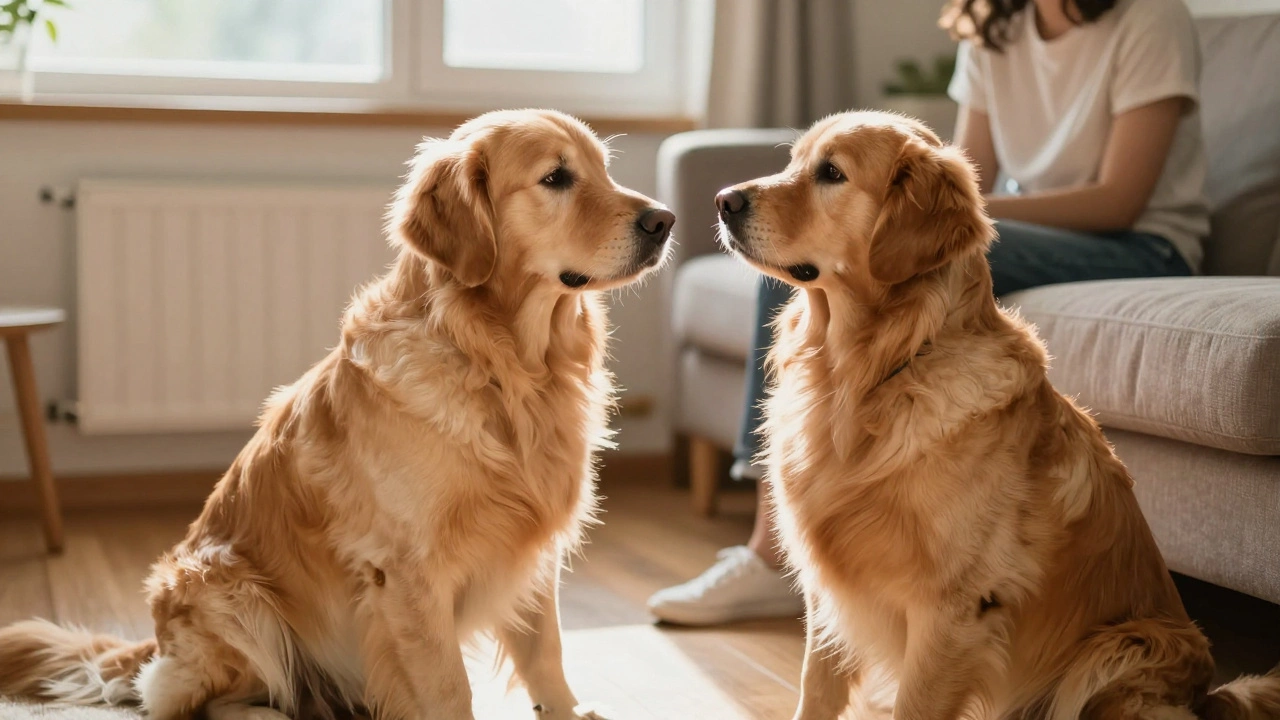
Dog Stare Diagnostic Tool
Let's understand your dog's gaze
This tool helps you determine why your dog is staring at you. Answer the questions below to get personalized guidance.
1. How long is the stare?
2. What's your dog doing while staring?
3. Are there other symptoms?
Your Dog's Stare Analysis
Did you know?
When dogs and humans gaze at each other, oxytocin levels rise in both species—creating a biological bond similar to parent-child connections.
Your dog locks eyes with you-right in the middle of dinner, while you’re scrolling on your phone, even when you’re just sitting quietly. It’s sweet. It’s weird. It’s a little unnerving. And you can’t help but wonder: why does my dog stare at me? Is it love? Hunger? A cry for help? Or is something wrong?
The truth is, dogs don’t stare for one single reason. Their gaze is a language. And if you’ve ever felt like your dog is reading your soul, you’re not imagining it. Science backs that up. When dogs and humans lock eyes, both of our bodies release oxytocin-the same hormone tied to bonding between mothers and babies. That’s right. Your dog’s stare isn’t just a habit. It’s a biological hug.
They’re Asking for Something
Let’s be honest. Most of the time, your dog stares because they want something. Food. A walk. The back door opened. A treat. It’s not manipulation-it’s learned behavior. Dogs are smart. They notice that when they look at you long enough, you usually react. You reach for the leash. You open the fridge. You toss them a biscuit.
Studies from the University of Portsmouth found that dogs increase their gaze duration when they’re waiting for food, especially if they’ve been denied it before. If your dog stares at you while you’re eating? They’re not being rude. They’re doing math: “They’re eating. I’m not. What are the odds?”
This isn’t about greed. It’s about survival. Dogs evolved alongside humans for 15,000 years. They learned early that eye contact gets results. So they keep doing it.
They’re Trying to Read Your Emotions
Dogs don’t just stare-they study you. They watch your face, your eyebrows, your mouth. They’re looking for clues about how you’re feeling. Research from the University of Lincoln showed that dogs are better than primates at reading human facial expressions. They can tell the difference between a smile and a frown. And they adjust their behavior accordingly.
If you’re stressed, your dog might stare longer. Not to annoy you. But to check if you’re okay. If you’re happy, they’ll stare with relaxed eyes, maybe even blink slowly. That’s their version of a smile. Slow blinking in dogs is a sign of trust. If your dog blinks back when you blink at them, they’re saying, “I feel safe with you.”
They Might Be Trying to Tell You Something’s Wrong
Not all staring is harmless. If your dog’s gaze is fixed, unblinking, and accompanied by other changes-like pacing, whining, loss of appetite, or avoiding eye contact with others-it could be a sign of discomfort or pain.
Older dogs, especially, might stare because they’re losing their hearing or vision. If they can’t hear you call them, they’ll stare harder to see if you’re moving. If they’re in pain from arthritis or dental issues, they might fixate on you because they don’t know how else to ask for help.
One dog owner in Dublin noticed her 11-year-old border collie staring at her for 20 minutes straight every night. At first, she thought it was affection. Then she noticed he was licking his lips constantly and not eating his kibble. A vet visit revealed a painful tooth abscess. The staring? His way of saying, “I hurt, but I don’t know how to tell you.”
If your dog’s stare feels off-intense, distant, or paired with unusual behavior-don’t ignore it. A quick check with your vet can rule out medical causes.

They’re Seeking Reassurance
Dogs are pack animals. They look to you as their leader. When they stare, especially in unfamiliar situations-like during a thunderstorm, at the vet’s office, or when you’re packing a suitcase-they’re checking in. “Are we safe? Are you still here? What’s next?”
That’s why your dog might stare at you before jumping into the car. Or when you leave the room. Or when a stranger walks in. They’re not being clingy. They’re relying on you to tell them how to feel. If you’re calm, they calm down. If you’re anxious, they get tense.
One trick that works: if your dog stares at you when they’re nervous, make slow eye contact and blink. It signals safety. Many dog trainers use this to help anxious dogs relax. It’s not magic. It’s biology.
Dog Health Supplements Might Be Influencing Their Behavior
Here’s something most owners don’t realize: what’s in your dog’s food or supplements can change how they behave-including how they look at you.
Omega-3 fatty acids, found in fish oil supplements, support brain health. Dogs on consistent omega-3 regimens often show improved focus, calmer behavior, and more consistent eye contact. That’s because omega-3s help regulate neurotransmitters like serotonin, which affects mood and attention.
On the flip side, low-quality kibble with artificial fillers or excessive sodium can cause restlessness or irritability. A dog that’s constantly itching, pacing, or staring blankly might not be trying to communicate. They might be feeling unwell.
One study from the University of California, Davis tracked 120 dogs over six months. Those given a daily fish oil supplement (rich in EPA and DHA) showed a 37% increase in calm, intentional eye contact with owners. Dogs on placebo diets showed no change.
If your dog’s staring has suddenly become more frequent or intense, consider their diet. Are they on a new brand? Did you start a supplement? Sometimes, the answer isn’t in their mind-it’s in their bowl.

They’re Just Bonding With You
At the end of the day, the simplest reason your dog stares at you is because they love you. That’s not poetic fluff. It’s neuroscience.
When dogs look into their owner’s eyes, their oxytocin levels rise. So do yours. This is the same chemical loop that happens between parents and infants. Dogs have literally evolved to form this bond with humans. They don’t stare because they’re bored. They stare because it feels good-for both of you.
Think about it: when was the last time you looked into your dog’s eyes and felt that warm, quiet rush of connection? That’s not random. That’s evolution. That’s loyalty. That’s love, written in biology.
What Should You Do When Your Dog Stares?
Not every stare needs fixing. But here’s how to respond based on what’s likely going on:
- If they’re waiting for food or a walk: Don’t reward the stare with instant action. Wait for them to look away or sit. Then give them what they want. This teaches patience.
- If they’re anxious or nervous: Blink slowly back. Speak in a calm voice. Offer a gentle pet. Don’t force interaction.
- If they’re staring blankly or seem confused: Check for signs of pain, hearing loss, or vision issues. Schedule a vet visit if it’s new or worsening.
- If it feels loving and calm: Smile. Blink back. Let them have their moment. You’re both sharing something rare and beautiful.
And if you’re considering supplements, talk to your vet. Look for ones with omega-3s, choline, or antioxidants like vitamin E. Avoid anything with artificial colors, corn syrup, or vague ingredients like “animal digest.” Quality matters.
Final Thought: It’s Not Just a Look. It’s a Conversation.
Your dog doesn’t speak English. But they don’t need to. Their eyes say everything. Staring isn’t a problem to fix. It’s a signal to understand. Sometimes, they want food. Sometimes, they’re scared. Sometimes, they’re just trying to say, “I’m here. Are you?”
When you learn to read that gaze, you don’t just understand your dog better. You start to see the quiet, steady love they’ve been offering all along.
Is it normal for my dog to stare at me for long periods?
Yes, it’s completely normal-especially if your dog is relaxed, blinking occasionally, and seems calm. Dogs use eye contact to bond, communicate needs, and check in with their pack. But if the stare is intense, unblinking, and paired with other odd behaviors like pacing or loss of appetite, it could signal discomfort or illness.
Can dog food or supplements cause changes in eye contact?
Absolutely. Poor-quality food with fillers or additives can make dogs restless or irritable, which may change how they interact with you. On the other hand, supplements with omega-3 fatty acids (like fish oil) support brain function and can lead to calmer, more focused eye contact. Dogs on these supplements often show improved emotional regulation and more intentional bonding behaviors.
Why does my dog stare at me when I’m not doing anything?
Dogs are social creatures. Even when you’re still, your presence is comforting. They may be watching you to feel secure, checking that you’re still nearby, or simply enjoying the quiet connection. This kind of stare is often soft, with relaxed eyes and maybe even a slight tail wag. It’s their version of cuddling.
Should I stop my dog from staring at me?
No-not unless it’s causing problems. Staring is natural communication. If your dog stares while begging for food, teach them to sit first before rewarding them. If they stare out of anxiety, offer calm reassurance. But if the stare feels loving and calm, let it happen. It’s one of the purest forms of connection between a dog and their human.
How do I know if my dog’s staring is a sign of a health problem?
Watch for changes: Is the stare new? Is it paired with confusion, bumping into things, excessive licking, or loss of interest in food? These could point to vision problems, cognitive decline, or pain. Older dogs are especially prone to this. If you notice a sudden shift in behavior, schedule a vet check-up. Early detection makes a big difference.