
National Seashore Dog Policy Checker
Check Dog Policy for Your National Seashore
Select your destination and travel date to see if dogs are allowed and what rules apply.
Planning a beach trip with your dog? You’re not alone. Thousands of dog owners head to U.S. National Seashores every year hoping to soak up sun, sand, and sea with their four-legged buddies. But here’s the truth: dogs at national seashore aren’t automatically welcome. Rules vary wildly between locations-and getting it wrong can mean fines, forced leash removal, or even being asked to leave.
It Depends on the Seashore
There’s no single rule for all National Seashores. The National Park Service manages over 20 of them, from Cape Cod in Massachusetts to Padre Island in Texas. Each one sets its own pet policy based on wildlife, erosion, visitor safety, and local ecology. What’s allowed at Assateague Island might be banned at Point Reyes. Always check the official site before you pack the dog bed.
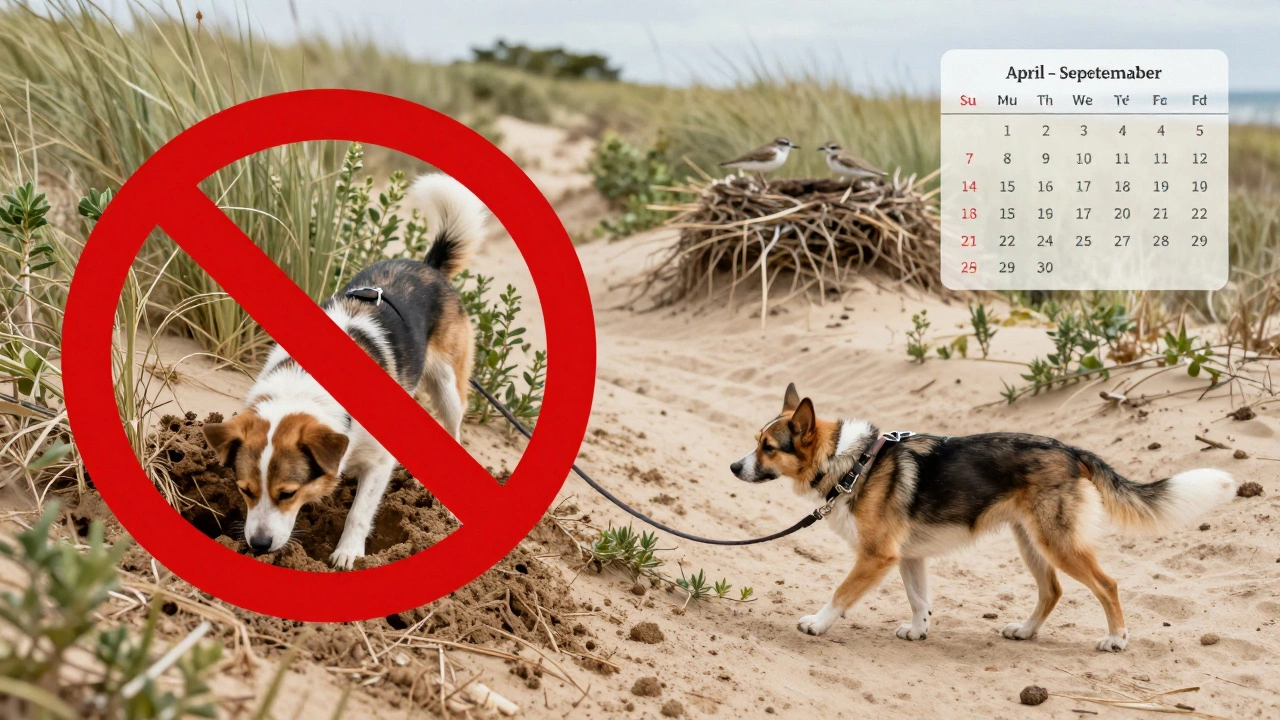
For example, at Cape Cod National Seashore, dogs are permitted on most beaches but only on a leash no longer than 6 feet. They’re banned from dune areas and nesting zones between sunrise and sunset from April 1 to September 15. Meanwhile, at Fire Island National Seashore, dogs are completely prohibited on all beaches from May 1 to September 15. That’s not a suggestion-it’s a federal regulation enforced by rangers.
Where Dogs Are Usually Allowed
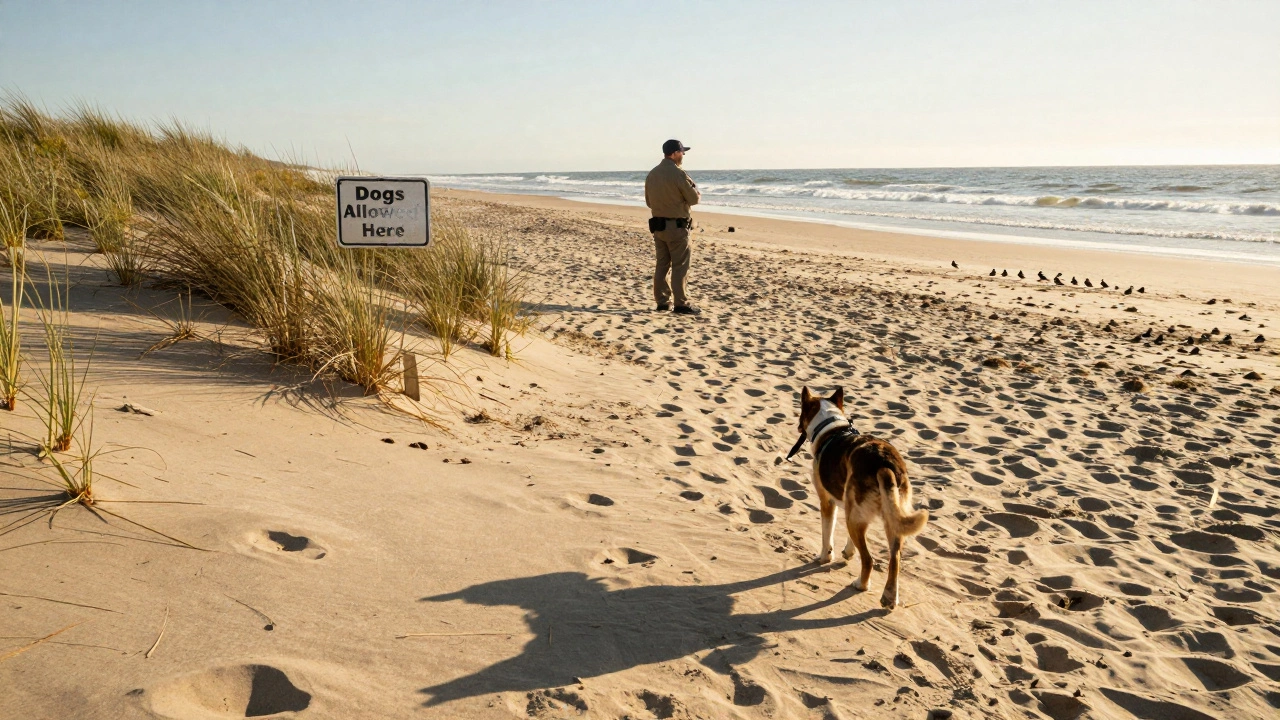
Most National Seashores let dogs on trails, in campgrounds, and on designated beach sections. But those sections often come with strict boundaries. Look for signs that say "Dogs Allowed" with a map or a shaded zone on the beach. Some places, like Gulf Islands National Seashore in Florida and Mississippi, have entire beach stretches where leashed dogs are welcome year-round. These are the spots most dog owners seek out.
Trail access is more consistent. Over 80% of National Seashores allow dogs on marked hiking paths as long as they’re leashed. The leash rule isn’t just about control-it’s about protecting nesting shorebirds like piping plovers and least terns. These birds lay eggs right on the sand. A dog’s scent, even if it doesn’t chase them, can cause mothers to abandon nests. That’s why some areas close entire beach sections during nesting season.
What’s Almost Always Banned
There are three things you should assume are off-limits unless proven otherwise:
- Unleashed dogs-Even if your dog is well-behaved, off-leash is almost never permitted. Rangers don’t make exceptions.
- Dogs on dunes-These fragile areas hold back erosion and support rare plants. Dogs digging or running here can destroy entire ecosystems.
- Dogs in visitor centers, restrooms, or boardwalks-These are human-only zones for hygiene and accessibility reasons.
Some parks, like Point Reyes in California, ban dogs entirely from the entire park except for one trail. Others, like Padre Island, allow dogs on the beach but not on the dunes or in the lagoon areas. Always read the fine print.
Leash Length and Enforcement
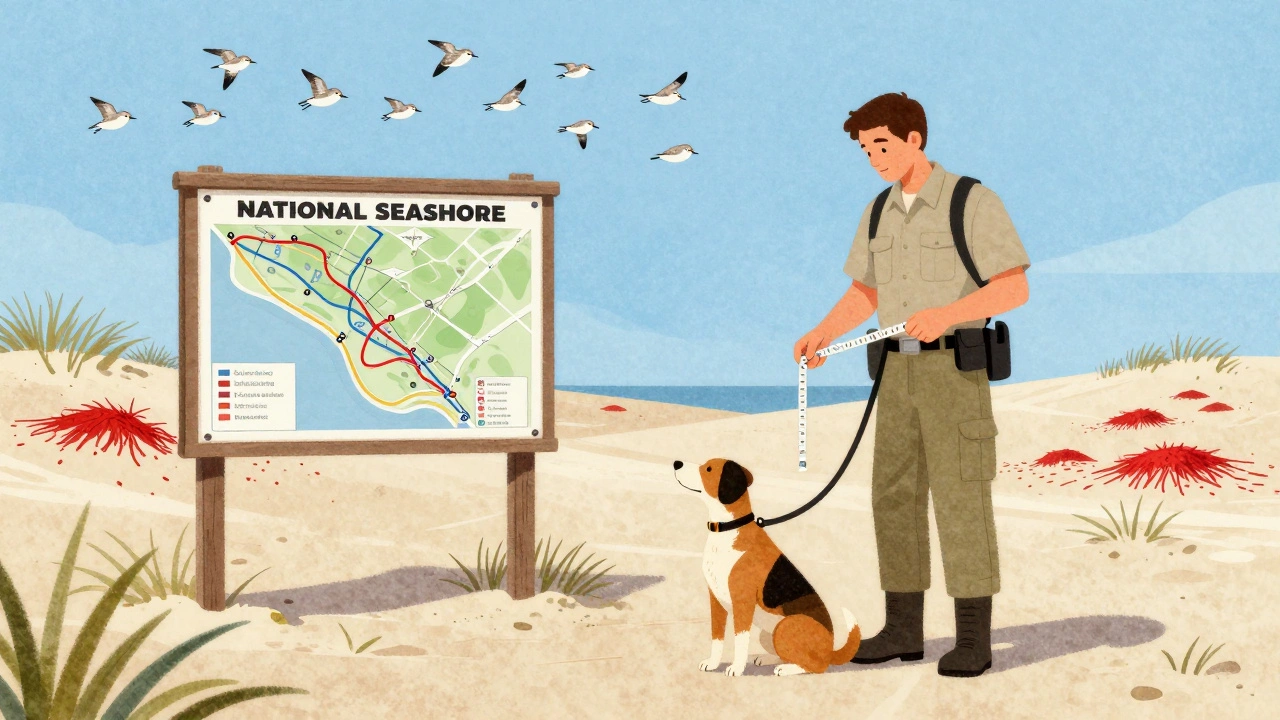
Most National Seashores require leashes 6 feet or shorter. Why? Longer leashes let dogs roam too far and get too close to wildlife. A 10-foot leash might seem harmless, but it gives your dog enough room to sneak into a nesting area before you can react. Rangers carry measuring tapes-and they’ve been known to use them.
Fines for violating leash rules range from $50 to $500 depending on the location and repeat offenses. In 2024, over 1,200 citations were issued across National Seashores for uncontrolled pets. Many of them were first-time visitors who thought their dog was "just being friendly."
What You Need to Bring
If you’re planning a trip, pack these essentials:
- A 6-foot or shorter leash (no retractables-they’re often banned)
- Water and a collapsible bowl (beach sand and saltwater aren’t safe to drink)
- Poop bags (mandatory in all parks-no exceptions)
- A towel or mat for your dog to rest on (hot sand can burn paw pads)
- A copy of the park’s pet policy printed or saved on your phone
Also, check the weather. Temperatures above 85°F can make sand too hot for bare paws. Test it with your hand-if it’s too hot to hold for 7 seconds, it’s too hot for your dog’s feet.
Alternatives If Your Dog Can’t Go
Not all National Seashores welcome dogs. If yours doesn’t, don’t cancel the trip. Many nearby state parks, county beaches, or private dog beaches offer dog-friendly access. For example:
- Instead of Cape Cod National Seashore, try Sandy Neck Beach in Barnstable-dogs allowed year-round on leash.
- Instead of Point Reyes, head to Tomales Bay State Park-dogs welcome on trails and beaches.
- Instead of Fire Island, visit Jones Beach State Park in New York-dogs allowed on the beach before 9 a.m. and after 5 p.m. from May to September.
These spots often have fewer restrictions and more space. Plus, they’re less crowded, which means a quieter, more relaxed day for both you and your pup.
Why These Rules Exist
It’s not about being mean. It’s about survival. Shorebirds like the piping plover are endangered. Their nests are barely visible-just a scrape in the sand. One startled bird can abandon its eggs. One dog can trample a nest. One human ignoring the rules can undo years of conservation work.
Since 2018, the National Park Service has reported a 34% increase in successful shorebird hatchings in areas where dog policies were strictly enforced. That’s not luck. It’s policy working.
Respecting these rules isn’t just about avoiding fines. It’s about letting wildlife thrive so future generations can see those tiny birds running along the tide line.
How to Find the Rules for Your Destination
Don’t guess. Don’t rely on Reddit or Facebook groups. Go straight to the source:
- Visit nps.gov
- Search for the specific National Seashore
- Click on "Plan Your Visit"
- Look for "Pets" or "Animals" under "Things to Do"
- Download or print the pet policy PDF
Some parks, like Acadia National Seashore, even have downloadable maps showing exactly where dogs are allowed. Save it to your phone. Bring it with you.
What to Do If You See Someone Breaking the Rules
If you spot an unleashed dog near nesting areas or someone ignoring cleanup rules, don’t confront them. Note the location, time, and description, then call the ranger station. Most parks have a 24-hour hotline. Rangers handle these situations professionally-and they appreciate the help.
Your quiet report could save a nest. It’s not about being a snitch. It’s about being part of the solution.
Final Thought: It’s a Privilege, Not a Right
Dogs aren’t banned from National Seashores because they’re bad. They’re restricted because the places we’re trying to protect are fragile. The same sand your dog loves to dig in is where a rare bird lays its only egg this year. The same breeze you both enjoy carries the scent of predators that could scare away nesting mothers.
Bringing your dog to a National Seashore is a privilege-and it comes with responsibility. Follow the rules, pack the essentials, and respect the space. Do that, and you’re not just a good pet owner. You’re helping protect something bigger than your vacation.
Are dogs allowed on all beaches at National Seashores?
No. Dogs are only allowed on specific beach sections at certain National Seashores, and even then, only if leashed. Many beaches ban dogs entirely during nesting season (April-September). Always check the official park website for exact rules.
Can I let my dog off-leash if it’s well-trained?
No. Even the most obedient dogs are required to stay on a leash 6 feet or shorter. This rule is strictly enforced to protect wildlife. Rangers do not make exceptions for training or behavior.
What happens if I don’t clean up after my dog?
Failing to clean up dog waste is a violation of federal park regulations. You can be fined between $50 and $500 depending on the location and whether it’s a repeat offense. Poop bags are required at all times.
Are service animals treated differently?
Yes. Service animals trained to assist people with disabilities are allowed everywhere the public is permitted, including beaches and buildings. Emotional support animals are not considered service animals under federal law and must follow the same rules as pets.
Is there a fee to bring my dog to a National Seashore?
No. There is no extra fee to bring your dog. However, you still need to pay the standard park entrance fee unless you have a pass like the America the Beautiful Pass. The pet policy is separate from entrance fees.