
Puppy Potty Training Schedule Generator
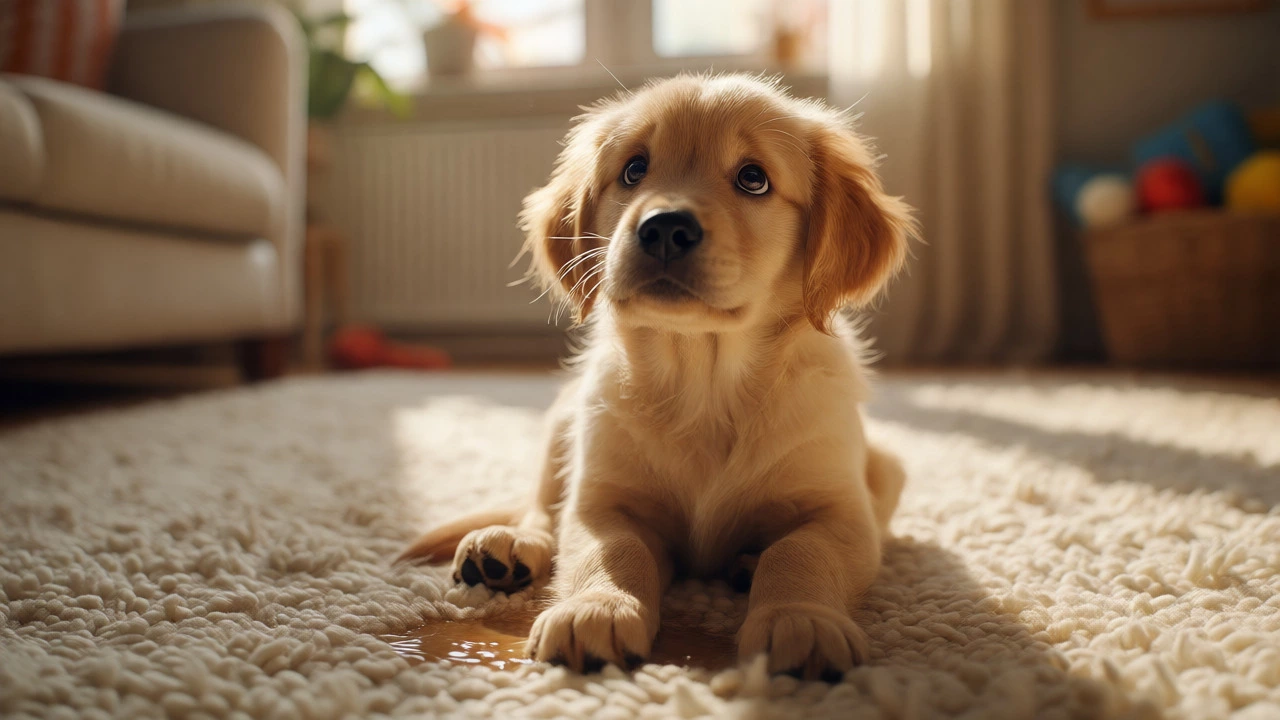
You just brought home a tiny ball of fluff. It’s eight weeks old, smells like milk and new carpet, and it looks at you with eyes so big they take up half its face. Then, five minutes later, there is a warm puddle on your living room rug. Panic sets in. You wonder if you made a mistake bringing them home this early. The short answer to can an 8 week old puppy be potty trained? is yes, but with a major asterisk. They can learn the concept, but their bodies aren’t fully ready to hold it for long stretches. This isn’t about stubbornness; it’s about biology.
At eight weeks, a puppy has just left its mother and littermates. This is a huge transition. In the wild, or even in a breeder’s home, the mother often stimulates elimination and cleans up after them. Now, that job falls to you. Understanding what is physically happening inside that small body helps you set realistic expectations. You aren’t failing as an owner if accidents happen. You are managing a biological process that takes time to mature.
The Biology Behind Bladder Control
Before you start counting hours between potty breaks, you need to understand the physiology. An eight-week-old puppy is a juvenile canine typically weighing between 1 to 5 pounds depending on breed, with immature sphincter muscles and a small bladder capacity. Their kidneys filter waste quickly because they drink frequently, but their bladder is tiny. Think of it like trying to hold water in a thimble versus a bucket. The signal from the brain to the bladder muscle (the detrusor) and the sphincter (the gatekeeper) is still developing.
Most veterinarians follow a simple rule of thumb: a puppy can hold its urine for one hour per month of age, plus one. So, an 8-week-old puppy (roughly 2 months old) can hold it for about three hours max during the day. At night, they might sleep longer, but only if they haven’t had too much water before bed. If you wait four hours to take them out, you’re setting them up to fail. They physically cannot hold it. This isn’t defiance; it’s anatomy.
Setting Up Your Success Strategy
Since you can’t rely on the puppy’s internal clock alone, you have to become their external clock. Consistency is your best tool here. You don’t need fancy gadgets, but you do need a strict schedule. Here is how to structure your first few days:
- The Immediate Wake-Up Rule: Take the puppy outside immediately upon waking from any nap. Sleep relaxes the sphincter muscles, so when they wake up, they need to go right away.
- The Post-Meal Window: Digestion triggers elimination. Take them out 10-15 minutes after every meal. Don’t let them play indoors during this window; keep them leashed or in a crate near the door.
- The Play Break: Excitement and physical activity stimulate the bowels. After 15-20 minutes of active play, offer a potty break.
- The Crate Schedule: Dogs naturally avoid soiling their sleeping area. Use a properly sized crate to encourage holding, but never leave an 8-week-old in a crate for more than two hours during the day.
Notice I didn’t say "wait until they tell you." At eight weeks, they rarely give clear signals. Some will sniff the floor, some will spin, and some will just squat without warning. Watch for subtle cues, but assume they need to go based on the schedule, not their behavior.
Crate Training: Your Best Friend or Worst Enemy?
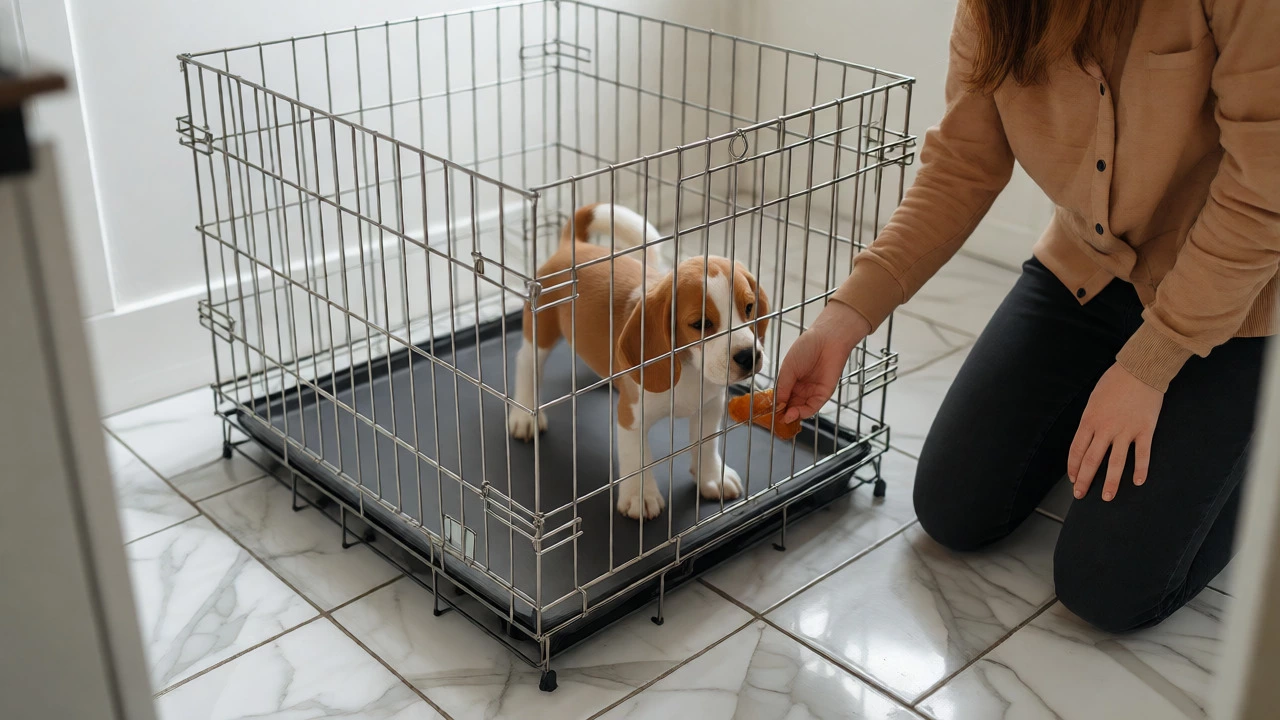
Many owners hate crates, thinking they are cruel. But for potty training, they are essential. Crate training is a method of confining a dog to a small, den-like space to utilize their natural instinct to keep their sleeping area clean. When used correctly, it teaches the puppy to "hold it" until released. However, size matters. If the crate is too big, the puppy will pee in one corner and sleep in the other. It needs to be just big enough for them to stand, turn around, and lie down comfortably.
| Breed Type | Approximate Weight | Recommended Crate Length |
|---|---|---|
| Toy (Chihuahua, Yorkie) | 1-3 lbs | 17-24 inches |
| Small (Beagle, Corgi) | 5-10 lbs | 24-30 inches |
| Medium (Labrador, Golden) | 15-25 lbs | 30-36 inches |
If you use a divider panel, adjust it as the puppy grows. Remember, the goal isn’t punishment. It’s safety and hygiene. Always pair the crate with positive experiences-treats, chew toys, and quiet time-so the puppy doesn’t associate confinement with distress.
The Power of Positive Reinforcement
Punishment does not work for potty training accidents. Yelling at a puppy for peeing on the rug is like yelling at a baby for crying. They don’t connect the scolding to the act; they just get scared of you. Instead, focus entirely on rewarding success. This is called positive reinforcement. When the puppy eliminates in the correct spot, reward them instantly. Not ten seconds later. Instantly.
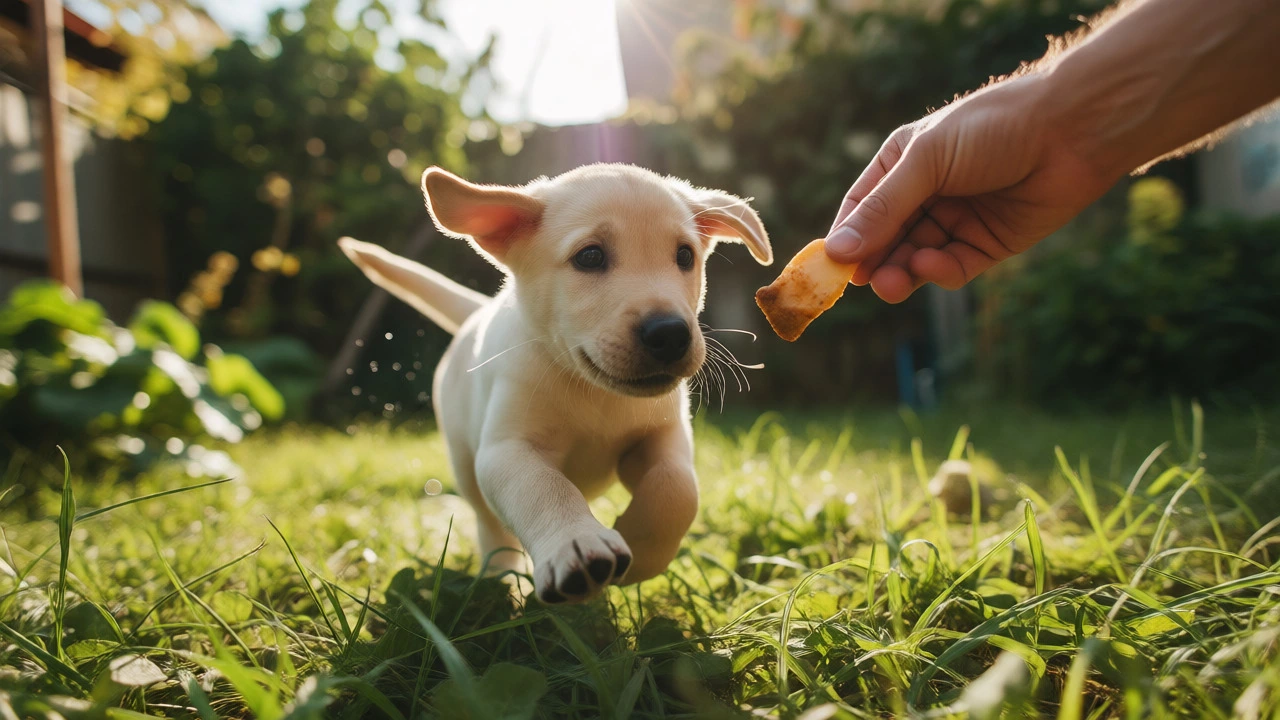
What counts as a reward? For most puppies, it’s high-value treats. Kibble works, but something smelly and soft like freeze-dried liver or boiled chicken is better. Pair the treat with verbal praise in a happy tone. Say "Good potty!" or "Yes!" while they are going, then deliver the treat immediately after they finish. This creates a semantic link in their brain: Peeing Outside = Good Things Happen.
Some owners try to catch the puppy mid-accident indoors. If you see them starting to squat, gently interrupt them (a sharp "Ah-ah" sound) and rush them outside. If they finish outside, praise heavily. If they don’t finish, don’t punish. Just clean it up thoroughly. Interrupting is tricky because if you scare them too much, they might learn to hide from you when they need to go, which leads to secret accidents behind the couch.
Dealing With Accidents Like a Pro
You will have accidents. Maybe twenty in the first week. That’s normal. How you handle them determines how fast you succeed. Never rub their nose in it. That’s an old myth that actually damages trust. Instead, use an enzymatic cleaner. Regular household cleaners remove the smell to human noses, but dogs can still smell the ammonia and uric acid crystals. If they smell their previous pee, they think it’s a designated toilet spot.
Enzymatic cleaners break down the organic compounds that cause odor. Brands like Nature’s Miracle or Rocco & Roxie are popular choices among professional trainers. Spray the area generously, let it soak, and let it air dry. Do not use steam cleaners or bleach, as heat can sometimes set the stain deeper into carpet fibers, and bleach can irritate a puppy’s sensitive skin if they walk over it.
Common Pitfalls to Avoid
Even with a good plan, owners make mistakes. Here are the top three traps to watch out for:
- Inconsistency: Taking them out at 7 AM one day and 9 AM the next throws off their routine. Stick to fixed times for feeding and potty breaks.
- Too Much Freedom Too Soon: Giving an 8-week-old free roam of the whole house is asking for trouble. Limit their access to one easy-to-clean room or use a playpen until they are reliably trained.
- Ignoring Nighttime Needs: Many owners forget that puppies wake up at night. Set an alarm for 3 AM if necessary. Letting them cry it out for six hours at this age usually results in a wet crate and a stressed puppy.
Also, beware of medical issues. If your puppy is having frequent accidents despite a strict schedule, or if the urine is very dark, bloody, or smells unusually strong, call your vet. Urinary tract infections (UTIs) are common in young puppies and require antibiotics, not more training.
When Will They Actually Get It?
Realistically, full reliability comes around four to six months of age. At eight weeks, you are building the foundation. You are teaching the association, not mastering the muscle control. By twelve weeks, you should see fewer accidents. By sixteen weeks, most puppies can hold it for four to five hours during the day. Patience is key. Every puppy learns at a different pace. Some grasp it in two weeks; others take three months. Neither means you have a "bad" dog.
Keep records. Write down when you feed them, when you take them out, and when accidents happen. Patterns emerge quickly. Maybe they always have an accident at 2 PM-that’s probably when they wake up from a nap. Adjust your schedule accordingly. Data beats guesswork.
How often should I take an 8-week-old puppy out?
Take them out every 1-2 hours during the day, plus immediately after waking up, eating, drinking, and playing. At night, expect to take them out once or twice unless they can sleep through the night without waking to eliminate.
Should I put pee pads inside the house?
It depends on your lifestyle. If you live in an apartment where going downstairs takes time, pads can be a helpful intermediate step. However, they can confuse puppies who think all rugs are toilets. If you use pads, place them in a specific area and gradually move them closer to the door before removing them entirely.
My puppy cries in the crate. Should I let them out?
If they cry for attention, ignore it until they settle. If they cry urgently and wiggle, they likely need to go. Take them directly outside on a leash. If they go, praise them. If they don’t go within 5 minutes, take them back in. This prevents them from learning that crying equals playtime.
What if my puppy poops inside but pees outside?
This is common. Bowel movements are harder to control than bladder emptying. Ensure you are taking them out after meals specifically, as digestion triggers bowel movements. Sometimes, adding a bit of pumpkin puree to their food can help firm up stools, making them easier to manage.
Is it too early to start potty training at 8 weeks?
No, 8 weeks is the ideal time to start. While they lack full physical control, their brains are highly receptive to learning routines. Starting now establishes habits that will pay off dividends as they grow.