
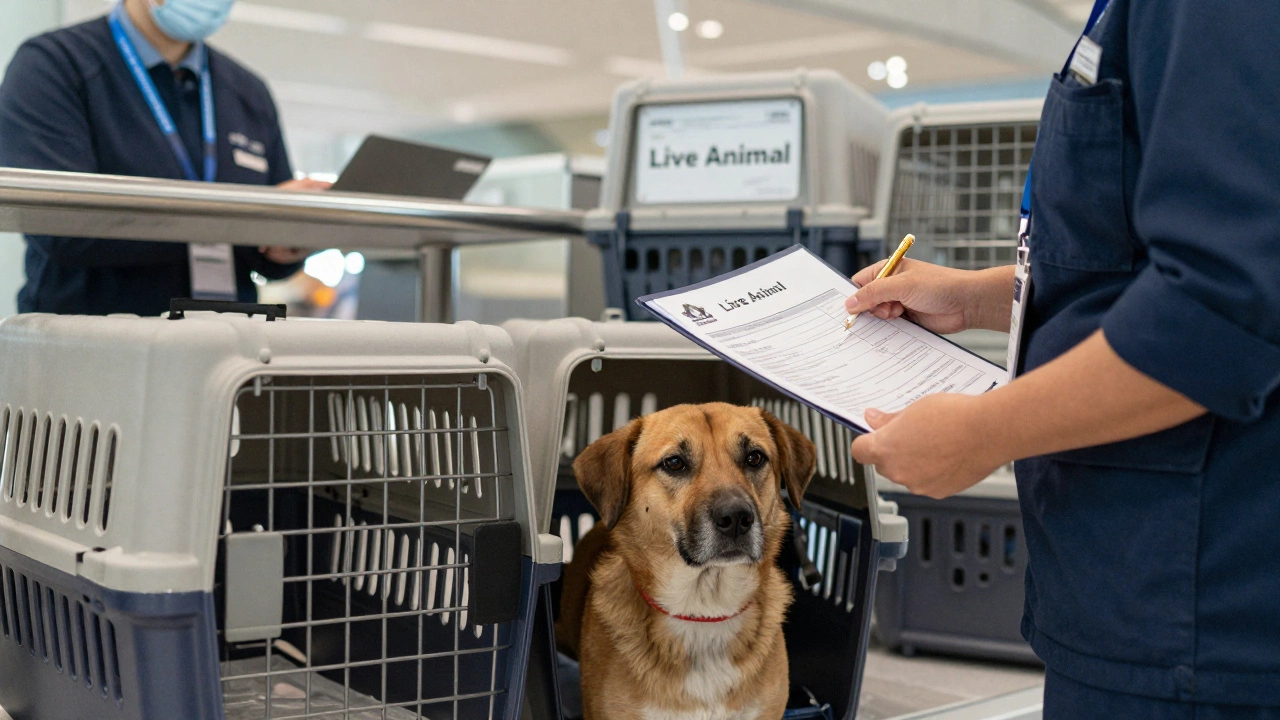
Pet Travel Eligibility Checker
Check if your dog can travel with you on a commercial airline based on weight, breed, and destination.
Your Dog's Details
Travel Details
Required Documentation
Estimated Costs
- Airline Cargo Fee
- IATA-Approved Crate
- Vet Health Certificate
- Total Estimated Cost
Recommended Airlines
Can you fly with a 25 lb dog? The short answer is yes-but not everywhere, not always, and not without planning. A 25-pound dog falls right into the gray zone of airline rules: too big for most cabin carriers, too small to qualify as a large pet in cargo. This isn’t just about weight-it’s about measurements, airline policies, health paperwork, and what kind of trip you’re taking. If you’ve ever stared at your dog’s carrier wondering if it’ll fit under the seat, you’re not alone. Thousands of pet owners face this same question every year. And the truth? Airlines don’t make it easy.
Why 25 lbs is the tricky zone
Most airlines draw a hard line at 20 lbs for in-cabin pets. That’s the typical combined weight limit for the dog and its carrier. A 25-pound dog, even in a lightweight carrier, pushes past that. That means your dog won’t fit under the seat. Not unless you’re flying on a regional jet with unusually large under-seat space-and even then, it’s a gamble. At 25 lbs, your dog is officially considered a medium-sized pet. That puts them in the cargo hold category for nearly every major U.S. and European airline. But cargo isn’t just a baggage hold. It’s pressurized, temperature-controlled, and monitored-but it’s still a stressful experience for most dogs. You’re trading convenience for safety. And that’s okay-if you know how to do it right.What airlines allow 25 lb dogs in cargo
Almost all major airlines accept dogs in cargo, but their rules vary. Here’s what the top carriers require in 2026:| Airline | Max Weight (Pet + Carrier) | Temperature Restrictions | Booking Required? | Restrictions |
|---|---|---|---|---|
| Delta Air Lines | 100 lbs | Not allowed if ground temp exceeds 85°F or drops below 45°F | Yes | Brachycephalic breeds (pugs, bulldogs) banned year-round |
| American Airlines | 100 lbs | Not allowed if ground temp exceeds 85°F or drops below 20°F | Yes | Restrictions on certain routes during summer |
| United Airlines | 100 lbs | Not allowed if ground temp exceeds 85°F or drops below 45°F | Yes | Must use approved crate; no live animals on flights over 12 hours |
| Alaska Airlines | 100 lbs | Not allowed if ground temp exceeds 85°F or drops below 45°F | Yes | Most pet-friendly; allows up to 2 pets per passenger |
| JetBlue | 20 lbs (in-cabin only) | N/A | No cargo option | Does not accept pets in cargo at all |
| British Airways | 8 kg (17.6 lbs) for cabin; cargo up to 75 kg | Not allowed if ground temp exceeds 85°F | Yes | Only accepts pets on select routes; 48-hour advance notice |
| Lufthansa | 8 kg for cabin; cargo up to 75 kg | Not allowed if ground temp exceeds 86°F | Yes | Requires EU pet passport and rabies certificate |
Notice something? Most airlines ban pet travel during extreme heat. That’s not a suggestion-it’s a rule. If it’s 90°F in Atlanta or 100°F in Phoenix, your flight will be denied. Airlines have learned the hard way. In 2023, over 300 pet deaths were reported across U.S. airlines during summer months. That’s why rules tightened. Always check the weather forecast for your departure, arrival, and any layover cities.
What you need before you book
Flying with a 25 lb dog isn’t like booking a ticket. You’re shipping a living animal. That means paperwork. Here’s your checklist:- Health certificate: Issued by a licensed vet within 10 days of travel. Required by all U.S. airlines and most international ones.
- Rabies vaccination record: Must be up to date. For international travel, you’ll need an EU Pet Passport or USDA form 7001.
- Airline-approved crate: Must be IATA-compliant. That means it’s sturdy, has a leak-proof bottom, and has handles and labels for "Live Animal." Your dog must be able to stand, turn, and lie down comfortably inside.
- Flight reservation: You cannot just show up with your dog. Cargo pet transport must be booked in advance-usually 48 to 72 hours before departure.
- Proof of microchip: Required for international travel and increasingly common even for domestic flights.
Don’t skip the vet visit. Many dogs get stressed during travel. Your vet can recommend a mild sedative if your dog is anxious-but many airlines ban sedatives because they can interfere with breathing at altitude. Always ask.

How to pick the right crate
A 25 lb dog needs a crate that’s at least 24 inches long, 18 inches wide, and 20 inches tall. But size isn’t everything. The crate must be made of hard plastic with metal bars on the front for ventilation. No soft-sided carriers. No wire crates unless they’re specifically labeled IATA-approved. Brands like Petmate Ultra and Sherpa are popular for good reason. They’ve been tested and approved by airlines. Avoid cheap crates from Amazon or Walmart. I’ve seen too many dogs escape during loading because the latch failed. One owner told me her dog chewed through the plastic door of a no-name crate during a layover. She missed her flight. The airline didn’t cover the cost of rebooking.What to do the day of the flight
Arrive at the airport at least 3 hours early. Cargo check-in is separate from passenger check-in. You’ll hand over your dog at the airline’s pet cargo desk. Bring:- Your vet documents (printed copies)
- Water bottle attached to the crate (no food-dogs can get sick flying on a full stomach)
- A familiar blanket or toy (something that smells like home)
- Your phone number and emergency contact written on the crate
Don’t say goodbye at the gate. That’s a myth. Most airlines don’t allow owners near the cargo area. You’ll drop your dog off at the cargo facility, then head to your gate. Your dog will be loaded last and unloaded first. That’s the good news. The bad news? You won’t see them until you’re at baggage claim.
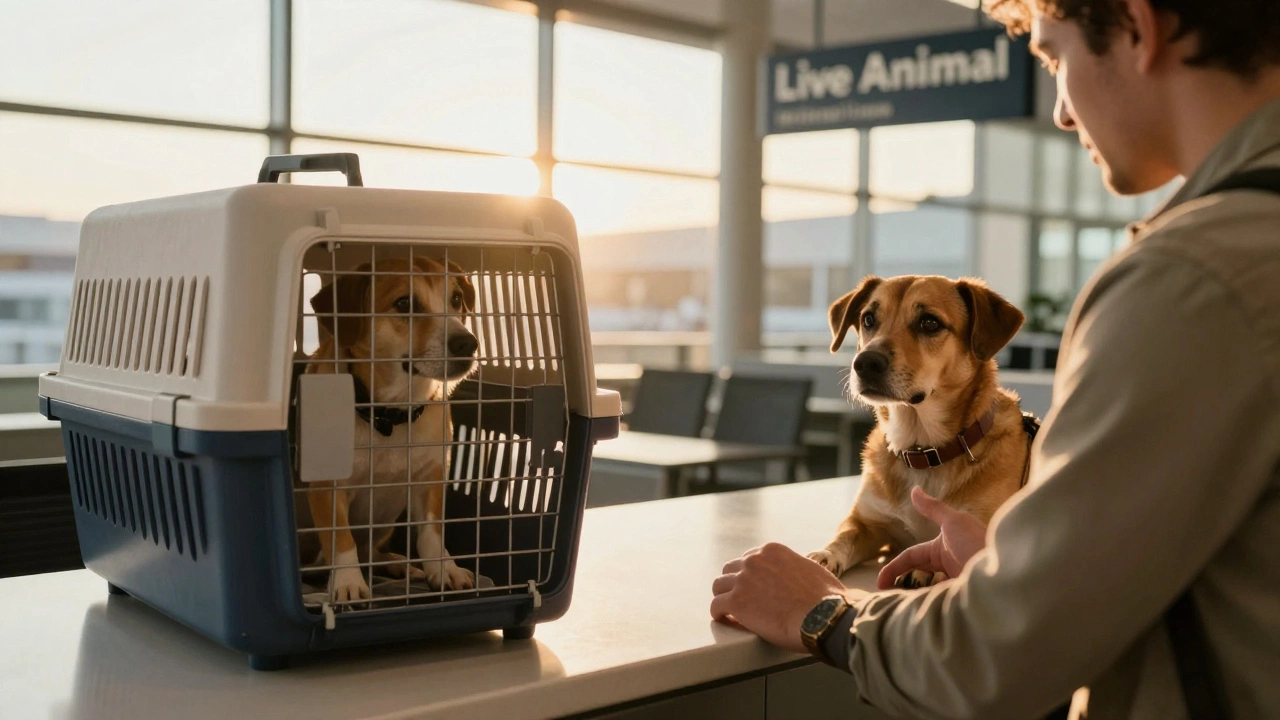
Is flying with a 25 lb dog worth it?
It depends. If you’re moving across the country or traveling for work, yes. If you’re just going on a weekend trip to visit family? Think again. The cost of cargo transport ranges from $250 to $700 one-way. Add vet fees, crate purchase, and possible quarantine costs (especially for international trips), and you’re looking at $1,000 or more.And the stress? Real. Dogs can panic. They can overheat. They can get lost in transit. In 2024, the U.S. Department of Transportation reported 11 dog deaths and 37 injuries on U.S. flights. Most happened during layovers or extreme weather.
Ask yourself: Could you drive? Could you board your dog at a trusted facility? Could you find a pet-friendly rental and stay longer? Sometimes, the safest option isn’t the fastest one.
Alternatives to flying
If flying feels too risky, here are other options:- Professional pet transport services: Companies like PetRelocation or Dogtainers specialize in door-to-door pet shipping. They handle paperwork, crates, and customs. Costs start at $800 but include tracking and vet support.
- Driving: If you’re within 1,000 miles, driving gives you control. Bring water, stops every 2-3 hours, and a crash-tested harness. Your dog will thank you.
- Train travel: Amtrak allows dogs up to 20 lbs in-cabin. No 25 lb dogs. But if you’re on the East Coast, check regional rail services-some allow larger pets in checked baggage.
- Ground transport with a pet sitter: Hire someone to care for your dog while you travel. It’s cheaper, safer, and less stressful for everyone.
Final tips for flying with a 25 lb dog
- Book flights with direct routes. Layovers increase risk. - Avoid summer months. Heat is the #1 killer. - Never feed your dog 4-6 hours before the flight. - Label the crate with "Live Animal," your name, and your phone number. - Take a recent photo of your dog. If something goes wrong, you’ll need it. - Consider pet travel insurance. It won’t cover everything, but it can help with vet bills if your dog gets sick during transit.There’s no perfect way to fly with a 25 lb dog. But there is a smart way. Do the research. Talk to your vet. Choose the right airline. Prepare the crate. And if you’re not 100% sure? Wait. Your dog’s safety isn’t something you should rush.
Can I bring a 25 lb dog in the cabin?
Almost never. Most airlines cap in-cabin pet weight at 20 lbs total (dog + carrier). A 25 lb dog will exceed that limit, even in a lightweight carrier. Only a few regional airlines might allow it on smaller jets, but it’s rare and not guaranteed. You’ll almost always need to check your dog as cargo.
How much does it cost to fly a 25 lb dog?
Domestic flights cost between $250 and $700 one-way for cargo transport. International flights can cost $800-$1,500, depending on destination, paperwork, and quarantine rules. Add $100-$200 for a new IATA-approved crate, $75-$150 for a vet health certificate, and possible fees for layovers or customs. Total cost often exceeds $1,000.
What’s the best airline for a 25 lb dog?
Alaska Airlines is widely considered the most pet-friendly for cargo travel. They have fewer restrictions, allow two pets per passenger, and offer real-time tracking. Delta and United also have solid systems, but Alaska’s customer service for pets is consistently rated higher. For international travel, Lufthansa and British Airways have reliable cargo services if you meet their documentation rules.
Can I sedate my dog for the flight?
Most airlines ban sedatives for pets in cargo. They can interfere with breathing at high altitudes and increase the risk of heart or respiratory failure. Instead, ask your vet about calming supplements like L-theanine or pheromone sprays. A familiar blanket or toy can also help reduce anxiety without medication.
Do I need a pet passport for a 25 lb dog?
Only if you’re flying internationally. The EU Pet Passport is required for travel to Europe and includes proof of rabies vaccination, microchip registration, and a vet health certificate issued within 10 days of travel. The U.S. doesn’t require a passport for domestic flights, but you still need a vet health certificate and rabies records.
Can my dog fly if it’s a brachycephalic breed?
No. Airlines like Delta, United, and American ban brachycephalic breeds-such as pugs, bulldogs, French bulldogs, and Shih Tzus-from flying in cargo year-round. Their short snouts make them more vulnerable to heat and breathing problems at altitude. Even if your dog is under 25 lbs, if it’s a brachycephalic breed, cargo travel is not allowed.
What if my dog has to go through customs?
Some countries require mandatory quarantine for incoming pets. The UK, Australia, and Japan have strict rules. Others, like the EU, only require documentation. Always check the destination country’s animal import rules. Delays can last from a few days to several weeks. Plan ahead-don’t assume your vet’s paperwork is enough.
Can I fly with two 25 lb dogs?
Most airlines allow only one pet per passenger in cargo. Alaska Airlines is an exception-they allow up to two pets per passenger, as long as each is in its own approved crate. If you have two dogs, you’ll need to book two separate cargo shipments or consider shipping one via a professional pet transport service.
If you’re planning to fly with your 25 lb dog this year, start now. Book your vet appointment. Measure your crate. Check the weather. Call the airline. Don’t wait until the day before. Your dog’s safety depends on the steps you take today.