

Service Dog Rights & Response Simulator
Select a Scenario
Choose a situation you might face as a handler.
Analysis & Recommended Action
Illegal RequestYou’re walking into a hotel lobby or boarding a flight with your service dog. Suddenly, a staff member stops you and demands to see "papers" proving the dog is a service animal. It’s an awkward, stressful moment that many handlers face. The short answer? In most places, including the United States under the Americans with Disabilities Act (ADA), businesses cannot ask for specific documentation, certification cards, or medical records for your service dog.
This confusion happens constantly because people mix up service dogs with emotional support animals (ESAs) or therapy dogs. Each has different legal protections, and knowing the difference is the only way to keep your access rights intact during travel or daily life.
What exactly counts as a service dog?
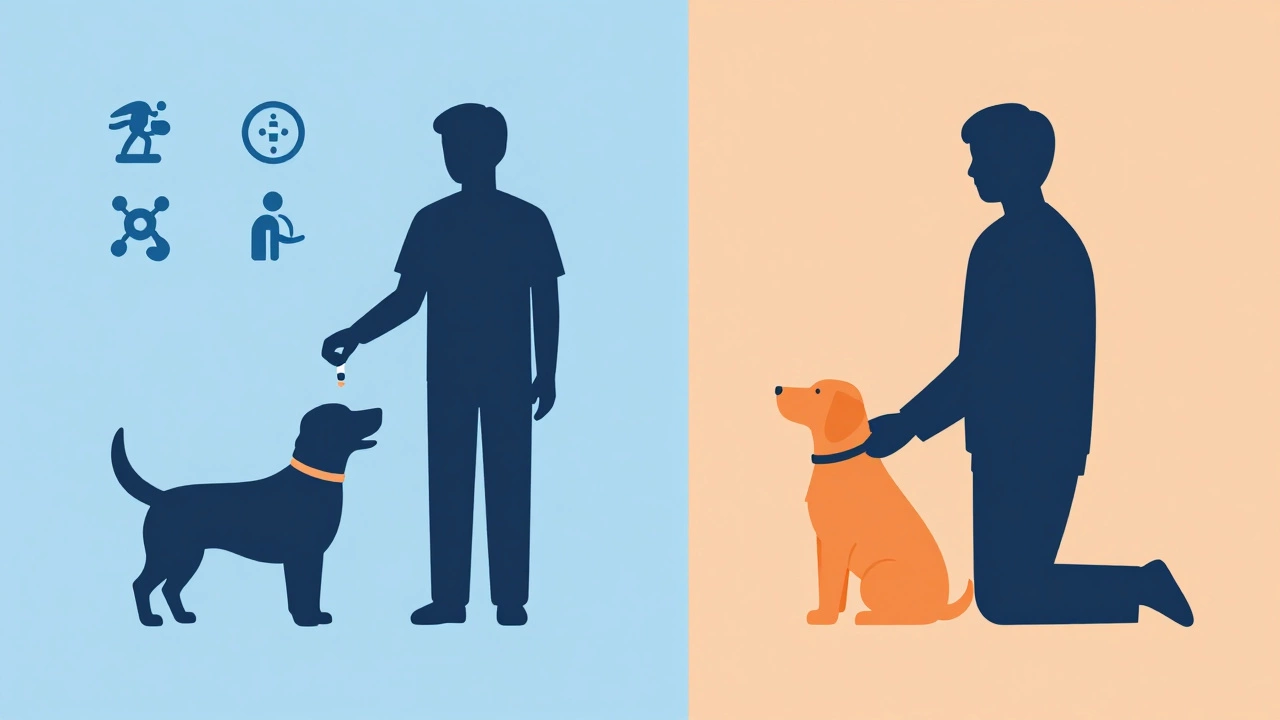
Service Dog is a dog that is individually trained to do work or perform tasks for a person with a disability. The key word here is "trained." A service dog isn’t just a comforting presence; it performs specific actions like alerting to seizures, retrieving medication, guiding someone who is blind, or interrupting panic attacks. Under federal law in the US, this definition applies regardless of whether the dog has a vest, harness, or any official paperwork.
The Two Questions Rule: What Staff Can Actually Ask
If you are traveling within the United States, the Department of Justice (DOJ) sets clear boundaries for public accommodations. Businesses can only ask two specific questions if it is not obvious what your dog does:
- Is the dog a service animal required because of a disability?
- What work or task has the dog been trained to perform?
That’s it. They cannot ask about the nature of your disability. They cannot demand to see a license, certification, or ID card. They cannot ask for a demonstration of the task. If a hotel manager asks for your dog’s "papers," they are likely misinformed about the law. You have the right to politely correct them by stating that federal law does not require such documentation.
In Ireland, where I live, the rules are slightly different but follow similar principles regarding discrimination. The Disability Act 2005 allows assistance dogs access to public premises. While there is no single national registry, organizations like Assistance Dogs Ireland provide identification cards. However, even here, the primary requirement is that the dog is trained and under control. The burden of proof shouldn't fall on producing a stack of medical files at the front desk.
Why Do People Keep Asking for Papers?
The confusion stems from the rise of online "certification" mills. For years, websites sold fake service dog vests and registration certificates for a fee. These documents have zero legal standing, yet many business owners believe they are mandatory. When staff members see a dog without a vest, they assume something is wrong. When they see a dog with a vest, they might still ask for the "certificate" that came with it.
This creates a catch-22 for legitimate handlers. You might carry a registration card simply to avoid conflict, even though you know it’s not legally required. This is a common strategy called "de-escalation." It doesn’t mean the paper is valid; it means you’re choosing peace over a lengthy legal debate while trying to check into your room.
Service Dogs vs. Emotional Support Animals: The Critical Difference
This is where most travelers get tripped up. An Emotional Support Animal (ESA) is an animal that provides comfort just by being present. ESAs are not trained to perform specific tasks related to a disability. Because of this, they do not have the same public access rights as service dogs.
Under the Air Carrier Access Act (ACAA), airlines in the US changed their policies significantly in recent years. As of 2021, airlines are no longer required to transport ESAs as service animals. They must still accommodate service dogs, but they may require DOT forms attesting to the dog’s training and behavior. This is not "paperwork" proving the dog’s status as a service animal per se, but rather a declaration of its health and training standards. Always check the specific airline’s policy before booking, as requirements can vary between carriers like Delta, United, or Aer Lingus.
| Animal Type | Public Access Rights | Housing Rights (US) | Airline Transport (US) | Requires Specific Training? |
|---|---|---|---|---|
| Service Dog | Yes (Stores, Hotels, Restaurants) | Yes (Fair Housing Act) | Yes (Cabin, Free) | Yes (Task-specific) |
| Emotional Support Animal | No | Yes (Fair Housing Act) | No (Treated as pet) | No |
| Therapy Dog | No (Only invited locations) | No | No (Treated as pet) | Yes (Visitation skills) |
Traveling Abroad: Rules Change by Country
If your holiday takes you outside the US or Ireland, the concept of "papers" becomes much more real. Many European countries, such as Germany and France, have strict regulations regarding assistance dogs. While they recognize the EU-wide principle of non-discrimination, some local businesses may expect to see identification issued by a recognized organization.
In Japan, for example, service dogs must be registered with the Ministry of Health, Labour and Welfare. Without this registration, you could be denied entry to trains or hotels. If you are traveling internationally, research the specific laws of your destination country. Carrying a letter from your doctor explaining your need for the dog can be helpful, even if it’s not strictly "legal proof" in every jurisdiction. It serves as a bridge for communication when language barriers exist.
What to Do When Denied Entry
Despite knowing your rights, you might still face resistance. Here is a practical step-by-step approach to handle these situations without escalating tension unnecessarily:
- Stay Calm: Anger rarely helps. Speak clearly and firmly.
- Clarify the Law: Politely explain that under the ADA (or local equivalent), documentation is not required.
- Offer the Two Answers: Answer the two permitted questions briefly. "Yes, this is my service dog. He alerts me to anxiety episodes."
- Ask for a Manager: Front-line staff often lack proper training. A manager may be more familiar with compliance issues.
- Document Everything: Take notes on names, times, and quotes. If you are denied access, this information is crucial for filing a complaint with the DOJ or local civil rights commission.
Remember, a business can only exclude your service dog if it poses a direct threat to health or safety, or if it fundamentally alters the nature of their service. If your dog is well-behaved and housebroken, they generally cannot turn you away.

Preparing Your Dog for Travel
Even with perfect legal knowledge, a poorly behaved dog will cause problems. No amount of paperwork will save you if your dog barks excessively, jumps on guests, or eliminates indoors. Your dog’s behavior is your best credential.
Before you book that dog-friendly holiday, ensure your service dog masters these core skills:
- Sit and Stay: Essential for restaurants and hotel lobbies.
- Leave It: Prevents scavenging food from tables or floors.
- Settle Down: The ability to lie down and relax in a confined space (like under a table) for long periods.
- Ignore Distractions: Other dogs, loud noises, and busy crowds should not break their focus on you.
Consider carrying a small kit with waste bags, a portable water bowl, and a mat. Offering to place a mat under your dog shows respect for the establishment’s cleanliness and can reduce staff anxiety.
Frequently Asked Questions
Do I need a vest for my service dog?
No. Federal law does not require service dogs to wear vests, ID tags, or harnesses. However, wearing a vest can help signal to the public that the dog is working, which may reduce unwanted interactions and make staff less likely to question the dog's purpose.
Can a hotel charge me a pet fee for my service dog?
Absolutely not. Hotels are prohibited from charging extra fees or deposits for service animals. They can only charge you if your dog causes damage to the property, just as they would charge any guest for damages.
What if the hotel says they have a no-pet policy?
A no-pet policy does not apply to service animals. Service dogs are not considered pets; they are medical equipment. The hotel must make reasonable modifications to their policy to allow you and your dog to stay.
Is an emotional support animal letter enough for air travel?
In the US, no. Airlines currently treat emotional support animals as regular pets. You would need to pay pet fees and follow pet travel guidelines. Only dogs trained to perform specific tasks qualify as service animals for free cabin transport.
Can I register my dog online as a service dog?
You can register your dog with various private websites, but these registrations have no legal power. They do not grant your dog special rights. Relying on these certificates can sometimes backfire if staff realize they are not government-issued documents.