

Service Dog Question Checker
Ask the Right Question
Under the ADA, businesses can only ask two questions about service dogs:
1. Is this dog required because of a disability?
2. What work or task has this dog been trained to perform?
All other questions are illegal under federal law
You walk into Walmart with your dog, head high, leash steady. A store associate approaches. "Is this dog a service animal?" You pause. Is that legal? Do they have the right to ask? And what if you’re not sure how to answer without sounding defensive? This isn’t just about Walmart-it’s about knowing your rights when you’re out with a service dog, especially during holiday shopping season when stores are packed and stress is high.
What the Law Actually Allows
The Americans with Disabilities Act (ADA) is clear: businesses can ask only two questions when someone brings a dog into their store. They can ask: "Is this dog required because of a disability?" and "What work or task has this dog been trained to perform?" That’s it. No more. No asking for documentation. No asking for proof of certification. No asking what the disability is. No asking the dog to demonstrate the task on the spot.
Walmart, like every other public business in the U.S., must follow these rules. They can’t refuse entry just because the dog doesn’t have a vest, tag, or ID card. Many service dog owners don’t use vests at all-some because they don’t want to draw attention, others because their dog is trained for tasks that don’t require visible gear, like alerting to seizures or providing deep pressure therapy for anxiety.
Why Walmart Employees Ask
It’s not that Walmart wants to be mean. Most employees are just trying to follow what they think the rules are. Many have been trained by managers who, in turn, were misinformed. You’ll often hear things like, "We need to make sure it’s not just a pet," or "We have to protect other customers." Those concerns are understandable, but they don’t override federal law.
Real service dogs are trained to behave in public. They don’t bark, pull on leashes, or jump on people. They stay quiet near checkout lines, walk calmly beside their handler, and don’t sniff or beg for food. If your dog does those things, it’s likely not a trained service dog-and that’s okay. But that’s not the store’s job to decide. Only if the dog is out of control or poses a direct threat can the business ask you to remove it.
What They Can’t Ask
Here’s what Walmart staff are not allowed to say or do:
- "Show me your service dog certificate." (There’s no official national registry.)
- "Is your dog trained?" (They can ask what tasks the dog performs, but not if it’s "trained." All service dogs are trained by definition.)
- "Can I pet it?" (Never ask to pet a service dog-it’s working.)
- "Do you have a doctor’s note?" (No documentation is required under ADA.)
- "Why do you need a service dog?" (That’s private medical information.)
Some employees might still ask these things out of habit or confusion. That doesn’t make it legal. You’re not obligated to answer beyond the two permitted questions.
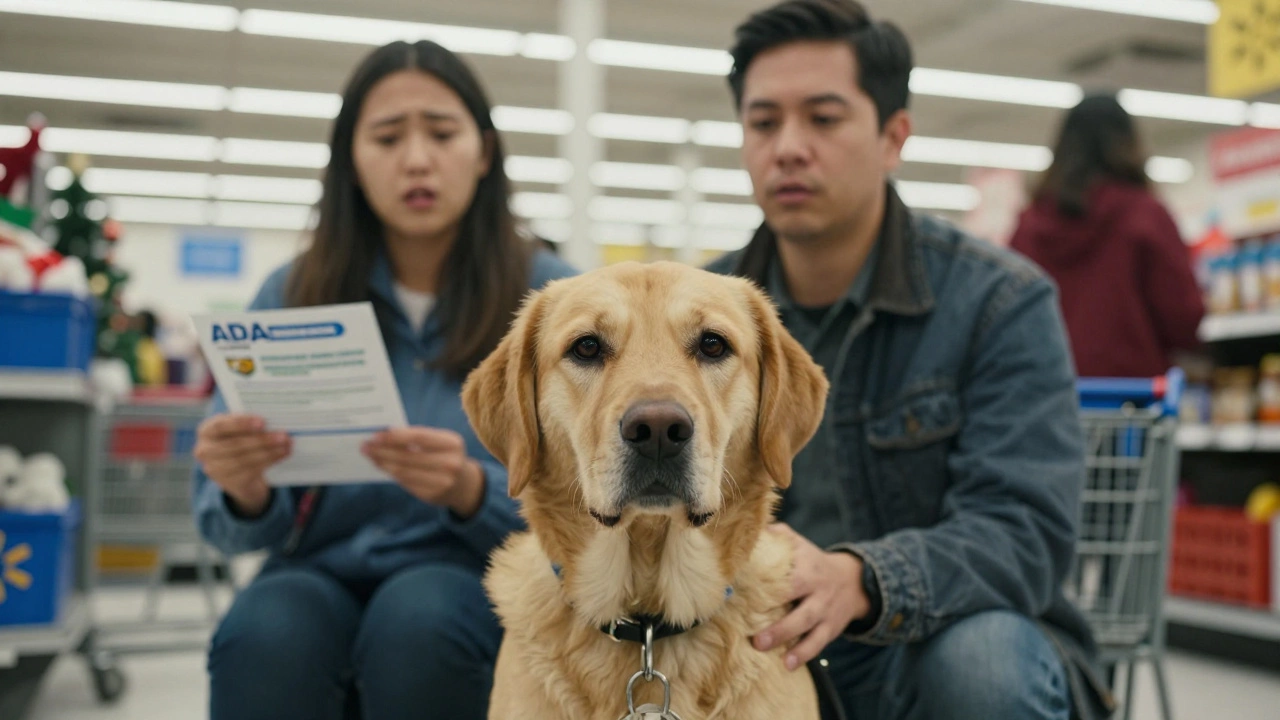
What If They Refuse Entry?
If a Walmart employee tells you to leave because your dog isn’t "official," you have options. First, stay calm. Get the employee’s name or badge number. Ask to speak with a manager. If the manager still refuses, politely say: "Under the ADA, I’m allowed to enter with my service dog. If you deny me access, I will file a complaint with the Department of Justice."
Most managers will back down when they hear that. Stores don’t want lawsuits. The U.S. Department of Justice has filed multiple cases against retailers who wrongly denied service dog access-and won. In 2023, a Walmart in Ohio paid $15,000 in damages after refusing entry to a veteran with PTSD and his service dog. The DOJ made it clear: no exceptions.
What About Emotional Support Animals?
This is where things get messy. Emotional support animals (ESAs) are not the same as service dogs. ESAs provide comfort through their presence but aren’t trained to perform specific tasks. The ADA does not protect ESAs in public places. Walmart can legally deny entry to an ESA.
Some people confuse the two. You might see people walking around with dogs in "ESA" vests, hoping to get into stores. That’s misleading. It’s not illegal to dress up a pet as an ESA-but it’s unfair to people who rely on real service dogs. When someone brings an untrained dog into a store, it makes it harder for those with legitimate needs. It also gives businesses reason to question every dog they see.
So if your dog is an ESA, don’t expect access to Walmart. But if your dog is trained to do tasks like interrupting panic attacks, retrieving medication, or guiding you through crowded aisles-you’re protected by law.
How to Handle the Conversation
You don’t have to argue. You don’t have to explain your disability. Just say:
- "Yes, this dog is required because of my disability."
- "It’s trained to perform [specific task], like alerting me to low blood sugar."
That’s it. End of conversation. If they press further, repeat: "I’ve answered the only two questions allowed under the ADA. I’m here to shop, not debate the law."
Some people worry this sounds rude. But you’re not being rude-you’re standing up for your rights. The law doesn’t require you to be polite to someone breaking it. And honestly? Most service dog handlers have been asked this dozens of times. They’ve learned to be calm, firm, and brief.

What You Can Do to Help
If you’re a service dog owner, you can help reduce confusion. Wear a simple vest or leash tag that says "Service Dog - Do Not Pet." It doesn’t have to be fancy. Just clear. It signals to staff that you know your rights and your dog is working. It also helps avoid unnecessary questions.
Carry a small card with the two ADA questions printed on it. If someone keeps asking, hand it to them. Most employees will stop and check it. It takes the pressure off you.
And if you see someone being harassed for their service dog, speak up. Say quietly to the employee: "That’s against the ADA. They’ve answered the only two questions allowed." You might be the reason someone gets to shop in peace.
Service Dogs During the Holidays
The holidays are the busiest time of year for service dog teams. Crowds, loud music, flashing lights, and long lines can be overwhelming-even for the most trained dog. If you’re heading to Walmart this season, plan ahead.
- Go during off-peak hours if you can-early morning or midweek.
- Bring treats your dog doesn’t usually get, to help with focus.
- Let your dog rest before you go. A tired dog is a better dog.
- Have a plan for if things get too loud or busy. Know where exits are.
Remember: your service dog isn’t just a pet. It’s your medical equipment. It helps you breathe, walk, eat, sleep, and live. You deserve to shop without being questioned like a suspect.
Final Reminder: Your Rights Are Clear
Walmart can ask if your dog is a service dog. But they can’t demand proof. They can’t make you explain your condition. They can’t refuse you because your dog doesn’t look "official." The law is on your side.
And if they still say no? File a complaint. Visit ada.gov for the official complaint form. It takes five minutes. And it helps make sure the next person doesn’t have to fight the same battle.
You’re not asking for special treatment. You’re asking for the same access everyone else has. And that’s not just legal-it’s fair.
Can Walmart ask for proof that my dog is a service dog?
No. Under the ADA, businesses are not allowed to ask for documentation, certification, or proof of training. They can only ask two questions: whether the dog is required because of a disability and what task it has been trained to perform.
What if my dog doesn’t wear a vest? Will Walmart still let me in?
Yes. Service dogs are not required by law to wear vests, tags, or any identifying gear. Many handlers choose not to use them to avoid unwanted attention. The dog’s behavior and training matter-not its accessories.
Can Walmart ban my service dog if it’s a certain breed?
No. The ADA does not allow breed restrictions for service animals. Even if Walmart has a policy against pit bulls, Rottweilers, or other breeds, they cannot enforce it against service dogs. The dog’s behavior, not its breed, determines access.
Are emotional support animals allowed in Walmart?
No. Emotional support animals (ESAs) are not protected under the ADA because they are not trained to perform specific tasks. Walmart and other businesses can legally deny entry to ESAs. Only service dogs trained to assist with disabilities have public access rights.
What should I do if Walmart refuses to let me in with my service dog?
Stay calm and ask to speak with a manager. If they still refuse, state clearly that you’re protected under the ADA and will file a complaint with the Department of Justice. Most managers will back down. If not, document the incident-name, time, location-and file a complaint at ada.gov. This helps protect others too.