
Pet Travel Airline Comparison Tool
Select Your Pet Travel Details
Recommended Airlines for Your Pet
Select your pet travel details to see airline recommendations
When you’re planning to fly with your pet, one of the first things you wonder is: do airlines feed pets in cargo? The short answer? No - not in the way you might hope. Airlines don’t hand out snacks or water bowls to pets in cargo like they do for passengers. But that doesn’t mean your pet goes hungry or thirsty. There are rules, procedures, and best practices that actually do keep them safe - if you know how to prepare.
What Happens to Pets in Cargo?
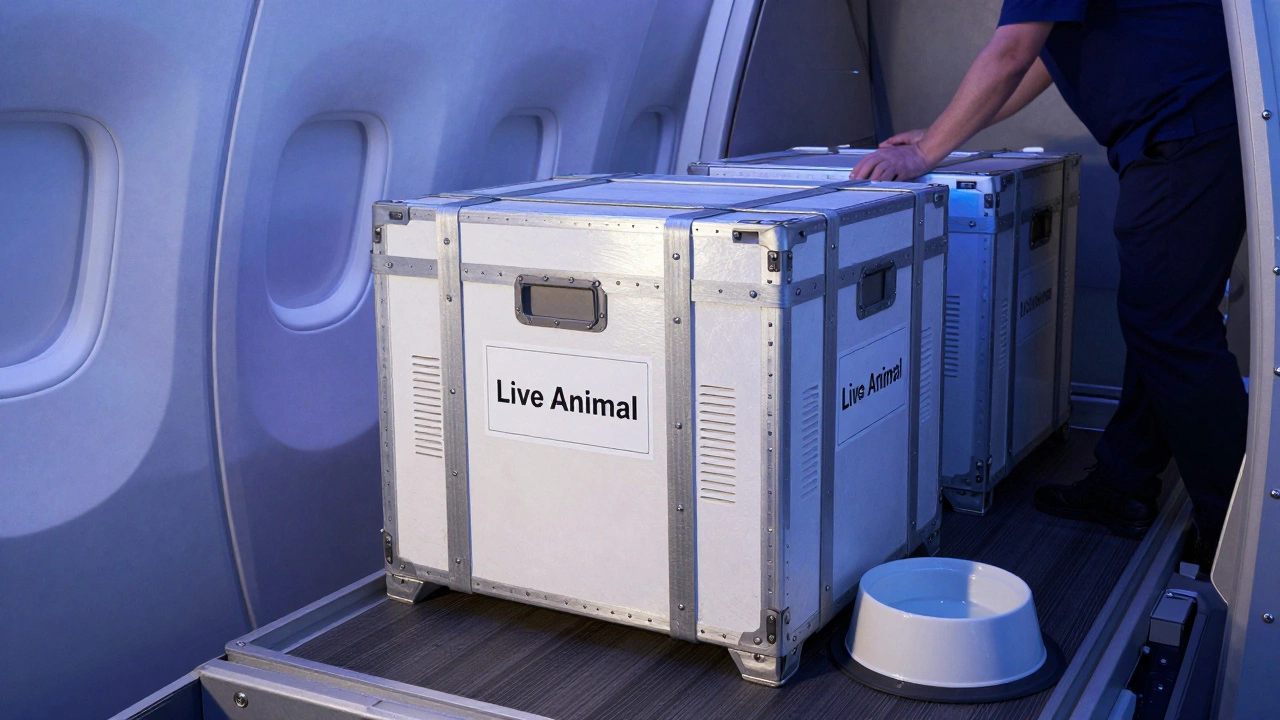
Pets traveling in cargo aren’t just tossed into a box and forgotten. Most major airlines use climate-controlled, pressurized cargo holds designed specifically for live animals. These areas are kept at the same temperature and pressure as the passenger cabin. The holds are also monitored constantly during flight. Pets are loaded last, after baggage, and unloaded first, before any other cargo. This minimizes time spent in the hold and reduces stress.But here’s the thing: no airline employee opens crates during flight to give food, water, or cuddles. Even if your pet is a nervous pup or a senior cat, the cargo hold stays sealed. This isn’t negligence - it’s safety. Opening crates mid-flight could cause chaos, injury, or even a dangerous shift in cargo weight. So while it might feel cruel, it’s actually the safest option.
How Are Pets Hydrated and Fed Before Flight?
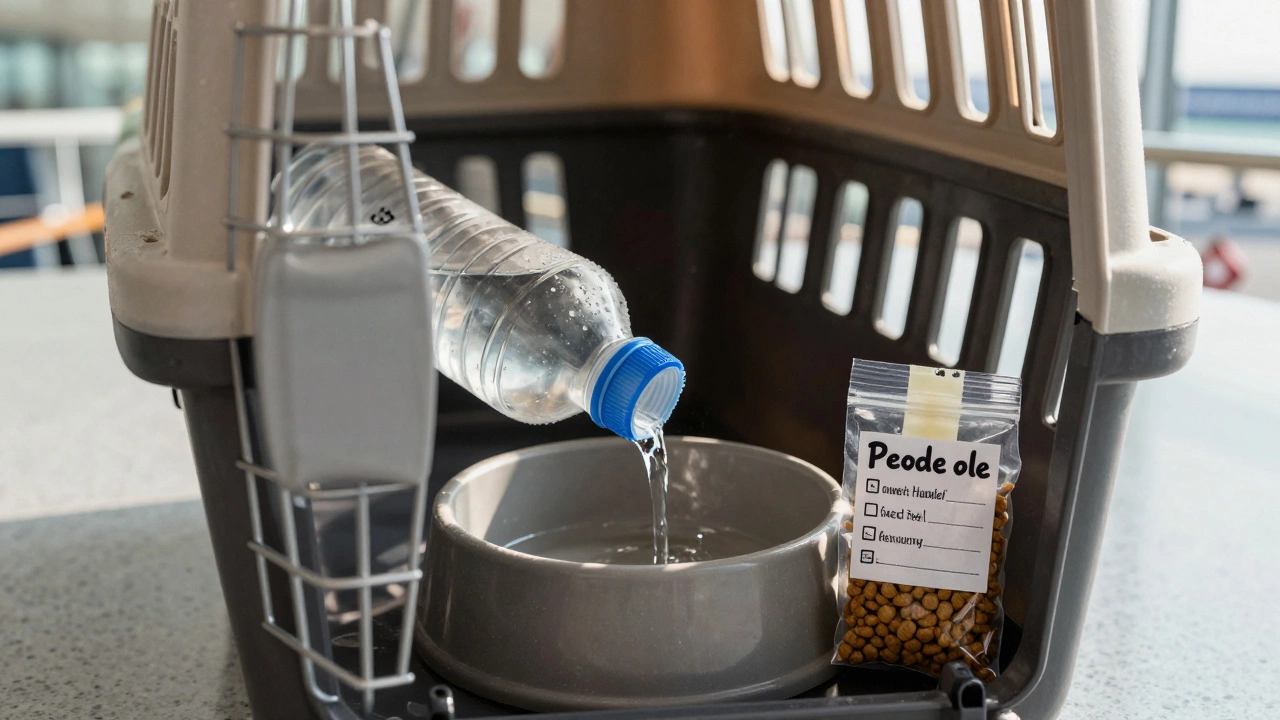
The key to keeping your pet healthy during a flight is preparation - before they even step into the crate. Most airlines require you to provide water and food containers that are securely attached to the crate’s door. These aren’t just bowls - they’re specially designed so your pet can reach them without spilling or getting stuck.For water, airlines typically require a spill-proof bowl that’s either bolted or clipped to the crate. Some owners use frozen water bottles that slowly melt during the flight. For food, you can attach a small bag of kibble or canned food to the outside of the crate. The airline staff will feed your pet if the flight is longer than 8 hours - but only if you’ve left clear instructions and the food is properly labeled.
According to IATA (International Air Transport Association) guidelines, which most major airlines follow, pets must have access to water within 4 hours of departure. If your flight is longer than 12 hours, airlines are required to provide water at least once during the journey - but only if the pet is in a climate-controlled hold and the stop is long enough (usually at least 30 minutes).
What You Can Do to Help Your Pet
You can’t control what happens in the air, but you can control what happens before takeoff. Here’s what works:- Hydrate your pet 2-3 hours before departure - not right before. Too much water too close to flight time can lead to accidents in the crate.
- Feed a light meal 4-6 hours before the flight - this gives time for digestion and reduces the chance of motion sickness.
- Use a leak-proof water container - attach it securely to the crate door. Test it at home first.
- Label everything - write your pet’s name, your contact info, and feeding instructions on the crate in permanent marker.
- Choose direct flights - every layover increases stress and exposure to temperature extremes.
Many owners make the mistake of overfeeding their pets the day before a flight. Don’t. A full stomach during flight can lead to vomiting, especially if the plane hits turbulence. Stick to small, bland meals. If your pet has a sensitive stomach, talk to your vet about anti-nausea medication - some airlines allow it with a vet’s note.
Which Airlines Have the Best Pet Policies?
Not all airlines treat pets the same. Some have stricter rules and better handling. Here’s how a few major carriers compare:| Airline | Water Access | Food Provided? | Max Flight Duration | Climate Control |
|---|---|---|---|---|
| Delta Air Lines | Yes - attached bowl | No, but staff can feed if instructed | 12 hours | Yes |
| United Airlines | Yes - mandatory | No | 10 hours | Yes |
| American Airlines | Yes - with instructions | No | 14 hours | Yes |
| Alaska Airlines | Yes - with bowl | Yes - for flights over 8 hours | 16 hours | Yes |
| JetBlue | Yes | No | 8 hours | Yes |
Alaska Airlines stands out because they’re the only major carrier that actually has staff feed pets on long-haul flights - if you’ve left food and instructions. They also allow pets to travel in the cabin on more routes than most. Delta and American are reliable for long trips, while JetBlue limits flights to 8 hours, making them better for short hops.
What About Layovers?
If your pet has a layover, they might be moved to a holding area - sometimes called an animal care center. These are staffed by trained handlers who check on pets, offer water, and sometimes even let them stretch their legs. But again - no feeding unless you’ve left food and written instructions. The staff won’t guess what your pet eats or how much.Always ask if your airline offers a pet care center at connecting airports. Some, like LAX and Heathrow, have dedicated facilities. Others? Not so much. If your pet has a long layover (over 4 hours), consider booking a flight that doesn’t require a change - or plan to pick them up and care for them yourself.

When Should You Avoid Flying With Your Pet?
Some pets shouldn’t fly at all - especially in cargo. Here’s when to skip the trip:- Your pet is under 8 weeks old
- Your pet has a brachycephalic breed (like a bulldog, pug, or Persian cat) - these pets struggle to breathe under pressure
- Your pet has heart, lung, or respiratory issues
- The weather at departure, destination, or layover is below 45°F or above 85°F
- Your pet is on medication that requires frequent dosing
Brachycephalic breeds are especially at risk. Airlines like United and Delta have banned them from cargo during hot months. In 2025, the FAA reported 17 pet deaths during flights - 13 of them involved short-nosed dogs. That’s not a coincidence. If your pet is one of these breeds, consider driving or using a pet transport service with climate-controlled vehicles.
Final Tips: What No One Tells You
Most pet owners think the airline will take care of everything. They don’t. You’re the one responsible. Here’s what to do:- Visit your vet 10 days before the flight - get a health certificate (required by all airlines)
- Label the crate with “Live Animal” stickers - this triggers priority handling
- Take a recent photo of your pet - in case the crate gets damaged or lost
- Don’t sedate your pet - it’s illegal on most airlines and increases risk of death
- Call the airline 24 hours before departure - confirm your pet is on the manifest
And one last thing: if you’re nervous, watch the cargo area when your pet is loaded. Most airlines let owners watch from a viewing area. Seeing your pet go in safely - and knowing they’re being handled with care - can ease your mind more than any promise.
Do airlines feed pets in cargo?
No, airlines do not actively feed pets during flight. However, they are required to provide water access via attached containers. For flights longer than 8-12 hours, some airlines will feed pets if you’ve left food and clear instructions. The responsibility falls on the owner to prepare and label everything properly.
Can I give my pet food during the flight?
You cannot give food during the flight. Crates remain sealed for safety. But you can attach a small amount of food to the outside of the crate, and airline staff may feed it during long layovers - if instructed. Always use a sealed, labeled container and avoid wet food that could spoil.
What if my pet needs medication during the flight?
Most airlines do not allow staff to administer medication. If your pet needs daily medication, you should either delay the trip, drive instead, or use a pet transport service that offers in-transit care. Some airlines may allow a vet to accompany the pet - but this is rare and expensive.
Are certain dog breeds banned from cargo?
Yes. Brachycephalic breeds - including Bulldogs, Pugs, French Bulldogs, Boston Terriers, and Persian cats - are restricted or banned from cargo during hot weather (typically May-September). Some airlines ban them year-round. Always check the airline’s breed policy before booking.
How do I know if my pet’s crate meets airline standards?
The crate must be IATA-compliant: sturdy, leak-proof, with a metal door, ventilation on all four sides, and a water container attached. It should be large enough for your pet to stand, turn, and lie down. Most airlines provide a checklist - or you can buy a pre-approved crate from pet travel retailers.
If you’re planning to fly with your pet this year, don’t wait until the last minute. Start preparing at least 6 weeks ahead. Talk to your vet, choose the right airline, and pack smart. Your pet’s safety isn’t up to chance - it’s up to you.