

Dog Sleep & Bedtime Routine Planner
Your Dog's Profile
Sleep Requirements
Total Daily Sleep Needed:
12-14 hoursIdeal Bedtime Window:
8:00 PM – 10:00 PMYou wake up at 6:00 AM, coffee in hand, ready to start your day. Your dog is staring at you with wide, expectant eyes, tail wagging slowly. You wonder: Did they really need that much sleep? Should I have put them on a stricter schedule?
The short answer is yes-dogs benefit significantly from a set bedtime and a consistent daily routine. But it’s not about locking them in a crate at 9:00 PM sharp because a calendar says so. It’s about aligning their natural biology with your household’s rhythm.
Dogs are crepuscular animals, meaning they’re most active during dawn and dusk. They don’t stay up late scrolling through social media like we do. Their bodies are wired for long periods of rest interspersed with bursts of activity. When you disrupt that cycle, you get a tired, anxious, or destructive pet-not a happy one.
The Science Behind Dog Sleep Patterns
To understand why a set bedtime matters, you first need to look at how dogs actually sleep. Unlike humans, who spend roughly 7-8 hours sleeping continuously, dogs sleep more but in shorter cycles. An adult dog sleeps between 12 and 14 hours a day, while puppies can sleep up to 18 to 20 hours.
This isn’t laziness. It’s efficiency. Dogs conserve energy for hunting, guarding, or playing. In the wild, their ancestors relied on quick naps throughout the day to stay alert to threats. Domestic dogs still carry this trait. They nap after meals, during quiet afternoon hours, and then take a longer rest overnight.
Circadian rhythms are internal biological clocks that regulate sleep-wake cycles based on light and darkness. Dogs have these too. Melatonin, the hormone that signals sleep, rises in their bodies as evening approaches. If you keep your dog awake past their natural wind-down time, you fight against their physiology. This leads to stress, poor immune function, and behavioral issues.
A study published in the Journal of Veterinary Behavior found that dogs with inconsistent sleep schedules showed higher levels of cortisol (the stress hormone) compared to those with regular routines. Consistency isn’t just good practice-it’s biologically necessary.
Why Routine Matters More Than Clock Time
Here’s the thing: your dog doesn’t care what time it is on the clock. They care about patterns. If dinner happens at 6:30 PM every night, followed by a walk at 7:00 PM, and bed at 8:30 PM, your dog will anticipate each step. This predictability reduces anxiety.
Dogs thrive on structure. Think back to when you were a child. Did you feel safer knowing exactly when bedtime was? Probably. Same with dogs. A set bedtime creates a sense of security. They know what to expect, which means less whining, less pacing, and fewer accidents.
But here’s where people get it wrong: they think “set bedtime” means rigid enforcement. No. It means consistency within a reasonable window. If your dog goes to bed between 8:00 PM and 9:00 PM nightly, that’s fine. Jumping from 7:00 PM one night to 11:00 PM the next confuses them.
Inconsistency breeds confusion. Confusion breeds anxiety. Anxiety breeds bad behavior. It’s a chain reaction-and it starts with an irregular sleep schedule.
Signs Your Dog Needs a Stricter Bedtime
Not every dog needs a military-style schedule. Some adjust easily. Others struggle. How do you know if your dog falls into the latter group? Watch for these signs:
- Pacing or whining before usual bedtime
- Difficulty settling down even after exercise
- Waking up multiple times during the night
- Excessive barking or restlessness in the evening
- Accidents in the house despite being potty-trained
- Hyperactivity followed by sudden crashes
If you see two or more of these behaviors regularly, your dog likely lacks structure. They’re not trying to be difficult-they’re asking for help.
Take Bella, a three-year-old Labrador mix living in Dublin. Her owner worked shift jobs, so her schedule varied wildly. Bella would sleep until noon some days, be up until midnight others. Within months, she developed separation anxiety and started chewing furniture. Once her owner established a fixed bedtime-even adjusting around work shifts-Bella’s behavior improved dramatically.
Routine didn’t fix everything overnight. But it gave Bella a anchor point in her day. That stability made all the difference.

How to Establish a Healthy Bedtime Routine
Setting a bedtime isn’t about forcing your dog into a cage at a certain hour. It’s about creating a calming sequence that signals “wind-down time.” Here’s how to build it:
- Start with physical activity. A tired dog is a sleepy dog. Aim for 30-60 minutes of vigorous exercise earlier in the evening. Walks, fetch, or agility drills work well. Avoid intense play right before bed-it raises adrenaline levels.
- Include mental stimulation. Puzzle toys, scent games, or short training sessions tire out your dog’s brain. Mental exhaustion often precedes physical fatigue.
- Feed dinner early enough. Give your dog dinner at least two hours before bedtime. This allows digestion and prevents nighttime bathroom trips. For puppies, last meal should be closer to bedtime since they can’t hold it as long.
- Create a pre-sleep ritual. Brush teeth, check ears, give a calm chew treat. Do the same steps every night. Repetition builds association.
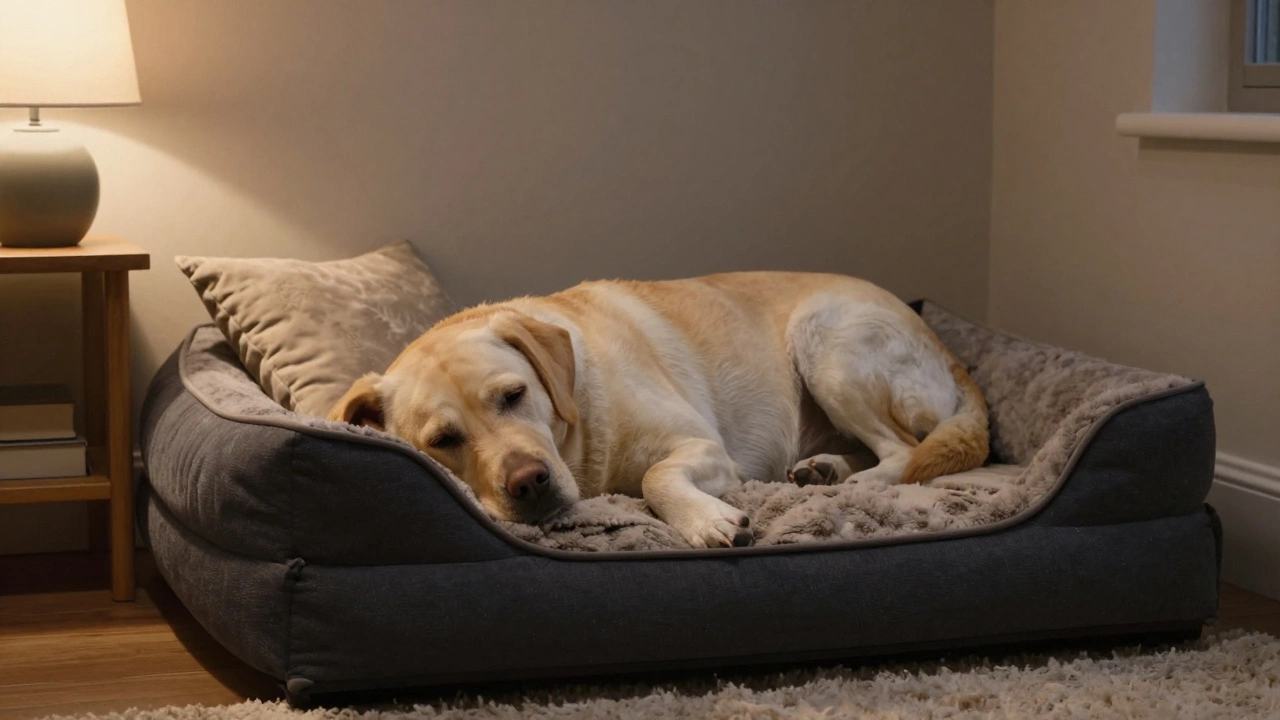
- Use a designated sleeping area. Whether it’s a dog bed placed in a quiet corner or a crate lined with soft blankets, make it comfortable and inviting. Never use it for punishment.
- Dim the lights. Lower lighting cues melatonin production. Turn off bright overhead lights an hour before bedtime. Use lamps or nightlights instead.
- Be present, then disengage. Spend 5-10 minutes cuddling or talking softly. Then leave the room. Don’t respond to minor noises. Reward silence with attention later.
This routine takes time to establish. Expect setbacks. But stick with it for 2-3 weeks, and you’ll see noticeable changes.
Puppies vs. Adult Dogs: Different Needs
Puppies aren’t mini-adults. Their bodies and brains are still developing. They need more sleep, more frequent breaks, and gentler transitions.
A newborn puppy sleeps nearly constantly. By eight weeks, they begin waking more frequently-but still require 18+ hours of rest. As they grow, their stamina increases, but so does their need for structure.
For puppies under six months, aim for a bedtime no later than 9:00 PM. Older dogs can handle slightly later hours, depending on lifestyle. Senior dogs may need earlier bedtimes due to joint pain or cognitive decline.
Also consider breed tendencies. High-energy breeds like Border Collies or Australian Shepherds need more daytime activity to settle at night. Brachycephalic breeds like Bulldogs may overheat easily, so ensure their sleeping area is cool and ventilated.
| Age Group | Total Daily Sleep | Ideal Bedtime Window | Notes |
|---|---|---|---|
| Under 6 Months | 18-20 hours | 8:00 PM - 9:00 PM | Frequent nighttime bathroom breaks expected |
| 6-12 Months | 14-16 hours | 8:30 PM - 9:30 PM | Adjustable based on activity level |
| Adult (1-7 Years) | 12-14 hours | 8:00 PM - 10:00 PM | Consistency key; avoid major variations |
| Senior (7+ Years) | 14-18 hours | 7:30 PM - 8:30 PM | Earlier bedtime helps manage arthritis and confusion |
Common Mistakes Owners Make
Even well-meaning owners sabotage their dog’s sleep. Here are the biggest pitfalls:
- Ignoring early signs of tiredness. Yawning, licking lips, lying down repeatedly-these are cues. Pushing past them causes overtiredness, which looks like hyperactivity.
- Using screens before bed. Blue light from phones or TVs suppresses melatonin in both humans and dogs. Keep devices away during wind-down time.
- Changing routines without warning. Travel, guests, or new family members disrupt schedules. Prepare your dog gradually. Bring familiar items like their bed or blanket.
- Punishing nighttime wakings. If your dog wakes up, ignore minor noise unless there’s an emergency. Responding reinforces the behavior.
- Skipping morning rituals. Bedtime isn’t isolated. Morning walks, feeding times, and departure routines complete the cycle. Break any link, and the whole system wobbles.
One common myth: “Dogs don’t care about time.” False. They read environmental cues-light, sound, human behavior-with remarkable accuracy. Your job is to provide clear signals.
What Happens When You Ignore Bedtime Structure
Let’s say you decide your dog doesn’t need a set bedtime. Maybe you’re flexible. Maybe you travel often. Maybe you just don’t want to enforce rules.
Short-term, nothing seems wrong. Long-term, problems emerge.
Chronic sleep deprivation affects cognition. Dogs become slower to learn commands, less responsive to training, and more prone to fear-based reactions. Immune systems weaken. Weight gain becomes likely due to reduced metabolism and increased snacking.
Behavioral issues spike. Destructive chewing, excessive barking, aggression toward other pets-all linked to frustration and unmet needs. These aren’t moral failures. They’re physiological responses.
Consider Max, a five-year-old German Shepherd whose owner worked remotely. Max had no set bedtime. He’d follow his owner around the house, interrupting calls, demanding attention. After implementing a structured evening routine-including a firm 8:30 PM bedtime-Max stopped interrupting meetings. His vet noted improved coat condition and weight loss within three months.
Sleep isn’t optional. It’s foundational.
Adapting Bedtime for Lifestyle Changes
Life isn’t static. Shift work, parenting young children, travel-all affect your ability to maintain perfect consistency. That’s okay. Adaptation is part of responsible ownership.
If your schedule changes temporarily, communicate it to your dog through adjusted routines. Add extra exercise beforehand. Use calming aids like pheromone diffusers or weighted blankets. Maintain core elements-even if timing shifts.
For frequent travelers, pack a piece of your bedding or a worn t-shirt. Familiar scents reduce stress. Try to keep meal and walk times similar across time zones. Gradual adjustment beats abrupt change.
And remember: flexibility doesn’t mean abandonment. Even if bedtime varies by an hour, keeping the sequence intact preserves the psychological benefit.
Can I let my dog sleep whenever they want?
While dogs naturally nap throughout the day, allowing completely unrestricted sleep patterns leads to confusion and behavioral issues. A loose framework-like a general evening wind-down period-is better than total freedom. Dogs thrive on predictability, not chaos.
Is it okay if my dog sleeps in my bed?
Yes, co-sleeping is fine as long as it doesn’t interfere with either of your sleep quality. Just ensure your dog has a designated spot elsewhere for when you’re not home. Consistency matters more than location.
How do I handle nighttime bathroom breaks?
Keep interactions minimal. No talking, no play, no treats. Take them outside quietly, wait for elimination, then return directly to bed. Over time, many dogs learn to hold it longer as bladder control develops.
Does diet affect my dog’s bedtime?
Absolutely. Heavy meals close to bedtime cause digestive discomfort. Caffeine-rich foods (even chocolate) stimulate nervous systems. Opt for balanced dinners rich in protein and fiber, served at least two hours before sleep.
What if my dog resists going to bed?
Resistance usually stems from insufficient daytime activity or lack of routine. Increase physical and mental stimulation earlier in the day. Stick to your plan calmly-don’t negotiate. Most dogs adapt within 1-2 weeks.
Are older dogs harder to schedule?
Actually, senior dogs often benefit most from strict routines. Cognitive decline makes unpredictability stressful. Earlier bedtimes, softer beds, and reduced evening activity support healthy aging.
Can music help my dog fall asleep?
Certain types of music-classical, reggae, or specially designed canine relaxation tracks-can lower heart rate and promote calmness. Play softly during wind-down time. Avoid loud genres or sudden volume changes.
Should I wake my dog up during the day?
Gently rousing your dog for short walks or meals encourages healthy circulation and prevents stiffness. Don’t interrupt deep sleep phases. Light touch or gentle voice works best. Let them resume resting afterward.