
Dog Bedding Recommendation Tool
Answer a few questions to discover the best sleeping surface for your pup's specific needs.
Our Recommendation:
Why is your dog sleeping on the hard floor?
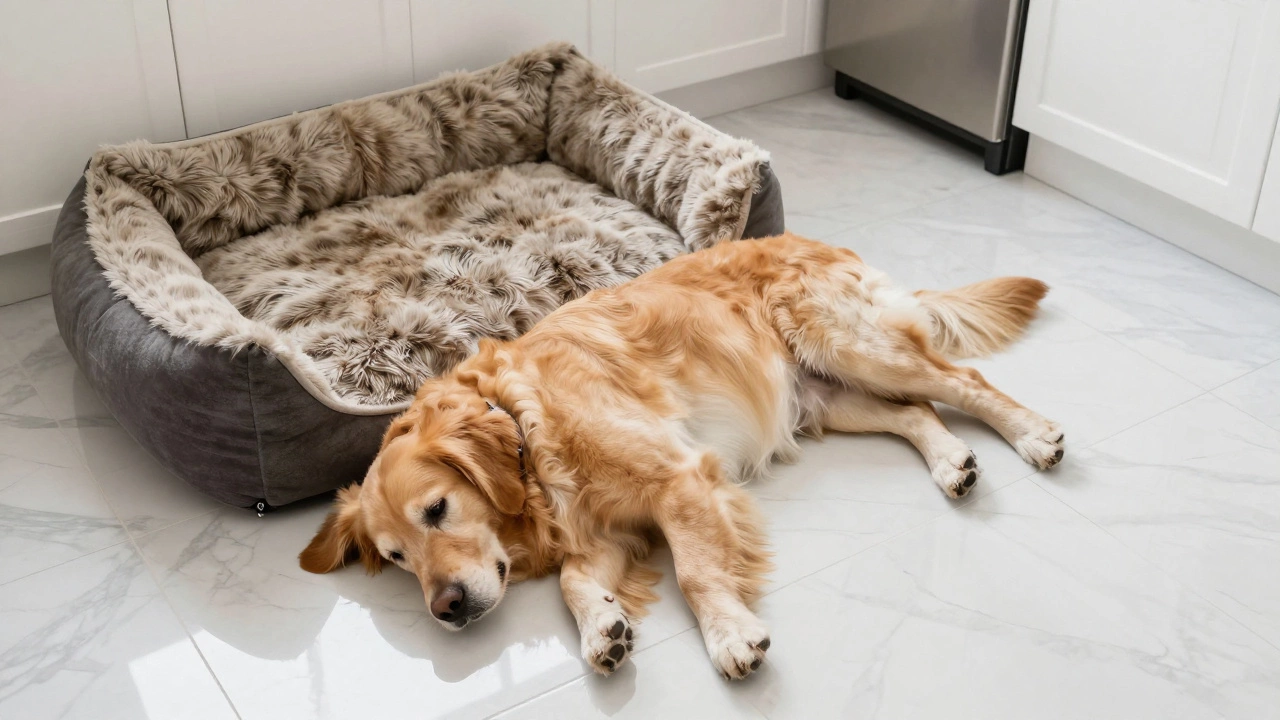
You've spent fifty bucks on a plush, faux-fur cloud of a bed, only to find your dog sprawled out on the cold kitchen tiles. It's a classic pet owner mystery. You aren't alone in this; most of us have stared at a luxury pet bed and wondered why our dogs treat it like a decorative piece of furniture rather than a place to sleep.
The truth is, dogs don't see the world the same way we do. While we associate a mattress with comfort, dogs prioritize temperature, security, and physical support. If your dog is choosing the floor, they aren't trying to annoy you-they're likely responding to a biological need that the bed isn't meeting. Whether it's the cooling effect of slate or the stability of hardwood, the floor often provides a sensory experience that fabric simply can't match.
To understand this, we need to look at dog beds is specialized bedding designed to provide support, warmth, and comfort for canines. While these products aim to improve sleep quality, the effectiveness depends entirely on the individual dog's breed, age, and health status.
The battle of temperature: Cool tiles vs. Warm fluff
The most common reason dogs ditch the bed for the floor is heat. Dogs don't sweat like we do; they rely on panting and releasing heat through their paw pads. When a dog gets too warm, they look for a "thermal sink"-a surface that absorbs heat from their body. This is why the bathroom floor or the kitchen area becomes a prime real estate spot during the summer.
High-loft foam and polyester fillers in many beds act as insulators. While this is great in January, it's a nightmare in July. If your dog is a "belly sleeper" who stretches out completely, they are trying to maximize the surface area of their skin touching a cool surface. If you notice your dog digging at their bed before lying down, they're trying to mimic their ancestors' behavior of clearing away brush to reach cooler earth.
Consider the impact of breed. A Golden Retriever with a thick double coat will struggle much more with overheating than a short-haired breed. If your dog has a heavy coat, a bed that traps heat will feel like a sauna, making the cold floor the only logical choice for a nap.
Joint health and the need for support
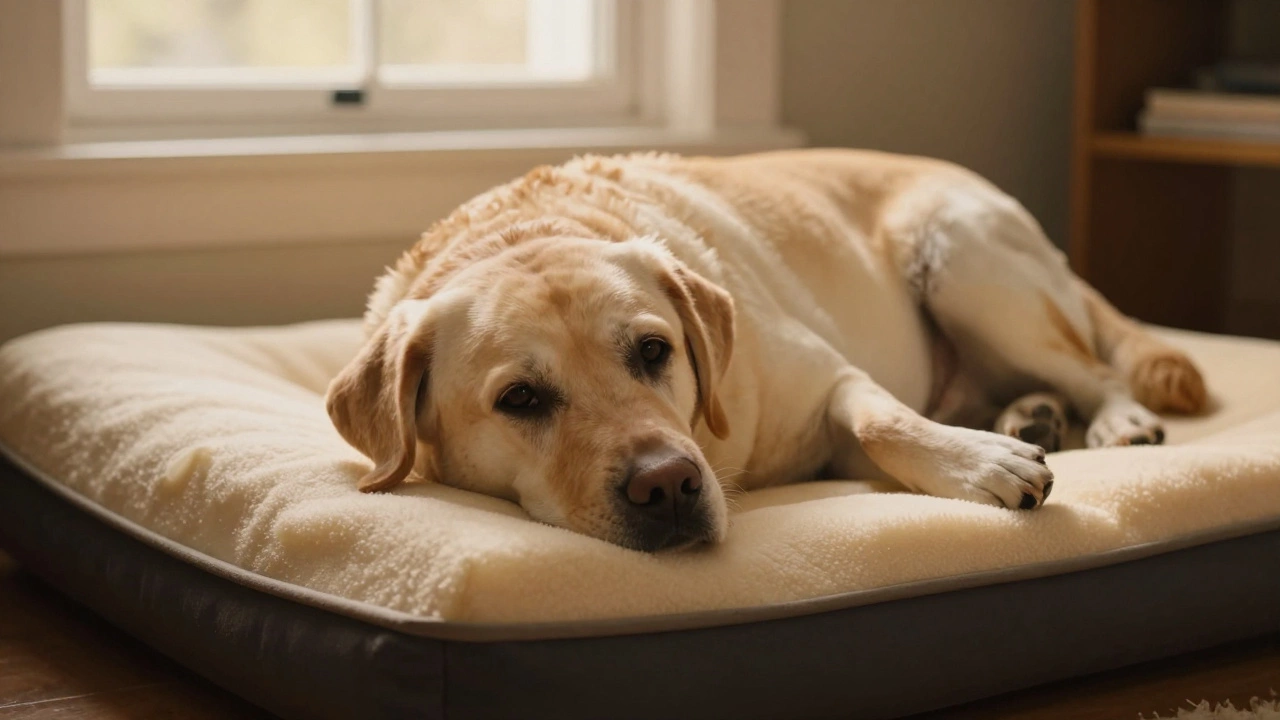
Not every dog loves a soft surface. For some, especially older dogs or those with joint issues, a bed that is too soft can actually be painful. Imagine trying to get out of a memory foam mattress that's too deep; it requires more effort for the muscles and joints to push off. For a dog with early-stage Osteoarthritis, which is a degenerative joint disease common in older canines that causes inflammation and stiffness, a firm surface is often easier to navigate.
This is where the type of bedding matters. A cheap poly-fill bed often collapses under the dog's weight, meaning they are essentially lying on the floor anyway, but with a thin layer of fabric in between. When the support fails, the dog might as well just lie on the flat floor where the surface is predictable.
For dogs with mobility issues, Orthopedic Dog Beds are the gold standard. These typically use high-density memory foam to distribute weight evenly, reducing pressure points on elbows and hips. Unlike standard beds, an orthopedic option provides a consistent level of support that doesn't "bottom out," making it more appealing than a hard floor for a senior dog.
| Surface Type | Best For... | Main Advantage | Main Drawback |
|---|---|---|---|
| Hardwood/Tile | Hot dogs, short-haired breeds | Immediate cooling effect | No joint support, cold in winter |
| Plush/Poly-fill Bed | Puppies, cold-weather breeds | Warmth and softness | Traps heat, lacks support |
| Memory Foam Bed | Seniors, large breeds | Joint pressure relief | Can be expensive, may retain heat |
| Elevated Cot | Active dogs, humid climates | Maximum airflow | Not cozy for deep sleep |
The psychology of the "Den"
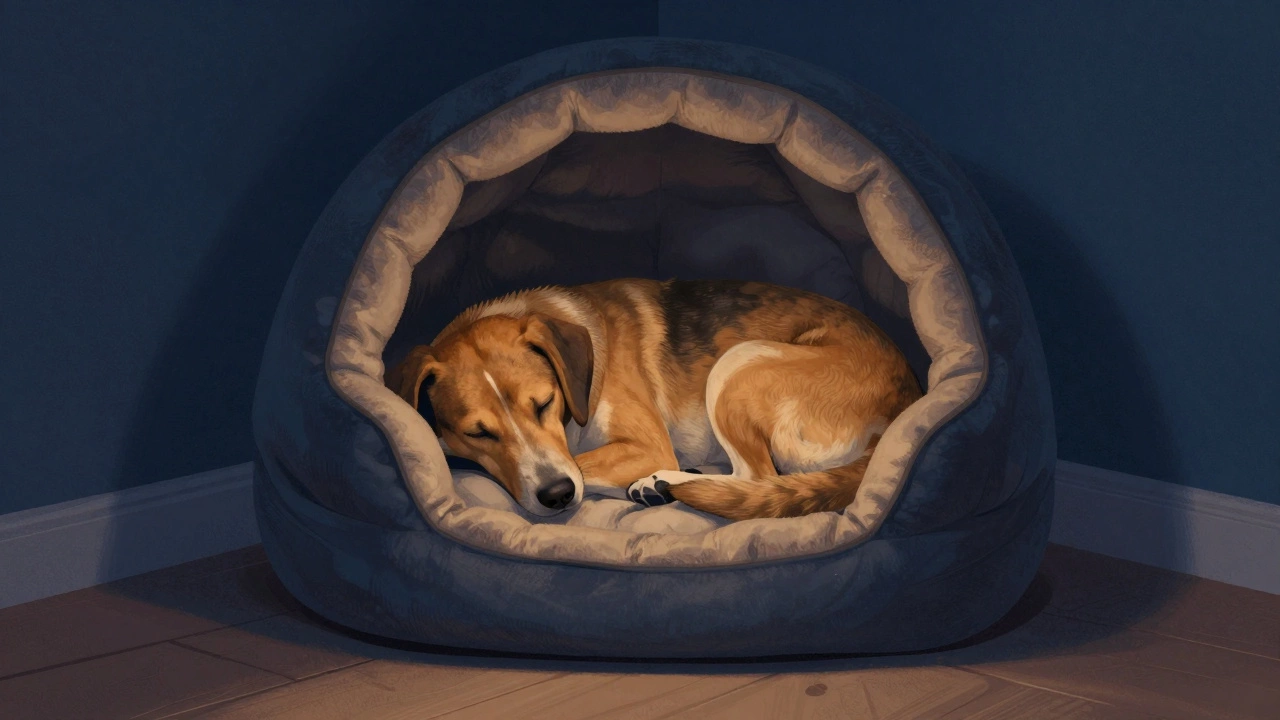
Beyond temperature and joints, there is a mental component. Dogs are instinctively den animals. A bed with raised edges, often called a "cuddler" or "donut bed," provides a sense of security. The raised rim acts as a pillow and a boundary, making the dog feel protected from the sides.
However, if a dog feels anxious, they might prefer the floor because it gives them a better vantage point. On a raised bed, they might feel "trapped" or disconnected from the exits of the room. Some dogs prefer the floor simply because it's a neutral territory. If the bed has become a place where they are frequently woken up or moved, they might associate it with interruption rather than rest.
Pay attention to where they choose to sleep. If they are always in the hallway, they might be "guarding" the house. If they are tucked under a table, they are seeking the enclosure of a den. Understanding these Canine Behaviors helps you place the bed in a spot they actually want to use.
How to make your dog love their bed
If you're tired of seeing your dog ignore their expensive bed, you can use a few tricks to shift their preference. First, consider the location. Most people put dog beds where it's convenient for humans-like the middle of the living room. But your dog might prefer the quiet corner of the bedroom or the spot where the sun hits the floor in the afternoon.
You can also try these specific adjustments:
- Scent swapping: Place an old t-shirt you've worn inside the bed. Your scent provides a powerful sense of security and comfort.
- Texture testing: Some dogs hate the feel of nylon or polyester. Try a cotton cover or a fleece throw to see if the tactile sensation is the problem.
- Cooling mats: If your dog loves the floor for the temperature, add a Cooling Gel Mat to their bed. This gives them the chill of the tile with the support of a cushion.
- The "Bribe" Method: Toss a few high-value treats on the bed. Make the bed a place where good things happen, even when they aren't sleeping.
Another factor is the size. A dog that likes to stretch out fully will find a small, circular bed frustrating. If they're constantly falling off the edges, they'll just give up and sleep on the floor. Ensure the bed is at least 20% larger than the dog when they are fully extended.
When should you be worried about floor sleeping?
Usually, choosing the floor is just a preference. But there are times when a sudden change in sleeping habits is a red flag. If your dog has always loved their plush bed and suddenly starts spending all their time on the hard floor, it could be a sign of a health issue.
For instance, a dog with a skin infection or severe allergies might find the warmth of a bed irritating to their skin. Conversely, a dog that suddenly avoids the floor and only wants a bed might be struggling with joint pain that makes the hard surface unbearable. Keep an eye on how they get up from the floor. If they are stiff, limping, or struggling to find their footing, it's time for a check-up with the vet.
Long-term sleeping on hard floors can also lead to calluses, known as Pressure Sores, specifically on the elbows and hocks. These occur when the skin is repeatedly rubbed against a hard surface. If you see thickening or darkening of the skin on their joints, a supportive bed is no longer a luxury-it's a medical necessity to prevent open sores.
Do dogs prefer a cold floor in the summer?
Yes, many dogs do. Because they can't sweat through their skin, they use the floor as a way to pull heat away from their bodies. Surfaces like ceramic tile, marble, or polished concrete act as heat sinks, providing a natural way for the dog to regulate their body temperature when they feel overheated.
Why does my dog dig at their bed before lying down?
This is an instinctual behavior passed down from their wild ancestors. In the wild, dogs would scratch at the ground to clear away debris, flatten the grass, or create a hollow in the dirt to make a safer, cooler, or warmer nesting spot. Even in a modern living room, your dog is simply "nesting" to ensure the surface is exactly how they want it.
Are orthopedic beds actually better for old dogs?
Absolutely. Older dogs often suffer from joint degradation. Standard beds with fluffy filling often compress completely, leaving the dog lying on the hard floor. Orthopedic beds use high-density memory foam that supports the joints without bottoming out, which reduces pain and allows for deeper, more restful sleep.
What is the best material for a dog bed?
The "best" material depends on the dog's needs. For warmth and comfort, fleece or faux-fur is great. For joint support, memory foam is the top choice. For dogs that overheat, breathable mesh or cooling gel fabrics are ideal. Always look for removable, machine-washable covers to keep the bedding hygienic.
Can sleeping on the floor cause health problems for dogs?
In the short term, no. However, long-term exposure to hard surfaces can cause calluses or pressure sores on the elbows and hips, especially in large breeds. Additionally, during winter, sleeping on a cold floor can aggravate joint stiffness in senior dogs, making it harder for them to move after they wake up.
Next steps for a happier sleeper
If your dog is still ignoring their bed, start by observing their patterns for three days. Note exactly where they choose to sleep and what the temperature is in that spot. If they're always on the tiles, move the bed to a cooler area or switch to a cooling mat. If they're sleeping against a wall, get a bed with a bolstered edge.
For those with senior dogs, don't just buy any bed-look for labels that specifically mention "high-density foam" and check the thickness. A thin foam layer won't help a 70-pound Labrador. If you see calluses forming on their joints, prioritize an orthopedic mattress immediately to prevent the skin from breaking.
Ultimately, your dog's choice of sleep spot is a communication tool. They are telling you whether they are too hot, in pain, or feeling insecure. By adjusting the gear to match their biology, you can turn that ignored piece of fabric into their favorite place in the house.