

Dog Training Knowledge Quiz
Question 1
According to the article, what do most veterinary professionals say about shock collars?
Question 2
What key finding did the British Veterinary Association (BVA) report about shock collars in 2020?
Question 3
What does the article say shock collars teach dogs?
Question 4
What is the article's primary alternative to shock collars?
Question 5
According to the article, what is a long-term risk of shock collars?
Quiz Results
0/5Take the quiz to see your score!
When it comes to training a stubborn dog, some owners turn to shock collars because they promise quick results. But if you ask a vet, the answer isn’t so simple. Most veterinary professionals don’t recommend shock collars-not because they’re against discipline, but because they’re ineffective and potentially harmful. The real issue isn’t whether the collar works-it’s whether it’s the right tool for the job.
What shock collars actually do
Shock collars, also called electronic or e-collars, deliver a static pulse to a dog’s neck when triggered by a remote or motion sensor. The intensity can range from a mild tingle to a painful jolt. Some models include vibration or tone settings, but the shock feature is what draws controversy.
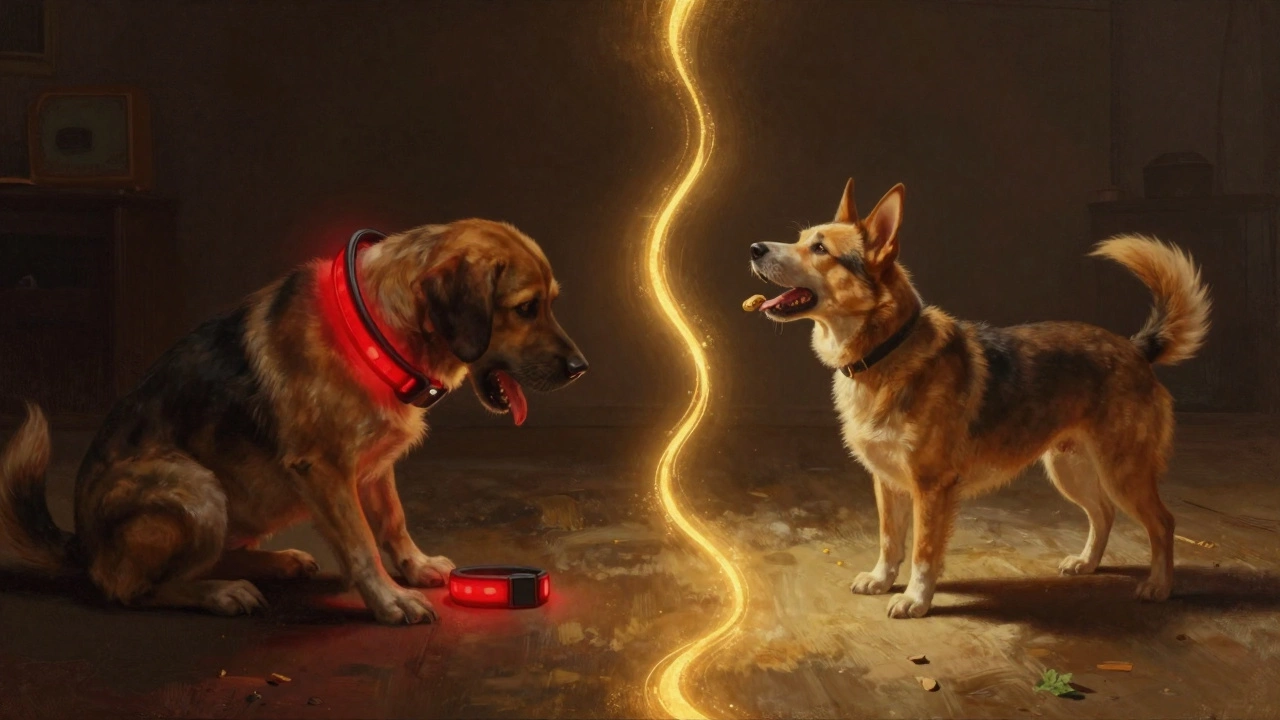
These devices are marketed as tools for stopping barking, pulling on leash, or preventing boundary crossing. But what they really teach is fear-not understanding. A dog doesn’t learn why not to chase squirrels; it learns that chasing squirrels means pain. That’s not training. That’s punishment.
What vet organizations say
The American Veterinary Society of Animal Behavior (AVSAB) released a position statement in 2007 that’s still widely cited today: positive reinforcement methods should be the first line of training, and aversive tools like shock collars should be avoided. They found that punishment-based training increases stress, aggression, and anxiety in dogs-and often worsens the very behaviors owners are trying to fix.
In 2020, the British Veterinary Association (BVA) went further, calling for a ban on electronic training devices in the UK. Their report reviewed over 50 peer-reviewed studies and concluded that shock collars cause measurable physiological stress, including elevated heart rates and cortisol levels. One study even showed dogs wearing shock collars during training had higher stress than dogs in a vet’s exam room.
Irish veterinary clinics follow similar guidelines. The Irish Veterinary Medical Association (IVMA) doesn’t have an official ban, but most practicing vets in Dublin, Cork, and Galway openly discourage shock collars. One Dublin vet, Dr. Maeve O’Connor, told a local paper in 2024: “We see dogs with neck injuries, skin burns, and sudden fear of outdoor spaces after using these collars. It’s not rare. It’s predictable.”
Why shock collars backfire
Shock collars don’t teach dogs what to do-they only tell them what not to do. That’s a huge problem. Imagine if you were yelled at every time you walked into a room you weren’t supposed to, but no one ever showed you where to go instead. You’d be confused. You’d be anxious. You might even start avoiding people.
Dogs react the same way. A dog shocked for barking might stop barking in your presence, but start barking more when you’re not around. A dog shocked for pulling on leash might freeze up entirely, refusing to walk. These aren’t signs of obedience. They’re signs of trauma.
Studies from the University of Pennsylvania and the University of Bristol show that dogs trained with shock collars are more likely to develop generalized fear, including fear of strangers, other dogs, and even their own owners. The damage isn’t always visible. Some dogs just become quieter, more withdrawn. That’s not calm. That’s broken.

What vets actually recommend instead
Most vets who refuse shock collars offer clear alternatives-and they’re backed by science.
- Positive reinforcement: Rewarding good behavior with treats, praise, or play. This builds trust and motivation. Dogs learn to choose the right behavior because it feels good.
- Clicker training: A small device makes a clicking sound when the dog does something right, followed by a treat. It’s precise, fast, and works for complex behaviors like “sit,” “stay,” or “come.”
- Head halters or front-clip harnesses: These don’t shock. They gently redirect pulling by changing how force is applied. Many dogs stop pulling within days.
- Behavioral consultation: If your dog is aggressive, fearful, or overly reactive, a certified dog trainer or veterinary behaviorist can create a customized plan. No shock needed.
One client in Cork had a German Shepherd that lunged at other dogs on walks. After three sessions of positive reinforcement and desensitization training, the dog stopped reacting. The owner didn’t need a shock collar. She needed time, consistency, and the right tools.
The hidden cost of shock collars
It’s easy to think, “It worked for me.” Maybe your dog stopped barking after one shock. But that’s short-term. Long-term, you’re risking:
- Increased aggression (especially toward people or animals near the shock trigger)
- Loss of trust between you and your dog
- Chronic stress, which weakens the immune system
- Behavioral problems that get worse over time
- Expensive vet visits for anxiety-related issues or skin damage
One 2023 study in the Journal of Veterinary Behavior followed 200 dogs trained with shock collars over two years. Forty-two percent developed new fear-based behaviors. Twenty-three percent needed medication for anxiety. None of those problems existed before the collar.
And here’s the kicker: the same study found dogs trained with positive methods were 60% more likely to obey commands reliably after six months.
When are shock collars ever okay?
Some trainers claim shock collars are necessary for “high-drive” dogs or remote training. But even in those cases, experts say there are better options.
Search and rescue teams, police K-9 units, and military working dogs use e-collars-but not for punishment. They use them for long-distance communication, often with only a tone or vibration. No shock. No pain. Just a signal.
Even then, these programs require years of foundational training first. No dog is ever shocked to learn its first command.
If you’re considering a shock collar because your dog is out of control, what you really need is help-not hardware. A certified trainer can show you how to set boundaries without causing fear. And your vet can refer you to one.
What to do if you already used a shock collar
If you’ve used a shock collar in the past, don’t feel guilty. Many owners did it because they were desperate, overwhelmed, or misled by marketing. The good news? It’s never too late to change.
Start by removing the collar. Then, focus on rebuilding trust. Give your dog space. Offer treats for calm behavior. Avoid punishment. If your dog seems fearful or anxious, talk to your vet. They can rule out physical causes and recommend a behavior specialist.
Many dogs recover. One owner in Galway stopped using a shock collar after her Labrador started trembling at the sound of the remote. Within six weeks of switching to reward-based training, the dog wagged its tail again when the owner picked up the leash.
Final thoughts
Vets don’t oppose discipline. They oppose pain as a teaching tool. Dogs don’t need to be punished to be well-behaved. They need to be understood.
The best training tools aren’t electronic. They’re patience, consistency, and empathy. And those are things no collar can give you-but you already have them.