

TSA Pet Compliance Checker
This tool helps you determine if your pet meets TSA requirements for flying in the cabin. Fill out the form below to check your compliance.
Flying with your pet isn’t as scary as it sounds-but only if you know how the TSA actually handles animals at security. Many pet owners assume the process is the same as for humans: take off shoes, empty pockets, walk through the scanner. But pets? They follow their own set of rules. And if you don’t know them, you could end up delayed, stressed, or even turned away at the gate.
What TSA Actually Does with Pets
The Transportation Security Administration (TSA) doesn’t treat pets like luggage. They’re considered live animals, and their screening is designed to keep both you and your pet safe without causing unnecessary stress. At security checkpoints, you’ll be asked to remove your pet from its carrier. The carrier goes through the X-ray machine alone. Your pet walks through the metal detector or is hand-wanded by a TSA officer. No pet is ever placed on the conveyor belt.
Some people think TSA requires pets to be sedated. That’s false. In fact, TSA prohibits sedatives for pets during flights. Airlines and the USDA both warn that sedation can be dangerous at high altitudes, especially for brachycephalic breeds like Bulldogs or Pugs. TSA officers are trained to handle nervous animals and will work with you to keep things calm.
Your Pet’s Carrier Must Meet TSA Standards
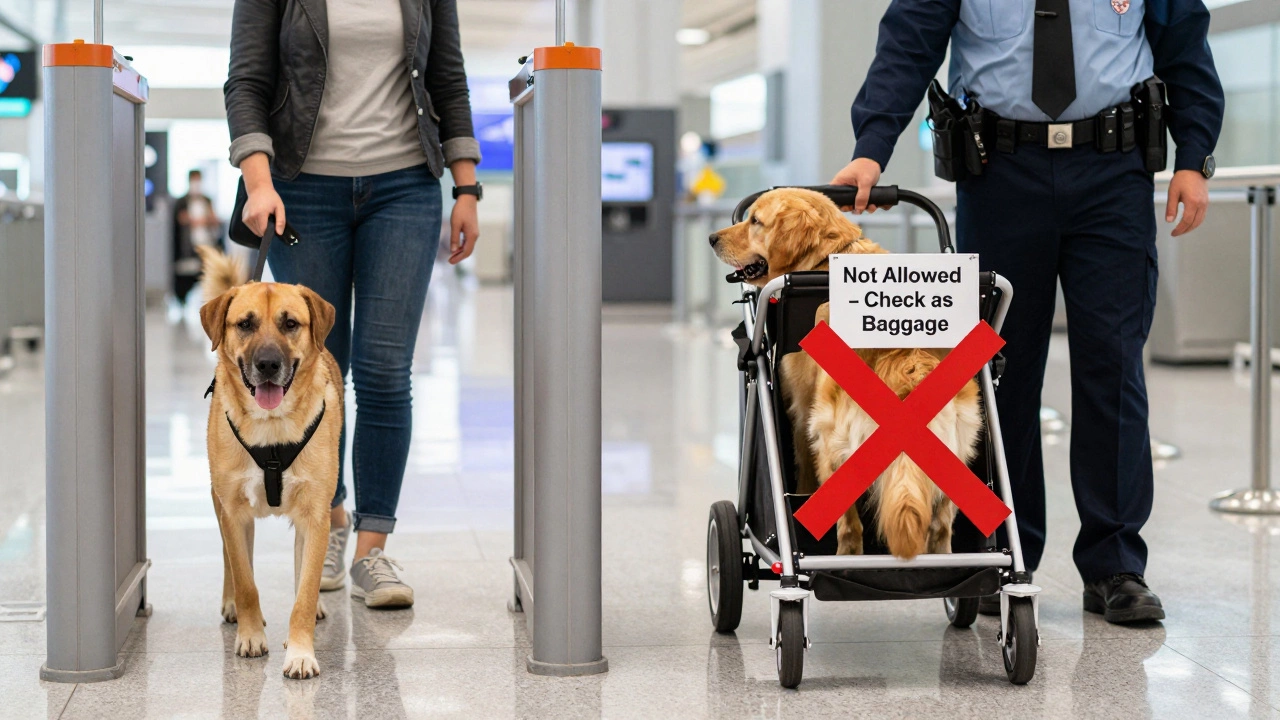
Your pet carrier isn’t just a box-it’s part of your carry-on allowance. TSA requires it to be small enough to fit under the seat in front of you. Most airlines allow carriers up to 19 x 13 x 9 inches. The carrier must be leak-proof, well-ventilated, and have a secure latch. No soft-sided carriers with zippers that can pop open. No pet carriers with wheels. If your carrier doesn’t meet these standards, TSA will ask you to repack or check it as baggage-meaning your pet won’t be able to stay with you in the cabin.
Pro tip: Use a carrier with a top-opening lid. TSA officers often need to quickly check your pet’s health or behavior. A carrier that opens from the top makes this easier and less stressful for your animal. Also, make sure the carrier is labeled with your name, phone number, and a note saying “Live Animal.”
What You Can and Can’t Bring Through Security
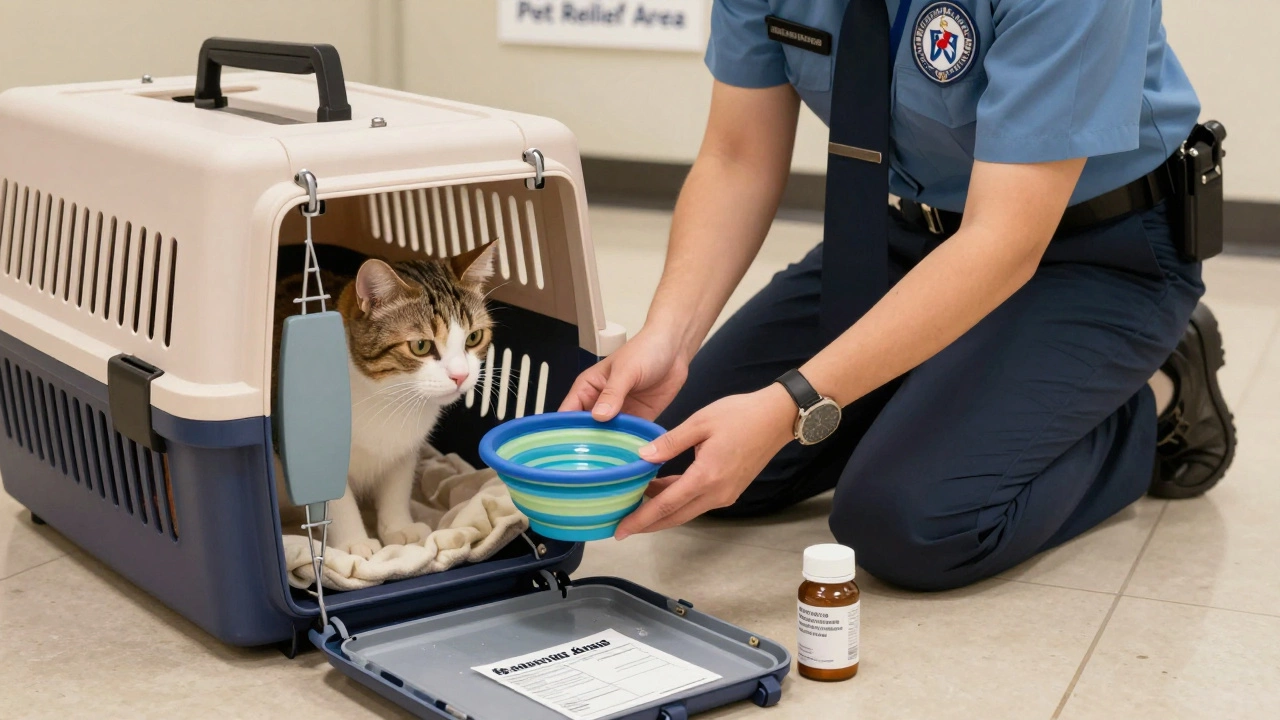
You’re allowed to bring pet food, water, and treats through TSA checkpoints. Liquids like water or wet food are exempt from the 3-1-1 rule if they’re for your pet. You don’t need to put them in a plastic bag. Just let the officer know you have pet supplies. Bring a small container of water and a collapsible bowl-TSA agents often let you give your pet a drink after screening.
But here’s what you can’t bring: pet medication in liquid form unless it’s in a clearly labeled prescription bottle. If you’re carrying insulin, antibiotics, or other controlled substances, bring a doctor’s note-even if it’s for your pet. Some TSA officers aren’t familiar with pet prescriptions and may question them. A note from your vet saying “For use by [Pet’s Name], [Medication], [Dosage]” can save you time and stress.
Service Animals vs. Emotional Support Animals
TSA treats service animals differently from emotional support animals. A service animal is trained to perform specific tasks for a person with a disability-like guiding someone who is blind, alerting to seizures, or retrieving items. These animals are allowed to accompany you through security without a carrier. They walk beside you, and TSA officers will not ask you to remove their harness or leash.
Emotional support animals (ESAs) are a different story. Since January 2021, the Department of Transportation no longer recognizes ESAs as service animals. That means if your dog is there to comfort you but hasn’t been trained for a specific task, TSA will treat it like a regular pet. You’ll need to remove it from its carrier, and it will go through screening just like any other animal. Airlines can also charge you a fee to bring it into the cabin.
What Happens If Your Pet Is Nervous or Aggressive?
TSA officers see hundreds of pets every day. They’ve dealt with barking dogs, hissing cats, and anxious rabbits. If your pet shows signs of fear or aggression, the officer will pause and give you time to calm them. They may offer to screen your pet in a quieter area away from the main line. You can request this. Just say, “My pet is nervous-can we do this in a less busy spot?”
But if your pet becomes truly aggressive-biting, growling, or trying to escape-TSA has the right to deny boarding. This is rare, but it happens. Airlines also reserve the right to refuse transport if they feel your pet poses a safety risk. That’s why it’s smart to practice with your pet before your trip. Let them get used to their carrier. Play recordings of airport sounds. Take short car rides with the carrier in the back seat. Familiarity reduces panic.
Before You Fly: The 3-Step Checklist
- Check airline rules-Each airline has different weight limits, carrier sizes, and fees. Southwest allows two pets per passenger. JetBlue lets you bring pets on most domestic flights. Delta charges $125 each way. Know your airline’s policy before you show up.
- Get a health certificate-Most airlines require a vet-issued health certificate dated within 10 days of travel. Some states or countries require additional paperwork. The USDA’s APHIS website has state-by-state requirements.
- Arrive early-Plan to be at the airport 2-3 hours before departure. Pet screening takes longer than human screening. You’ll need time to check in, get your pet’s carrier ready, and handle any unexpected delays.
What to Do After Security
Once you’re past security, don’t forget to give your pet a few sips of water and a quiet moment to relax. Most airports now have pet relief areas-usually near baggage claim or outside the terminal. Use them. Even if your pet doesn’t need to go, the scent and space help reduce anxiety.
Keep your pet’s carrier open and accessible. TSA doesn’t require you to close it after screening, and leaving it slightly open lets your pet breathe and see you. Bring a favorite blanket or toy. Familiar smells help your pet feel safe.
Common Mistakes Pet Owners Make
Here’s what goes wrong most often:
- Bringing a carrier that’s too big. TSA won’t stop you, but the gate agent will-and you’ll have to check your pet.
- Forgetting the health certificate. No paperwork? No flight.
- Using a carrier with wheels. Even if it folds, TSA and airlines consider it checked baggage.
- Trying to sneak a pet through without declaring it. If you’re caught, you could be fined up to $1,000.
- Feeding your pet right before the flight. It increases the chance of motion sickness or accidents.
One real example: A woman from Atlanta tried to fly with her cat in a wheeled carrier she thought was “foldable.” TSA let her through, but the gate agent refused to board the cat. She missed her flight and had to pay $300 to rebook. All because she didn’t read the airline’s pet policy.
International Travel? It’s Even More Complex
If you’re flying outside the U.S., TSA is just the first step. Each country has its own rules. The EU requires a microchip, rabies vaccine, and a pet passport. Canada requires a health certificate within 72 hours. Australia has strict quarantine rules-some pets must stay in a facility for 10 days. Always check with the destination country’s agriculture or veterinary authority before booking.
Some airlines, like United and Lufthansa, offer pet travel consultants who help with international paperwork. It’s worth the call.
Final Thought: It’s About Preparation, Not Luck
Flying with your pet isn’t about hoping everything works out. It’s about planning. Know the rules. Practice with your pet. Bring the right gear. Show up early. And don’t be afraid to ask TSA officers for help-they’re there to make this easier for you.
Thousands of pets fly safely every day. You don’t need to be an expert. Just be prepared.
Can I bring my pet’s food through TSA security?
Yes. Solid pet food, wet food in containers, and treats are all allowed through security. Liquids like water or wet food are exempt from the 3-1-1 rule as long as they’re clearly for your pet’s use. You don’t need to put them in a plastic bag, but you should tell the TSA officer you have pet supplies.
Does TSA require pets to be sedated for flights?
No. TSA and the USDA both prohibit sedating pets for air travel. Sedatives can interfere with breathing at high altitudes and increase the risk of heart or respiratory failure, especially in short-nosed breeds. TSA officers will not allow a sedated pet to fly and may deny boarding.
What’s the difference between a service animal and an emotional support animal at TSA checkpoints?
Service animals are trained to perform specific tasks for people with disabilities and are allowed to walk beside you without a carrier. Emotional support animals (ESAs) are not trained for specific tasks and are now treated like regular pets by TSA. You’ll need to remove them from their carrier and go through standard pet screening. Airlines can also charge you a fee to bring an ESA on board.
Can I bring my pet’s medication through TSA?
Yes, but only if it’s in a clearly labeled prescription bottle. Liquid medications for pets must be declared to TSA. For controlled substances like insulin or antibiotics, bring a vet’s note explaining the medication, dosage, and why it’s needed. This avoids delays or misunderstandings.
What if my pet barks or acts scared at security?
TSA officers are trained to handle nervous animals. If your pet is scared or barking, you can ask to move to a quieter area away from the main line. Most officers will accommodate this request. Don’t force your pet-give them time to calm down. If your pet becomes aggressive, TSA may delay or deny boarding for safety reasons.
Do I need a health certificate to fly with my pet?
Most U.S. airlines require a health certificate issued by a licensed veterinarian within 10 days of your flight. Some states or countries require additional documentation. Always check with your airline and destination’s animal health authority. Without this document, you won’t be allowed to board.
If you're planning to fly with your pet this year, start preparing now. Book your flight early, confirm airline policies, and schedule your vet visit at least two weeks ahead. The more you plan, the smoother the ride-for you and your pet.