
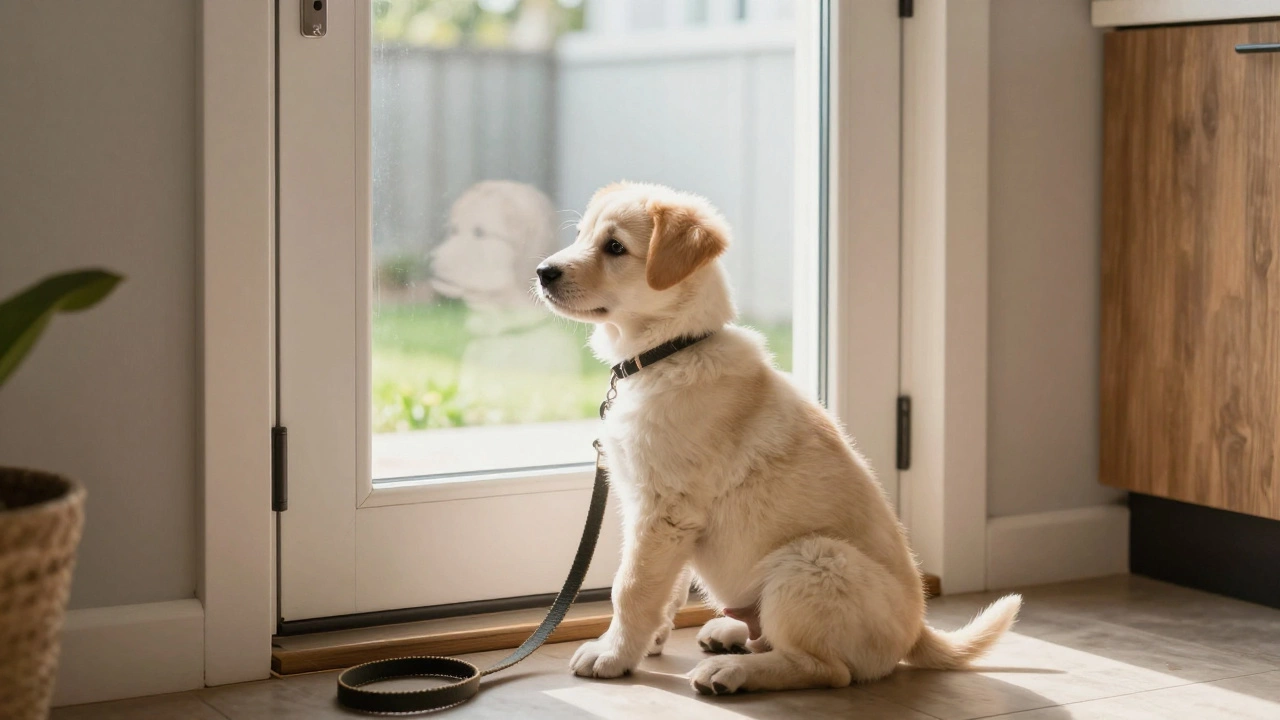
Housebreaking Time Estimator
How Long Will It Take?
Estimate your dog's housebreaking timeline based on age and training factors. The average is 4-6 weeks, but individual dogs vary.
Estimated Timeline
Key Factors
Bladder Control: Your dog can hold it for
Training Factors:
Most new dog owners expect their puppy to learn where to go potty in just a few days. That’s not how it works. Housebreaking a dog isn’t a quick fix - it’s a process that takes time, consistency, and patience. On average, it takes 4 to 6 weeks for a puppy to be reliably housebroken, but some dogs may need up to 4 months. The timeline depends on age, breed, routine, and how closely you stick to the plan. If your puppy is still having accidents after two months, it’s not because they’re stubborn - it’s likely because the training hasn’t clicked yet. And that’s okay. You can fix it.
What Does Housebreaking Really Mean?
Housebreaking isn’t just about stopping accidents. It’s about teaching your dog to signal when they need to go, hold it until they’re outside, and choose the right spot. A fully housebroken dog doesn’t just go outside - they wait for you to take them, and they do it on command. That takes time. Puppies under 12 weeks old have almost no bladder control. Their bodies are still developing. Expecting them to hold it for 6 hours? That’s unrealistic. Even adult dogs with no training will have accidents if they’re stressed, sick, or confused.
Age Matters - A Lot
Most puppies start learning between 8 and 16 weeks old. That’s when their brains begin to connect the dots: bladder full → need to go → go outside → get praised. But here’s the catch: younger puppies can’t hold it as long. A 10-week-old puppy can hold their bladder for about 2 hours. A 16-week-old puppy? Maybe 4 hours. By 6 months, most can make it 6-8 hours. That’s why your schedule needs to match their age. If you leave a 12-week-old alone for 8 hours while you’re at work, you’re setting them up to fail. No amount of yelling will fix that. They literally can’t hold it.
The 3-Step Routine That Works Every Time
There’s no magic trick. Just three simple rules, repeated every day:
- Take them out first thing in the morning - right after they wake up.
- Take them out after every meal, nap, or play session.
- Take them out before bed - and don’t let them drink water 1 hour before sleep.
That’s it. No complicated timers. No expensive gadgets. Just consistency. Most accidents happen because owners skip one of these steps. Maybe they forget after a long nap. Or they assume the dog is "trained" after a few clean days. That’s when the slip-ups start. Dogs don’t generalize like humans do. If you take them out at 7 a.m. every day but forget on Saturday, they’ll think Saturday is a free-for-all.
Where You Take Them Makes a Difference
Don’t just open the door and say "go." Lead them to the same spot every time. Grass is best. Avoid concrete or gravel at first - those surfaces can be confusing. Use a cue word like "go potty" or "do your business." Say it quietly while they’re going. Repeat it every time. After a few weeks, they’ll start to associate the word with the action. Once they do, you’ll notice something amazing: they’ll pause at the door, look at you, and wait. That’s the goal.
Accidents Happen - Here’s What to Do
If you catch your puppy in the act, interrupt them with a calm "uh-oh," then immediately take them outside. Don’t yell. Don’t rub their nose in it. That doesn’t teach them anything. It just teaches them to fear you. If you find an accident later? Clean it up with an enzymatic cleaner. Regular cleaners leave scent trails that say "this is a bathroom." Enzymatic cleaners break down the odor completely. You can buy them at any pet store. Don’t use vinegar or bleach - they don’t work long-term and can make dogs anxious.
Why Some Dogs Take Longer
Some breeds are harder to housebreak. Terriers, hounds, and small breeds like Chihuahuas often take longer - not because they’re dumb, but because they’re independent. They don’t care about pleasing you. They just want to do what feels right. That means you need more structure. Crate training helps. A crate isn’t a punishment. It’s a den. Dogs naturally avoid soiling their sleeping area. If you use a crate, make sure it’s the right size: just big enough for them to stand, turn, and lie down. Too big? They’ll use one corner as a bathroom. Too small? They’ll be uncomfortable. A 10-pound puppy needs a 16-inch crate. A 40-pound dog? 24 inches.
Rescue dogs or dogs from puppy mills often take even longer. They may have never been taught to go outside. Some have learned that peeing indoors is normal. That’s not their fault. It takes months of patience. Don’t compare your dog to others. Every dog has their own pace.
Signs Your Dog Is Ready
You’ll know they’re getting close when:
- They go to the door or whine before they need to go.
- They hold it for 6+ hours overnight without accidents.
- They go potty on command - even in new places.
- They stop having accidents indoors for 2 straight weeks.
That’s when you can start giving them more freedom. But don’t rush. Keep an eye on them. Use baby gates to limit access to certain rooms. Watch for sniffing, circling, or pacing - those are signs they need to go. If you see them start to squat indoors, interrupt them and take them outside. Praise them hard when they finish.
What Not to Do
Don’t punish accidents. It doesn’t work. Dogs don’t connect punishment with what happened hours ago. They only learn from what happens in the moment.
Don’t use pee pads as a permanent solution. They teach dogs it’s okay to go inside. If you use them, it’s only as a temporary tool while you’re building the habit. Gradually move the pad closer to the door, then outside.
Don’t assume your dog is "fixed" after a few clean days. That’s when most people slip up. Keep the routine for at least 30 days after the last accident.
When to Call a Pro
If your dog is over 6 months old and still having daily accidents, talk to your vet. There could be a medical issue - a urinary tract infection, hormonal imbalance, or neurological problem. If your dog was housebroken and suddenly started having accidents, that’s a red flag. Same goes for excessive drinking, frequent urination, or whining while trying to go. Don’t wait. Get it checked.
Also, if you’ve been consistent for 3 months and still have no progress, consider a professional trainer. Sometimes, a fresh set of eyes and hands makes all the difference. You’re not failing. The system just needs tweaking.
Real-World Timeline Example
Here’s what success looks like in real time:
- Week 1-2: Accidents happen 3-5 times a day. You’re taking them out every 2 hours. You’re cleaning up with enzymatic cleaner. You’re not yelling.
- Week 3-4: Accidents drop to 1-2 per day. They start waiting at the door. You catch them before they go inside once or twice.
- Week 5-6: Accidents are rare - maybe once a week. They go potty on cue. You’re starting to relax.
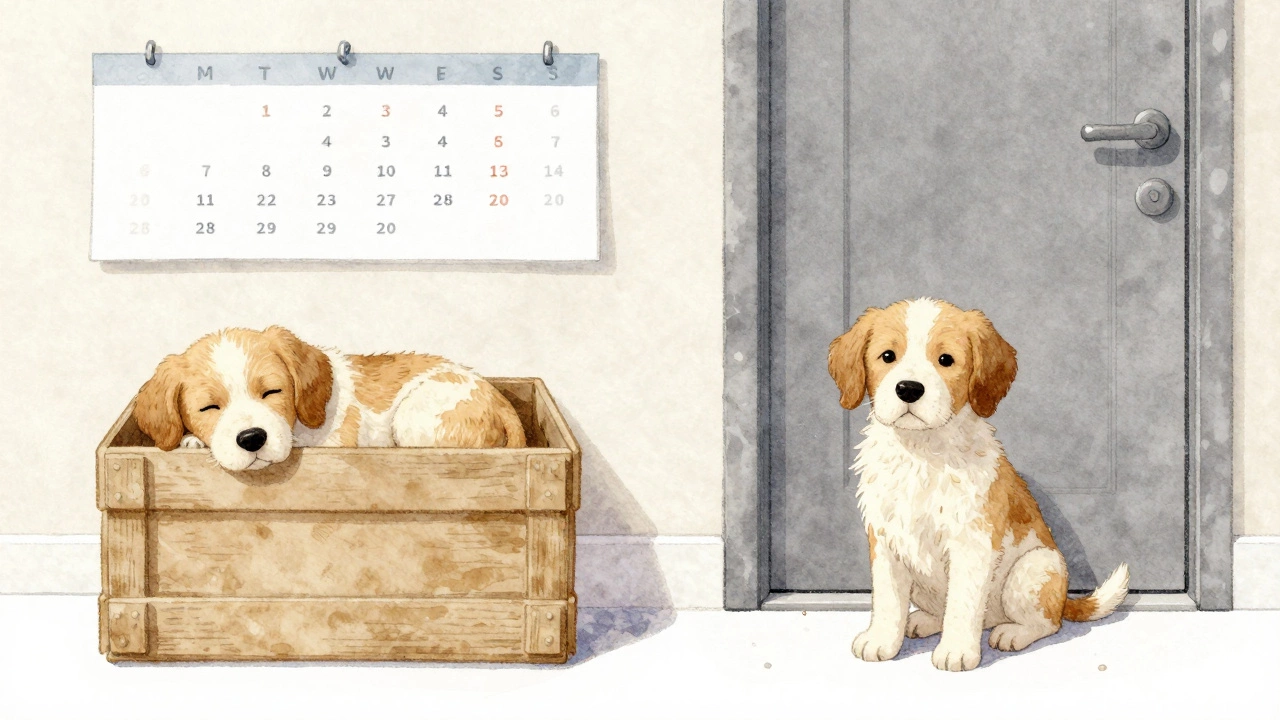
- Week 7-8: No accidents for 10 days straight. You let them roam the house unsupervised. You still take them out after meals and before bed.
- Month 3: Fully reliable. They signal when they need to go. Even in new places.
That’s the path. No shortcuts. No magic pills. Just time, repetition, and quiet consistency.
What Happens After Housebreaking?
Once they’re housebroken, don’t stop. Keep the routine. Take them out after meals, after play, before bed. Even adult dogs need structure. If you stop, they’ll forget. A 3-year-old dog who used to be perfect can start having accidents if their schedule changes - a new job, a move, a new baby. Keep the habits alive. It’s easier than starting over.