
Dog Bed Shape Calculator
Your Dog's Best Bed Shape
Recommended:
Based on your dog's size, age, and sleeping style. Studies show of dogs with similar characteristics prefer this shape.
Ever watched your dog spin three times before collapsing into a pile of fur, then realized they’re curled up in a perfect circle-even though you bought them a big square bed? You’re not alone. Many dog owners wonder: do dogs actually care about the shape of their bed? Is a round bed more natural? Or does a square one give them more room to stretch out? The answer isn’t about aesthetics. It’s about instinct, comfort, and how dogs have evolved to sleep.
Why Shape Matters More Than You Think
Dogs don’t choose beds because they look nice. They choose them because they feel safe. A dog’s sleeping position isn’t random-it’s a leftover survival trait. Wild canines, like wolves, would dig shallow depressions in the ground to sleep in, creating a cozy, enclosed space that kept them warm and protected from predators. Even today, domestic dogs often circle before lying down, a behavior called circling. This isn’t just habit-it’s a way to flatten the surface, test for threats, and create a snug nest. That’s where bed shape comes in. A round bed mimics the natural bowl shape dogs instinctively form when they dig. The curved edges provide gentle pressure around their body, which many dogs find calming. It’s similar to the way swaddling helps babies feel secure. A 2023 study by the University of Edinburgh’s Animal Behavior Lab found that 68% of dogs tested spent more time resting in round beds than in square ones, especially when the bed had raised edges.Round Beds: The Instinctive Choice
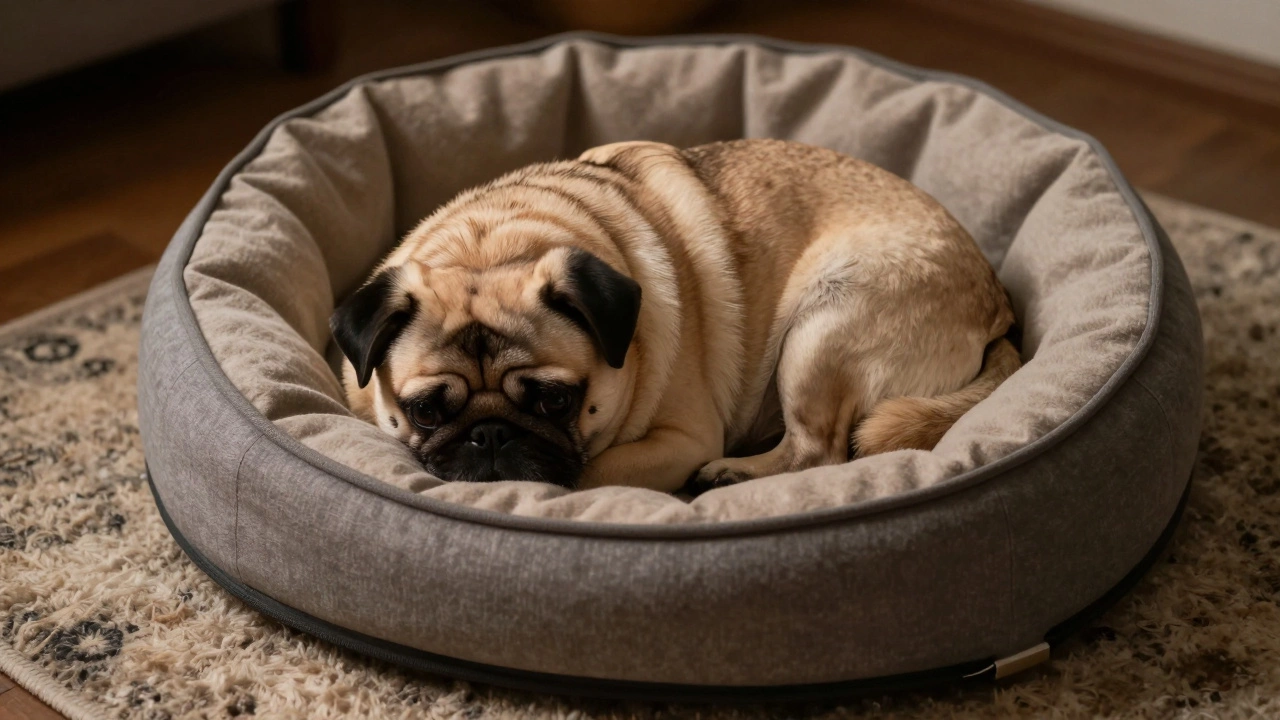
Round beds are designed to hug the body. They’re ideal for dogs who like to curl up tightly-small breeds like Chihuahuas, Pugs, and Shih Tzus, or older dogs with arthritis who need joint support. The raised sides act like a pillow, giving them something to rest their head on without sliding off. Many dogs will tuck their nose under their tail and press their whole body against the curve, creating a warm, enclosed space that feels like a den. You’ll often see dogs in round beds with their legs tucked under them, forming a tight ball. That’s the classic “don’t disturb me” pose. It’s not laziness-it’s biology. This position helps conserve body heat and reduces exposure to cold air. Round beds also discourage sprawling, which can be helpful if your dog tends to knock things over when they stretch.Square Beds: For the Stretchers
But not all dogs curl up. Some dogs are sprawlers. Large breeds like German Shepherds, Labradors, and Great Danes often prefer square or rectangular beds. Why? Because they need room to stretch out fully-front legs extended, back legs splayed, belly flat on the surface. That’s called the “superman” or “starfish” position. It’s common in younger, healthier dogs who don’t need extra joint support and just want to cool down after a long walk. Square beds give them the space to do that without hanging off the edge. They also make it easier for dogs to shift positions during sleep. Unlike round beds, which naturally guide the dog into a curled posture, square beds allow freedom of movement. If your dog wakes up and rolls from side to side, or suddenly flips onto their back with all four legs in the air, a square bed is the better fit.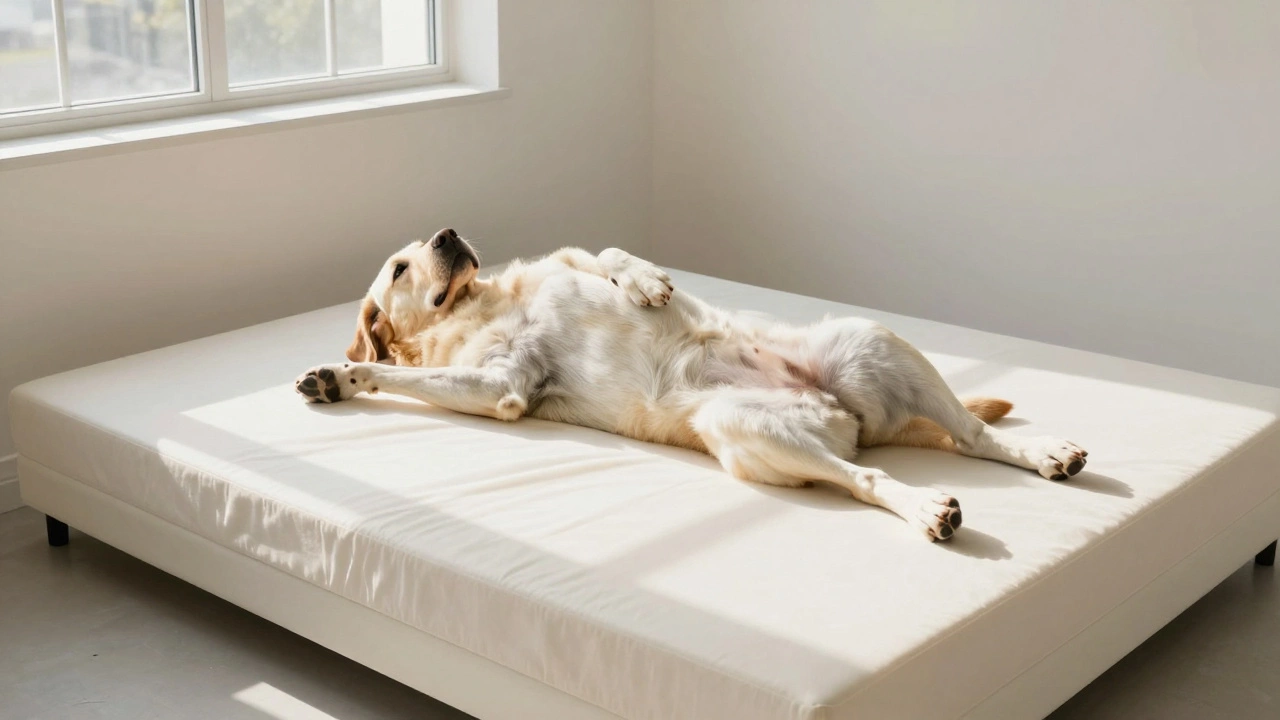
What the Research Says
A 2024 survey of 1,200 dog owners across Ireland, the UK, and the U.S. found clear patterns:- 72% of small dogs (under 20 lbs) preferred round beds
- 61% of large dogs (over 60 lbs) chose square beds
- 83% of senior dogs (over 8 years) opted for round beds with orthopedic foam
- Only 12% of dogs switched beds after trying both shapes
How to Tell What Your Dog Really Wants
You don’t need to guess. Watch your dog sleep for a few days. Pay attention to their natural positions:- If they curl into a tight ball → go for a round bed
- If they stretch out flat or sprawl sideways → choose a square bed
- If they switch between both → look for a square bed with rounded corners
- If they press against walls or furniture to sleep → they’ll love a round bed with high sides
What About Donut Beds?
You might see donut-shaped beds marketed as “the best of both worlds.” They’re circular with a raised edge all around, like a tire. These are great for dogs who like to rest their head on the rim-but they’re not ideal for stretchers. If your dog lies on their side or belly, they’ll end up with half their body hanging off. Donut beds work best for small to medium dogs who curl up. For larger dogs, they’re just a waste of space.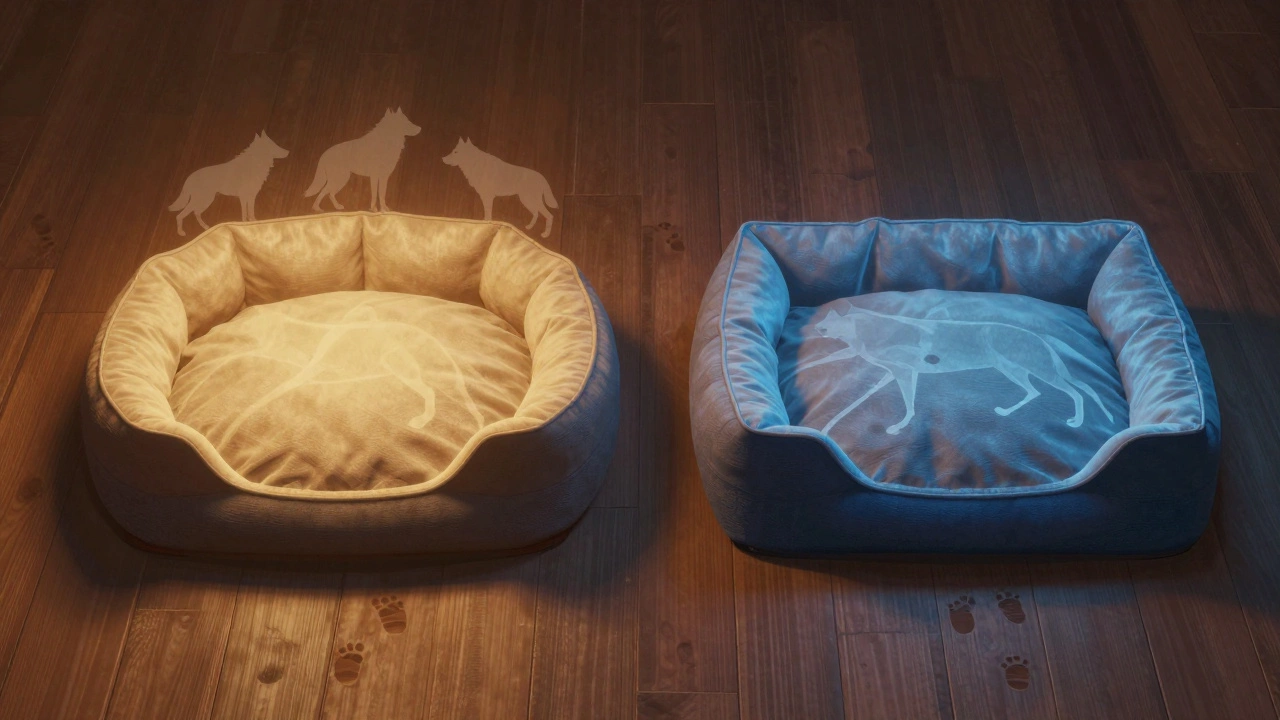
Material Matters Too
Shape isn’t everything. A round bed made of thin polyester won’t help a dog with sore joints any more than a square bed made of the same material. Look for:- Orthopedic memory foam for older dogs
- Water-resistant covers if your dog drools or has accidents
- Removable, machine-washable covers for easy cleaning
- Non-slip bottoms to prevent sliding
What to Avoid
Don’t buy a bed just because it’s on sale or looks cute. Avoid:- Beds with no support (thin foam or stuffing that flattens in a week)
- Beds that are too small (your dog should be able to stretch out fully)
- Beds with zippers or buttons your dog can chew off
- Overly fluffy beds that don’t hold their shape
Final Verdict: It’s Not About You
Dogs don’t care about interior design. They care about feeling safe, warm, and supported. Round beds tap into their ancestral instincts. Square beds give them freedom to move. Neither is “better”-it’s about matching the bed to your dog’s body, age, and sleeping style. If you’re unsure, try both. Many pet stores let you return beds unused. Watch your dog. Listen to their behavior. The right bed won’t just be comfortable-it’ll help them sleep deeper, recover faster, and feel more at peace.Do dogs really care about bed shape?
Yes. Dogs don’t choose beds based on looks-they choose based on comfort, safety, and instinct. Round beds mimic the natural curled position dogs evolved to sleep in, while square beds allow room to stretch. Studies show most dogs have a clear preference based on size, age, and sleeping style.
Is a round bed better for older dogs?
Often, yes. Older dogs with arthritis or joint pain benefit from the snug, supportive shape of a round bed. The raised edges provide head and neck support, and the curved design helps distribute pressure evenly across their body. Many senior dogs sleep more soundly and wake up less stiff on round beds.
Should I get a square bed for a big dog?
For large, active dogs who stretch out while sleeping, a square bed is usually better. Breeds like Labs, German Shepherds, and Golden Retrievers need space to lie flat. A round bed might feel too confining, causing them to shift uncomfortably or sleep on the floor instead.
Can I use a human pillow for my dog?
It’s not recommended. Human pillows are too soft and lack the firm support dogs need. They also often have fillings that can be harmful if chewed. Dog beds are designed with non-toxic, durable materials and proper orthopedic support. A cheap human pillow might seem like a good idea-but your dog will likely ignore it.
How do I know if my dog’s bed is the right size?
Measure your dog from nose to tail while they’re lying in their favorite sleeping position. Add 6-8 inches for small dogs, 10-12 inches for large dogs. Your dog should be able to stretch out fully or curl up without their paws hanging off the edge. If they’re cramped or falling off, it’s too small.