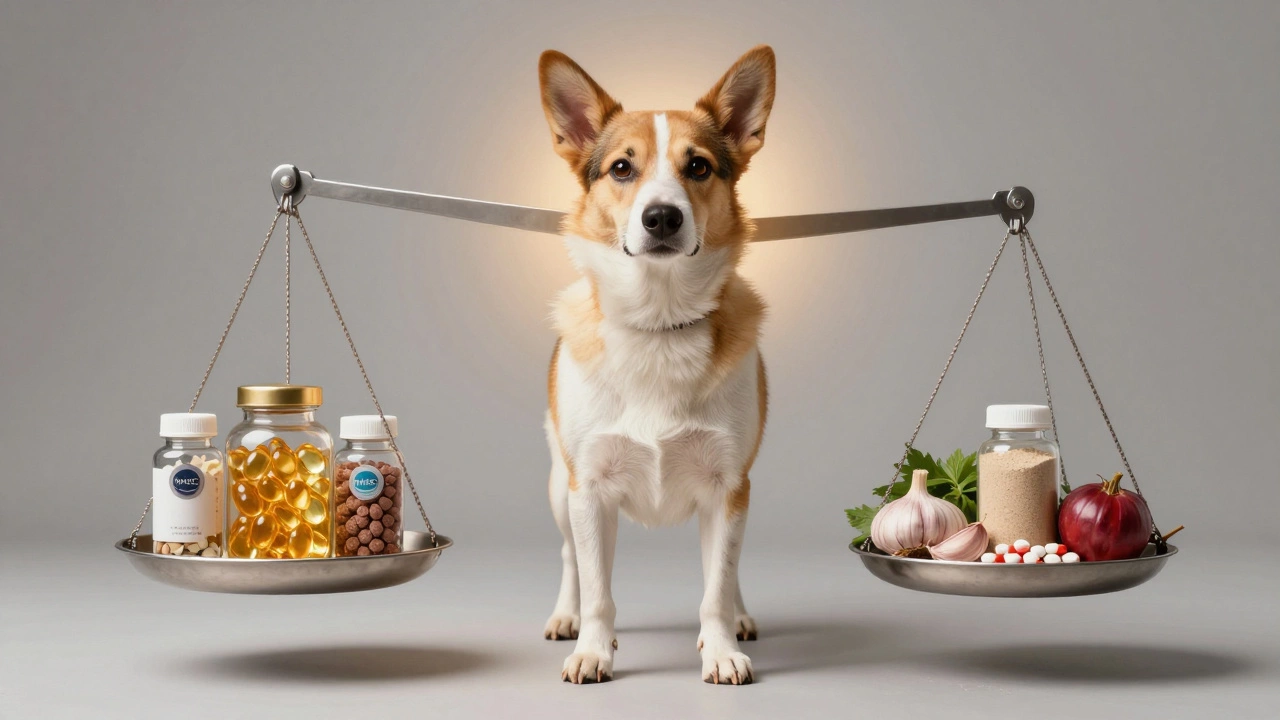

Choosing a supplement for your dog isn’t like picking a treat from the shelf. It’s not about what looks cute or what the ad claims will make your pup ‘shine like a superstar.’ It’s about matching the right nutrient to your dog’s real needs - and avoiding stuff that does more harm than good.
Start with your dog’s age and life stage
Puppies, adult dogs, and seniors all need different things. A 6-month-old Golden Retriever puppy isn’t going to benefit from a joint supplement meant for a 12-year-old Arthritic Labrador. Puppies need supplements that support bone growth and immune development - things like DHA for brain development, calcium in the right ratio with phosphorus, and probiotics to build healthy digestion. Adult dogs usually don’t need extra vitamins if they’re eating a balanced commercial food. But seniors? That’s where supplements really matter. Glucosamine and chondroitin help slow joint wear. Omega-3s reduce inflammation. Antioxidants like vitamin E and selenium fight cellular aging. If your dog is 7 or older, talk to your vet about what’s actually helping - not just what’s being sold.Look at your dog’s symptoms, not just the label
Don’t buy a supplement because it says “for shiny coat” or “for energy.” Watch your dog. Is their coat dull and flaky? That could mean a lack of omega-3s or zinc. Are they licking their paws constantly? It might be allergies - and fish oil can help. Are they slow to get up in the morning? Joint support might be needed. A supplement shouldn’t be a guess. It should be a response to a real, observable issue. If your dog is eating well, acting normal, and has no visible problems, they probably don’t need anything extra. Most healthy dogs get all the nutrients they need from quality dog food. Supplements are for fixing gaps, not filling marketing dreams.Check the ingredient list like a detective
Read the label. Not just the front. The back. The fine print. If the first three ingredients are “chicken flavor,” “brewers yeast,” and “dextrose,” you’re buying flavoring, not nutrition. Real supplements list active ingredients first - things like glucosamine hydrochloride, MSM, green-lipped mussel, or fish oil (not “fish meal”). Avoid products with artificial colors, preservatives like BHA or BHT, or fillers like corn syrup. Look for certifications: NASC (National Animal Supplement Council) seal means the product passed quality and safety tests. GMP (Good Manufacturing Practices) certification is another sign the company follows strict standards. If a brand won’t tell you where their ingredients come from or won’t share lab test results, walk away.
Don’t trust “natural” as a guarantee
“Natural” doesn’t mean safe. Some natural ingredients can be toxic in high doses. Garlic is natural - but it can damage your dog’s red blood cells. Turmeric is popular - but too much can cause stomach upset or interfere with blood thinners. Even something as simple as vitamin D can be deadly if overdosed. The dose makes the poison. Always follow the weight-based dosage instructions. If your dog weighs 15 pounds, don’t give them the 50-pound dog dose just because “it can’t hurt.” More isn’t better. In fact, too much calcium can cause skeletal problems in growing puppies. Too much vitamin A can lead to bone pain and peeling skin. Stick to the numbers on the bottle - or better yet, get the dose from your vet.Watch for interactions with medications
If your dog is on any prescription meds - for seizures, heart disease, arthritis, or allergies - supplements can interfere. For example, glucosamine can affect blood sugar levels in diabetic dogs. Omega-3s can thin the blood, which is risky if your dog is on aspirin or other anti-inflammatories. Probiotics can reduce the effectiveness of antibiotics if given at the same time. Always tell your vet about every supplement you’re giving, even if it’s “just a little.” They’ve seen dogs get sick from well-meaning owners who thought a supplement was harmless. Your vet might even recommend a specific brand they’ve tested or used successfully with other patients.Compare real brands - not hype
Here’s what actually works, based on veterinary studies and real-world use:| Goal | Key Ingredients | Trusted Brands (Vet-Recommended) |
|---|---|---|
| Joint Support | Glucosamine, Chondroitin, MSM, Omega-3 | Dasuquin, Cosequin, Nutramax |
| Coat & Skin | Omega-3 (fish oil), Zinc, Biotin | Zesty Paws Omega Bites, Nordic Naturals Pet Omega-3 |
| Immune Support | Vitamin E, Selenium, Beta-glucans | Thorne Research Vetri-DMG, PetHonesty Immune Support |
| Digestive Health | Probiotics, Prebiotics, Pumpkin | FortiFlora, Purina Pro Plan FortiFlora, VetriScience Probiotic |
These brands don’t have flashy packaging or TikTok influencers. They’re used in vet clinics because they’ve been tested. Avoid store-brand supplements from big-box retailers unless they’re clearly labeled with NASC certification. Generic brands often contain fillers, inconsistent dosing, or inactive ingredients.