
Puppy Potty Training Schedule & Signal Checker
Estimated Hold Time
Can hold urine for:
Note: This is a biological limit. Always offer more frequent breaks during play or after eating.
Recommended Frequency
Select what you are observing to get the immediate recommended action.
Critical Timing Windows
Don't just wait for signals. Proactively take your puppy out during these high-risk times:
- 1 Immediately after waking up (nap or night)
- 2 10–15 minutes after eating or drinking
- 3 After intense play sessions
- 4 Every 2 hours (minimum) for puppies under 4 months
You’ve just brought home a fluffy bundle of joy. It’s cute, it’s chaotic, and it has absolutely no idea where the bathroom is. One minute you’re cuddling on the sofa, the next there’s a warm puddle on your rug. Frustrating? Yes. Normal? Absolutely. The core problem isn’t that your puppy is being stubborn or bad; it’s simply that he hasn’t learned how to communicate his biological needs to you yet.
Potty training isn’t just about teaching a dog where to go; it’s about building a two-way conversation. Most owners wait for accidents to happen before reacting. But if you want to stop the messes, you need to learn to read the subtle signs your dog is already giving you. This guide breaks down exactly how to spot those signals and train your pup to alert you before disaster strikes.
The Biology Behind the Bladder
Before we talk about communication, let’s look at the hardware. A young dog bladder is tiny and underdeveloped. As a general rule of thumb, a puppy can hold their urine for one hour per month of age, up to about four months old. So, an eight-week-old puppy (two months) can only hold it for about two hours. That’s barely enough time to finish a cup of coffee.
This biological limitation means your puppy physically cannot "wait" in the same way an adult dog can. When they feel the urge, it’s urgent. They don’t have the sphincter control to dance around politely for ten minutes. Understanding this helps you realize that when your puppy starts pacing, it’s not misbehavior-it’s a physiological emergency.
Decoding Early Warning Signs
Your puppy is talking to you all day long. You just might not speak "Dog." Dogs rarely use vocalizations like barking to signal a need to pee unless they’ve been specifically trained to do so. Instead, they rely on body language. If you miss these early cues, you’ll likely find yourself cleaning up after the fact.
Watch for these specific behaviors:
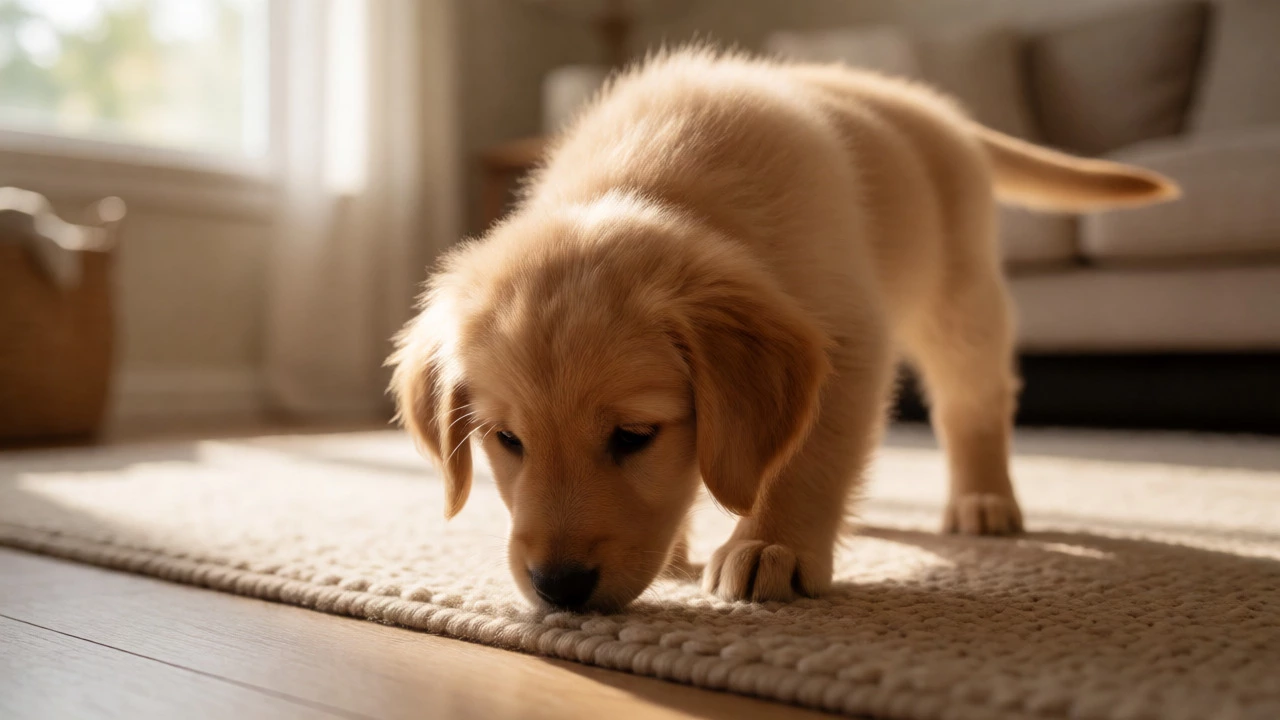
- Sudden Sniffing: If your puppy drops what they are doing and starts sniffing the ground intensely, especially near corners or doorways, they are looking for a spot. This is often the first sign.
- Restlessness: A puppy who was sleeping or playing calmly suddenly gets up, walks to the door, looks back at you, and then walks back to you is asking to go out.
- Whining or Pacing: Low-level whining combined with circling is a classic pre-accident signal. They are uncomfortable and trying to tell you something is wrong.
- Going to the Door: Many puppies will instinctively head toward the exit point they associate with outside. If they stand by the back door and look at you, take them out immediately.
Notice the pattern? These signs usually happen within 15-30 minutes of waking up, eating, or drinking water. Timing is everything.
| Signal Type | What It Looks Like | Immediate Action |
|---|---|---|
| Visual Cue | Sniffing floor, circling in a corner | Quietly pick up puppy and rush outside |
| Vocal Cue | Whining at door, soft bark | Open door immediately; reward silence once outside |
| Behavioral Cue | Leaving play area, heading to crate | Interrupt gently and lead to potty zone |
| Posture | Squatting posture indoors | Make a sharp noise (e.g., "Oops!") to interrupt, then run outside |
Teaching the "Ask" Behavior
Once you can spot the natural signs, you can actively teach your puppy to alert you. The goal is to replace accidental accidents with intentional communication. There are three main methods to achieve this, depending on your living situation.
Method 1: The Bell System
This is popular for houses with doors leading directly outside. Hang a dog bell on the doorknob at nose height. Every time you take your puppy out to pee, help them touch the bell with their paw or nose. Say "Go Potty" as you open the door. After a few weeks, most puppies figure out that ringing the bell equals freedom to go outside. Consistency is key here-never ignore the bell, even if you think they just want to play. If you ignore it, they learn the bell doesn't work.
Method 2: The Mat Command
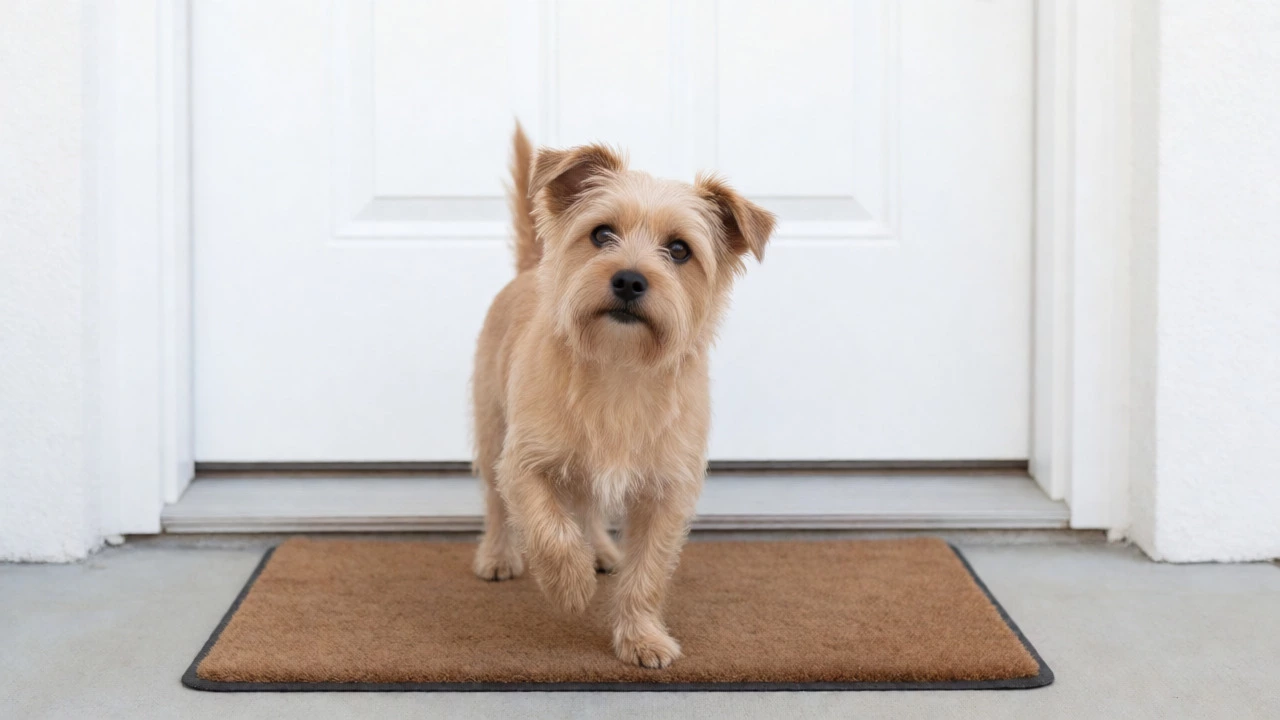
If bells aren’t practical (maybe you live in an apartment), place a small mat by the door. Train your puppy to sit on the mat whenever they need to go out. Start by luring them onto the mat with a treat. Once they sit, say "Outside" and take them out. Over time, the mat becomes their designated "request station." This works well because it gives the dog a physical place to go rather than jumping on your legs.
Method 3: Eye Contact and Stillness
For highly attentive breeds, you can teach them to come to you and stare. When you see the early signs of needing to pee, call your puppy over. If they come and look at you, immediately take them out. Reward the eye contact heavily. This requires you to be very observant, but it builds a strong bond.
Critical Timing Windows
You can’t rely solely on your puppy telling you. In the early stages, you must anticipate their needs. Think of it like managing a toddler. You know they need to go after certain events. Schedule your outings around these triggers:
- After Waking Up: Whether from a nap or overnight sleep, take them out immediately. Their bladder fills while they sleep.
- After Eating or Drinking: Digestion stimulates the bladder. Wait 10-15 minutes after a meal or water bowl session, then take them out.
- After Playtime: Excitement can cause leaks. If you’ve been wrestling or running in the garden, pause and offer a potty break.
- Every 2 Hours (Minimum): For puppies under four months, set a timer. Don’t guess. Set an alarm on your phone. If you miss the window, you risk an accident.
Using a strict schedule reduces the chance of accidents, which makes the learning process faster. If your puppy never has an accident inside, they never learn that inside is acceptable for peeing.
Handling Accidents Without Guilt
Despite your best efforts, accidents will happen. Maybe you were on a Zoom call, or maybe your puppy just couldn’t hold it. How you react matters more than the accident itself.
If you catch them in the act, make a quick, neutral sound like "Ah!" or "Oops!" Do not yell or punish. Just scoop them up and rush them outside. If they finish outside, praise them wildly. This teaches them that the act of peeing should happen outside, not that they are bad dogs.
If you find the puddle after it happened, clean it up silently. Punishing a dog for an accident they did 20 minutes ago is useless. They won’t connect the punishment to the pee. They will just think you are scary when you come home. Use an enzymatic cleaner to remove the scent completely. If your puppy smells their own urine, they are likely to mark that spot again.
When to Worry About Medical Issues
Sometimes, a puppy isn’t ignoring your commands-they physically can’t hold it. Watch for red flags that suggest a health issue rather than a training gap.
Contact your vet if you notice:
- Frequent Urination: Peeing tiny amounts every 10-15 minutes.
- Straining: Pushing to pee but little comes out.
- Blood in Urine: Pink or red tint.
- Lethargy: Combined with excessive thirst.
A urinary tract infection (UTI) is common in young dogs and can cause sudden regression in potty training. Always rule out medical causes before assuming your puppy is just being difficult.
Building Long-Term Habits
Potty training isn’t a sprint; it’s a marathon that lasts until your dog is fully mature, usually around 12-18 months. Even after your puppy seems reliable, keep up the routine. Adult dogs can develop bad habits if left alone too long or if their routine changes drastically.
Keep a log for the first few weeks. Note down times you took them out and whether they went. Patterns will emerge. Maybe your puppy always needs to go 20 minutes after breakfast. Once you know their rhythm, you can stay one step ahead. Remember, patience pays off. A dog that communicates clearly is a dog that lives stress-free alongside you.
How long does it take to potty train a puppy?
Most puppies show significant progress within 4-6 weeks of consistent training. However, full reliability, including holding it through the night, often takes until the puppy is 6-12 months old. Smaller breeds may take longer due to smaller bladders.
Should I wake my puppy up at night to pee?
Yes, for young puppies (under 4 months). Their bladders are small, and they cannot hold urine for 8 hours. Set an alarm to take them out once during the night. Gradually extend the time between night outings as they grow older.
My puppy pees inside even after going outside. Why?
This could be submissive urination (excitement) or incomplete emptying. Ensure they stay outside long enough to fully relieve themselves. If it persists, consult a vet to rule out UTIs or other medical issues. Avoid greeting them excitedly right after coming inside.
Do male puppies lift their leg earlier than females?
Not necessarily. Leg-lifting is a marking behavior, not a toileting necessity. Most puppies squat regardless of gender until they reach sexual maturity (6-12 months). Marking indoors is a separate behavioral issue from basic potty training.
Can I use pee pads instead of going outside?
Yes, especially for apartments. However, be aware that using pads exclusively can delay outdoor training. The puppy learns to eliminate indoors. Transition slowly by moving the pad closer to the door, then eventually removing it entirely if you plan to switch to outdoor-only elimination.