
Puppy Sleep Lighting Calculator
Find the right time to turn off nightlights for your puppy based on age and behavior.
When you first bring a puppy home, everything feels new - the tiny paws, the endless chewing, the midnight zoomies. But one of the quietest, most confusing questions many new owners face is this: should you turn the light off for your puppy at night? It seems simple, but the answer isn’t just about saving electricity. It’s about safety, comfort, and helping your puppy learn to sleep through the night.
Do puppies need light at night?
No, puppies don’t need light to see in the dark. Their eyes are built for low-light conditions. A puppy’s retina has more rod cells than a human’s, which helps them pick up movement and shapes in dim environments. That’s why your puppy can find their water bowl or a dropped toy even when the room is mostly dark. But vision isn’t the only factor.
Many puppies cry or whine at night because they’re scared, lonely, or unsure. If you’ve left a nightlight on since day one, your puppy has learned to associate darkness with being alone. When you finally turn it off, the sudden change can trigger anxiety. That’s not because they can’t see - it’s because the environment changed.
What happens if you leave the light on all night?
Leaving a bright light on all night can mess with your puppy’s natural sleep cycle. Like humans, dogs have circadian rhythms. Too much light at night can suppress melatonin, the hormone that helps them fall asleep and stay asleep. Studies in veterinary sleep science show that dogs exposed to constant artificial light at night take longer to enter deep sleep and wake up more often.
Also, a bright room can overstimulate a young puppy. Think about it - you wouldn’t sleep well if your bedroom had a 60-watt bulb shining directly on your face. Your puppy feels the same way. Even a dim lamp can be enough to keep their brain on alert, especially if they’re still learning to self-soothe.
What’s the best lighting setup for a puppy at night?
The sweet spot is low, indirect, and optional. Here’s what works for most puppies:
- Use a small nightlight with warm, amber-colored light (not blue or white). These mimic sunset tones and don’t interfere with melatonin.
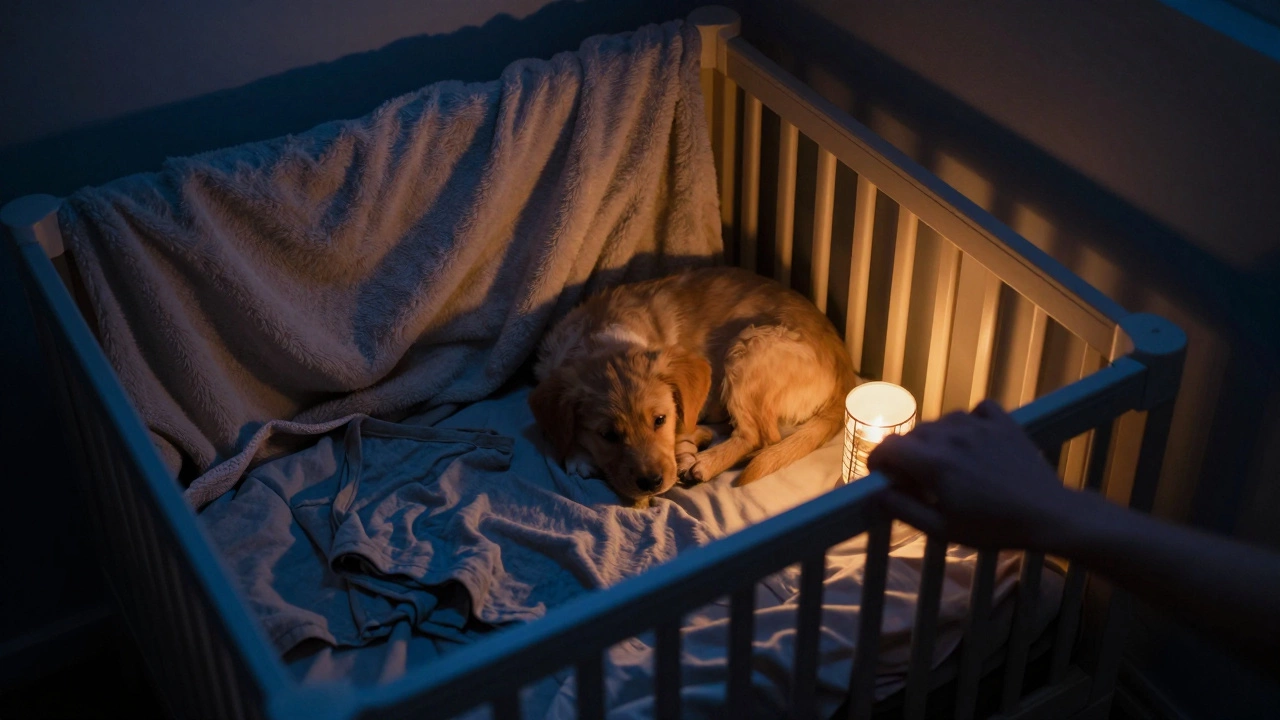
- Place it far from the crate or bed - maybe on the other side of the room or near the door. This gives your puppy a sense of security without bathing them in light.
- Don’t leave it on permanently. Try turning it off after the first 3-5 nights, if your puppy seems calm. If they start whining or pacing, put it back on for a few more nights.
Some owners use motion-sensor lights that turn on only if the puppy gets up. That way, they get a gentle glow if they need to go potty, but the room stays dark otherwise. It’s a smart middle ground.
Should you keep the crate in a dark room?
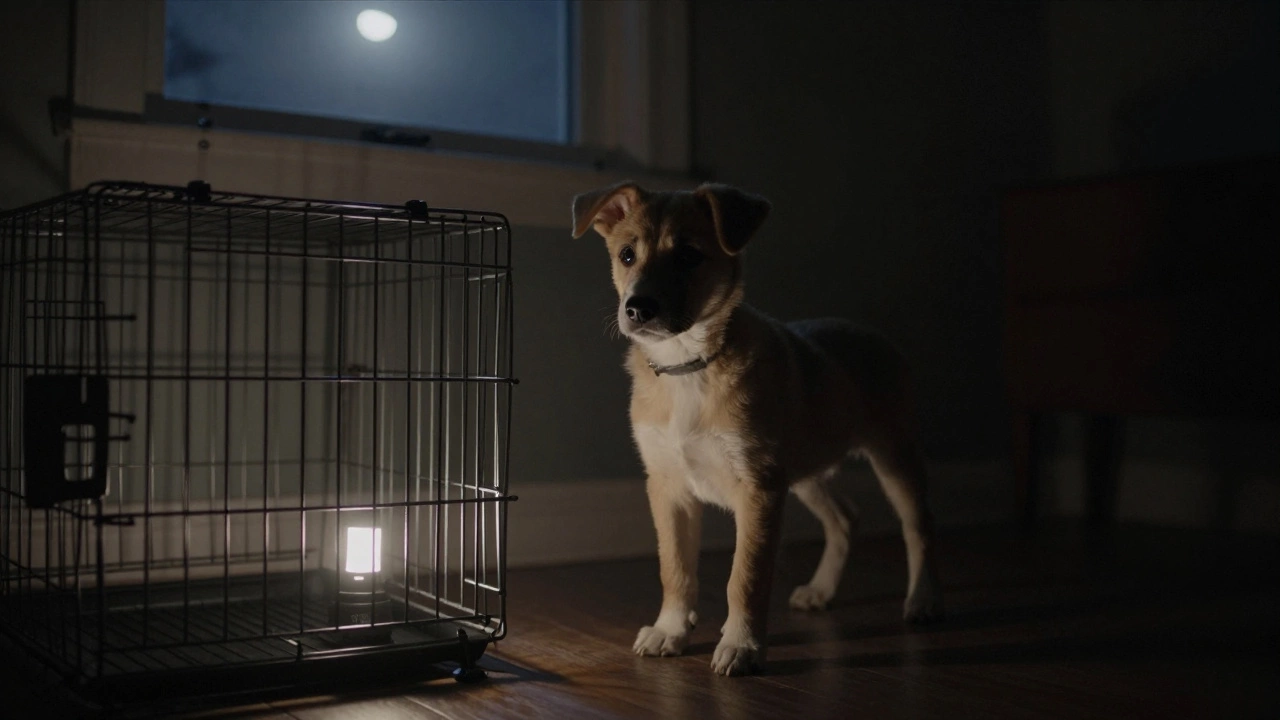
Yes - but with a twist. A dark, quiet space helps signal to your puppy that it’s time to rest. But darkness alone isn’t enough. The crate should feel safe, not scary. That’s why many experts recommend:
- Putting the crate in your bedroom for the first few weeks. Your presence - even if you’re asleep - reduces separation anxiety.
- Covering the crate with a light blanket on three sides. This creates a den-like feeling, which mimics the warmth and quiet of a litter.
- Leaving a soft, old t-shirt with your scent inside. Familiar smells are powerful comfort tools.
After a few weeks, if your puppy sleeps quietly, you can slowly move the crate to another room. But don’t rush it. A 10-week-old puppy still needs reassurance. Moving too fast can undo progress.
What if your puppy cries when the light goes off?
Crying at night is normal - but it’s not always about the light. It could be:
- A full bladder. Puppies under 12 weeks can’t hold it for more than 3-4 hours. Make sure they’ve had a potty break right before bedtime.
- Hunger. If you’re feeding once at night, consider adjusting meal timing. A small dinner 2 hours before bed helps.
- Over-tiredness. A puppy who’s been overstimulated during the day won’t sleep well. Try quiet time before bed - no games, no loud noises.
- Separation anxiety. If they cry the moment you leave the room, even with the light on, they may need more gradual training.
Don’t rush to turn the light back on every time they cry. That teaches them that crying gets attention. Instead, wait 5-10 minutes. If they’re just testing boundaries, they’ll settle. If they’re truly scared, a soft voice or a gentle pat (without picking them up) can help.
How long should you keep a nightlight on?
There’s no fixed timeline - it depends on your puppy’s personality. Here’s a general guide:
- Week 1-2: Keep a dim nightlight on. This is the adjustment phase. Your puppy is learning where they are.
- Week 3-4: Try turning it off for 1-2 hours after they fall asleep. If they sleep through it, leave it off. If they wake up whining, turn it back on.
- Week 5-6: Most puppies can handle complete darkness. If they’re sleeping quietly, you’re good to go.
- After 8 weeks: If your puppy still panics in the dark, consult a vet or certified trainer. It could be a deeper anxiety issue.
Some puppies never need light. Others take months. Don’t compare. Your job isn’t to make it perfect - it’s to make it safe.
What about puppies with medical issues?
If your puppy has vision problems, neurological conditions, or is recovering from surgery, they may need more light. Always follow your vet’s advice. But for healthy puppies? Darkness is natural. And with the right setup, it’s comforting.
Final tip: Build a bedtime routine
Lighting matters, but consistency matters more. A calm, predictable routine helps your puppy relax more than any nightlight ever could. Try this:
- 6:30 PM - Last meal
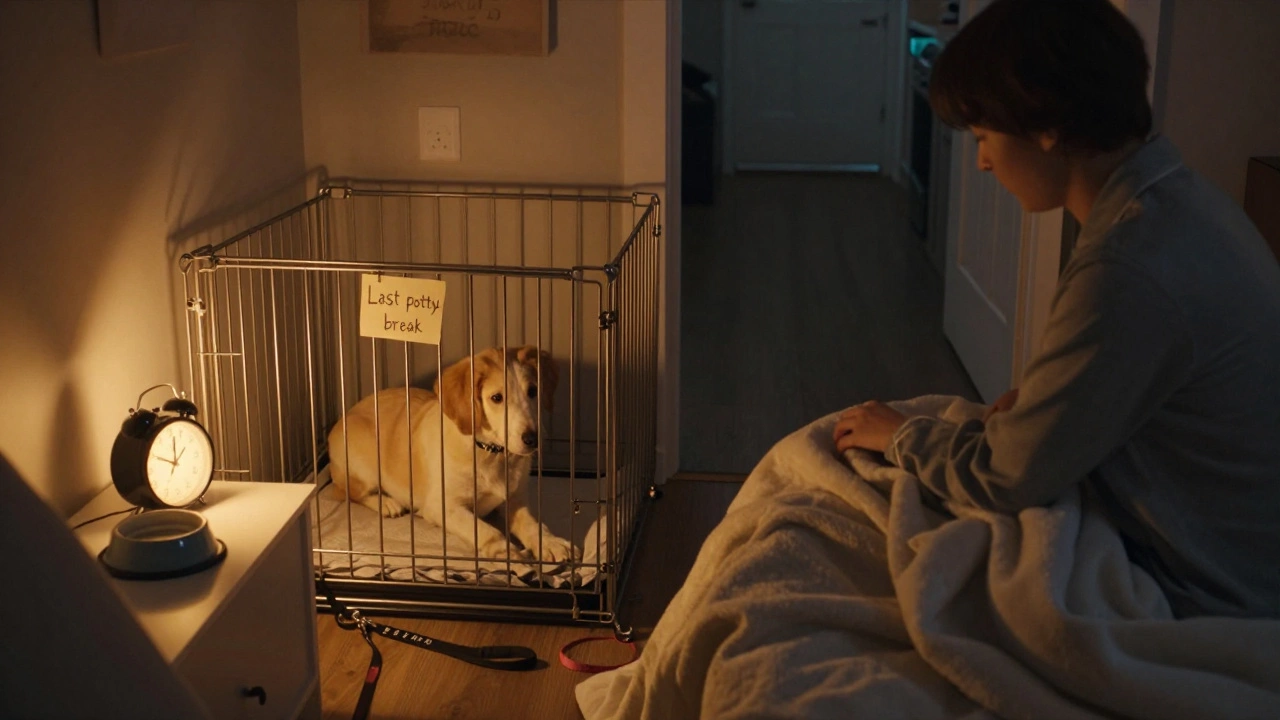
- 7:00 PM - Potty break
- 7:15 PM - Quiet play (no chasing, no barking)
- 7:30 PM - Crate time, dim light on
- 8:00 PM - Light off, quiet room
- 9:00 PM - Sleep
Stick to this for a week, and you’ll notice a difference. Puppies thrive on rhythm. They don’t need fancy gadgets. They need you - calm, consistent, and present.