
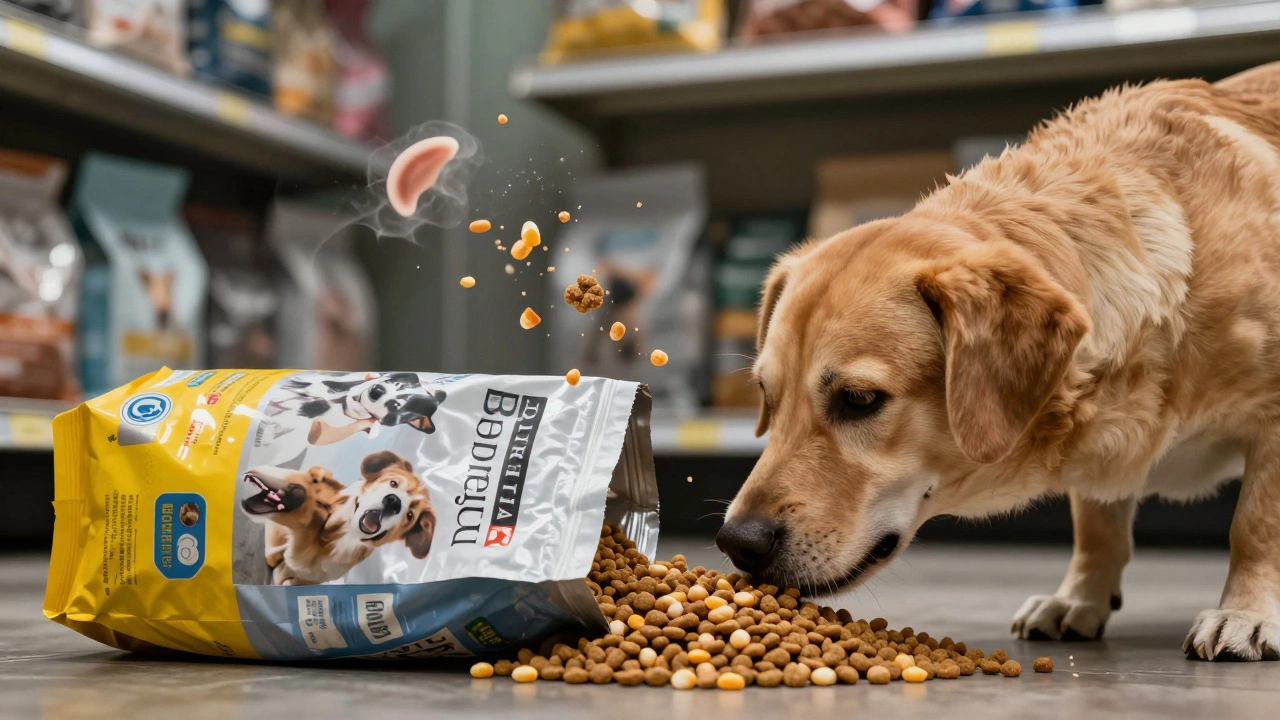
When you open a bag of Purina Beneful, you see bright packaging, cute dog photos, and maybe even a promise like "Made with real chicken" or "No artificial preservatives." It’s easy to assume it’s a healthy choice. But behind the marketing, there’s a lot more to consider. Is Purina Beneful actually good for your dog? The answer isn’t simple. It depends on your dog’s age, health, and what’s really inside the bowl.
What’s in Purina Beneful?
Purina Beneful comes in many varieties-dry kibble, wet food, treats, and even grain-free options. But most of its dry formulas share the same core ingredients: corn, wheat, and soy. These aren’t fillers in the old-school sense; they’re cheap sources of carbohydrates. The problem? Dogs don’t need carbs like humans do. Their bodies are built to thrive on protein and fat, not grains. Studies from the University of Illinois and the American College of Veterinary Nutrition show that dogs digest animal proteins far better than plant-based starches. When corn and soy make up the first three ingredients, that’s a red flag.
The protein source? Often listed as "chicken by-product meal" or "meat and bone meal." That’s not the same as "chicken" or "chicken meal." By-product meal includes parts like feathers, beaks, and organs-some of which are nutritious, but others are low-quality and inconsistent. There’s no standard for what goes into by-product meal, so one bag could be better than the next. That’s not something you want to gamble with when your dog’s health is on the line.
Artificial additives and preservatives
Even though Beneful claims "no artificial preservatives," that’s only true for some lines. Many older formulas still contain BHA and BHT-chemicals linked to cancer in lab animals. The FDA has flagged these as potential risks, but they’re still legal in pet food. You won’t find them in the newer "Natural" or "Healthy Weight" lines, but you’ll still see artificial colors like Red 40 and Yellow 5. Why? They make the food look more appetizing to humans, not dogs. Dogs are colorblind. They eat based on smell and texture. Those colors serve no purpose but marketing.
Another issue: propylene glycol. It’s used in wet foods to keep them moist. It’s safe for humans, but in dogs, it can damage red blood cells over time. The FDA allows it in pet food, but many vet nutritionists avoid it entirely. If your dog has allergies, digestive issues, or even just a sensitive stomach, these additives can make things worse.
Health concerns tied to Beneful
In 2015, a class-action lawsuit claimed Beneful caused kidney failure, liver damage, and even death in dogs. Purina denied responsibility, and the case was dismissed in 2017. But over 2,000 dog owners submitted affidavits with vet records showing symptoms after feeding Beneful. Some dogs improved dramatically after switching foods. That’s not proof of causation, but it’s enough to make you pause.
More recent studies from the University of California, Davis tracked 1,200 dogs over three years. Those fed primarily on grain-based kibble like Beneful had a 34% higher rate of chronic digestive issues compared to dogs on meat-first diets. The same group also showed higher levels of inflammation markers in blood tests. It doesn’t mean every dog gets sick-but the risk is real.

Who might still do okay on Beneful?
Not every dog will react badly. Some dogs eat Beneful for years and stay healthy. If your dog is young, active, and has no allergies or chronic conditions, they might tolerate it fine. The "Healthy Weight" line has fewer carbs and added fiber, which helps some dogs maintain a healthy body condition. The "Multi-Sensorial" line includes real meat as the first ingredient and avoids artificial colors. It’s not perfect, but it’s better than the original formulas.
Also, if you’re on a tight budget, Beneful is cheaper than premium brands. A 30-pound bag costs around $25. Compare that to Orijen or Acana, which run $60-$80. For some owners, the price difference matters. But remember: cheaper food can cost more in vet bills later. A single episode of pancreatitis or chronic diarrhea can run $1,000 or more. Is saving $35 a month worth that risk?
What should you look for instead?
Start with the ingredient list. The first three ingredients should be named meats: chicken, beef, lamb, or fish-not "meat meal," not "by-products." Look for whole grains like brown rice or oats if you’re not going grain-free. Avoid corn, wheat, soy, and artificial anything.
Check for AAFCO statements. Every bag should say it meets AAFCO nutrient profiles for "growth," "maintenance," or "all life stages." Beneful does, but so do many low-quality brands. That just means it meets minimum requirements-not that it’s optimal.
Try brands like Wellness Simple, Blue Buffalo Basics, or Hill’s Science Diet. They use higher-quality proteins, fewer fillers, and no artificial additives. Even store brands like Blue Buffalo’s "Blue Freedom" or Victor’s "Super Premium" are better than Beneful for the same price.
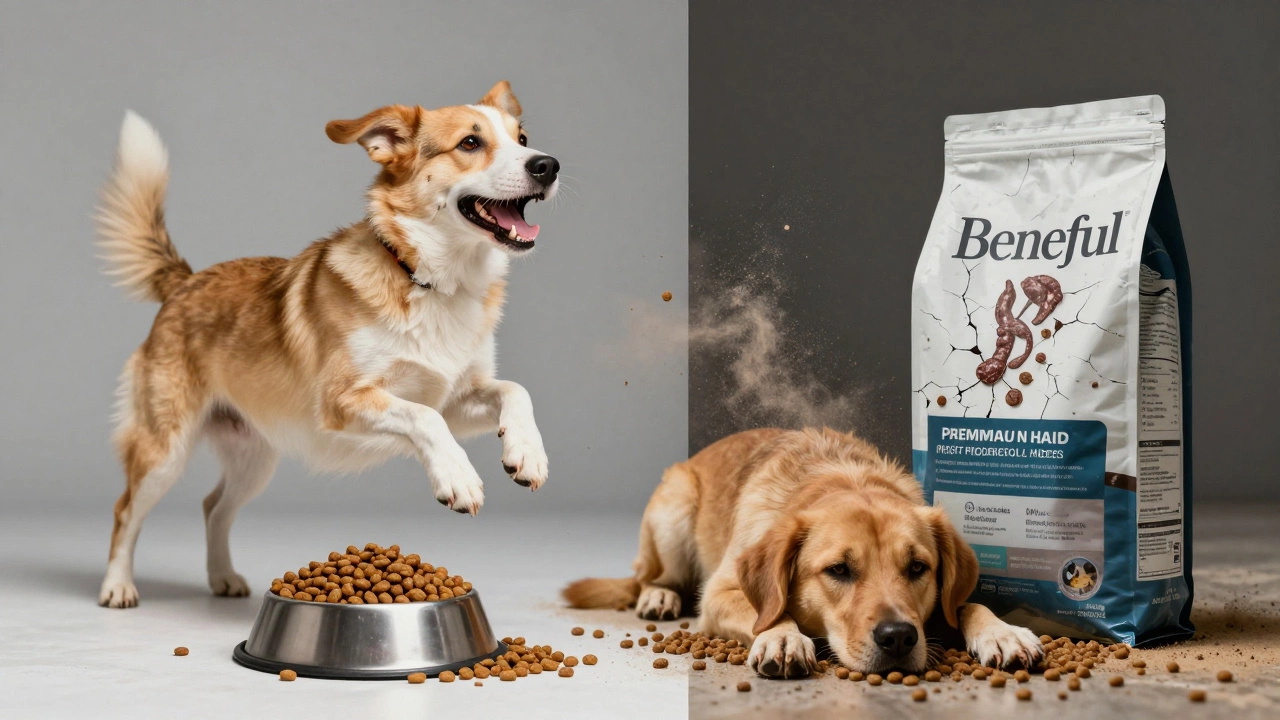
What to do if your dog is already eating Beneful
If your dog is healthy and you’ve been feeding Beneful for years, don’t panic. But start paying attention. Watch for signs like:
- Loose stools or frequent diarrhea
- Excessive itching or skin rashes
- Bad breath or yellow teeth
- Low energy or weight gain
- Recurring ear infections
If you see any of these, it’s time to consider a change. Switch slowly-mix 25% new food with 75% Beneful for five days, then 50/50 for five more, then 100% new food. This prevents upset stomachs.
Keep a food journal. Note what you feed, when, and any changes in behavior or digestion. That helps you spot patterns. If your dog improves after switching, you’ll know Beneful was part of the problem.
Bottom line: Is Beneful good for your dog?
Purina Beneful isn’t poison. But it’s not nutritionally optimal either. It’s designed to be affordable and shelf-stable, not to support long-term health. For healthy adult dogs with no sensitivities, it’s okay as a temporary option. But if your dog has allergies, digestive issues, or you want to give them the best chance at a long, active life, there are far better choices.
Think of dog food like human food. Would you feed your child a breakfast of corn flakes, sugar, and artificial coloring every day? Probably not. Dogs deserve the same respect. Your dog’s body isn’t a trash can. It’s a living system that needs real nutrients to thrive.
Switching food isn’t about fear. It’s about giving your dog a better shot at health. And that’s worth the effort.
Is Purina Beneful recalled?
Purina Beneful has never had a full recall, but there have been voluntary withdrawals of specific batches due to potential contamination. In 2016, a small number of wet food cans were pulled because of possible salmonella. In 2020, some dry food bags were recalled over mold concerns. These were limited, but they show that quality control isn’t perfect. Always check the FDA’s pet food recall page before buying.
Does Beneful cause allergies in dogs?
Yes, it can. The main allergens in Beneful are corn, wheat, soy, and chicken by-products. These are common triggers for skin and digestive allergies in dogs. If your dog licks their paws constantly, has red ears, or gets diarrhea after eating, Beneful might be the culprit. Switching to a limited-ingredient diet with novel proteins like duck or venison often helps.
Is Beneful grain-free better?
The grain-free versions of Beneful replace corn and wheat with peas, potatoes, and lentils. But these legumes are linked to dilated cardiomyopathy (DCM) in dogs, according to the FDA’s 2021 report. While not all grain-free foods cause heart issues, the risk is real. If you want grain-free, choose brands that use whole meats and avoid excessive legumes. Beneful’s grain-free line isn’t the safest option.
Can puppies eat Beneful?
Purina offers a "Beneful Healthy Growth" formula for puppies. But even this version contains corn and soy as top ingredients. Puppies need high-quality protein and fat for brain and bone development. Cheap fillers can slow growth and weaken their immune system. Better options include Royal Canin Puppy, Hill’s Science Diet Puppy, or Blue Buffalo Life Protection Puppy-all with named meats as the first ingredient.
How do I know if my dog’s food is good?
Look at the ingredient list: meat first, no artificial colors or preservatives. Check the AAFCO statement. Then watch your dog: shiny coat, firm stools, good energy, no itching. If your dog thrives on the food, it’s working. If they’re tired, itchy, or have loose poop, it’s time to try something else. Your dog’s body tells you what it needs.
If you’re unsure where to start, talk to your vet. Ask for a list of foods that meet AAFCO standards and have high meat content. Don’t rely on packaging claims. Read the label. Your dog’s health depends on it.