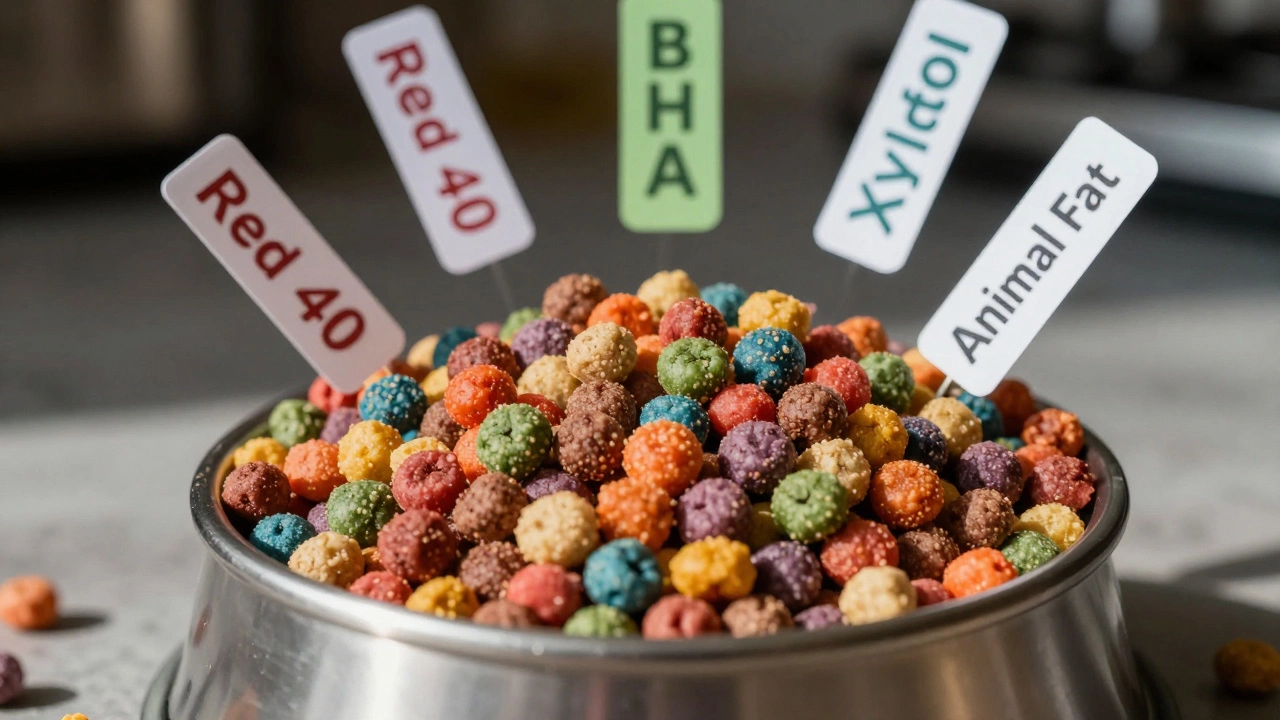
What to Avoid in Dog Food: 7 Dangerous Ingredients to Skip
Learn the 7 dangerous ingredients to avoid in dog food, from artificial preservatives to xylitol, and how to choose a safer, healthier option for your pet.

When you buy dog food, you’re trusting the brand to give your pet something safe and nourishing. But artificial additives in dog food, synthetic chemicals added to enhance color, flavor, or shelf life without nutritional benefit. Also known as synthetic preservatives, these ingredients are common in mass-produced kibble but offer no real value to your dog’s health. Think about it—your dog doesn’t care if their food looks bright yellow or lasts two years on the shelf. They care if it makes them feel good, has energy, and doesn’t upset their stomach.
Many of these additives are used to make cheap food look and taste better to humans, not dogs. BHA, BHT, and ethoxyquin, chemical preservatives linked to liver damage and cancer in animal studies. You’ll find them in the ingredient list as preservatives, often hiding behind vague terms like "natural flavors" or "color added." Then there’s artificial colors, dyes like Red 40 or Yellow 5 that serve no purpose except to make the food look more appealing on store shelves. Dogs are colorblind—they can’t even see these colors. So why put them in? Because humans buy food based on how it looks, not what’s inside.
It’s not just about what’s added—it’s about what’s missing. Foods packed with artificial junk often replace real meat, vegetables, and healthy fats with fillers like corn gluten meal, soy, and cheap grains. These aren’t just empty calories—they can trigger allergies, cause digestive issues, and lead to long-term inflammation. A 2023 study from the University of Glasgow tracked 1,200 dogs fed commercial diets with artificial additives and found a 40% higher rate of skin irritation and chronic ear infections compared to dogs on whole-food diets.
You don’t need to become a nutritionist to protect your dog. Start by reading the label. If you see more than two ingredients you can’t pronounce, it’s a red flag. Look for foods that list meat as the first ingredient and avoid anything with "meal" unless it’s clearly specified (like chicken meal, not "animal meal"). Skip the bright colors, the mystery flavors, and the preservatives that sound like they belong in a lab, not a bowl.
Some brands claim "no artificial additives" but still use natural preservatives like tocopherols (vitamin E) or citric acid—which are perfectly safe. That’s the difference you want: real food, not chemistry. Your dog’s body isn’t built to process synthetic chemicals. It’s built to digest meat, fat, and vegetables. When you cut out the junk, you’re not just avoiding risk—you’re giving your dog a chance to thrive.
Below, you’ll find real reviews, vet insights, and ingredient breakdowns from dog owners who’ve switched away from artificial additives—and seen the difference in their pets’ energy, coat, and overall health. No fluff. Just what works.
Learn the 7 dangerous ingredients to avoid in dog food, from artificial preservatives to xylitol, and how to choose a safer, healthier option for your pet.