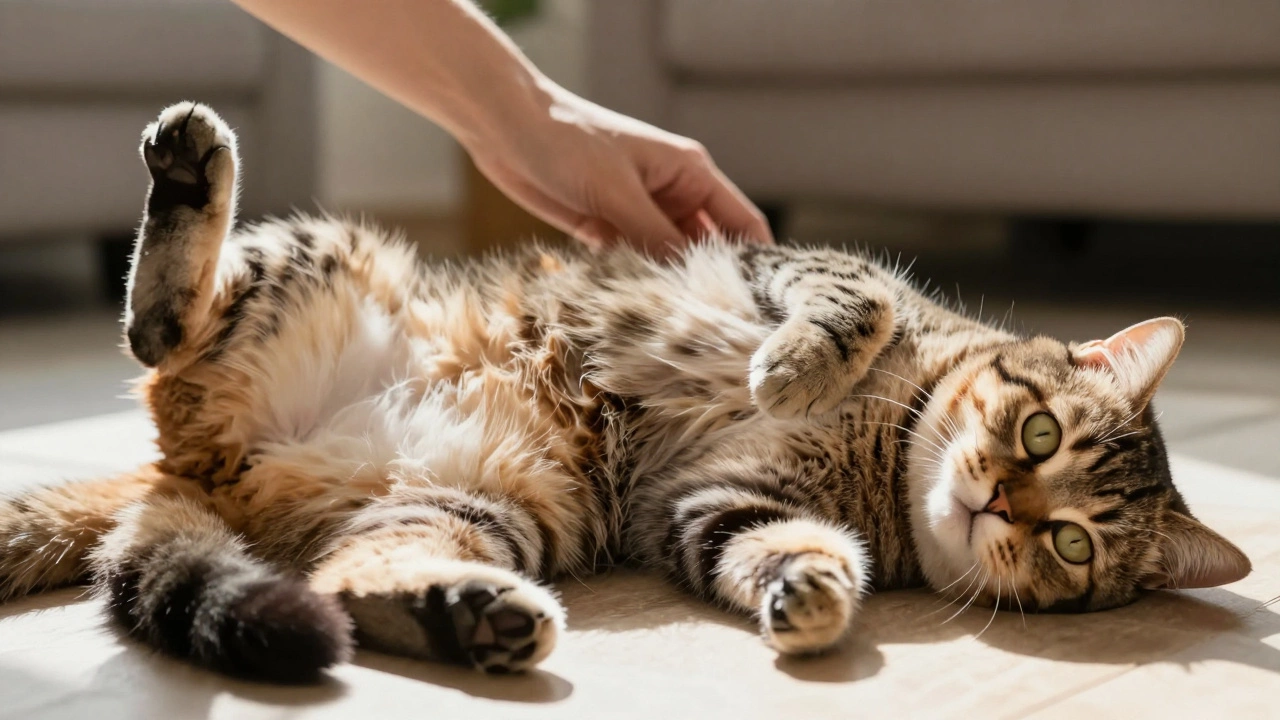
Why Do Cats Hate Belly Rubs? Understanding Feline Behavior
Discover why most cats dislike belly rubs, the signs of discomfort, and better ways to show affection. Learn how to build trust with your feline friend and avoid common mistakes.

Ever notice your dog rolling over for a good belly rub? That’s a clear sign they love the attention and trust you. Giving a belly rub isn’t just about a fun tickle – it can deepen your bond, lower your dog’s stress, and even help with minor muscle tension.
Before you start, check that your dog is comfortable being on their back. Some pups only relax in that position when they feel safe. If they seem tense, try a quick petting session on the chest or side first, then gently invite them to flip over.
Start with a soft, slow stroke using the pads of your fingers. Move in small circles around the ribcage, then glide outward toward the hips. Keep the pressure light – too hard can feel like a tickle that turns into a bite. Watch your dog’s body language: a relaxed tail, soft eyes, or a gentle sigh mean they’re enjoying it.
Mix in a few longer strokes along the spine if your dog likes that sensation. Many dogs love a gentle sweep from the neck down to the tail base. If you hear a soft whine or see a relaxed pant, you’re doing it right. Stop if the dog tries to move away or shows signs of discomfort such as stiffening or growling.
Not every dog wants a belly rub all the time. Puppies may be too wiggly, older dogs might have joint pain, and some breeds have sensitive stomachs. If your dog has a recent surgery, skin irritation, or a medical condition affecting the abdomen, avoid this type of massage.
Also, never force a belly rub on a dog that’s eating, drinking, or in the middle of a bathroom break. Timing matters. A quick rub after a walk or during a calm evening works best.
Remember, belly rubs are a two‑way street. While you’re giving love, you’re also learning what your dog enjoys. Over time, you’ll notice subtle cues – a nudge with the nose, a paw placement, or a happy wiggle – that tell you when they’re ready for the next session.
In short, a good belly rub is low‑effort, high‑reward. Keep it gentle, watch the feedback, and you’ll see your dog’s happiness level rise. Try it tonight and enjoy that blissful moment of pure canine contentment.
Discover why most cats dislike belly rubs, the signs of discomfort, and better ways to show affection. Learn how to build trust with your feline friend and avoid common mistakes.
Discover why dogs go nuts for belly rubs and how it intertwines with their health and happiness. Explore the science behind this lovable gesture, learn how to read your pet's response, and find out the right way to rub that fuzzy belly. Also, get tips on using belly rubs to monitor your dog's well-being as part of a holistic health care routine.