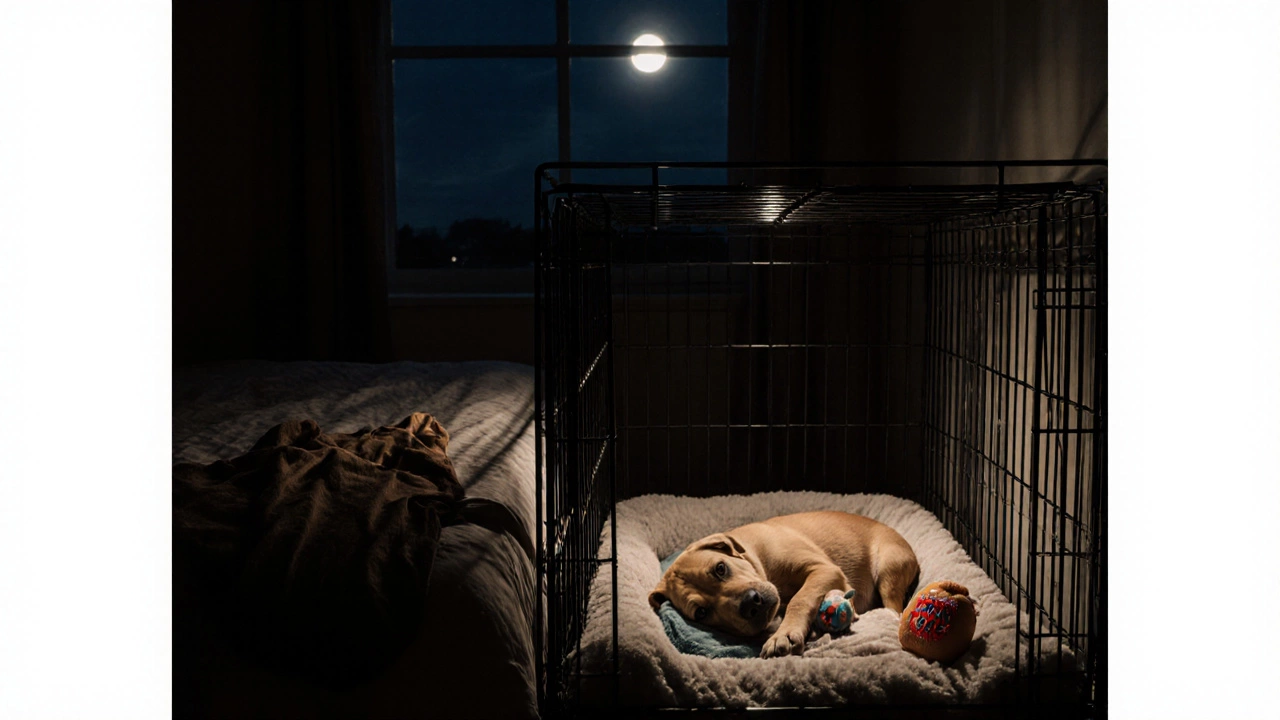
Puppy Crate at Night: Safe Sleep Tips and What Works Best
When you bring home a new puppy, one of the first questions you’ll ask is: puppy crate at night, a secure, enclosed space designed to help young dogs feel safe while sleeping and learning house rules. It’s a tool, not a punishment. Used right, it gives your puppy a den-like space that reduces anxiety, prevents accidents, and helps them learn to sleep through the night. Many owners worry it’s cruel, but dogs naturally seek out enclosed, cozy spots—think of how they curl up in blankets or under furniture. A crate just gives them that same feeling, safely and consistently.
It’s not just about the crate itself. puppy crate training, the gradual process of helping a puppy feel comfortable and calm in their crate matters just as much. Start slow. Leave the door open with treats inside. Let them explore. Don’t force them in. Over time, they’ll walk in on their own. And when they do, you’ve built trust, not fear. Pair it with a consistent puppy sleep schedule, a daily routine that includes feeding, potty breaks, play, and quiet time before bed. Puppies under 12 weeks can’t hold it for more than 3–4 hours, so plan for a middle-of-the-night potty trip if needed. Skip the late-night snacks and water after 7 PM. A tired puppy is a quiet puppy.
Don’t skip the dog crate safety, the practice of choosing the right size, materials, and placement to prevent injury or stress. The crate should be big enough for your puppy to stand, turn, and lie down—but not so big they can use one end as a bathroom. Use a soft bed or blanket. Cover it with a light towel if they seem anxious. Keep it in your bedroom at first. Your presence helps them feel secure. And never use the crate as punishment. If they whine, don’t rush to let them out right away. Wait for a quiet moment. That teaches them silence gets rewarded, not noise.
Some puppies adjust in days. Others take weeks. That’s normal. What’s not normal? Leaving them crated for hours without breaks, using a crate that’s too small, or ignoring signs of panic. If your puppy screams for more than 10–15 minutes and won’t settle, something’s off. Maybe they’re scared. Maybe they need to go out. Maybe the crate feels like a prison. Adjust. Try a different location. Try a different cover. Try a different routine. You’re not failing—you’re learning.
What you’ll find below are real, tested tips from owners who’ve been there. From how to pick the right crate size for your pup’s breed, to what to do when they howl at midnight, to the one trick that helps most puppies sleep through the night without accidents. No fluff. No theory. Just what works.