
Prong Collar Suitability Checker
Based on the article's insights into Cesar Millan's philosophy, this tool helps you evaluate whether a prong collar is the right choice for your specific situation or if an alternative like a front-clip harness might be safer.
Dog Profile
Owner & Fit Assessment
Result
Detailed Checklist:
You’re standing at the pet store aisle, staring at a metal chain with blunt spikes. It looks intimidating. You’ve heard it called everything from a "pinch collar" to a torture device. But then you hear Cesar Millan on TV, calmly guiding a reactive German Shepherd with one. He calls it a tool for communication, not punishment. So, what gives? Is he right, or is this just old-school thinking that hasn’t caught up with modern behavioral science?
If you’ve ever struggled with a dog that pulls like a freight train, you’ve probably considered this tool. The debate around prong collars (also known as pinch collars) is heated. On one side, you have traditionalists who swear by their effectiveness. On the other, you have force-free trainers who argue they cause pain and fear. Cesar Millan sits firmly in the middle, but his stance is nuanced. He doesn’t advocate for them as a default starting point, but he does defend their use when applied correctly.
The Core Philosophy: Communication Over Pain
To understand Millan’s view, you have to understand his broader philosophy. He often talks about "calm-assertive energy." For him, a leash isn’t a brake; it’s a telephone line between you and your dog. If the line is static-filled because the dog is pulling, you need a clearer signal.
Millan argues that many owners misuse standard flat collars by constantly yanking or letting the dog drag them. This creates constant pressure, which dogs habituate to. They stop feeling it. A prong collar, however, applies pressure only when tension is added and releases immediately when slack returns. In his view, this mimics how mother dogs correct puppies-with a quick, firm mouth correction, not sustained crushing force.
He frequently states that the prong collar is "less painful than a flat collar" if used properly. Why? Because the pressure is distributed across multiple points on the neck rather than concentrated on the trachea. When you pull a flat collar hard, you risk damaging the thyroid gland or causing coughing fits. A well-fitted prong collar spreads the load. But-and this is the big "but"-only if it fits correctly.
When Does He Recommend Them?
Millan doesn’t hand out prong collars to every new puppy owner. He reserves them for specific scenarios where other methods have failed or aren’t safe. Here is the breakdown of his typical criteria:
- Strong Pullers: Dogs that physically overpower their owners. If you’re being dragged down the street, you can’t teach anything. Safety comes first.
- Reactive Dogs: Dogs that lunge at other dogs or people. The immediate feedback helps interrupt the reaction cycle faster than a treat might.
- Owners with Limited Strength: Elderly owners or those with physical limitations who cannot manage a strong dog with a front-clip harness alone.
Notice what’s missing? Aggression towards humans or severe anxiety cases. Millan warns against using prongs on fearful dogs because the discomfort can be associated with the trigger (e.g., the other dog), making the fear worse. This is classical conditioning gone wrong.
The Fit Matters More Than the Tool
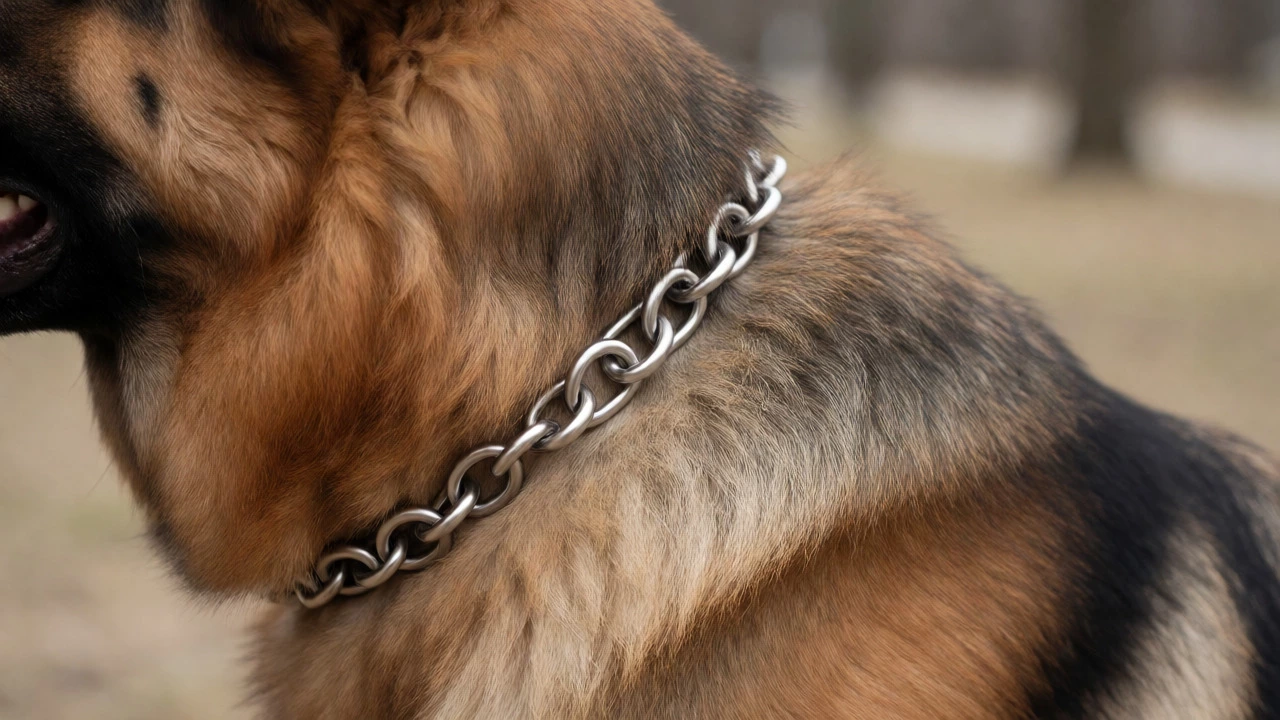
Most criticism of prong collars stems from bad fitting. If the links are loose, the collar slides down to the throat, turning into a choke chain. That hurts. If it’s too tight, it pinches skin unnecessarily.
Millan insists on two strict rules for fit:
- High and Tight: The collar must sit high on the neck, just behind the ears. This is the most sensitive part of the dog’s neck, allowing for subtle cues. You should be able to fit two fingers between the collar and the skin, no more.
- No Slack: Unlike a regular collar, there should be no excess length. The links should touch each other when the dog is relaxed.
He also emphasizes that the prongs must be blunt. Modern quality prong collars (like Herm Sprenger) have rounded tips. If yours look sharp, throw them away. Sharp prongs puncture skin; blunt ones press into fur and muscle without breaking the surface.

Comparison: Prong vs. Flat vs. Harness
Let’s look at how these tools stack up based on mechanics and common usage errors. This table highlights why Millan defends the prong despite its scary appearance.
| Feature | Prong Collar | Flat Buckle Collar | Front-Clip Harness |
|---|---|---|---|
| Pressure Distribution | Distributed across neck circumference | Concentrated on trachea/thyroid | Spread across chest/shoulders |
| Feedback Speed | Immediate release upon slack | Delayed (friction holds pressure) | Moderate (depends on design) |
| Risk of Injury | Low (if fitted correctly) | Medium-High (thyroid/damage) | Low (can cause shoulder strain) |
| Best For | Strong pullers, reactive dogs | Well-trained walkers, small dogs | Puppies, mild pullers |
| Owner Skill Needed | High (timing is critical) | Low-Medium | Low |
The Timing Problem: Why Most Owners Fail
Here is the uncomfortable truth: The prong collar works brilliantly in Cesar Millan’s hands because his timing is perfect. He touches the leash, feels the tension, and releases before the dog even fully reacts. It’s a whisper, not a shout.
Most average owners do the opposite. They wait until the dog is lunging, then jerk hard. Then they hold the tension while yelling "No!" This turns the prong collar into a punishment device. The dog learns that seeing another dog equals pain. Instead of learning to walk nicely, they become anxious.
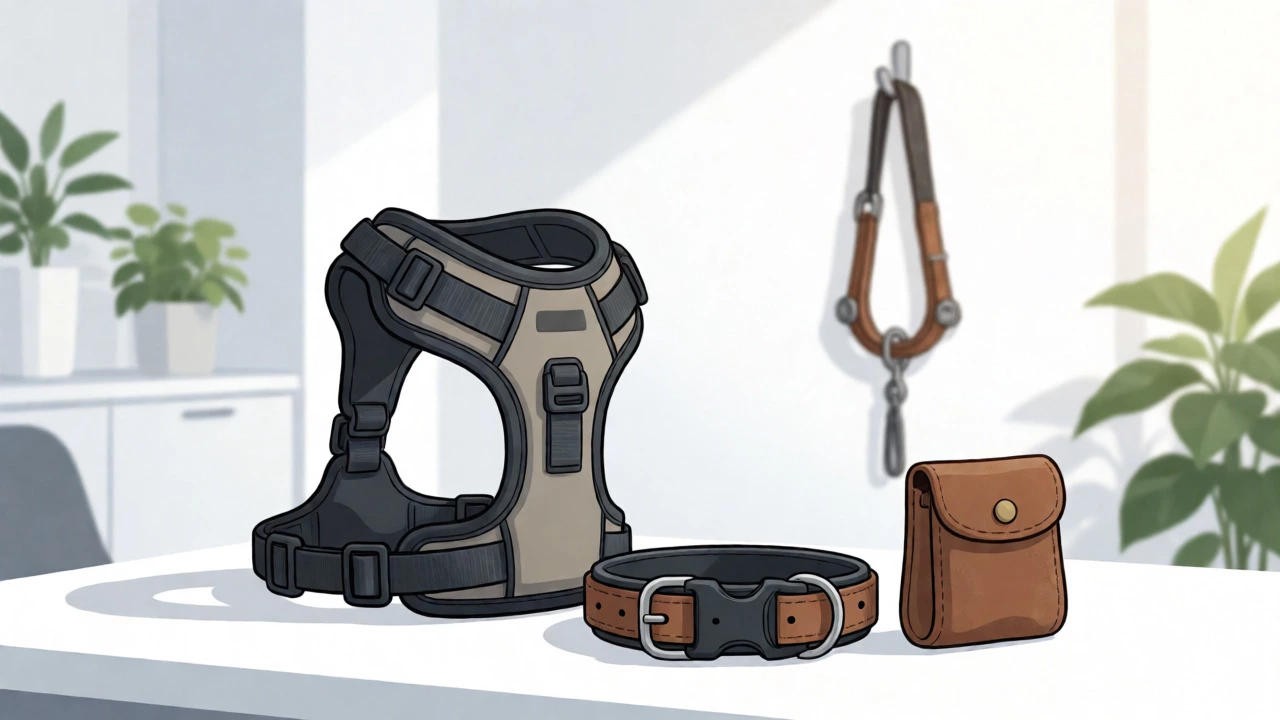
Millan admits that if you cannot master the "pop and release" technique, you shouldn’t use a prong collar. In fact, he often recommends starting with a front-clip harness for beginners. It mechanically discourages pulling without any pain factor. Only move to a prong if the harness fails or if the dog’s strength makes safety a concern.
Modern Context: Has His View Changed?
As of 2026, the dog training landscape has shifted heavily toward positive reinforcement. Many vets and behaviorists now classify prong collars under "aversive tools," alongside shock collars. While Millan still uses them, he acknowledges that the market has changed.
He now spends more time educating owners on reading body language. A dog wearing a prong collar that is pinned back, yawning, or sniffing excessively is stressed. That stress negates learning. Millan’s current advice leans heavily on pairing the tool with rewards. You don’t just correct; you mark the good behavior with praise or food immediately after the correction resolves.
This hybrid approach-management via the collar, motivation via treats-is where the industry is heading. Pure dominance theory is fading, but practical management remains essential for city dwellers with powerful breeds.
Practical Checklist Before Buying
If you decide to try a prong collar based on Millan’s principles, run through this checklist first:
- Consult a Vet: Rule out neck injuries or thyroid issues.
- Check the Material: Ensure it’s stainless steel with blunt tips. Avoid cheap plated metals that rust or break.
- Add a Safety Link: Always attach a secondary clip to the O-ring so the collar doesn’t fail completely if a link breaks.
- Practice Indoors: Test the fit and feel in a low-distraction environment before hitting the busy streets.
- Limit Wear Time: Do not leave it on all day. Use it only during walks.
Remember, the goal is always to fade the tool out. Once your dog walks loosely on a flat collar, the prong goes in the drawer. It’s a bridge, not a permanent residence.
Does Cesar Millan think prong collars hurt dogs?
No, he believes they do not hurt when used correctly. He compares the sensation to a mother dog's muzzle correction. However, he agrees that improper use-such as jerking hard or fitting it incorrectly-causes pain and confusion.
Can I use a prong collar on a puppy?
Generally, no. Millan recommends waiting until a dog is at least six months old and has finished teething. Puppies have softer necks and are better suited for front-clip harnesses or light flat collars during early socialization.
Why does my dog whine when I put the prong collar on?
This usually indicates incorrect fitting. If the collar is too loose, it slides down to the throat and chokes. If it is too tight, it pinches skin. Adjust the size so it sits high behind the ears and fits snugly but comfortably.
Is a prong collar better than a head halter?
It depends on the dog. Head halters (like Gentle Leaders) control the head and are great for reactivity but can cause neck strain if the dog lunges violently. Prong collars distribute pressure better for strong pullers but require more skill to use effectively. Millan often prefers halters for reactive dogs and prongs for pure power/pulling issues.
How long should I keep the prong collar on?
Only during active training sessions or walks. Never leave it on unattended or overnight. Extended wear can irritate the skin and lead to hair loss or sores.