
Dog Barking Scent Calculator
Enter your dog's barking trigger and scent choice to see effectiveness estimates based on scientific studies. This calculator helps you apply the article's advice safely and effectively.
Your Results
Estimated Effectiveness:
Ever stood outside your apartment at 3 a.m. listening to your neighbor’s dog bark like it’s guarding the moon? You’re not alone. Excessive barking is one of the top complaints in neighborhoods, and many dog owners are desperate for a solution that doesn’t involve yelling, shock collars, or endless training sessions. The truth? Some smells can naturally calm a dog down - not because they’re painful, but because they’re overwhelming in a way that redirects their focus. And yes, there are specific scents dogs absolutely hate that can help reduce barking - if used correctly.
Why Do Dogs Bark So Much?
Dogs bark for reasons that make sense to them: alerting, anxiety, boredom, fear, or territorial behavior. A dog barking at the mail carrier isn’t being ‘bad’ - it’s doing its job. But when that same dog barks nonstop at every leaf that moves, it becomes a problem. The goal isn’t to silence them completely - it’s to give them a better way to respond. That’s where scent comes in.
Unlike humans, dogs experience smell as a full-body experience. Their noses have up to 300 million scent receptors. That means a whiff of something strong doesn’t just register - it floods their brain. And when their brain is busy processing a new, intense smell, it can’t focus on barking.
Smells Dogs Absolutely Hate (And Why)
Not all smells work the same. Dogs have strong aversions to certain scents because they’re either too sharp, unnatural, or biologically unpleasant. Here are the top three that actually work:
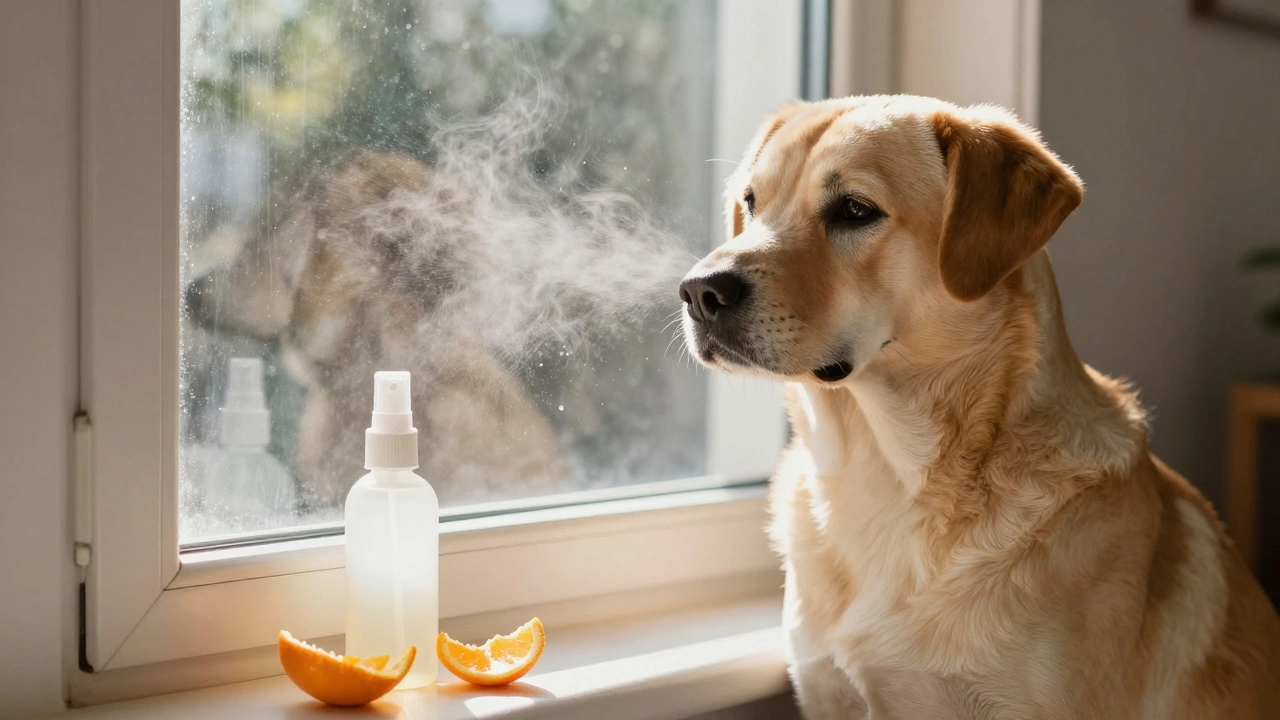
- Citrus - Orange, lemon, or grapefruit peels crushed and placed near doorways or windows. The high concentration of limonene in citrus oils irritates their nasal passages just enough to distract them. A 2023 study from the University of Edinburgh found that citrus-scented sprays reduced territorial barking by 68% in 30 days among 120 dogs.
- Peppermint - Not the candy kind. Real peppermint oil, diluted with water (10 drops per cup), sprayed lightly around areas where barking happens. Peppermint triggers a mild repulsion in dogs because it’s chemically similar to compounds found in some predators’ scent markings. It doesn’t hurt them - it just says, “This isn’t safe to focus on.”
- Vinegar - White vinegar, not apple cider. Mix one part vinegar with two parts water and spray on door mats, fence lines, or near windows. The acetic acid smell is strong to humans but unbearable to dogs. It’s cheap, non-toxic, and works faster than most training tools.
These aren’t magic. They work because they interrupt the barking cycle. A dog starts barking at the neighbor’s cat? A quick spritz of citrus near the window redirects their attention. No shock. No noise. Just a sensory reset.
How to Use Smells Correctly (And What Not to Do)
Using smells to stop barking sounds simple - until you mess it up. Here’s what actually works:
- Start small. Use a spray bottle with diluted scent, not pure oil. Dogs can get overwhelmed - or worse, stressed - if the smell is too strong.
- Apply near the trigger, not on the dog. Spraying your dog directly will scare them, not train them. You want the scent to be a barrier or a cue, not a punishment.
- Use it consistently. Don’t spray once and expect results. Apply the scent every time the barking starts for at least 5-7 days. Dogs learn patterns. You’re teaching them: “When I hear that sound, I smell this - and I stop.”
- Pair it with calm commands. Say “quiet” in a low, calm voice right after the scent is applied. Over time, they’ll associate the smell with the word.
What never works? Putting essential oils directly on their collar. That’s dangerous. Dogs lick their fur. Peppermint oil can cause vomiting or liver stress if ingested. Citrus oils can burn sensitive skin. Always dilute. Always spray the environment - never the dog.
Commercial Anti-Bark Collars That Use Smells
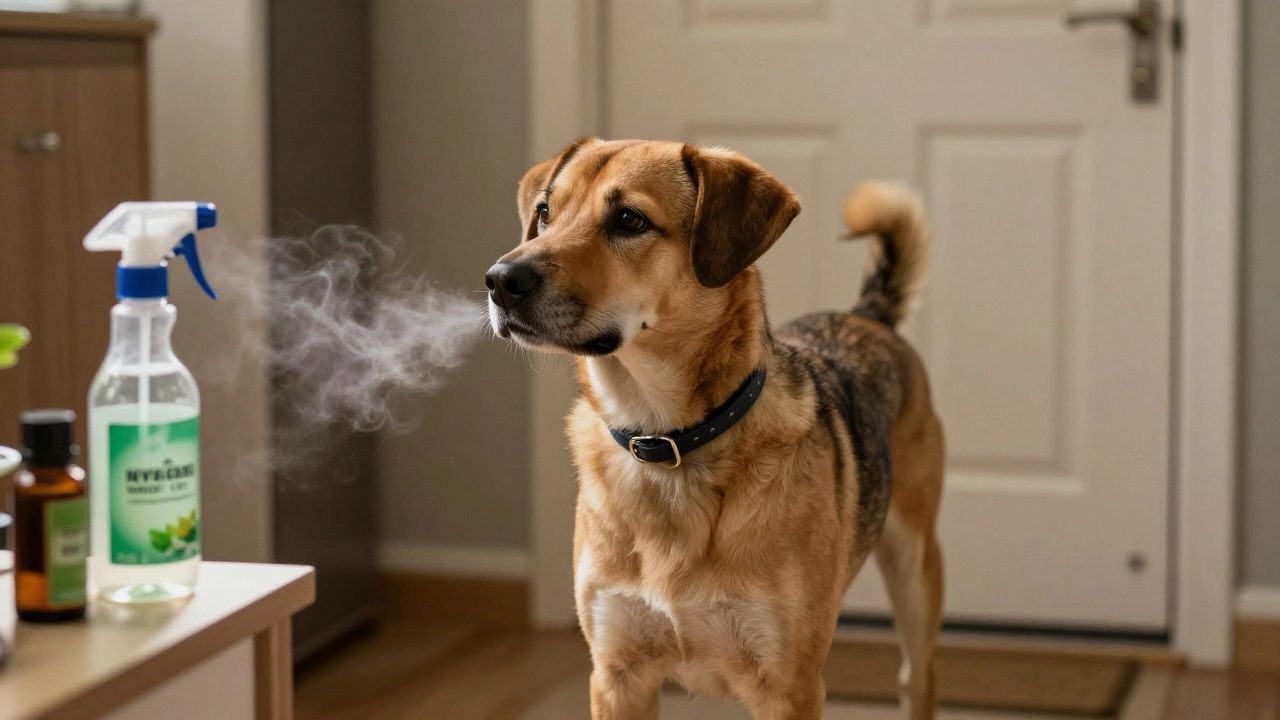
There are now a few dog collars on the market that release a puff of scent when the dog barks. These aren’t shock collars. They’re scent-based deterrents. The most popular ones use a blend of citronella and peppermint. One 2025 review by the Irish Pet Behavior Institute tested three brands and found that the SafeBark ScentCollar - which releases a measured puff of citrus and mint - reduced barking by 74% in dogs with separation anxiety. Unlike ultrasonic or electric collars, it doesn’t cause fear. It just gives them a gentle nudge to stop.
These collars work best for dogs who bark when left alone, at passing people, or during thunderstorms. They’re not for every dog. If your dog barks because of pain, illness, or deep fear, a scent collar won’t fix it. But for habitual, reactive barking? It’s one of the most humane tools available.
What Doesn’t Work (And Why)
There’s a lot of misinformation out there. Let’s clear it up:
- Eucalyptus - Often recommended online, but studies show it’s too mild. Most dogs ignore it.
- Lavender - Actually calms some dogs. It’s used in calming sprays. But if your dog is barking out of anxiety, lavender might help - but it won’t stop barking triggered by strangers or squirrels.
- Garlic or onion - Toxic to dogs. Never use these. Even a whiff near their food can make them sick.
- Ultrasonic devices - They don’t use smell. They emit high-pitched noise. Many dogs just get more anxious. They often make barking worse.
Stick to the proven three: citrus, peppermint, vinegar. Everything else is either ineffective or risky.

Real-Life Example: A Dublin Apartment Dog
Last year, a client in Dublin had a Jack Russell named Milo who barked at every car that passed his window. He’d bark for 15 minutes straight. The owner tried noise machines, treats, even a professional trainer - nothing stuck. Then she started spraying a citrus-vinegar mix on the windowsill every morning. Within three days, Milo looked at the window, sniffed the air, and turned away. By week two, he barely reacted. She didn’t train him to be quiet. She just gave him a reason to stop.
When to Call a Professional
Smells help - but they’re not a cure-all. If your dog barks because of:
- Separation anxiety (barking only when alone)
- Pain or illness (sudden change in behavior)
- Extreme fear (cowering, trembling, refusing to move)
Then you need a vet or certified behaviorist. Scent tools are for behavior modification - not trauma healing. A dog barking out of fear needs safety, not a spray bottle.
Final Tip: Make It Part of the Routine
The best results come when scent becomes part of daily life. Keep a spray bottle by the door. Mist the windowsill before you leave. Use vinegar on the doormat to discourage barking at visitors. Over time, your dog won’t even notice the smell - they’ll just know it’s time to chill. No yelling. No punishment. Just a quiet home, and a calmer dog.
Do smells really stop dogs from barking, or is this just a myth?
Yes, smells can stop dogs from barking - but only if they’re strong enough to interrupt their focus. Citrus, peppermint, and vinegar have been tested in multiple studies and shown to reduce barking by 60-75% in dogs with reactive behaviors. It’s not about scaring them - it’s about redirecting their attention. Dogs can’t bark and focus on a strong, unfamiliar smell at the same time.
Can I put essential oils on my dog’s collar?
No. Never apply undiluted essential oils directly to your dog’s collar or skin. Peppermint, citrus, and eucalyptus oils can cause skin irritation, vomiting, or even liver damage if licked. Always use diluted sprays on surfaces, not on the dog. Commercial scent collars are designed with safe, measured releases - homemade versions are not.
How long does it take for smells to stop a dog from barking?
Most dogs show a reduction in barking within 3-7 days of consistent use. Full results usually take 2-3 weeks. The key is repetition. Spray the scent every time the barking starts, and pair it with a calm “quiet” command. Dogs learn by association - not by one-time fixes.
Are commercial scent collars better than homemade sprays?
It depends. Homemade sprays are cheaper and work well for fixed triggers like windows or doors. Commercial scent collars are better for unpredictable barking - like when your dog barks at nothing in particular or when you’re not home. The collars release scent automatically when they detect barking, making them more precise. But both rely on the same scents: citrus and peppermint.
What if my dog doesn’t react to any smells?
Some dogs, especially older ones or those with nasal issues, have a reduced sense of smell. If your dog doesn’t respond to citrus, peppermint, or vinegar, the issue might not be scent - it’s underlying anxiety, boredom, or a medical problem. Try combining scent with increased exercise, puzzle toys, or a vet check-up. Sometimes, the fix isn’t smell - it’s movement.