
Puppy Sleep & Potty Schedule Calculator
Why the First Few Nights Matter Most
It is 3 AM. You are exhausted from your day job. Your new puppy, a tiny ball of energy just hours ago, is now crying in the corner. Do you let them into your bed? Do you ignore the whining? Or do you bring them into the living room?
The answer isn't just about comfort; it is about survival and success for your new relationship. Where you put a puppy to sleep dictates how fast they learn to hold their bladder, how secure they feel, and whether you get any sleep at all. Getting this wrong leads to accidents on the rug, anxiety issues, and a very tired owner.
The Golden Rule: Safety Over Convenience
Before we talk about bedrooms or basements, we need to address the most critical factor: safety. A puppy is not a small human. They are an explorer with zero common sense. They will chew electrical cords, ingest toxic plants, and get stuck under furniture.
Crate training is the process of acclimating a dog to a confined space that serves as their safe den. This is the industry standard for a reason. Dogs are den animals. In the wild, they do not eliminate where they sleep. By using a properly sized crate, you leverage this instinct to help with housebreaking.
- Containment: Prevents destructive chewing when unsupervised.
- Bladder Control: Encourages holding urine until released outside.
- Anxiety Reduction: Provides a predictable, enclosed space during storms or loud noises.
If you skip the crate, you must create a "puppy-proofed" pen area. However, crates remain the most effective tool for establishing boundaries early on.
Location Strategy: Bedroom vs. Living Room vs. Basement
Now, where does that crate go? This is where opinions split. Let’s look at the three main options based on behavior science and practical experience.
| Location | Pros | Cons | Best For |
|---|---|---|---|
| Bedroom (Near Bed) | Reduces separation anxiety; easy to hear needs; warmth | Puppy may wake you up; requires discipline | First 6-12 months; anxious breeds |
| Living Room | Part of family activity; good for socialization | Distractions; harder to monitor at night; cold drafts | Confident puppies; daytime naps |
| Basement/Garage | Quiet; isolated | Isolation causes anxiety; temperature risks; lack of supervision | Not recommended for puppies |
Option 1: The Bedroom (Highly Recommended)
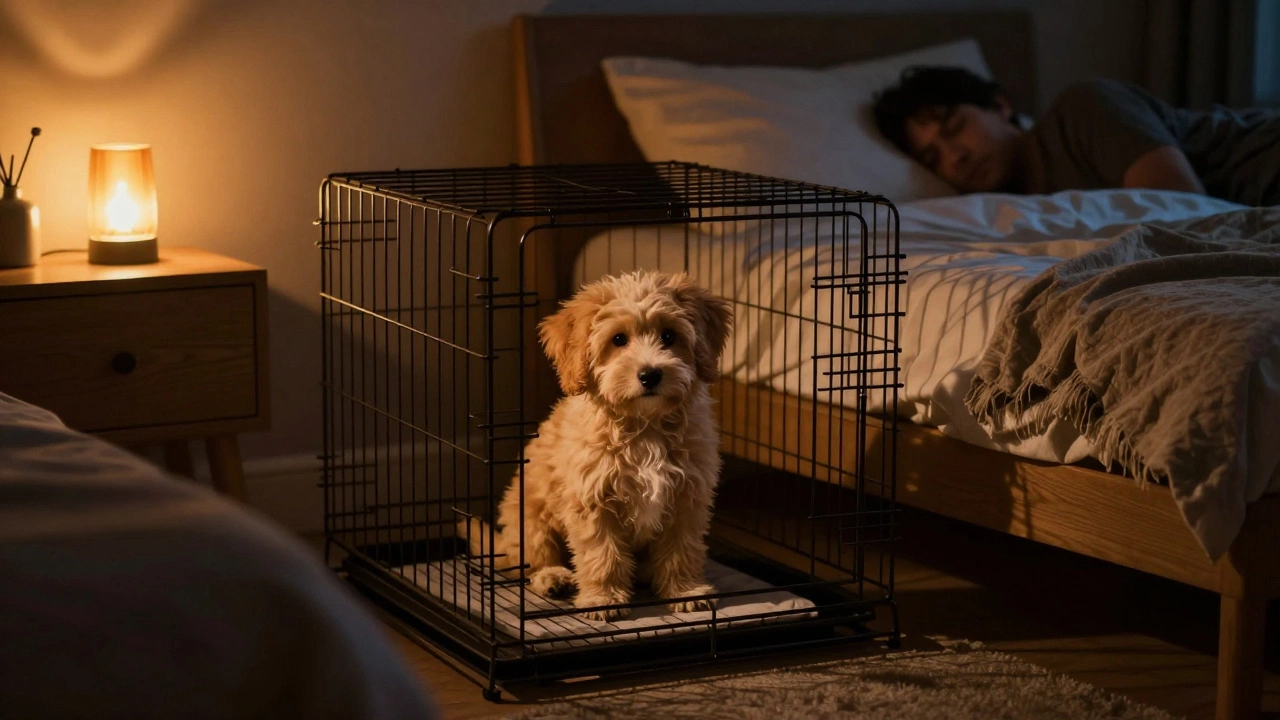
For the first six months, keep the crate in your bedroom. Place it next to your bed, but not *in* your bed. Why? Because puppies need proximity to their "pack" (you) to feel safe. If they cry out because they need to pee, you will hear them. If you leave them in another room, you might miss the cue, leading to an accident inside the crate-which ruins housebreaking progress.
This setup also helps prevent severe separation anxiety. Puppies left alone in empty rooms often develop panic behaviors later in life. Being near you teaches them that being apart is temporary and safe.
Option 2: The Living Room (Daytime Only)
During the day, the living room is great. It allows the puppy to observe family life. However, at night, the living room can be too isolating if everyone else is asleep upstairs. Unless you have a multi-level home where noise travels well, avoid putting the crate in a large, open space at night. Puppies feel vulnerable in wide-open areas without visual barriers.
Option 3: The Basement or Garage (Avoid)
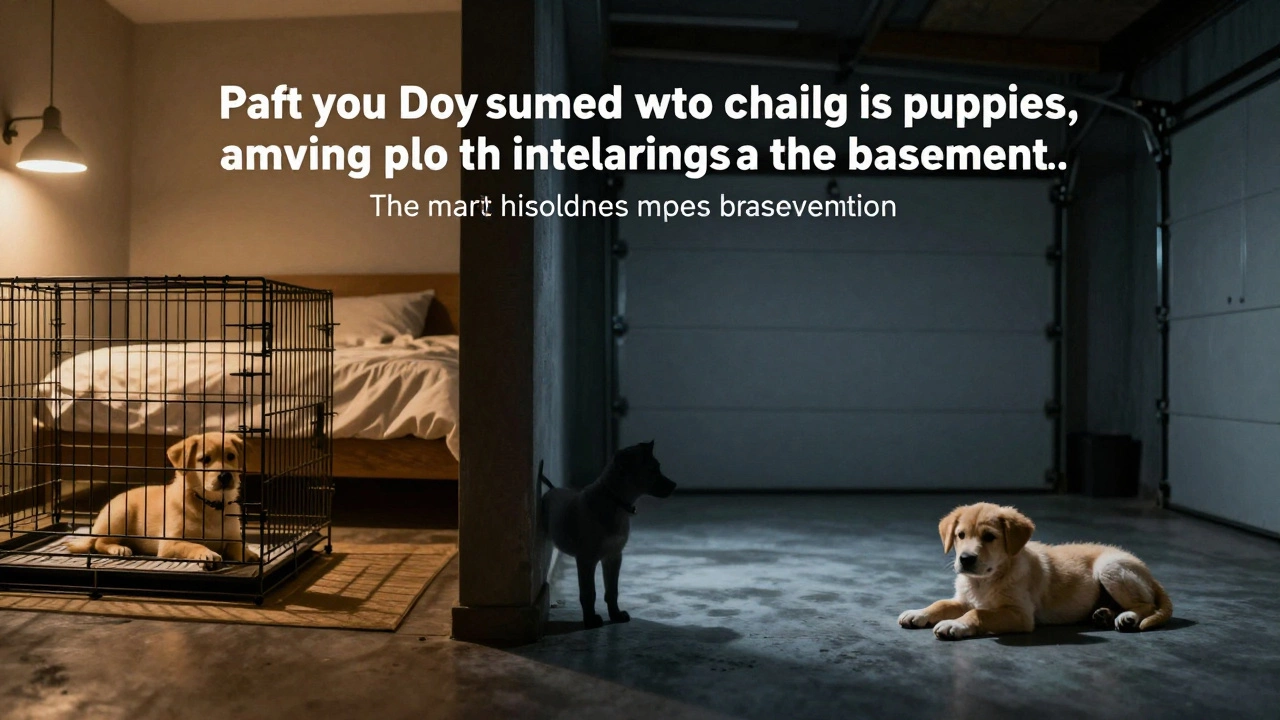
Never put a young puppy in the basement or garage. These spaces are often colder, lack natural light cycles, and isolate the dog from the family scent. This isolation can trigger distress barking and slow down bonding. Save these locations for adult dogs who are fully trained and comfortable with solitude.
Setting Up the Perfect Sleep Environment
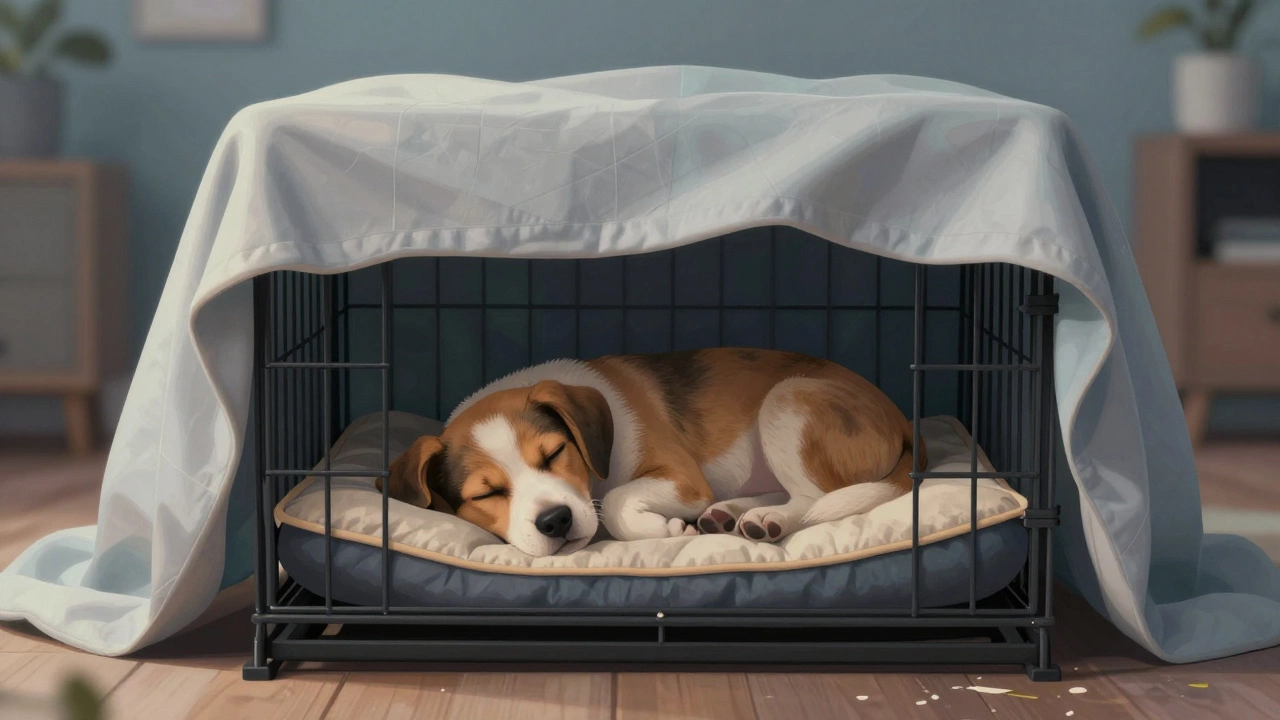
Once you’ve chosen the location, the setup matters. A messy crate creates stress. Here is how to build a calming sanctuary.
- The Right Size: The crate should be large enough for the puppy to stand up, turn around, and lie down comfortably. If it’s too big, they will use one corner for sleeping and the other for peeing. Use a divider panel if you bought a larger crate for adulthood.
- Comfortable Bedding: Use a washable blanket or orthopedic pad. Avoid plush toys that can be shredded and swallowed. Chew toys are for supervised playtime only.
- Temperature Control: Puppies cannot regulate body heat well. Keep the room between 65-75°F (18-24°C). Avoid direct drafts from windows or AC vents.
- Lighting: Dim lights signal sleep time. A small nightlight is fine if it helps reduce shadows that might scare them, but avoid bright overhead lights.
The First Night: What to Expect
Be prepared for chaos. The first night is rarely peaceful. Your puppy has been separated from their mother and littermates. They are scared.
Here is a realistic timeline for the first week:
- Hour 1-2: Crying and whining. They are exploring the crate and realizing they are trapped.
- Hour 3-4: Settling down, then waking up needing to pee.
- Hour 5+: Deep sleep, followed by more crying.
When they cry, wait 30-60 seconds. Sometimes they just want attention. If the crying continues, assume they need to eliminate. Take them out immediately on a leash. No playing. No treats. Just business. Then back to the crate. Repeat this cycle every 2-3 hours.
Common Mistakes That Ruin Sleep Training
I see these errors constantly in new owners. Avoid them to save yourself weeks of frustration.
Mistake 1: Punishing Accidents
If you find pee in the crate, do not yell. Do not rub their nose in it. They do not connect the punishment with the act. They only learn to fear you or hide their elimination. Clean it with an enzymatic cleaner to remove the scent completely.
Mistake 2: Giving In Too Soon
If you let the puppy out of the crate because they are crying, you teach them that crying = freedom. Be consistent. If they are healthy and don’t need to pee, let them self-soothe. This builds resilience.
Mistake 3: Moving the Crate Too Often
Keep the crate in the same spot for at least three months. Moving it confuses the puppy’s sense of security. Once they are fully housebroken and calm, you can gradually move it to a permanent location if desired.
When Can They Sleep in Your Bed?
This is a personal choice, but many trainers advise against co-sleeping for puppies. It sets a precedent that is hard to break. If you decide to allow it later, wait until the dog is at least 1 year old, fully housebroken, and respects boundaries. Many owners start with the crate in the bedroom and transition to a dog bed on the floor next to the human bed before allowing full bed access.
Should I cover my puppy's crate at night?
Yes, covering three sides of the crate with a lightweight blanket can create a den-like atmosphere that reduces visual distractions and calms anxious puppies. Ensure there is still adequate airflow. Remove the cover during the day to prevent overheating.
How long can a puppy sleep without going to the bathroom?
A general rule is that puppies can hold their bladder for one hour per month of age, plus one. So, a 2-month-old puppy can hold it for about 3 hours maximum. Never expect a young puppy to sleep through the entire night without a break initially.
What if my puppy cries when I take them out of the crate?
If they cry upon exit, they may be overstimulated or seeking play. Keep exits boring. Go straight outside to potty, then return to the crate for sleep. Avoid eye contact or talking during these transitions to reinforce that the crate is for rest, not play.
Can I use a playpen instead of a crate?
Playpens are excellent for daytime confinement and socialization but less effective for nighttime housebreaking. In a large pen, a puppy may sleep in one corner and eliminate in another. If using a pen at night, place a crate inside it to encourage proper bladder control.
At what age can a puppy sleep through the night?
Most puppies can sleep through the night (6-8 hours) by 4 to 6 months of age, provided they are fed appropriately earlier in the evening and given a final potty break right before bedtime. Smaller breeds may take longer due to smaller bladders.