
Dog Grooming Time Estimator
Select your dog's details and click calculate to see the estimated grooming time.
You hand over your fluffy friend for a simple trim and bath, only to be told the appointment will take four hours. You might feel like you are being charged for time rather than service. But here is the truth: that extra time isn’t padding on the bill. It is usually a sign of respect for your dog’s safety, comfort, and coat health.
Most people assume grooming is just cutting hair and washing. If it were that simple, yes, it would take twenty minutes. In reality, professional dog grooming is a complex physical process involving drying, detangling, sanitizing, and precision styling. When you add in the variable factors like coat condition, breed standards, and anxiety management, those hours start to make sense.
The Drying Phase Is Not Optional
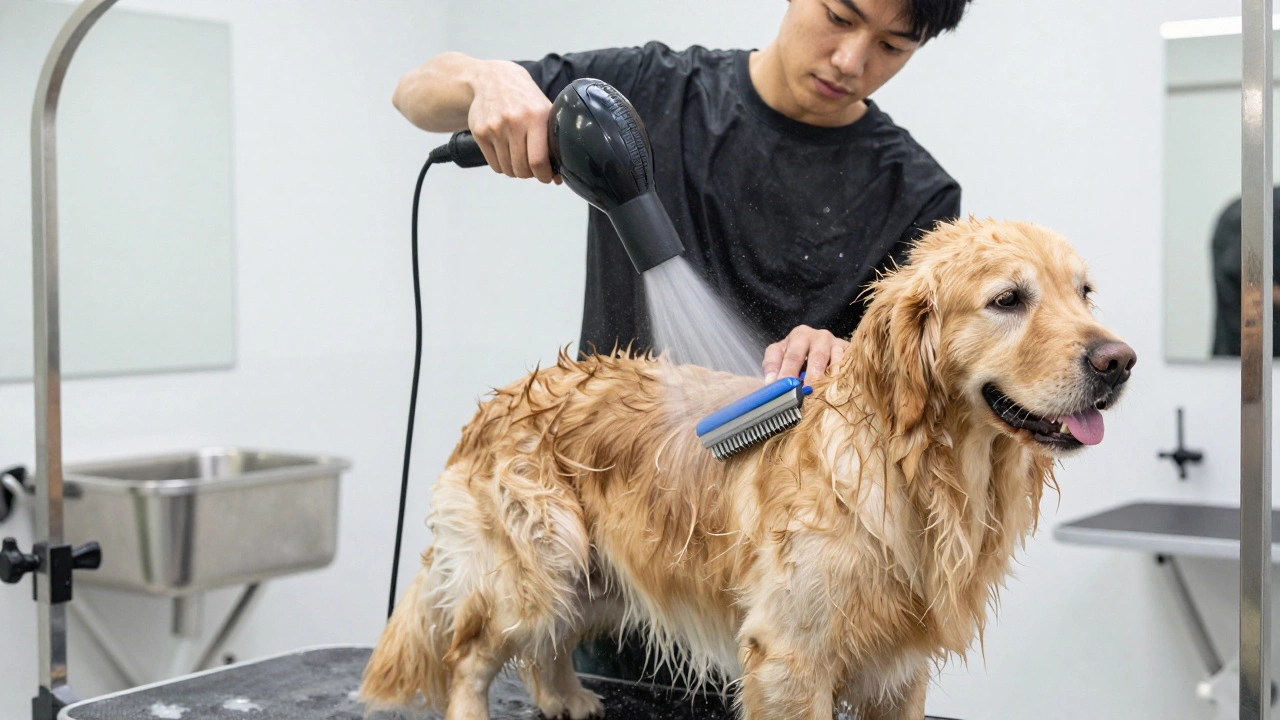
If you have never watched a groomer work, you might think the dryer is just a loud noise in the background. It is actually the most critical part of the entire session. For medium to large dogs with double coats, air-drying is not an option. Leaving a dog wet leads to skin infections, hot spots, and matting within hours.
Groomers use high-velocity dryers to blow the water out from the root of the hair shaft. This is different from a human hairdryer. A high-velocity dryer moves massive amounts of air at low heat to prevent burns while penetrating thick undercoats. For a Golden Retriever or a Husky, this process alone can take forty-five minutes to an hour. The groomer must constantly move the nozzle and brush the coat simultaneously to ensure every layer is dry. If they miss a spot, mats form instantly once the hair starts to cool and clump together.
Think of it like wringing out a heavy winter coat. You cannot just hang it up; you have to physically work the moisture out. That is what the groomer does, but with a living, breathing animal that needs constant reassurance.
Mats Are Time Bombs
The single biggest reason grooming sessions run long is pre-existing tangles. If your dog has been home for three weeks without brushing, their coat likely has surface tangles and deep-rooted mats. These are not just messy; they are painful. Mats pull on the skin, restrict movement, and trap moisture against the body, creating a breeding ground for bacteria.
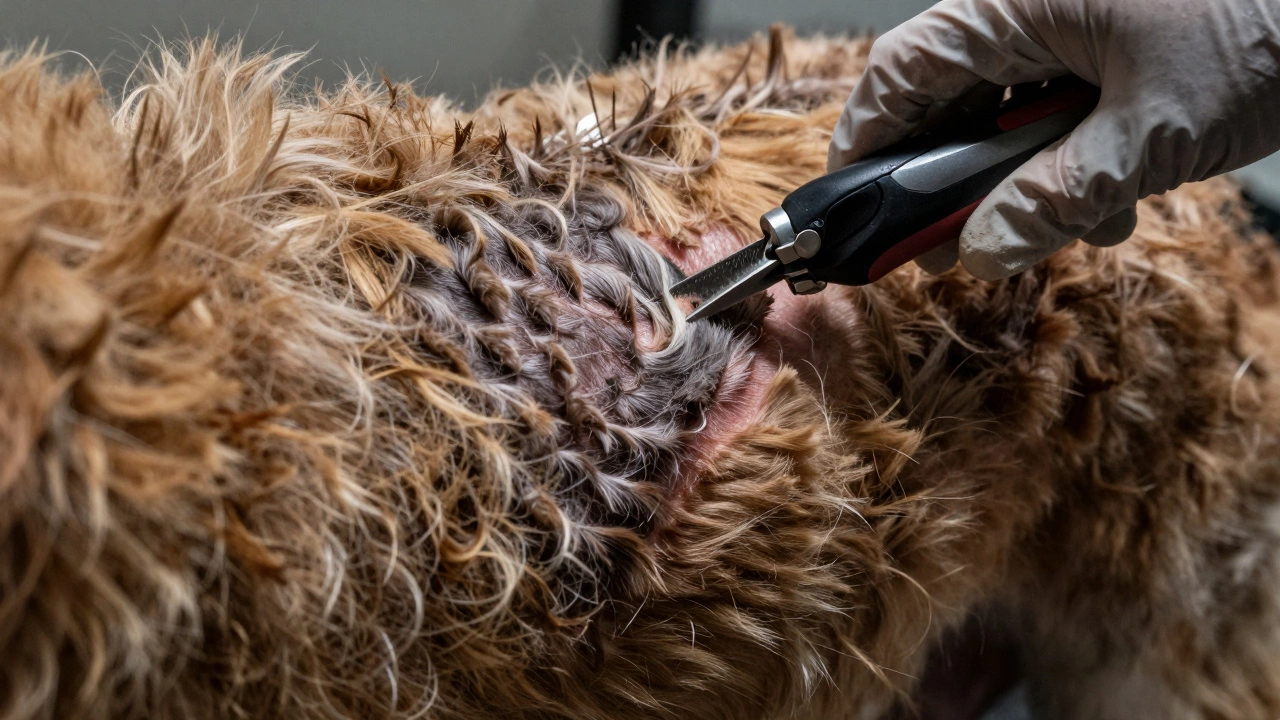
A groomer cannot simply cut through a mat with scissors. That is dangerous and ineffective because the mat often sits close to the skin. Instead, they must carefully shave down to the skin using clippers. This requires slow, steady pressure to avoid nicks. If the mat is particularly dense, the groomer may need to use thinning shears to break it apart before shaving, which adds significant time.
In severe cases, known as 'felted' coats, the entire coat may need to be shaved off completely. This is called a 'sanitary shave.' It takes longer than a standard haircut because the groomer must navigate around ears, legs, and sensitive areas with extreme caution. While some owners prefer a quick scissor trim, removing mats safely is non-negotiable for any ethical groomer.
Breed-Specific Styling Takes Precision
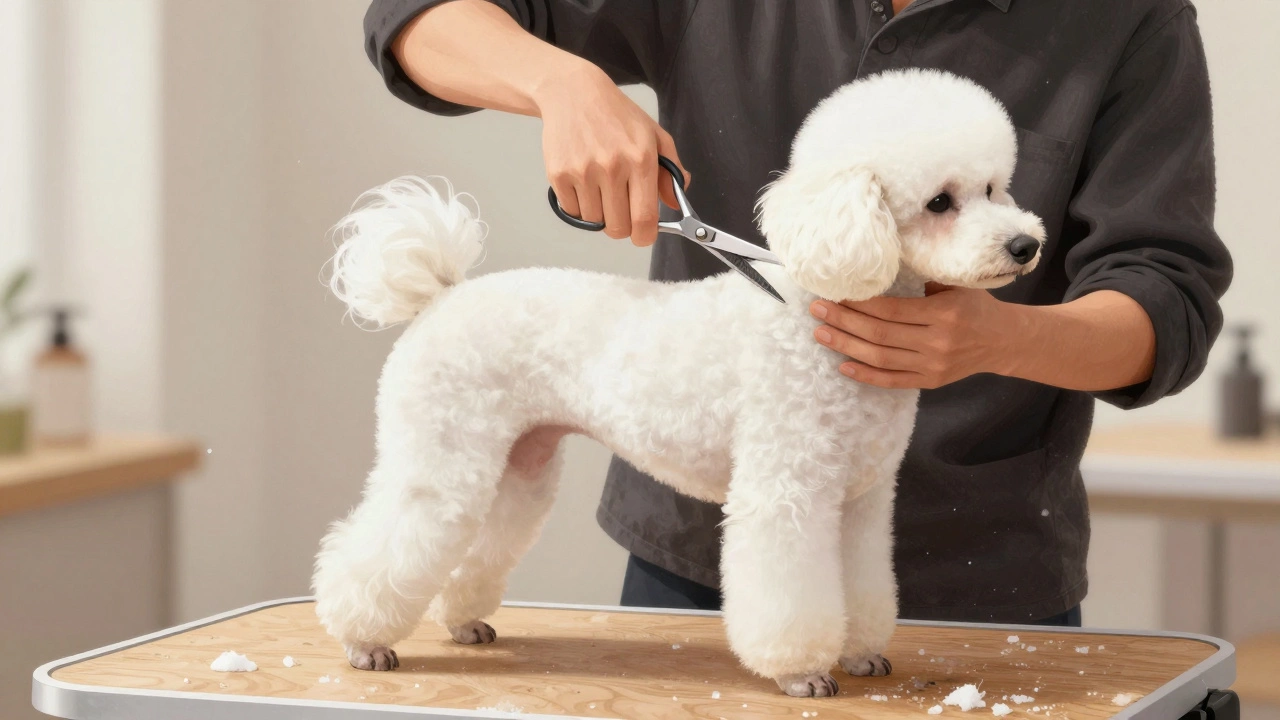
Not all cuts are created equal. A 'puppy cut' or a simple 'teddy bear trim' is relatively fast. However, breed-specific styles require years of training to master. Consider the Poodle, the Bichon Frisé, or the Shih Tzu. These breeds require scissoring techniques that shape the body into specific contours.
Scissoring is not like using household scissors. Groomers use curved blades to blend the hair smoothly, creating rounded shapes that look natural. This involves thousands of small snips per session. A full Poodle clip, for instance, includes intricate detailing around the feet (puffing), the tail plume, and the head. Each section must be balanced symmetrically. One wrong cut ruins the symmetry, so the groomer works slowly and checks angles constantly.
Even for mixed-breed dogs, if you request a specific style-like a lion cut or a show-style trim-the time increases dramatically. The groomer is essentially sculpting with hair, and sculpture takes time.
Anxiety and Safety Protocols
Dogs do not naturally enjoy being held still while strange tools buzz near their ears. Many dogs experience stress during grooming. A good groomer prioritizes the dog’s mental state over speed. If a dog is anxious, the groomer will pause frequently to offer treats, praise, and breaks. Rushing an anxious dog can lead to bites, scratches, or trauma that makes future visits harder.
Safety protocols also add time. Before touching the dog with sharp tools, the groomer performs a thorough health check. They look for lumps, bumps, parasites, ear infections, or skin irritations. Finding a tick or a rash means stopping the grooming process to address the issue or notify the owner immediately. This diagnostic step is vital but often overlooked by clients expecting a quick wash-and-go.
Additionally, nail trimming and ear cleaning are separate procedures that require focus. Trimming nails involves locating the quick (the blood vessel inside the nail) to avoid bleeding. In dark nails, this is done by taking tiny shavings until a black dot appears. Cleaning ears involves flushing out wax and debris, then drying them thoroughly to prevent yeast growth. These steps are meticulous and cannot be rushed.
The Bathing and Sanitization Process
A dog bath is not like a human shower. It involves multiple stages:
- Pre-brushing: Removing loose hair and dirt before water touches the coat. Wetting a dirty coat creates mud that is impossible to rinse out.
- Shampooing: Applying shampoo, massaging it into the skin, and letting it sit to kill fleas or soothe allergies. This requires waiting periods.
- Rinsing: Ensuring no residue remains, which can cause itching.
- Conditioning: Applying conditioner to detangle and soften the hair, followed by another rinse.
- Sanitizing Spray: Applying a final spray to freshen the coat and protect against bacteria.
Each step requires physical effort. Massaging shampoo into a thick coat is hard work. Rinsing thoroughly ensures the dog doesn’t itch later. Skipping these steps saves time now but costs more in vet bills later due to skin issues.
| Breed/Coat Type | Clean Coat (Well-Brushed) | Matted/Dirty Coat | Key Time Factors |
|---|---|---|---|
| Short Hair (Labrador, Boxer) | 1 - 1.5 hours | 1.5 - 2 hours | Nail trim, ear clean, de-shedding treatment |
| Medium Double Coat (Husky, Collie) | 2 - 3 hours | 3 - 4+ hours | High-velocity drying, undercoat raking, mat removal |
| Long Curly/Wavy (Poodle, Bichon) | 3 - 4 hours | 4 - 6 hours | Scissoring, detailed styling, extensive drying |
| Wire Coat (Terriers) | 2 - 3 hours | 3 - 4 hours | Stripping or clipping, beard cleaning, eye area detail |
How to Reduce Your Dog's Grooming Time
If you want faster appointments and lower bills, the solution lies in home maintenance. Regular brushing is the number one factor that reduces professional grooming time. Brushing your dog once or twice a week prevents mats from forming. When you bring a well-brushed dog to the groomer, they can skip the tedious mat-removal phase and focus on styling and cleaning.
Also, consider the frequency of visits. Scheduling appointments every six to eight weeks keeps the coat manageable. Waiting too long allows tangles to build up exponentially. A little effort at home saves hours in the salon.
Finally, communicate clearly with your groomer. If you don’t need a complex breed-specific style, ask for a simpler cut. A 'hygiene trim' focuses only on sanitary areas and paw pads, which is much faster than a full body style. Knowing your options helps you manage expectations and time.
Is it normal for dog grooming to take 4 hours?
Yes, it is normal for certain breeds and conditions. Dogs with long, curly, or double coats often require 3 to 4 hours for a full groom, including drying, detangling, and styling. If the coat is matted, it can take even longer due to the careful removal process required for safety.
Why does my groomer charge by the hour?
Many groomers charge by the hour because the time required varies significantly based on the dog's size, coat condition, and behavior. Charging by the hour ensures fairness, as a matted dog takes much longer to groom than a well-maintained one, reflecting the actual labor and expertise involved.
Can I reduce the time my dog spends at the groomer?
Yes, regular home brushing is the most effective way to reduce grooming time. Brushing your dog weekly prevents mats and tangles, allowing the groomer to focus on washing and styling rather than difficult detangling. Additionally, choosing simpler styles over complex breed-specific cuts can shorten the appointment.
What happens if my dog is matted?
If your dog is matted, the groomer will likely need to shave the coat down to the skin to remove the mats safely. Scissors cannot effectively remove tight mats without risking injury to the skin. This process, known as a sanitary shave, takes considerable time but is necessary to relieve pain and prevent skin infections.
Do groomers bathe dogs before or after cutting?
Groomers typically bathe and dry the dog before cutting. Washing removes dirt and oils, making the hair easier to comb and cut evenly. Drying is essential because cutting wet hair can lead to uneven results once the hair dries and shrinks back to its natural length. The final trim is always done on dry, fluffy hair.