
Dog Sleep Spot Estimator
How Your Dog Chooses Your Spot
Answer these questions to discover the primary reason your dog claims your sleeping spot. Based on canine behavior science from the article.
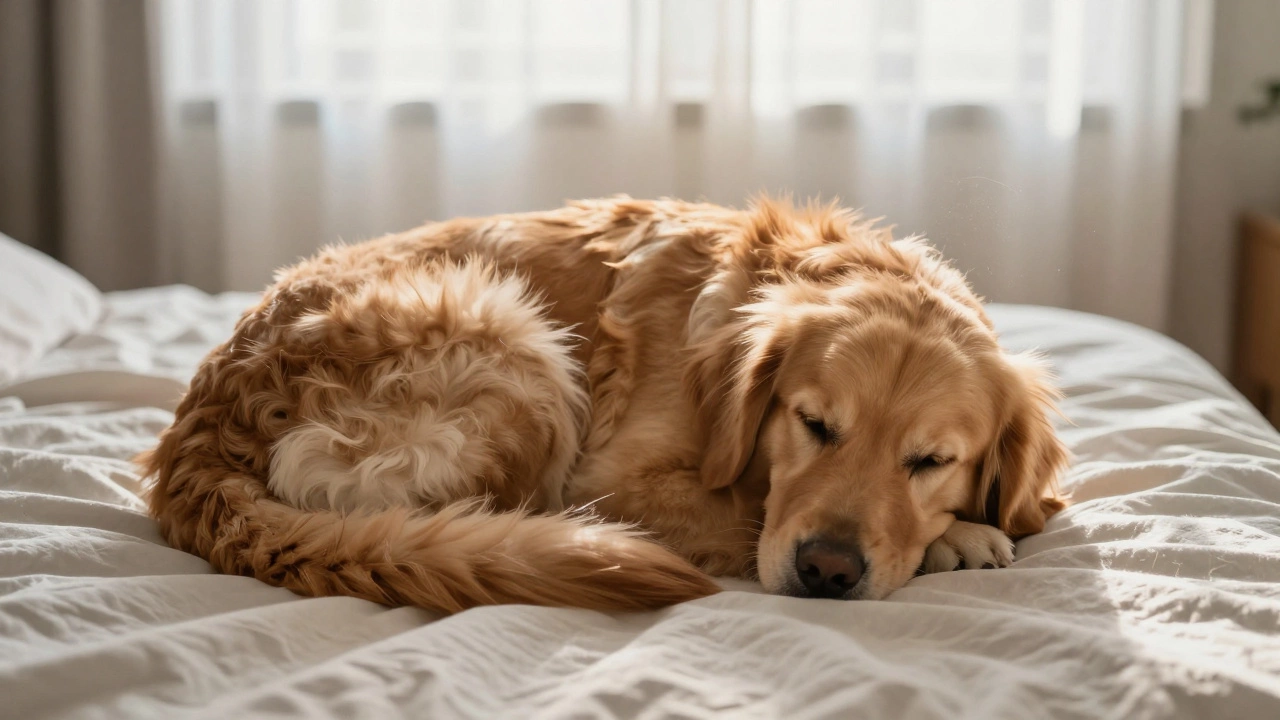
Ever walked into your bedroom and found your dog curled up in the exact spot you just left? Not just on the bed-right where your body shaped the sheets, still warm, still smelling like you. It’s not a coincidence. It’s not mischief. And it’s definitely not because they’re trying to be annoying. There’s a very real, very biological reason your dog claims your spot the second you get up.
Your scent is their security blanket
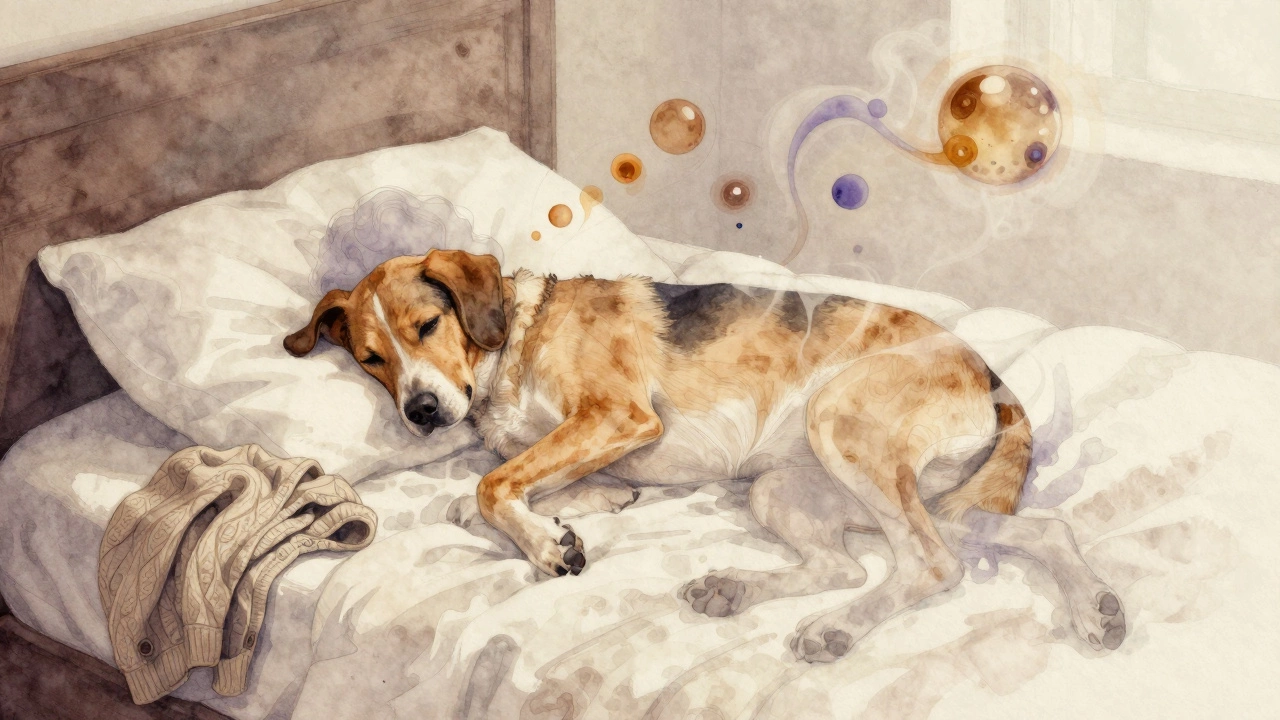
Dogs don’t think like humans. They don’t care about privacy or personal space the way we do. To them, scent is everything. Your skin sheds oils, your sweat carries pheromones, and your breath leaves traces of your unique chemical signature all over your bed. When you leave, that scent doesn’t vanish-it lingers. And to your dog, it’s the most comforting thing in the world.Studies show that dogs have up to 300 million olfactory receptors in their noses. For comparison, humans have about 5 million. That means your dog can detect the faintest trace of your presence long after you’ve left the room. When they settle into your spot, they’re not just being cozy-they’re soaking up the smell that tells their brain: you’re safe.
Think of it like a child clutching a parent’s hoodie. Your dog isn’t trying to replace you. They’re trying to stay close to you, even when you’re gone. The warmth of your body heat fades after a few minutes, but your scent lasts for hours. That’s why they wait until you’re out of the room before claiming the space. They’re not being sneaky-they’re being smart.
Warmth matters more than you think
Dogs are naturally drawn to warmth. Their ideal body temperature is between 101°F and 102.5°F, and they lose heat faster than humans do because of their thinner layer of subcutaneous fat. Your bed, especially after you’ve been lying in it, holds heat longer than most other surfaces in the house. Even a few degrees warmer than the floor or their own bed can feel like luxury to them.It’s not just about comfort-it’s about energy conservation. In the wild, dogs would huddle together to share body heat. Domestic dogs still carry that instinct. When you get up, your bed becomes the warmest place in the room. Your dog doesn’t need a heater when they can just hop into your spot. It’s efficient. It’s natural. And honestly? It’s kind of adorable.
It’s a social hierarchy thing
You might think your dog sees you as their boss. But in their world, ownership isn’t about who bought the bed-it’s about who claims it. When your dog settles into your space, they’re not challenging your authority. They’re reinforcing their place in your pack.Dogs are pack animals. In a wild pack, the alpha gets the best resting spot. But in a domestic setting, the alpha doesn’t always get the warmest spot-the most trusted member does. Your dog isn’t trying to be the boss. They’re showing you they feel safe enough to claim your space. That’s a sign of deep trust, not dominance.
If your dog only does this with you and not other family members, that’s even more telling. They’ve chosen you as their primary bond. The spot isn’t just yours-it’s yours together. When they take it, they’re saying, I belong here with you.
They’re not being territorial-they’re being loyal
Some people worry that this behavior means their dog is possessive or aggressive. But unless your dog growls when you try to get back in bed, it’s not territorial behavior. Territorial dogs guard spaces they think are theirs. Your dog isn’t guarding your bed-they’re inviting themselves into a space that smells like love.There’s a big difference between guarding and claiming. Guarding means aggression. Claiming means affection. If your dog just curls up quietly, tail tucked, breathing slow and deep, they’re not asserting control. They’re seeking comfort. They’re not trying to take over-they’re trying to stay close.
One owner in Dublin told me her dog, a 7-year-old rescue named Finn, used to sleep under the bed. After six months of gentle routines and quiet evenings together, he started sleeping on the pillow beside her. Then, one day, he started taking her spot. She was worried. But when she sat on the edge of the bed and called him over, he didn’t move. He just looked at her, ears perked, eyes soft. She realized: he wasn’t replacing her. He was waiting for her to come back.
What to do if you don’t want them in your spot
If you’re okay with your dog sleeping in your spot, great. But if you’d prefer they stay in their own bed, it’s not about punishment-it’s about redirection.- Give them a bed that smells like you. Rub your hands on their bed, or leave a worn T-shirt on top of it. Familiar scent makes their space feel safe.
- Warm it up. Use a microwavable heating pad (set on low) or a heated pet bed. Dogs love warmth, and if their own bed is cozy, they’ll prefer it.
- Make their bed the best spot in the room. Place it near your bed, in a quiet corner, with soft lighting. Dogs like to be near you-even if they’re not on the mattress.
- Don’t chase them off. If you shoo them away every time, they’ll learn that your spot = excitement. Instead, calmly guide them to their bed with a treat. Reward them for staying there.
Consistency is key. Dogs don’t understand "sometimes". If you allow it on weekends but not weekdays, they’ll get confused. Pick a rule and stick with it.
It’s not a problem-it’s a bond
The truth is, most dogs who sleep in their owner’s spot are happy, well-adjusted, and deeply attached. This behavior doesn’t mean they’re anxious or needy. It means they feel safe with you. And that’s something to appreciate, not fix.There’s a reason this happens in nearly every household with a dog. It’s not a quirk. It’s a universal dog behavior. From the streets of Dublin to the suburbs of Texas, dogs do this because it makes them feel connected. They’re not trying to annoy you. They’re trying to stay close.
Next time your dog jumps into your spot, don’t sigh. Smile. They’re not taking your space. They’re holding onto your love.