
Dog Vaccination Calculator
Vaccination Needs Calculator
Based on veterinary guidelines from AAHA and WSAVA, this tool helps determine which vaccines your dog needs. There's no magic age when vaccines stop - it depends on individual factors.
There’s a myth out there that once your dog hits a certain age, you can just stop vaccinating. That’s not true. And skipping vaccines because your dog is older could put their life at risk. I’ve seen too many senior dogs in Dublin vet clinics with preventable diseases-distemper, parvovirus, leptospirosis-all because their owners thought, "They’re old now, they don’t need shots anymore."
There’s no magic age when vaccines stop
There’s no set age-like 7, 10, or 12-when your dog suddenly stops needing vaccines. Vaccination isn’t like a driver’s license that expires. It’s about your dog’s immune system, lifestyle, and exposure risk. A healthy 12-year-old Labrador who goes to the dog park every weekend needs different protection than a 5-year-old Chihuahua who never leaves the backyard.
The American Animal Hospital Association (AAHA) and the World Small Animal Veterinary Association (WSAVA) both say: core vaccines should be given based on immunity duration, not age. That means some vaccines last three years. Others need yearly boosters. Your vet doesn’t just pick a number based on how old your dog looks. They look at blood tests, medical history, and daily habits.
What are core vaccines, and why do they matter?
Core vaccines protect against diseases that are deadly, widespread, or required by law. For dogs, those are:
- Canine distemper-a virus that attacks the nervous system. Mortality rate: up to 50%.
- Parvovirus-a highly contagious gut virus. Puppies are most at risk, but unvaccinated adults die fast.
- Adenovirus (canine hepatitis)-damages the liver and kidneys.
- Rabies-required by law in most countries. Even indoor dogs must be vaccinated.
These vaccines are not optional. Even if your dog never leaves the house, rabies laws still apply. And if they ever get boarded, go to the groomer, or visit a friend’s house with other pets, they’re exposed. A 2023 study in the Journal of Veterinary Internal Medicine found that 18% of dogs diagnosed with parvovirus were over 7 years old. Age doesn’t make you immune.
Non-core vaccines: It’s all about lifestyle
These aren’t required for every dog. They depend on where you live, what your dog does, and how often they interact with other animals.
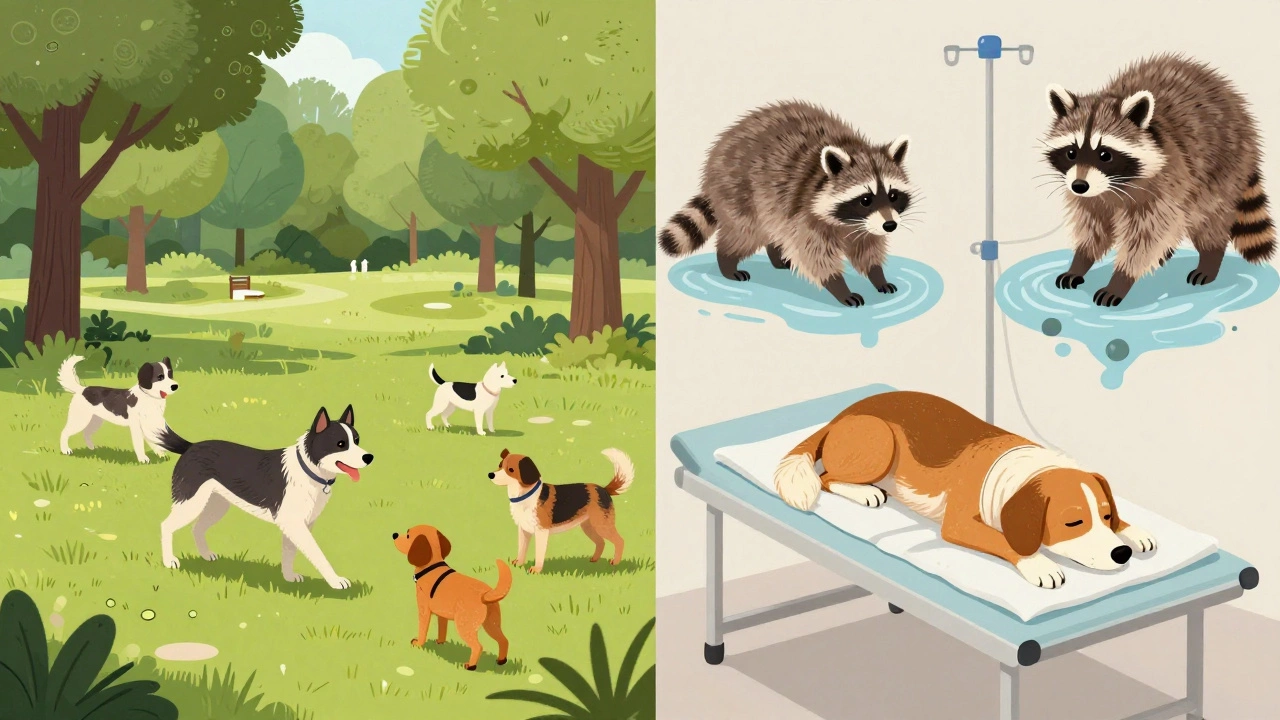
- Leptospirosis-common in areas with standing water or wildlife. Dogs get it from urine of rats or deer. If your dog likes to swim in ponds or sniff around bushes after rain, they need this yearly.
- Lyme disease-transmitted by ticks. If you hike with your dog in wooded areas, especially in spring and fall, this vaccine is worth it.
- Bordetella (kennel cough)-if your dog goes to daycare, grooming, or dog parks, they need this every 6-12 months.
- Canine influenza-outbreaks happen in high-density dog areas. Not common everywhere, but worth asking about if you live in a city with lots of dog walkers.
A 9-year-old Golden Retriever in County Wicklow that visits the same dog park every Tuesday? They need Bordetella and leptospirosis yearly. A 14-year-old Poodle that never leaves the house? Maybe they only need rabies and the core trio.
How do vets decide what to give each year?
It’s not guesswork. Vets use titer tests to measure antibody levels in the blood. These tests show if your dog still has protection from past vaccines. For core diseases like distemper and parvovirus, a high titer means they’re still protected-even if it’s been three years since their last shot.
But titer tests don’t work for everything. Leptospirosis and Bordetella don’t produce long-lasting antibodies, so even if the test looks good, vets still recommend yearly shots. That’s why you can’t just rely on a blood test and call it quits.
Most vets follow a schedule like this:
- Puppies: Start at 6-8 weeks, boost every 3-4 weeks until 16 weeks.
- First adult booster: At 1 year old.
- Then: Core vaccines (distemper, parvo, adenovirus) every 3 years. Rabies every 1-3 years depending on local law.
- Non-core: Yearly if risk is present.
Some vets will give a 3-year rabies vaccine after the first yearly shot. Others stick with 1-year. It depends on your country’s rules. In Ireland, rabies boosters are required every year if your dog travels under the Pet Travel Scheme.
What about senior dogs? Do they need vaccines?
Yes. And here’s why people get it wrong.
Older dogs don’t have weaker immune systems because they’re old. They have weaker immune systems because they’re sick-arthritis, kidney disease, diabetes, cancer. Many senior dogs are on medications that suppress immunity. That makes them more vulnerable to infections.
A 2022 study from the University of Edinburgh tracked 3,200 dogs over 10 years. Dogs over 10 with no vaccines had 3.7 times higher risk of contracting preventable diseases than those kept up to date. The risk didn’t drop with age-it climbed.
Also, vaccines are safer for older dogs than you think. Modern vaccines are purified, contain fewer antigens, and are given at lower doses for seniors. The risk of a reaction is lower than the risk of getting parvo at age 12.
What happens if you skip vaccines?
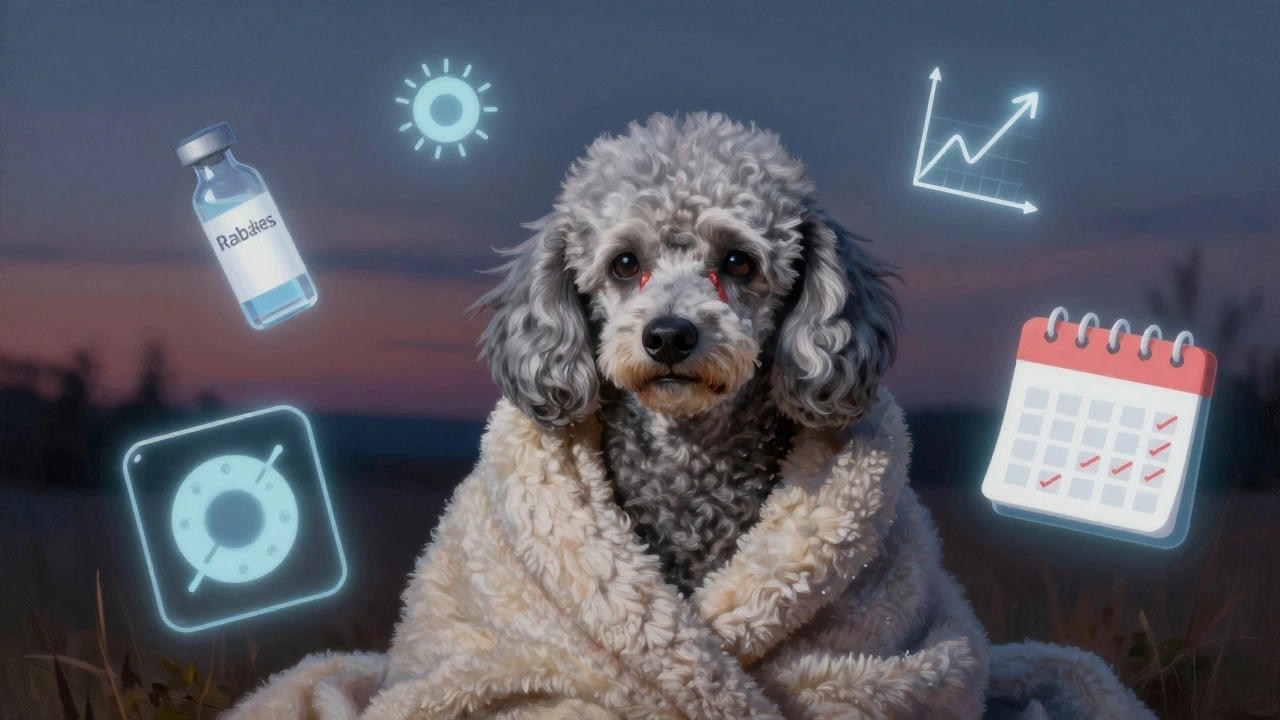
Let’s say your 11-year-old Beagle never got another shot after age 7. One day, they sniff a puddle outside a pet store. That puddle has urine from a raccoon infected with leptospirosis. Two days later, they’re vomiting, lethargic, and their eyes are yellow.
Leptospirosis isn’t just a dog disease. It can spread to humans. Treatment costs over €2,000 in Ireland. Many dogs don’t survive. And it was 100% preventable with a simple yearly shot.
Same with rabies. Even if your dog never leaves the garden, a bat could fly in. Or a stray fox could get close. Rabies has no cure. If your dog isn’t vaccinated and gets exposed, they’re euthanized by law. No exceptions.
What about vaccine reactions?
Yes, some dogs have reactions. Swelling, vomiting, fever. But they’re rare-about 1 in 1,000 shots. Most are mild and last 24 hours. Severe reactions (anaphylaxis) happen in less than 1 in 10,000.
Compare that to the risk of disease: parvo kills 80% of unvaccinated dogs. Distemper leaves survivors with brain damage. Rabies is always fatal.
If your dog had a reaction before, tell your vet. They can space out shots, use pre-medication, or switch brands. But don’t skip vaccines because of fear. The math doesn’t add up.
What should you do?
Here’s the simple plan:
- Keep a record of every vaccine your dog ever got.
- Go for a yearly check-up. Don’t wait for symptoms.
- Ask your vet: "Which vaccines does my dog need this year based on their lifestyle?"
- Request a titer test for core vaccines if you’re unsure-but know it won’t replace leptospirosis or Bordetella shots.
- Never skip rabies. Ever.
Your dog doesn’t stop needing protection because they get older. They need it more.
Do dogs need vaccines for life?
Yes. Core vaccines like rabies, distemper, parvovirus, and adenovirus are needed for the dog’s entire life. The frequency changes-some every 3 years, others yearly-but they don’t stop. Vaccination is lifelong protection, not a one-time event.
Can I skip vaccines if my dog never goes outside?
No. Even indoor dogs can be exposed. Rabies can come from bats or rodents that get inside. Parvovirus can be carried on shoes or clothes. Leptospirosis spores can survive in damp soil near windows. Plus, if your dog ever needs to go to the vet, groomer, or boarding facility, they’ll be required to show proof of vaccination. Skipping puts them at risk and breaks legal requirements.
Are older dogs more likely to have bad reactions to vaccines?
Not necessarily. Studies show reaction rates are similar across age groups. However, dogs with existing health issues (like kidney disease or cancer) may be more sensitive. That’s why vets adjust protocols for seniors-giving fewer vaccines at once, using lower doses, or spacing them out. But avoiding vaccines entirely is riskier than the chance of a mild reaction.
What if my dog had a vaccine reaction in the past?
Tell your vet. They can pre-treat with antihistamines, give vaccines one at a time, use a different brand, or space shots out over weeks. In rare cases, they may skip non-core vaccines. But core vaccines like rabies and parvo are usually still given, just with extra precautions. Never assume a past reaction means all future vaccines are unsafe.
Do titer tests replace all vaccines?
No. Titer tests only measure immunity for core diseases like distemper, parvovirus, and adenovirus. They don’t work for leptospirosis, Bordetella, Lyme, or rabies. Even if the titer is high, your dog still needs yearly shots for those. Titer tests help avoid unnecessary boosters for core vaccines, but they’re not a full replacement.