
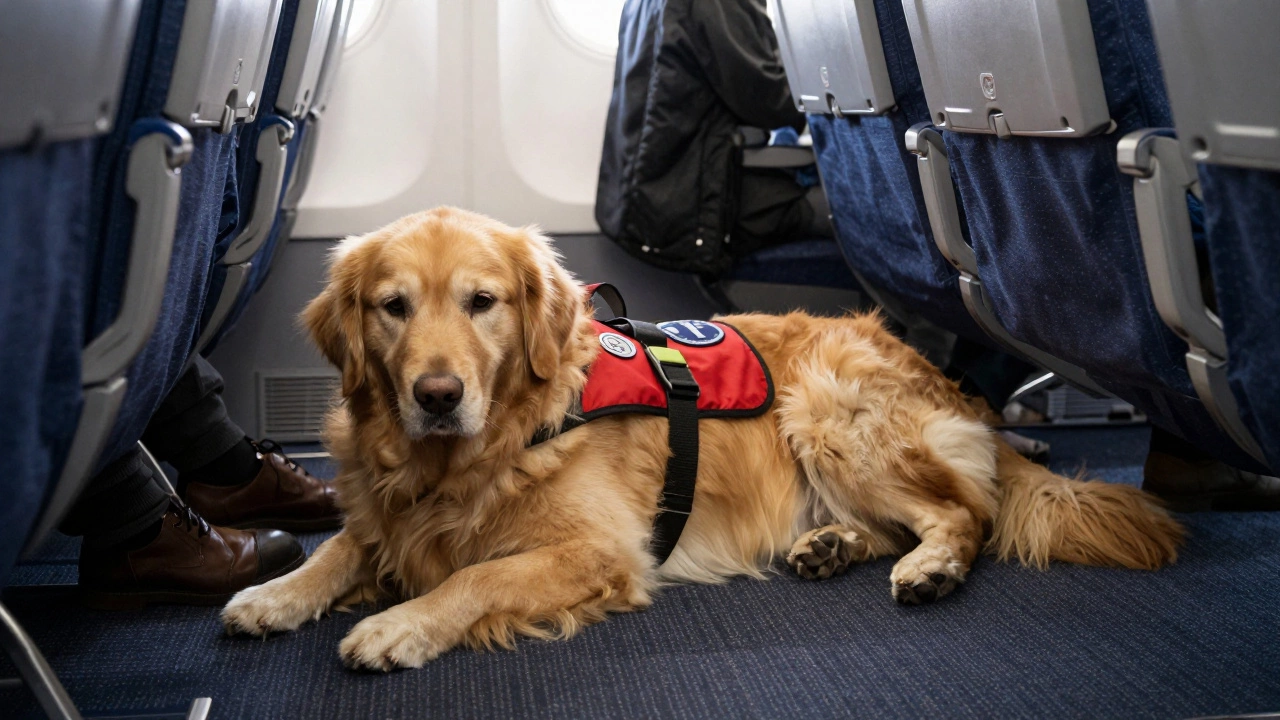
Flight Seat Dispute Simulator
Select the scenario that matches your situation to see if you have grounds to request a seat change or intervention.
Step 1: Identify the Animal
Step 2: Your Situation
Ready for Takeoff
Select the type of animal and your reason for discomfort to see what the rules say.
You book your flight, check in early, and head to your gate. You sit down, take a deep breath, and then you see it: a crate. A dog is settling in next to you. Your heart rate spikes. You’re claustrophobic, or maybe you just hate the smell of wet fur. Can you walk away? Can you demand a different seat? The short answer is complicated, but mostly no-not if that dog is working.
The landscape of air travel with animals changed drastically between 2020 and 2024. If you remember the era of Emotional Support Animals (ESAs) flying for free in the cabin, those days are over. Today, airlines distinguish sharply between pets, service animals, and cargo. Understanding this distinction is the only way to navigate an uncomfortable situation without causing a scene or getting removed from the plane yourself.
Service Dogs vs. Pets: The Legal Line
To know if you can refuse a seat, you first need to know what kind of animal is sitting there. This isn't about guessing; it's about legal definitions enforced by the Department of Transportation (DOT) in the US and similar bodies globally.
Service Dog is a dog individually trained to do work or perform tasks for a person with a disability. Under the Air Carrier Access Act (ACAA), airlines must allow these dogs to travel in the cabin at no extra charge. They are not considered "pets." They are medical equipment, much like a wheelchair or a hearing aid. You cannot ask a passenger to move their wheelchair because it takes up legroom; similarly, you generally cannot ask a service dog handler to move because the dog occupies the floor space.
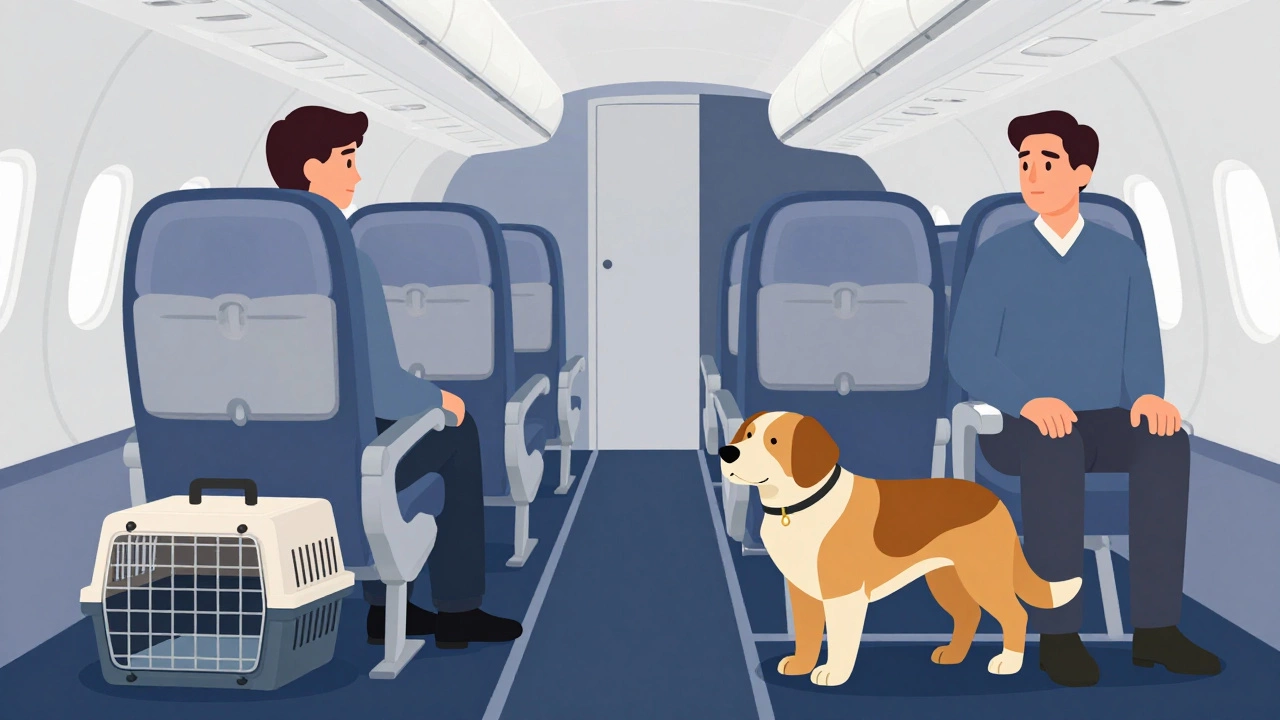
In contrast, a Pet is an animal traveling for companionship, usually inside a carrier under the seat. Pets cost money to fly. They must stay in their carriers. If a pet is in a carrier under your seat, you have almost zero grounds to complain unless the carrier physically protrudes into your footwell significantly more than allowed.
The confusion often arises because people still think of ESAs as service animals. Since December 2020, the DOT has reclassified ESAs as pets. This means if someone brings a dog claiming it is an ESA, the airline treats it as a regular pet. It goes in a crate, it pays a fee, and it stays under the seat. If that crate is too big or blocking your feet, you have a valid complaint. But if the dog is walking freely beside the seat, it is likely a legitimate service animal.
When Can You Actually Ask Someone to Move?
Let’s be realistic. Most passengers don’t want to start a fight. But there are specific scenarios where your comfort or health rights override the general rule of "take it like a man." Here is how to assess if you have leverage.
- Allergies and Respiratory Issues: If you have a severe, documented allergy to dogs or a respiratory condition like asthma, you have stronger ground. However, airlines are not required to provide allergen-free zones. They might try to accommodate you, but they are not legally obligated to bump another passenger to save your sneeze fit. The best defense here is booking a seat far away from high-traffic areas or using antihistamines beforehand.
- Physical Obstruction: Service dogs must fit on the floor without encroaching on aisles or adjacent seats. If the dog is large (like a Great Dane) and its body is pressing against your shin, or if the handler has left toys, leashes, or food bowls in the aisle, you can politely ask the handler to tidy up. If the dog itself is too big for the floor space, the airline agent should have addressed this at check-in. Once airborne, your options are limited to asking a flight attendant to intervene.
- Behavioral Problems: A service dog must be housebroken and under control. If the dog barks incessantly, growls, or eliminates on the floor, it is violating the terms of its transport. In this case, you aren't complaining about the *presence* of the dog; you are reporting a safety and hygiene hazard. Flight attendants will handle this immediately, potentially removing the team from the flight.
If none of these apply, and you simply dislike being near a dog, the airline will likely tell you to tough it out. Swapping seats requires the consent of the other passenger. You cannot force them to move.
The Strategy: How to Avoid Sitting Next to a Dog
Since you rarely win the argument once you are seated, the smart move is prevention. Here is how seasoned travelers avoid this situation entirely.
1. Choose Your Seat Wisely
Dogs occupy floor space. This means seats next to bulkheads, exit rows, or walls are prime real estate for handlers. Why? Because there is no one sitting next to them on the wall side, giving the dog more room to stretch. If you see a seat taken by a handler with a dog, assume the floor space is claimed.
- Avoid Bulkhead Seats: These are the most popular spots for service animal teams because the dog can lie flat against the wall.
- Skip Window Seats Next to Aisles: While window seats seem safe, the dog sits in the aisle space. If you are in the middle or aisle seat, you are sharing the floor footprint.
2. Check-In Early, But Watch the Gate
Don’t just check in online and rush to the gate. Arrive at the boarding area early. Look for passengers with vests, harnesses, or crates. If you see a cluster of people with dogs, steer clear of those rows. Airlines often group service animal teams together during boarding to make it easier for staff, though this isn't a hard rule.
3. Use Airline Apps
Some major carriers, like Delta and United, have started tagging service animal requests in their internal systems. While they won’t show you exactly where every dog is, some apps allow you to see "service animal" indicators on the seat map during mobile check-in. If you see a red flag or a paw icon next to a seat, pick another one.
What If You Have a Phobia?
Cynophobia (fear of dogs) is a recognized anxiety disorder. Does this give you special rights? Legally, no. The ACAA protects the rights of the disabled person with the service dog, not the fearful passenger. The airline’s priority is ensuring the service dog can perform its job. Removing the dog would disable the handler. Moving you would inconvenience you, but it doesn’t violate a federal civil right in the same way.
However, customer service exists for a reason. If you explain calmly to a flight attendant that you have a severe phobia, they may try to find a volunteer to swap seats. Do not demand it. Ask nicely. "I’m really struggling with my anxiety today because of the dog. Is there any chance anyone nearby would mind swapping?" Often, a friendly face will help you out. If no one volunteers, you may have to ride it out. Bringing noise-canceling headphones and focusing on a screen can help distract you.
Comparison: Service Animal vs. Pet Policies
| Feature | Service Dog | Emotional Support Animal (ESA) | Regular Pet |
|---|---|---|---|
| Legal Status | Protected under ACAA/DOT | Treated as a pet (since 2020) | Commercial commodity |
| Cost | Free | Pet fee applies | Pet fee applies ($95-$150+) |
| Location | Floor of cabin, uncrated | Under seat, crated | Under seat, crated |
| Documentation | DOT Service Animal Form | Health certificate/Vaccination | Health certificate/Vaccination |
| Can Passenger Refuse Seat? | No (unless behavioral issue) | Yes (if crate blocks footwell) | Yes (if crate blocks footwell) |
Handling the Situation Onboard
If you find yourself stuck next to a dog, here is how to handle it with dignity and minimal stress.
Do not touch the dog. Even if it looks cute, touching a service dog while it is working is illegal in many jurisdictions and highly disrespectful. It distracts the animal from its task. Keep your hands to yourself.
Keep your belongings off the floor. Place your bag on the overhead bin or your lap. Do not put your shoes or carry-on on the floor where the dog is lying. This creates a physical boundary and shows respect for the animal’s workspace.
Watch your food. Dogs are scavengers. Do not eat messy foods like popcorn or chips near the dog. Crumbs falling onto the dog’s bed (the floor) can trigger begging behavior, which puts the handler in a difficult position. Eat solid meals or keep snacks sealed until you are done.
Speak to the handler, not the dog. If you need to adjust your position, ask the human. "Excuse me, could you shift slightly so I can get my legs comfortable?" Most handlers are empathetic and will adjust if possible. Remember, they are also trying to relax.
International Flights: Different Rules Apply
If you are flying outside the US, the rules change. The EU has strict regulations regarding service animals, but enforcement varies by country. In some European countries, only guide dogs for the blind are universally accepted in cabins; psychiatric service dogs may face more scrutiny. Always check the specific airline’s policy for international routes. For example, British Airways and Lufthansa have detailed forms that must be submitted weeks in advance. If you are a passenger concerned about a dog on an international flight, know that the airline staff will be more rigid about documentation. If the paperwork isn't perfect, the dog might not even be allowed on board, saving you the worry.
Final Thoughts on Coexistence
We share public spaces with people who have disabilities every day. The airplane cabin is one of those spaces. While it is understandable to feel uneasy, especially with phobias or allergies, the law prioritizes access for the disabled. The best approach is proactive avoidance through seat selection and calm, respectful communication if avoidance fails. You likely won't get the other passenger to move, but you can control your own reaction and make the flight bearable.
Can I ask a flight attendant to move me because of a service dog?
You can ask, but the flight attendant is not required to say yes. They will prioritize the needs of the service animal team. If there is an empty seat available, they might move you as a courtesy, but they cannot force another paying passenger to switch seats to accommodate your preference.
Are airlines required to warn me if a dog is on my flight?
No. Airlines are not legally required to announce the presence of service animals on the flight manifest or via PA announcements due to privacy laws protecting the handler's disability status. However, some airlines offer discreet notifications upon request at check-in.
What if the dog bites me or scratches me?
If a service dog injures you, it is a serious incident. Report it to the flight attendant immediately. The airline will document the event, and you may need to file a report with local authorities upon landing. Service dogs are rigorously trained not to bite, so an attack suggests the animal was not a legitimate service dog or was provoked.
Can I bring my own service dog to protect myself from fear of dogs?
No. A service dog must be trained to perform tasks related to a specific disability. Fear of dogs (cynophobia) is treated with therapy, not by bringing another dog on a plane. An animal trained solely to provide comfort due to fear does not qualify as a service animal under current DOT rules.
Does the size of the dog matter for seating?
Yes, practically speaking. While the law doesn't limit dog size, airlines require the dog to fit on the floor without blocking the aisle or encroaching on adjacent seats. Large breeds like Golden Retrievers or Labradors take up significant space. If the dog is too large for the floor area, the airline should have denied boarding or offered a different solution before takeoff.