
Cat Feeding Calculator
Determine the right amount of food for your cat based on weight, age, and activity level. The article explains that proper portion sizing is crucial to avoid underfeeding or overfeeding.
Recommended Daily Calories
Enter your cat's information to see their daily caloric needs.
Example: A 10 lb adult indoor cat needs ~200-250 calories per day.
Remember: Always use a measuring cup, not scooping from the bag.
Ever stare at your cat as they stare back at you, tail flicking like a metronome, and wonder if they’re really hungry-or just plotting world domination? Cats are masters of subtlety. They don’t bark for food or paw at your leg like a dog. But that doesn’t mean they’re silent. If you know what to look for, your cat will tell you exactly when they’re hungry-even if they refuse to say it out loud.
They’re at the bowl before you are
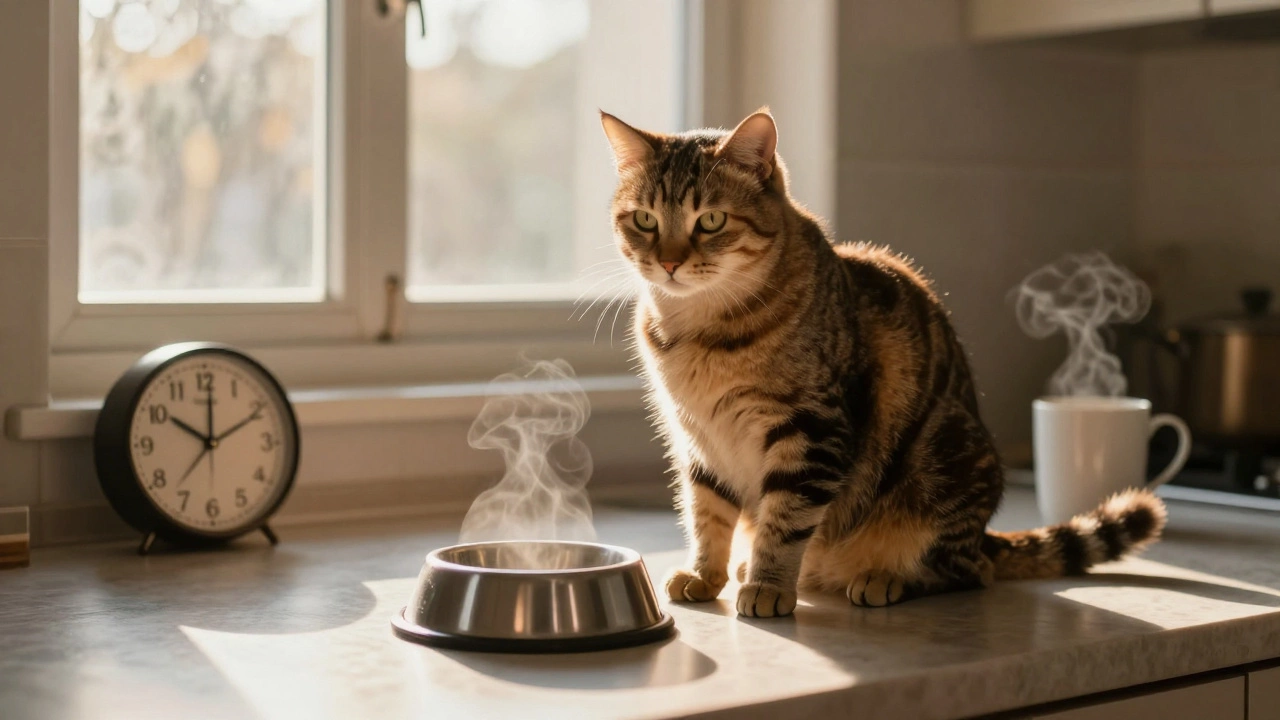
One of the clearest signals? Your cat shows up at their food bowl before you even get out of bed. Not just nearby. Not just in the kitchen. Right there, paws planted, nose inches from the empty dish. This isn’t curiosity. It’s a demand. Cats have excellent internal clocks. If you feed them at 7 a.m. every day, they’ll be waiting at 6:58. No alarm needed. If they start doing this earlier than usual-say, 6 a.m. when it’s normally 7-they’re signaling something’s off. Maybe they burned extra calories last night chasing a dust bunny. Or maybe they’re just ready.
Vocalizing like a broken alarm clock
Not all cats meow. But the ones that do? When they’re hungry, they turn into tiny, persistent sirens. It’s not the soft chirp they use to say hello. It’s the low, drawn-out meeeeowww that starts at 4 a.m. and doesn’t stop until you open a can. This sound is different from their usual meows. It’s more rhythmic, more urgent. Studies from the University of California, Davis show that cats develop this specific vocalization specifically to manipulate human behavior. They’ve learned that this sound gets food faster than rubbing against your leg. And yes, it works. Every time.
Following you like a shadow
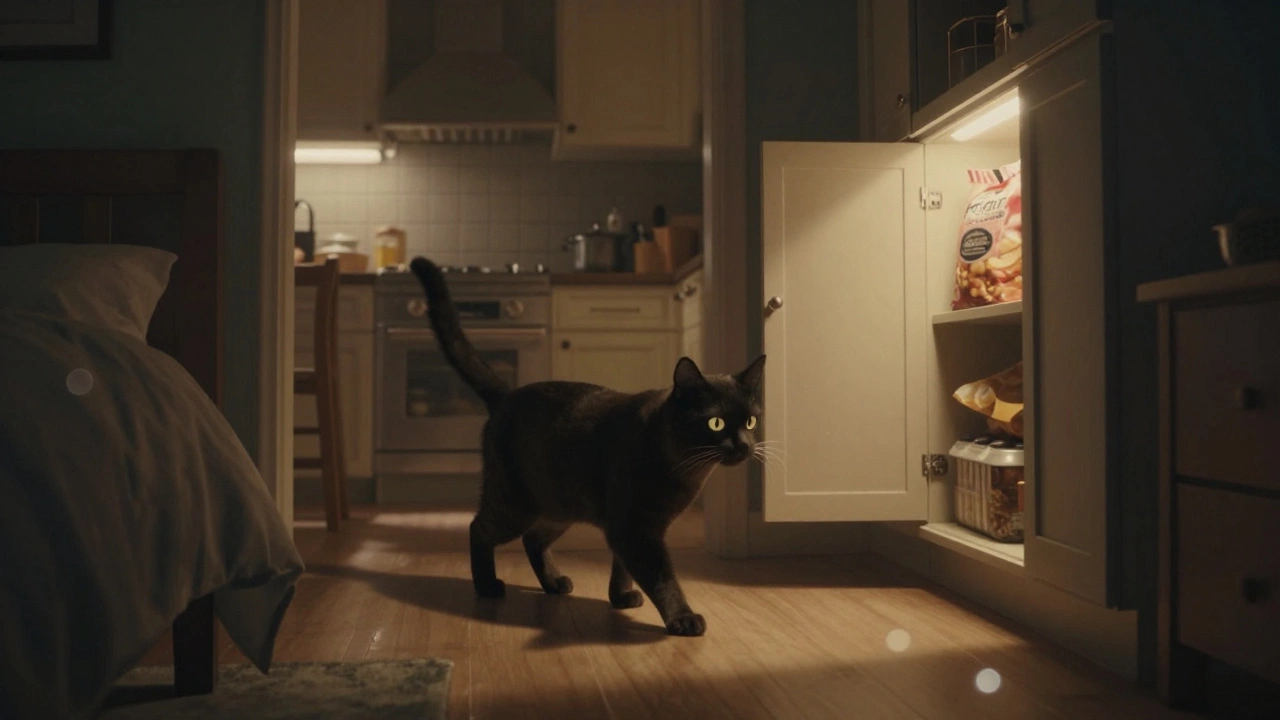
Is your cat suddenly glued to your heels every time you move? From the bedroom to the kitchen to the bathroom? If they’re not just being clingy (which cats also do), this is a classic hunger cue. They’re not interested in your shower routine. They’re tracking your path to the pantry. Cats don’t ask for food-they follow the source. If your cat starts following you into rooms where food is stored (even if it’s just the cupboard where you keep the tuna), they’re mapping your movements for mealtime.
Acting weirdly aggressive around food
Some cats don’t beg. They bluff. If your usually calm cat suddenly swats at the counter when you walk by, knocks over a water glass near the food area, or stares intensely at your plate while you eat? That’s not rudeness. That’s hunger. They’re not trying to be mean. They’re communicating: That looks better than my dry kibble. This behavior is especially common in cats who’ve been fed the same food for months. If they’ve lost interest in their regular bowl but are fixated on your food, they’re telling you their diet might need a change-or they’re just really hungry.
Weight loss or changes in body condition
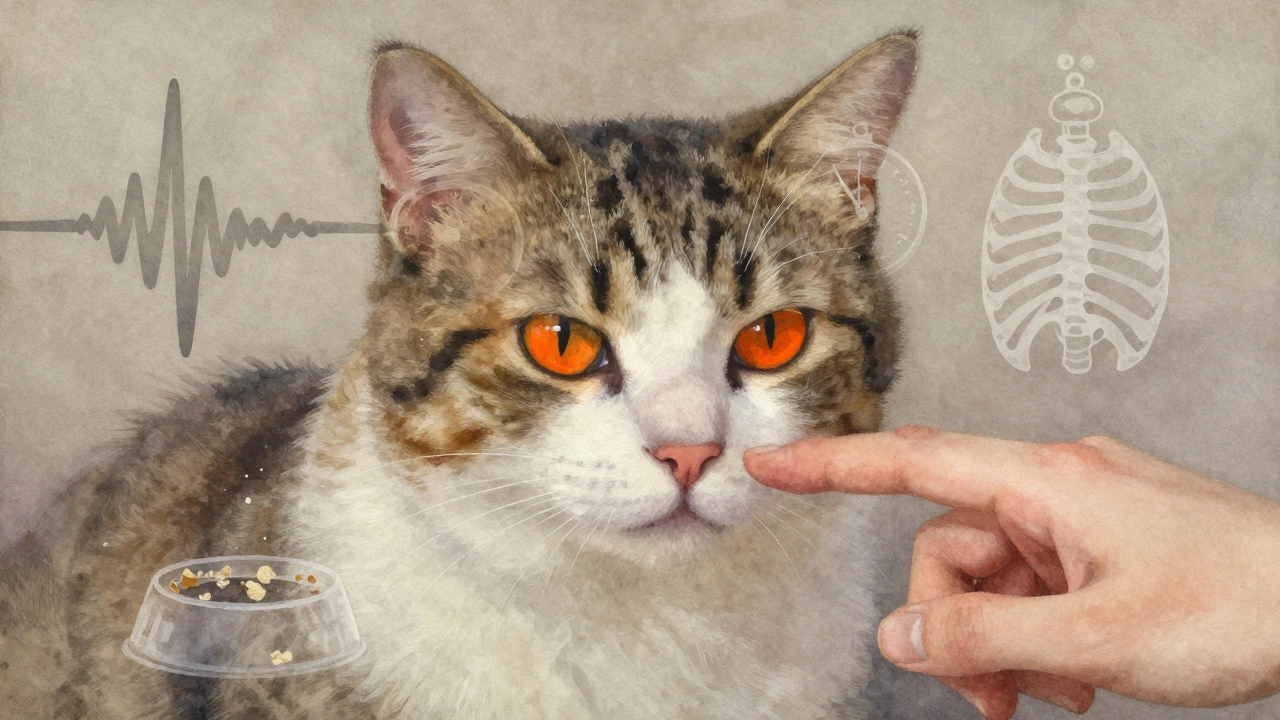
Let’s get real: if your cat’s ribs are showing, or their spine sticks out like a washboard, they’re not just picky-they’re underfed. A healthy cat should have a slight layer of padding over their ribs. You should be able to feel them, not see them. If you can count every rib like piano keys, it’s time to reassess portions. Same goes for their waistline. When viewed from above, a healthy cat has a visible taper from ribs to hips. If they look like a tube with legs? They’re not getting enough. A 2024 study from the American Veterinary Medical Association found that 38% of cats with weight loss were not being fed enough, not because of illness, but because owners misread their behavior.
Food obsession beyond normal
Is your cat suddenly obsessed with the food bag? Sniffing it, pawing at it, sitting on it like it’s a throne? Or do they lick the inside of the empty bowl after every meal? That’s not cleaning. That’s craving. Cats have scent receptors that can detect food residue for days. If they’re licking the bowl clean down to the plastic, they’re not being tidy-they’re trying to get every last molecule. This behavior often shows up after a change in food brand, or if they’ve been underfed for a while. It’s a learned response: When food disappears, it’s gone for good.
They’re eating too fast-or too slow
There are two extremes here. One: your cat inhales their food in 12 seconds, then stares at the empty bowl like it betrayed them. Two: they take one bite, walk away, come back an hour later, nibble again, and leave half the bowl untouched. Both are red flags. Eating too fast often means they’re used to not having enough. They learned to gulp it down before it vanished. Eating too slow? Could mean they’re full-or they’re bored, sick, or the food isn’t fresh. If your cat used to eat quickly and now takes 45 minutes, something’s changed. Check the food’s expiration date. Smell it. If it’s stale, they’re turning it down.
They’re acting out at feeding time
Has your cat started knocking over their water bowl right before dinner? Scratching the door to the pantry? Purring loudly while you’re on a Zoom call? These aren’t random acts. They’re attention-seeking behaviors tied to food. Cats don’t throw tantrums like toddlers. But they do learn cause and effect. If they’ve learned that meowing at 2 a.m. makes you get up and open a can, they’ll keep doing it. If they’ve learned that sitting on the keyboard makes you stop working and feed them, they’ll sit on it every time. Pay attention to the pattern. If it only happens around mealtime, it’s hunger.
What to do when your cat is hungry
First, don’t assume they’re just being dramatic. Cats don’t fake hunger. If they’re showing multiple signs, they’re telling you something. Start by checking their food bowl. Is it empty? Is the food old? Dry kibble loses flavor after 6-8 weeks. Wet food should be opened and served within 24 hours. If the food is fine, look at portion size. Most cat food bags list feeding guidelines, but those are averages. A 10-pound indoor cat needs about 200-250 calories a day. A 15-pound active cat? Closer to 300. Use a measuring cup. Don’t eyeball it.
Try feeding smaller meals more often. Cats are natural grazers. Two meals a day is fine, but four small ones are better. Set a timer. Even if you’re busy, a quick 15-minute feeding schedule keeps their metabolism steady. Also, consider using puzzle feeders. They slow down eating, stimulate mental activity, and make mealtime feel like a hunt-which is what cats were built to do.
When to worry
Not every change means hunger. If your cat is losing weight, not eating at all, vomiting, lethargic, or drinking way more water than usual, see a vet. These could be signs of diabetes, kidney disease, or hyperthyroidism-all common in older cats. But if your cat is acting hungry, still energetic, and has a normal coat and litter box routine? You’re probably just dealing with a cat who knows exactly how to get what they want. And honestly? That’s okay. They’ve earned it.
Feeding schedule cheat sheet
- Adult cats (1-7 years): 2-3 meals per day
- Senior cats (8+ years): 2 meals per day, with wet food for hydration
- Kittens (under 6 months): 3-4 meals per day
- Active or underweight cats: add a small snack midday
- Always use a measuring cup-not a scoop from the bag
- Wet food should be served fresh; discard uneaten portions after 4 hours
My cat begs for food all the time. Should I give in?
No. Begging is learned behavior. If you feed them every time they meow, you’re training them to keep doing it. Stick to a schedule. If they’re genuinely hungry between meals, offer a small portion of wet food or a puzzle feeder. But don’t reinforce the begging. It’s not cruelty-it’s consistency.
Can cats tell if their food is bad?
Yes. Cats have 200 million scent receptors-five times more than humans. They can smell rancid fat, mold, or oxidation in dry food long before you can. If your cat turns away from food they used to love, check the expiration date. Smell the kibble. If it smells oily or stale, toss it. Their nose knows better than your eyes.
Is it normal for my cat to eat less in summer?
Yes. Just like people, cats naturally eat less when it’s hot. Their metabolism slows. As long as they’re still drinking water, staying active, and not losing weight, it’s fine. Don’t force-feed. Just make sure food is stored in a cool place and offer wet food, which has higher water content.
How do I know if I’m overfeeding my cat?
Check their body condition. If you can’t feel their ribs without pressing hard, if they have no waistline, or if they waddle instead of walk-they’re overweight. Overfeeding is more common than underfeeding. Most cat owners pour too much food into the bowl. Use the guidelines on the bag, then adjust based on body shape-not appetite.
Should I free-feed my cat dry food?
It’s not ideal. Free-feeding leads to overeating, boredom, and weight gain. Even if your cat seems to self-regulate, they’re not. Studies show cats on free-fed diets gain 15-20% more weight over two years than those on scheduled meals. If you must free-feed, use a timed feeder and limit daily portions. Better yet: switch to scheduled meals with puzzle feeders.