
Dog Walking Business Profitability Calculator
Input your expected business parameters to see if dog walking can meet your financial goals in 2026.
Most people think starting a dog walking is a low-barrier entry point into the pet care industry that requires minimal upfront capital but demands high reliability and local trust. It sounds simple: you love dogs, you have free evenings, so why not get paid to walk them? But before you print out flyers or set up a social media page, you need to look past the cute photos of golden retrievers on leashes. The reality is that this isn't just about loving animals; it's about managing logistics, liability, and inconsistent demand.
If you are considering this as a primary career or a serious side hustle in 2026, the answer isn't a simple yes or no. It depends entirely on your location, how you structure your pricing, and whether you treat it like a hobby or a company. Here is the honest breakdown of what makes this business viable, where it fails, and how to actually make money without burning out.
The Financial Reality: What You Actually Earn
Let’s talk numbers first, because emotion shouldn’t drive your financial planning. In most urban areas in the United States, the standard rate for a single 30-minute walk hovers between $20 and $35 per dog. If you take on five clients who each need two walks a week, you’re looking at roughly $1,000 to $1,750 a month. That sounds decent, but you have to subtract the costs.
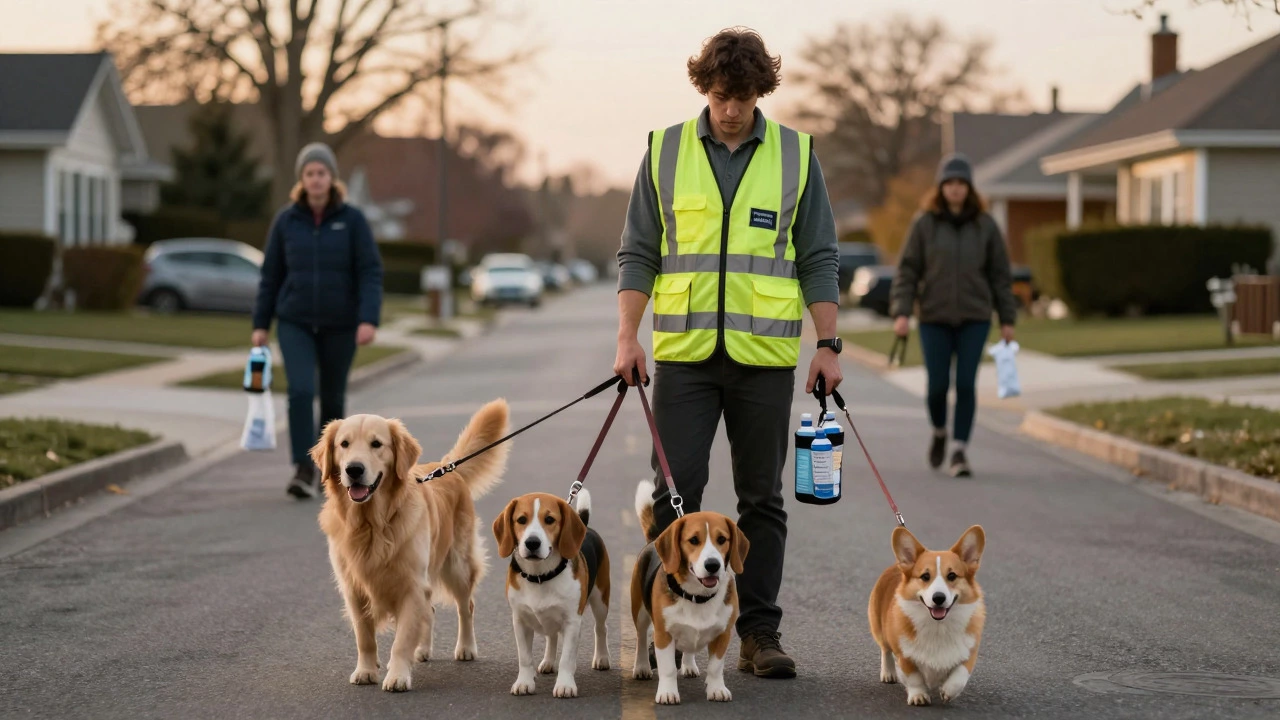
Your biggest expense isn’t gear-it’s time. A 30-minute walk often takes 45 minutes when you factor in travel to the client’s home, securing the dog, waiting for them to settle, and returning. If you bill strictly by the hour, your effective hourly wage drops significantly once travel time is included. Smart walkers solve this by grouping dogs from nearby neighborhoods into one route. This allows you to cover more clients in less time, pushing your effective hourly rate closer to $40-$50. However, grouping only works if the dogs are compatible and the owners live within a tight geographic radius.
You also need to account for variable costs. Leashes, poop bags, water bottles, and potential vet emergencies can eat into your margins. Many successful walkers set aside 10-15% of gross revenue for these operational surprises. If you’re doing this part-time while working another job, the net profit might be modest-perhaps $500 to $800 a month after expenses. For a full-time venture, you’d need to scale aggressively to hit a livable wage, which means managing 15 to 20 regular clients consistently.
Legal and Liability Hurdles You Can’t Ignore
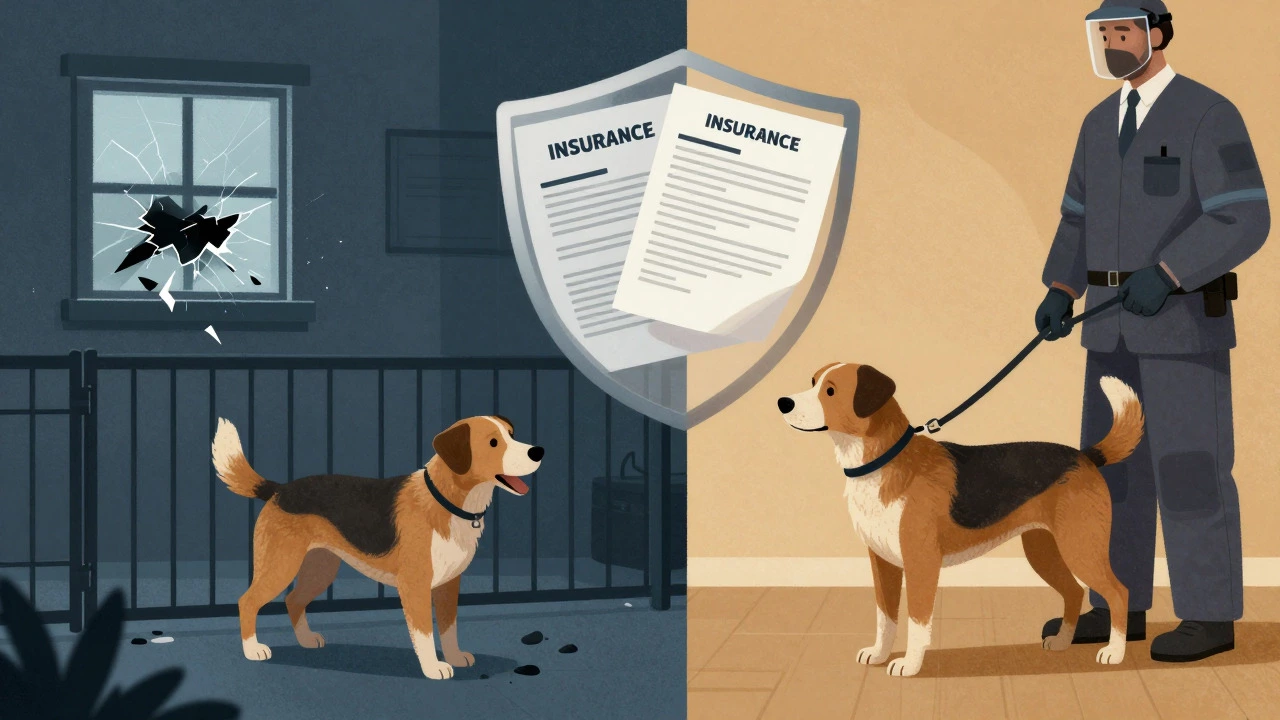
Here is where many new walkers stumble. Just because you don’t need a license to walk a dog doesn’t mean you’re protected if something goes wrong. If a client’s dog bites a neighbor, escapes a fence, or gets hit by a car during your watch, who pays? Without proper coverage, that’s you.
Pet sitter insurance is a specialized policy that covers liability, theft, and accidental injury for pet care providers, typically costing between $30 and $100 per month depending on coverage limits. This is non-negotiable. General homeowner’s insurance rarely covers professional pet care activities. Before taking your first paying client, secure a policy that includes general liability, professional liability, and perhaps personal property coverage (in case you break a window or lose a key). Most reputable policies require you to carry at least $1 million in liability coverage.
Beyond insurance, you need contracts. Every client should sign a service agreement that outlines:
- Walk duration and frequency
- Payment terms and late fees
- Liability waivers (especially for known behavioral issues)
- Cancellation policies
- Emergency contact procedures
These documents protect you from "he said/she said" disputes. They also help establish your professionalism, which justifies higher rates compared to an informal neighborly favor.
Building Your Client Base in a Saturated Market
In major cities, competition is fierce. You aren’t just competing with other individual walkers; you’re competing with established apps like Rover or Wag! These platforms handle marketing and scheduling for you, but they take a significant cut-often 20% to 25% of your earnings. Plus, clients on these apps are often price-sensitive and less loyal, switching providers based on availability rather than relationship.
To build a sustainable business, you need direct clients. How do you find them?
- Local Networking: Visit local dog parks, pet stores, and veterinary clinics. Leave flyers there, but make sure they include a QR code linking to a simple booking page. Ask vets if you can leave your card at their front desk-they know which owners struggle with exercise schedules.
- Social Media Presence: Create a dedicated Instagram or TikTok account for your business. Post short videos of happy, tired dogs after walks. Use local hashtags. People hire faces, not logos. Show your personality and your reliability.
- Referral Incentives: Offer existing clients a discount or a free walk for every new client they refer. Word-of-mouth is the strongest driver in local services.
Aim to build a waitlist. When you have more demand than supply, you gain leverage to raise prices and choose better clients. Avoid chasing every lead; focus on owners who are communicative, punctual, and respectful of your boundaries.
Operational Challenges: Weather, Dogs, and Burnout
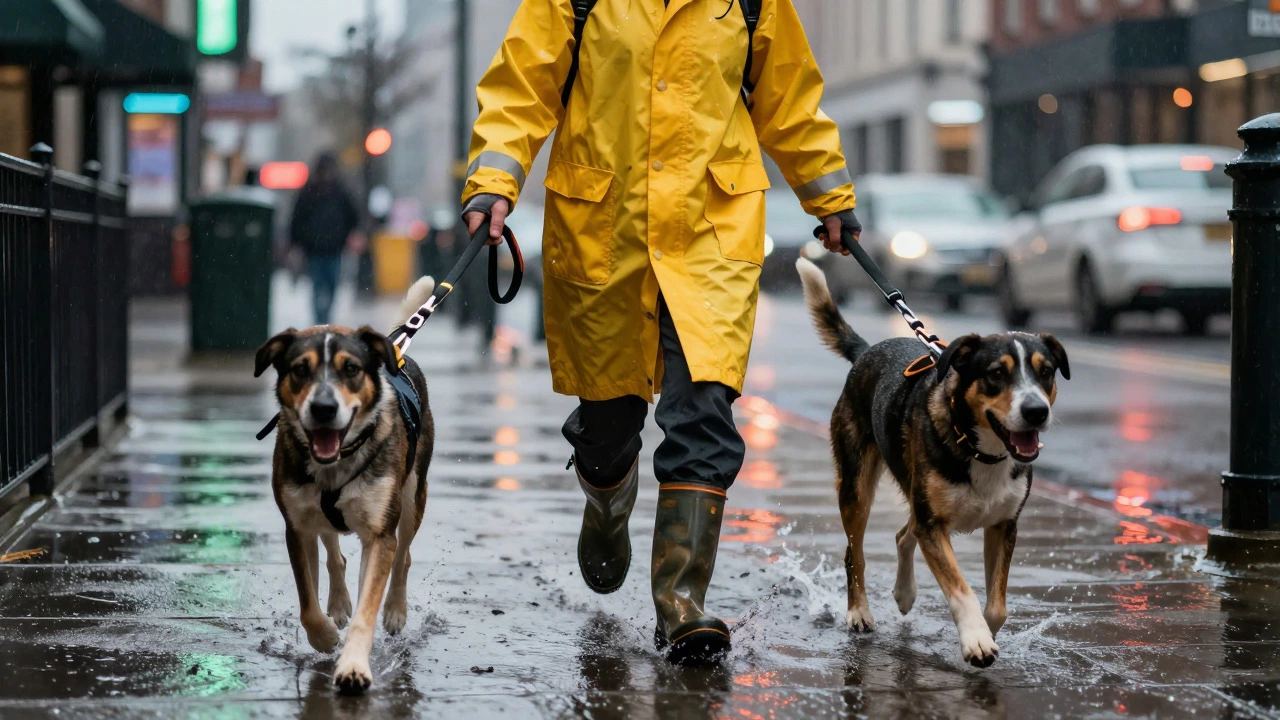
Dog walking is physically demanding. You are outdoors in rain, snow, heat, and wind. In summer, you risk heatstroke for both you and the dogs. In winter, you deal with ice and slush. You need appropriate gear: waterproof boots, high-visibility vests, and reflective leashes. Never skip hydration or sunscreen, even in cloudy weather.
Then there’s the dog factor. Not all dogs are well-behaved. Some pull, some bark, some refuse to pee, and some simply hate other dogs. You need to assess each dog’s temperament before committing to a group walk. If a dog has separation anxiety or aggressive tendencies, it may require solo walks or even a different provider altogether. Misjudging a dog’s behavior is a common reason for early termination of service-and bad reviews.
Burnout is real. If you’re walking six dogs a day, five days a week, plus handling messages, invoices, and emergencies, you’re working a second full-time job. To prevent this, set strict boundaries. Define your operating hours clearly. Don’t promise 24/7 availability unless you’re truly ready for it. Consider hiring a sub-walker or assistant once you hit 10+ clients. This allows you to maintain quality while scaling capacity.
When Is It NOT a Good Idea?
Despite the perks, dog walking isn’t for everyone. Consider avoiding this path if:
- You live in a rural area with sparse population density. The travel time between clients will kill your profitability.
- You dislike routine. This job is highly repetitive. You’ll walk the same routes daily.
- You have poor credit or no emergency fund. Income can fluctuate seasonally (fewer walks in extreme weather) or due to client cancellations.
- You expect quick riches. This is a slow-build business. Trust takes months to establish.
If you fall into any of these categories, consider alternative pet care models like pet sitting (which commands higher rates for overnight stays) or mobile grooming (higher skill barrier but higher pay).
Scaling Beyond Solo Walking
Once you’ve mastered the basics, you can expand your service offerings to increase average revenue per client. Add-ons like:
- Drop-in visits: A 15-minute check-in for feeding or playtime. Charge $15-$25 per visit.
- Overnight boarding: For vacations. Charge $50-$80 per night.
- Puppy training basics: Simple obedience tips for new puppy owners. Charge a premium for expertise.
These services diversify your income stream and reduce reliance on daily walks. They also deepen client relationships, making them less likely to switch to a cheaper competitor.
| Feature | Dog Walking | Pet Sitting (Overnight) |
|---|---|---|
| Average Rate per Service | $20 - $35 per walk | $50 - $80 per night |
| Time Commitment per Service | 30 - 45 minutes | 12 - 16 hours (overnight) |
| Scalability | High (can group multiple dogs) | Low (limited by number of homes) |
| Client Retention | Medium (easy to switch providers) | High (trust-based, infrequent events) |
| Physical Demand | Moderate (daily outdoor activity) | Low-Moderate (mostly indoor, occasional walks) |
Final Verdict: Who Should Start This Business?
So, is dog walking a good business to start? For the right person, absolutely. It’s ideal for individuals who value flexibility, enjoy being outdoors, and are disciplined enough to manage their own finances and marketing. It’s a great way to build a local reputation and potentially transition into a broader pet care brand.
However, it’s not a passive income stream. It requires consistent effort, excellent customer service, and resilience against seasonal dips. If you approach it with a business mindset-not just a love for dogs-you can build a profitable, sustainable side hustle or even a full-time career. Start small, nail your first five clients, gather testimonials, and then scale. The dogs will keep you humble; the business will keep you sharp.
How much does it cost to start a dog walking business?
Initial costs are low. Budget $500-$1,000 for leashes, collars, poop bags, business cards, and a basic website or booking tool. The ongoing monthly cost is primarily insurance, which ranges from $30 to $100 per month. You don’t need expensive equipment to begin, but investing in durable, high-quality gear reduces replacement costs over time.
Do I need a license to become a professional dog walker?
In most US states, you do not need a specific state license to walk dogs. However, you may need a local business license or DBA (Doing Business As) registration depending on your city or county. Always check with your local municipal office. Additionally, some cities require pet sitters/walkers to register with animal control, though this is rare for walkers specifically.
What is the best way to find my first dog walking clients?
Start with your immediate network: friends, family, and neighbors. Offer discounted rates for your first three clients in exchange for detailed testimonials and referrals. Then, expand to local dog parks and veterinary clinics. Creating a simple Instagram profile showcasing your walks and personality helps attract organic local leads. Consistency in posting and engaging with local pet communities builds trust quickly.
Should I use an app like Rover or build my own client list?
Apps are great for initial exposure and filling gaps in your schedule, especially when you’re new. However, they take a commission fee and limit your ability to build long-term relationships. Ideally, use apps to find your first few clients, then convert them to direct bookings via your own website or phone number. This maximizes your profit margin and gives you control over your brand experience.
How many dogs can I walk at once?
Most experienced walkers recommend limiting groups to three to four dogs maximum. More than that becomes difficult to manage safely, especially if one dog pulls or reacts to another. Ensure all dogs in a group are comfortable with each other and have similar energy levels. Solo walks are necessary for large breeds, reactive dogs, or puppies still learning leash manners.