
Dog Lighting Needs Calculator
Answer the questions below to get a personalized recommendation for your dog's lighting setup.
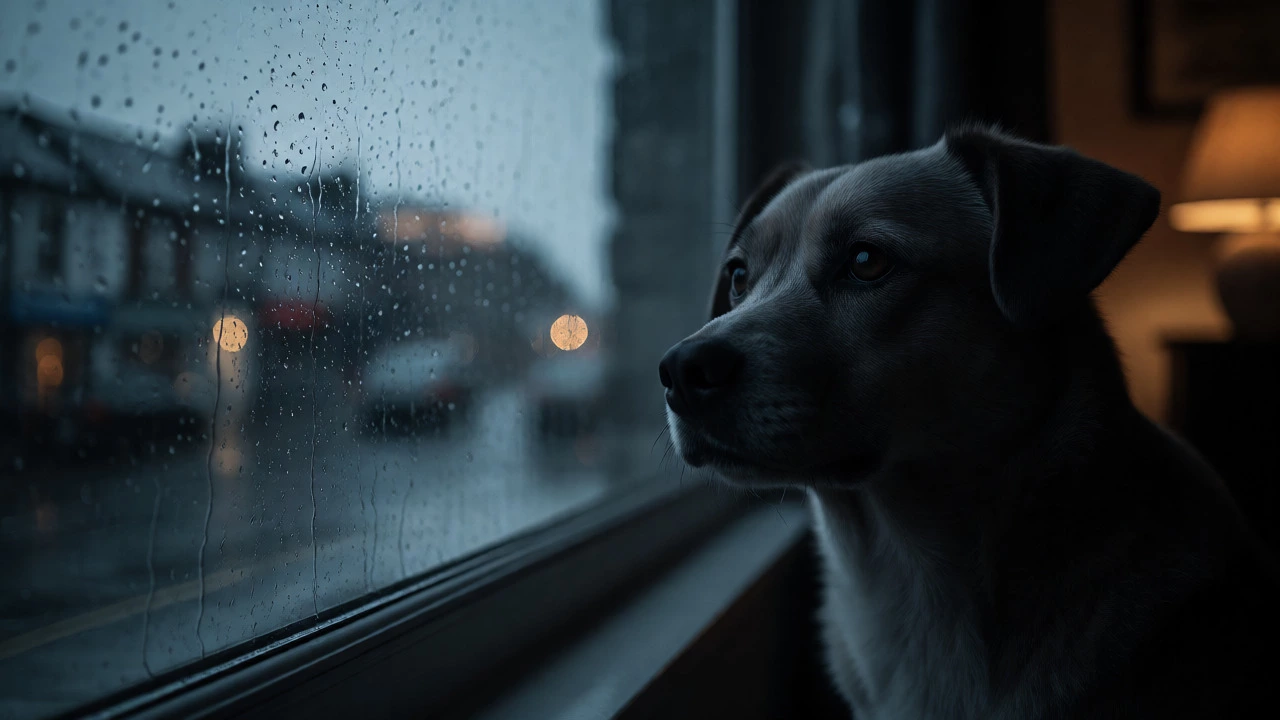
You rush out the door, keys jangling, and glance back at your pup. They’re staring up with those big, soulful eyes, and a guilt trip hits you: Is it too dark in there? Are they scared? It’s a common worry, especially during the short, gloomy days of November here in Dublin. You might be tempted to flip every switch in the house before you leave, just to keep them company.
But does your dog actually need that light? Or are we projecting our own fear of the dark onto animals who see the world very differently than we do? The answer isn’t a simple yes or no. It depends entirely on your specific dog, their age, their health, and what kind of night you’re having. Let’s break down what’s really happening when you leave the lights on, so you can stop worrying and start sleeping better yourself.
The Myth of Canine Nyctophobia
First off, let’s kill the biggest myth right now: dogs are not afraid of the dark because it’s dark. Humans have evolved to rely heavily on sight; we get anxious when we can’t see potential threats. Dogs, however, are crepuscular hunters by ancestry. Their eyes are built for low-light conditions. They have a higher number of rod cells in their retinas compared to us, which allows them to detect movement and shapes in near-total darkness.
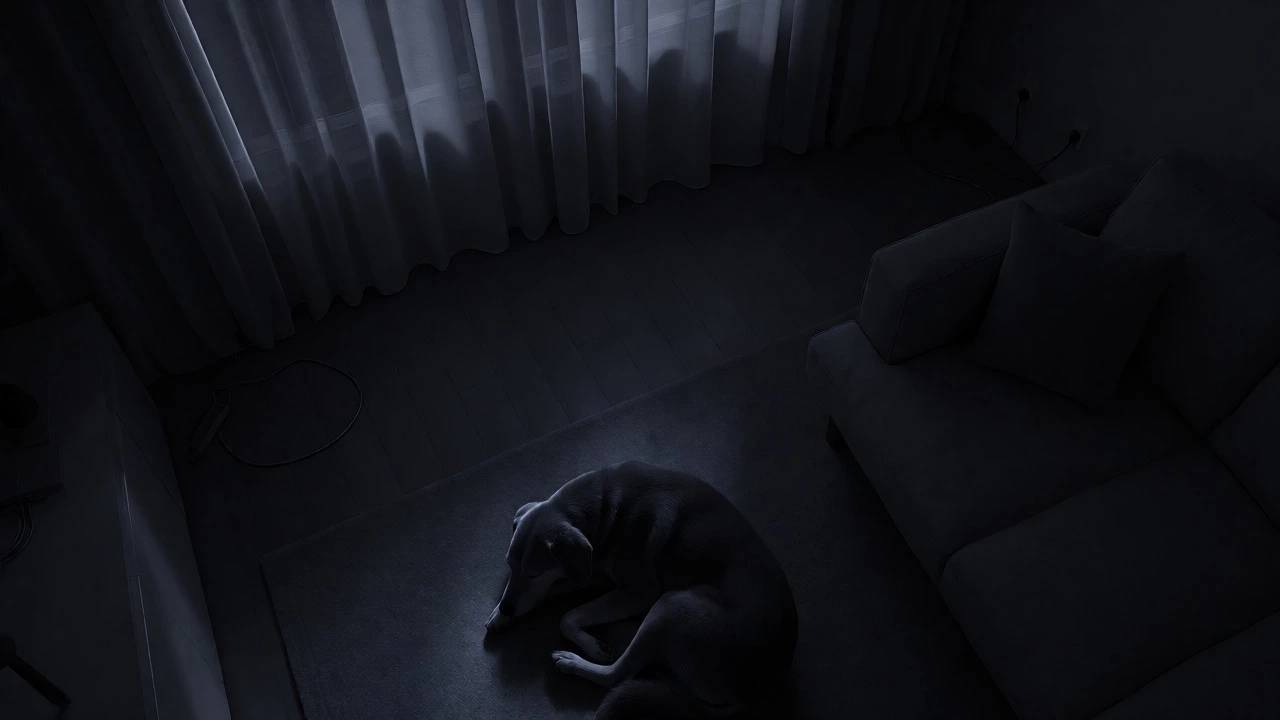
If your healthy adult dog is pacing around the living room at 2 AM, it’s rarely because they’re tripping over furniture. It’s usually boredom, excess energy, or a reaction to external noises. Leaving a light on won’t fix an under-exercised dog. In fact, for many dogs, total darkness signals that it’s time to rest. If you leave the overheads blazing, you might actually be disrupting their natural circadian rhythm, making it harder for them to settle into deep sleep while you’re away.
When Darkness Is Actually Better
Think about your own bedroom. Do you sleep best with the ceiling fan light on? Probably not. Your dog feels the same way. Melatonin, the hormone that regulates sleep, is suppressed by light exposure. If you leave a bright LED bulb glowing all night, you’re potentially suppressing melatonin production in your dog’s brain.
This is especially true if your dog sleeps in a crate or a dedicated bed area. Most dog beds are designed to create a cozy, den-like atmosphere. Denning instincts drive dogs to seek out enclosed, dark, and quiet spaces where they feel safe from predators. By flooding that space with light, you’re breaking the "den" effect. You’re turning their sanctuary into a stage. If your goal is to help your dog relax and nap through your workday, dimming the lights or letting them sit in natural twilight is often the superior choice for their mental well-being.
The Exception: Senior Dogs and Vision Loss
Here is where the rule flips. If you have a senior dog, say, over seven years old, or a breed prone to eye issues like Poodles or Cocker Spaniels, the calculus changes. Many older dogs develop cataracts or nuclear sclerosis, which clouds their vision. While they still see better than humans in the dark, severe vision loss makes navigating obstacles difficult.
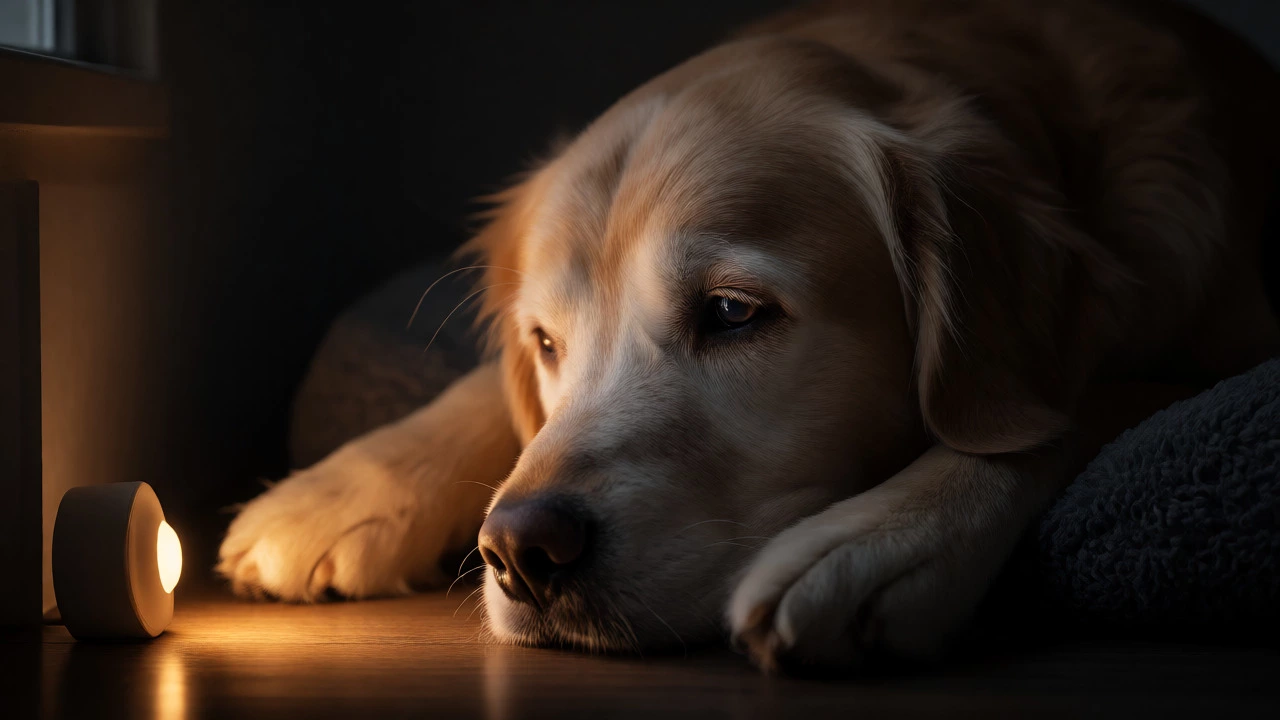
A dog with poor vision relies heavily on memory and scent mapping. But if they wake up confused or disoriented-a common occurrence known as canine cognitive dysfunction-they may panic if they can’t find their water bowl or their favorite rug. In these cases, leaving a small, warm-toned nightlight on is not just nice; it’s a safety measure. It provides enough visual cues to prevent collisions with coffee tables or stairs without being bright enough to disrupt sleep cycles completely.
Separation Anxiety vs. Fear of Dark
We need to distinguish between two very different problems: separation anxiety and fear of the dark. Owners often conflate them. If your dog whines, drools, destroys drywall, or howls the moment you turn off the hallway light, is it the darkness bothering them? Probably not. It’s likely the isolation.
Dogs with separation anxiety experience genuine panic attacks when left alone. They are hyper-vigilant. For these dogs, a light on can act as a comforting beacon, a sign that the household is still "active" even if you aren't there. However, this is a band-aid solution. If the light helps them cope in the short term, use it. But don’t mistake the light for a cure. The root cause is the absence of their social group, not the absence of photons.
Conversely, some dogs genuinely dislike shadows moving across the wall. If you notice your dog flinching at the flicker of tree branches against the window in the dark, a steady, low-level light can reduce that visual noise. This is more common in sensitive breeds like Greyhounds or Border Collies, who process environmental stimuli intensely.
Choosing the Right Type of Light
If you decide a light is necessary, not all bulbs are created equal. Blue-enriched white LEDs, which are popular for energy efficiency, are harsh on canine eyes and human eyes alike. They suppress melatonin more aggressively than warmer colors. If you’re going to leave something on, choose a warm spectrum (around 2700K color temperature).
| Light Type | Best For | Impact on Sleep | Safety Risk |
|---|---|---|---|
| Bright Overhead LED | Large open areas, security | High disruption | Low (if secured) |
| Warm Nightlight | Senior dogs, vision loss | Minimal | Low |
| TV/Radio Glow | Noise-sensitive dogs | Moderate | Medium (chewing cords) |
| Smart Bulb (Dimmed) | Adjustable needs | Customizable | Low |
A smart plug with a timer is a game-changer here. You can set a lamp to turn on only during the darkest hours (say, 5 PM to 9 PM) and then shut off automatically. This gives your dog the comfort of visibility during the evening transition but allows for full darkness during the prime sleeping hours. It’s the best of both worlds.
Safety Hazards You Might Be Ignoring
Before you hit the switch, look at the setup. Dogs chew things. It’s what they do. If you leave a floor lamp on, ensure the cord is tucked behind furniture or covered in a protective sleeve. Electrical shocks from chewing live wires are a frequent emergency vet visit cause for puppies and destructive adults.
Also, consider heat. Old-school incandescent bulbs get hot. If your dog knocks a lamp over, a hot bulb shattering on a wooden floor is a fire hazard. Modern LEDs stay cool to the touch, making them safer for curious noses and paws. And please, avoid candles. Leaving an open flame unattended with a dog that has separation anxiety is asking for trouble.
How to Test What Your Dog Needs
Stop guessing. Start experimenting. Try this three-day protocol:
- Day 1: Total Darkness. Leave the house with all lights off. Check your pet camera footage later. Did they sleep? Did they pace? Were they calm?
- Day 2: One Low Light. Turn on a single, warm-colored nightlight in the main living area. Observe their behavior. Did they settle faster? Did they ignore it?
- Day 3: The "Company" Light. Leave a TV on mute or a radio playing softly with a dim lamp. See if the combination of sound and light reduces anxiety behaviors.
Keep notes. Look for signs of stress: yawning, lip licking, panting, or circling. If they sleep deeply in the dark, take the win. Save electricity and respect their biology. If they seem anxious in the dark but calm with a light, you have your answer. Tailor your approach to their individual personality, not general advice.
Final Thoughts on Routine and Comfort
Your dog doesn’t care about the electric bill. They care about consistency. If you always leave a light on, they expect it. If you suddenly change it, they might notice. But they adapt quickly. The most important factor in their comfort isn’t the lumens-it’s the routine. A predictable departure ritual, a comfortable orthopedic dog bed placed in a draft-free corner, and a long walk before you leave will do ten times more for their peace of mind than a 60-watt bulb.
So, should you leave a light on? For most healthy, adult dogs, no. They prefer the dark. For seniors, dogs with vision issues, or those with mild separation anxiety, a soft, warm glow can be a helpful tool. Just make sure it’s safe, sustainable, and actually solving the problem rather than masking it.
Do dogs see better in the dark than humans?
Yes, significantly. Dogs have a reflective layer behind their retina called the tapetum lucidum, which amplifies available light. This allows them to see clearly in conditions that would appear pitch black to humans. They also have more rod cells, which are responsible for low-light vision and motion detection.
Will leaving a light on help my dog sleep?
For most dogs, no. Bright light suppresses melatonin, the sleep hormone. Dogs generally sleep deeper and longer in darkness, mimicking their natural denning instinct. However, a very dim, warm nightlight may help elderly dogs or those with vision impairments navigate safely if they wake up.
Is it safe to leave a lamp on for my dog?
It can be, but precautions are needed. Use LED bulbs to minimize heat risk. Ensure electrical cords are chew-proof or hidden away. Avoid placing lamps where they can easily be knocked over by a tail wag or a startled jump. Smart plugs with timers are a safer alternative to manual switches.
Does my puppy need a light on at night?
Not necessarily. Puppies, like adult dogs, have good night vision. If they are crated, darkness often helps them settle. If they are loose in the house, ensure the area is puppy-proofed regardless of lighting. A faint glow might help them find their water bowl, but it’s rarely essential for their comfort.
Can light affect my dog's behavior?
Indirectly, yes. Poor sleep quality due to excessive light can lead to irritability or increased activity levels at odd hours. Conversely, if a dog associates light with owner presence, its absence might trigger anxiety in insecure dogs. Observing your specific dog's reaction is the only way to know for sure.