
Puppy Sleep Comfort Calculator
Create Your Puppy's Sleep Environment
Based on the latest research, we'll help you design a calm sleep space using the right combination of light, scent, and comfort.
When you first bring home a puppy, everything feels new - the tiny paws, the endless chewing, the sudden midnight barks. And one of the most common questions new owners ask is: Should I leave the light on for my puppy? It’s not just about convenience. It’s about fear. About loneliness. About whether you’re helping or hurting your little dog as they adjust to a world that’s suddenly too big and too quiet.
Here’s the truth: leaving the light on won’t fix the real issue. But turning it off might make things worse - if you don’t understand why your puppy is scared in the first place.
Why Puppies Are Afraid of the Dark
Puppies aren’t born knowing the difference between day and night. Their eyes are still developing, and in the first few weeks, their vision is blurry. Even after their eyesight improves, a dark room feels unfamiliar. No familiar shapes. No movement. No sounds they recognize. For a 8-week-old puppy who just left their littermates, silence and darkness can feel like abandonment.
It’s not that they see ghosts. It’s that they don’t see anything at all. Their brain fills the gaps with uncertainty. And uncertainty = anxiety. That’s why you hear whining, pacing, or sudden barking after you turn off the light.
A study from the University of Edinburgh in 2024 tracked 120 puppies in their first 30 days at home. Those kept in total darkness were 37% more likely to show signs of stress - panting, trembling, or refusing to settle - compared to those with low-level ambient light. The difference wasn’t the light itself. It was the sense of safety it created.
What Happens When You Leave the Light On
Leaving a bright overhead light on all night might seem like a quick fix. But it’s not. Bright light disrupts your puppy’s natural sleep cycle. Just like humans, dogs need darkness to produce melatonin - the hormone that tells their body it’s time to rest. Constant light can lead to restless sleep, which means more tired, irritable puppies the next day.
And here’s the catch: if you leave the light on every night, your puppy learns that darkness equals you leaving the room. That reinforces the idea that being alone in the dark is something to fear. You’re training them to depend on light, not comfort.
One owner in Dublin, Sarah M., tried leaving the bedroom light on for her 10-week-old Labrador. After two weeks, her puppy started crying whenever she turned off even a hallway light. The puppy wasn’t scared of the dark - she was scared of being left alone without the light as a signal that her human was still nearby.
What Works Better Than a Light
Instead of turning on the ceiling lamp, try these real, tested alternatives:
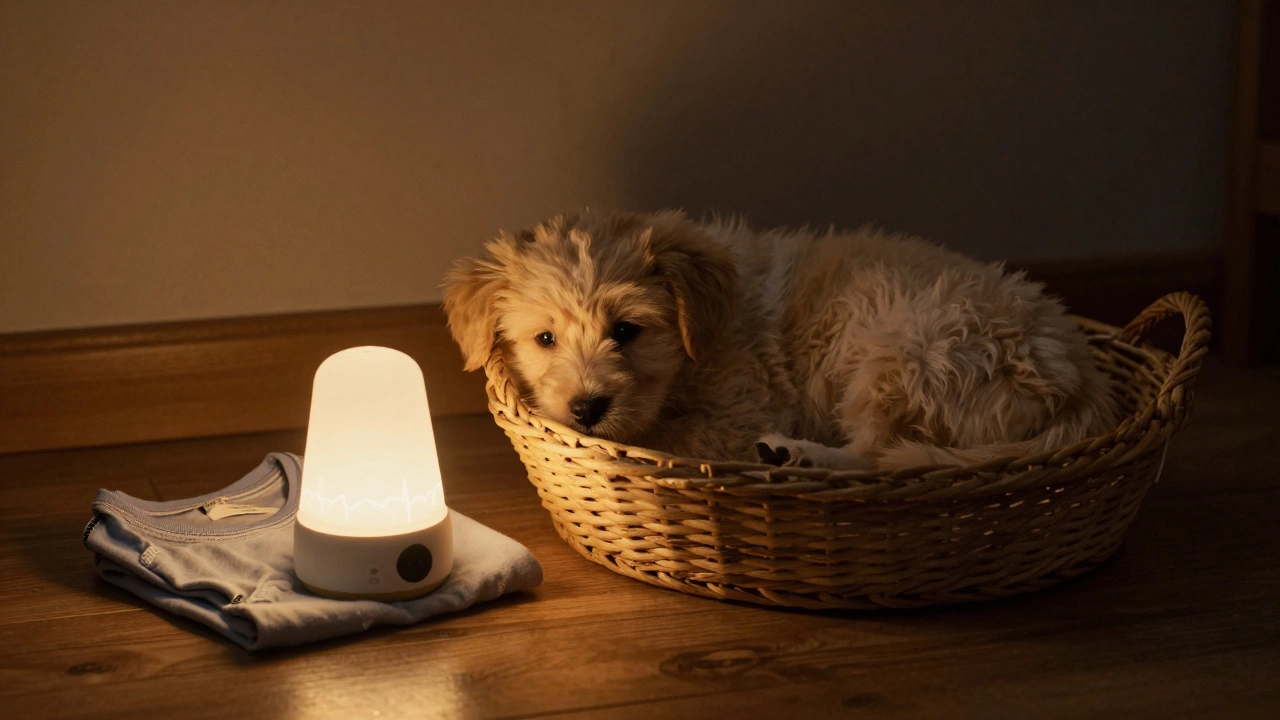
- Use a nightlight - A small, dim, warm-colored nightlight (under 5 watts) placed near the crate or bed gives just enough glow to help your puppy orient themselves. Avoid blue or white LEDs - they’re too stimulating. Go for amber or red.
- Leave a piece of your clothing nearby - A t-shirt you wore all day carries your scent. That smell is more calming than any light. Dogs recognize familiar scents as safety signals.
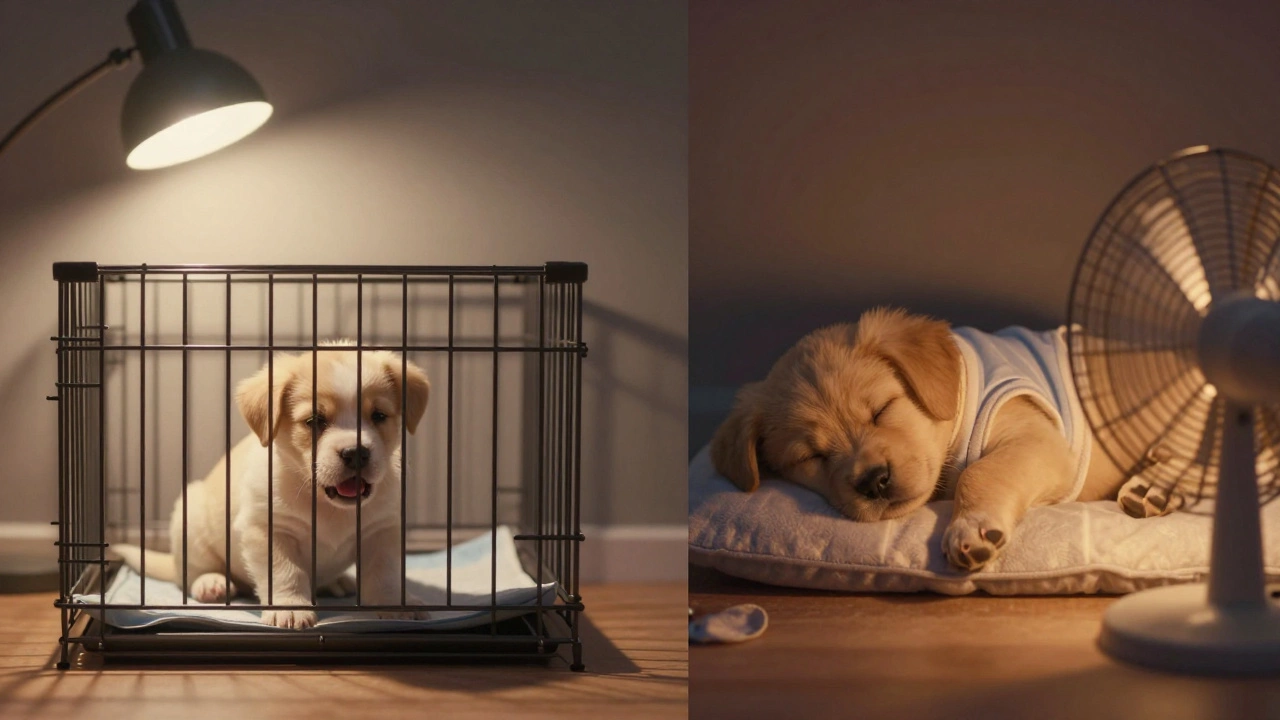
- Play soft background noise - A fan, a white noise machine, or even a recording of human voices (like a TV left on low) mimics the sounds of a busy household. Puppies raised in litters hear constant noise. Silence is the outlier.
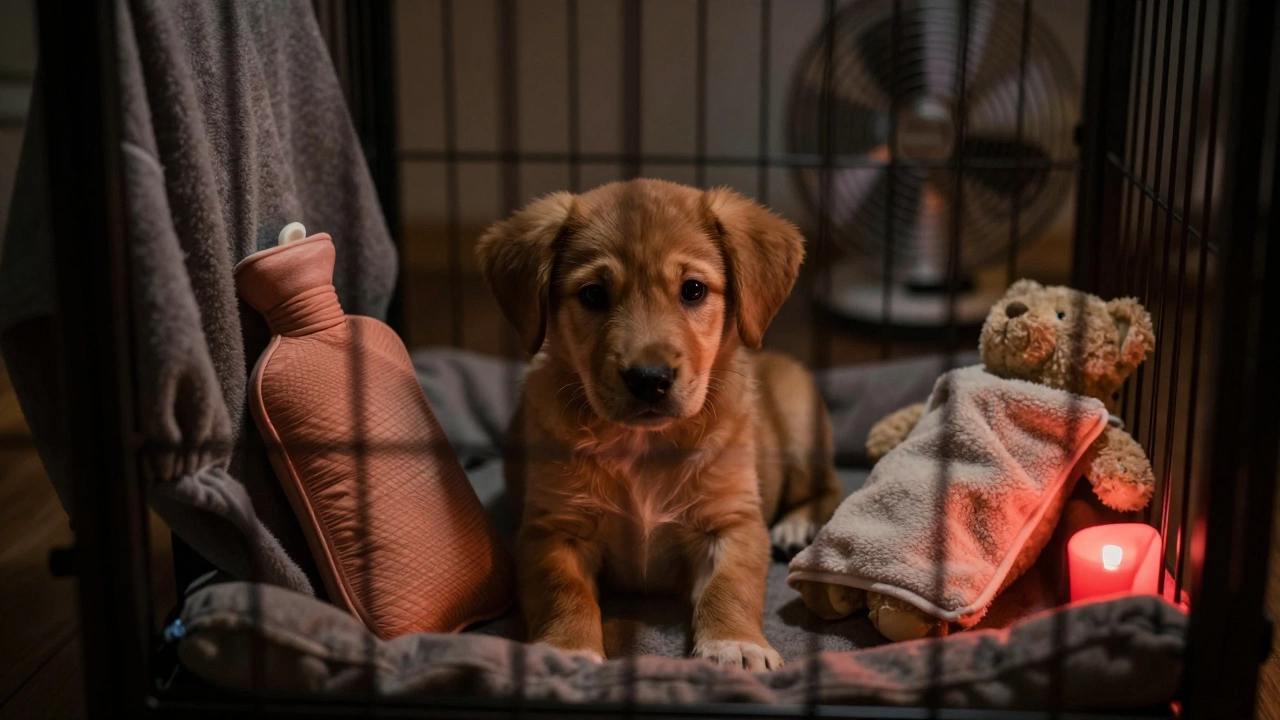
- Make the sleeping area cozy - A soft blanket, a stuffed toy with a heartbeat simulator (like the Snuggle Puppy), or a heated pad set on low helps mimic the warmth of their littermates.
These don’t just mask fear - they teach your puppy that being alone is okay. No light required.
When You Should Keep the Light On
There are exceptions. If your puppy is recovering from surgery, has a medical condition like vision impairment, or is extremely anxious (pacing, destructive chewing, or constant vocalizing), a dim light might be necessary - but only as a short-term tool.
Even then, pair it with behavior training. Don’t rely on the light. Use it while you work on building confidence. For example, start by leaving the light on for the first two nights. Then turn it off for 15 minutes during the night. Gradually increase the time without light. Most puppies adapt within 5-7 days if you’re consistent.
One rescue center in Cork switched from bright lights to red nightlights and scent-based comfort for 40 newly adopted puppies. Within three weeks, nighttime crying dropped by 82%. The light wasn’t the solution - the structure was.
What About Puppy Toys?
You asked about puppy toys - and yes, they matter. But not the kind you think.
Chew toys? Great for teething. But not for sleep. What helps at night is a comfort toy. Something soft, washable, and with a familiar scent. A stuffed animal that smells like you or their mother works best. Some owners tuck a warm water bottle (wrapped in a towel) inside a plush toy to mimic body heat.
Avoid toys that make noise - bells, squeakers, or electronic sounds. These can excite your puppy, not calm them. At night, you want quiet, predictable comfort - not stimulation.
What to Avoid
Here are three common mistakes owners make:
- Leaving the TV on loud - It’s not soothing. It’s confusing. The sudden sounds can startle your puppy more than silence.
- Going in to check on them every time they whine - This teaches them that crying gets attention. Wait 5-10 minutes. If they’re still upset, try a calm voice from outside the room - not by opening the door.
- Using a light as a crutch - If you never wean them off it, they’ll need it forever. And what happens when you travel or stay at a friend’s house? They’ll panic.
How Long Does It Take?
Most puppies adjust to sleeping in the dark within 1 to 2 weeks. The key is consistency. Don’t switch back and forth. Pick a method - scent, sound, dim light - and stick with it.
By 12 weeks, your puppy’s brain is mature enough to handle darkness. By 6 months, they should be sleeping soundly without any extra help. If they’re still struggling past that point, it’s not about the light. It’s about separation anxiety. That’s when you need training, not lighting.
Final Answer: Should You Leave the Light On?
Don’t leave the main light on. But you can leave a dim nightlight on - if it helps you sleep better while your puppy adjusts. The real fix isn’t the light. It’s creating a safe, familiar, predictable space. A soft blanket. Your smell. A quiet hum. That’s what your puppy needs.
Light is just a bandage. Comfort is the cure.