
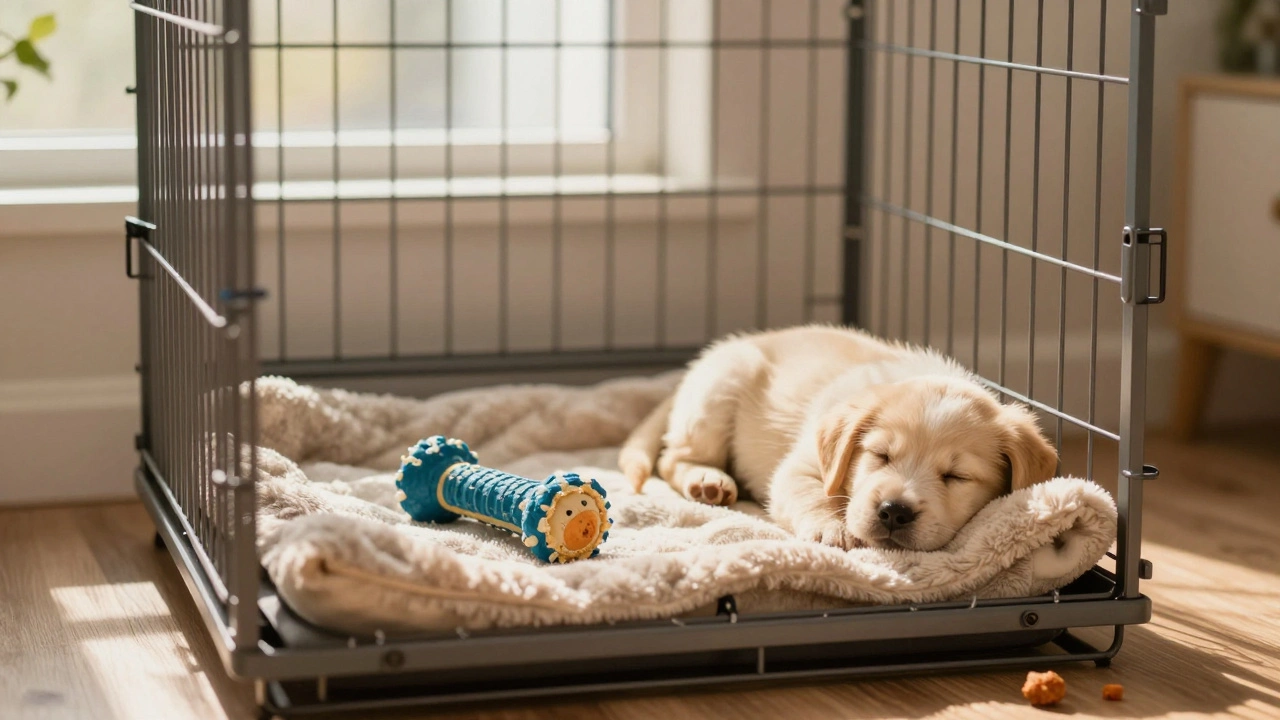
Puppy Crate Time Calculator
How Long Can Your Puppy Stay in the Crate?
Proper crate training is essential for your puppy's well-being. This calculator helps you determine the safe maximum crate time based on your puppy's age.
Recommended Crate Time
Maximum: 0 hours
Daily total should not exceed 0 hours
How to Schedule Crate Breaks
Based on your puppy's age, here's how to break up crate time throughout the day.
Crating your puppy during the day isn’t cruel-it’s often the smartest thing you can do. But only if you do it right. Too many people lock their puppies in crates for hours because they’re tired, busy, or just don’t know what else to do. And that’s where things go wrong. A crate isn’t a jail. It’s a safe space. And like any space, it needs rules, timing, and care to work.
Why Crates Work for Puppies
Puppies are den animals. In the wild, their ancestors slept in small, enclosed spaces for safety. That instinct is still there. A well-set-up crate feels like a cozy den-not a punishment. When used properly, it helps with house training, prevents destructive chewing, and gives your puppy a quiet place to rest when the house is too loud or too busy.But here’s the catch: a crate only works if your puppy sees it as a positive place. If you throw your puppy in there every time you leave, and never let him out until he’s whining or crying, you’re teaching him to fear it. That’s not training. That’s trauma.
How Long Is Too Long?
There’s a simple rule: your puppy can hold it for about one hour for every month of age, plus one. So a 3-month-old puppy? Maximum 4 hours. A 5-month-old? Around 6 hours. That’s the absolute limit-not the goal.Most puppies under 6 months old can’t physically hold their bladder or bowels for more than 5-6 hours. If you’re at work all day, that’s a problem. No crate, no matter how nice, will fix that. You need a plan.
Here’s what actually works for working owners in Dublin:
- Crating for 2-3 hours in the morning, then letting him out for a potty break, play, and a snack
- Another 2-3 hours in the afternoon, then another break
- Never leave him crated for more than 6 hours total in a day
If you’re gone longer than that, hire a dog walker. Or ask a neighbor. Or use a doggy daycare. It’s not expensive. It’s not a luxury. It’s basic care.
What Happens If You Crate Too Long?
Puppies who are crated too long develop serious problems. Not just accidents on the floor. Real behavioral damage.They start to panic when left alone. They chew their own paws. They bark nonstop. They become anxious, depressed, or even aggressive. These aren’t "bad behaviors." They’re signs of stress. And they’re completely preventable.
One owner I know in Ballsbridge crated her 4-month-old puppy for 8 hours a day while she worked. After two weeks, the puppy stopped eating. He wouldn’t play. He just sat in the corner of his crate, staring. The vet said it was stress-induced anorexia. Took months of rehab to fix it.
That’s not normal. And it’s not your fault if you didn’t know. But now you do.
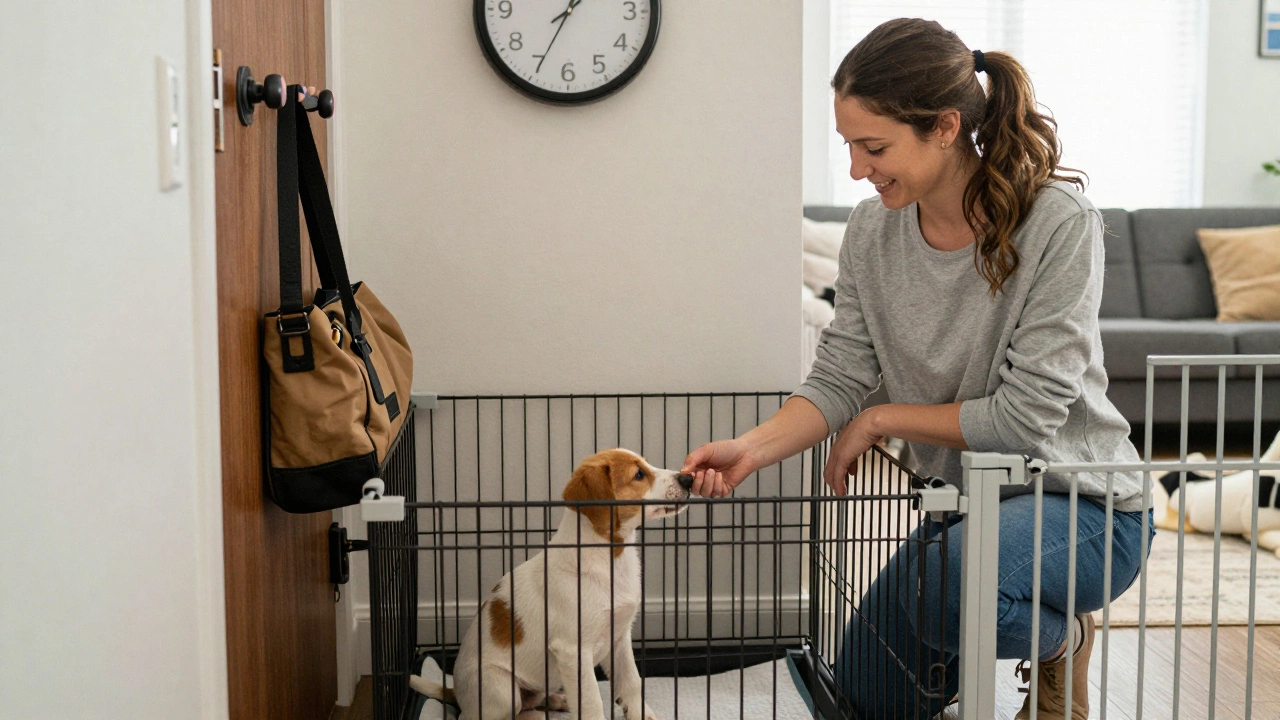
How to Make the Crate a Happy Place
A crate should be the best spot in the house. Not the only spot. Not the scary spot. The *best* spot.Start here:
- Leave the door open. Let your puppy explore it on his own. Put a soft blanket inside. Toss in a few treats.
- Feed meals inside the crate. That’s the fastest way to build positive associations.
- Give him a chew toy or a stuffed Kong only when he’s in there. Make it special.
- Never use the crate as punishment. If he misbehaves, don’t shove him in. That breaks trust.
- Use a calm, happy voice when he goes in. Say "crate time!" like it’s a fun game, not a command.
Within a week, most puppies will walk into the crate on their own. Some even curl up inside when you’re watching TV. That’s the goal.
What to Put Inside the Crate
Keep it simple. Too much stuff turns it into a mess-and a hazard.- A soft, washable bed or blanket
- A safe chew toy (avoid rawhide, hard plastic, or anything that can be swallowed)
- A frozen Kong with peanut butter (for longer stays)
- Water? Only if you’re gone more than 4 hours. Use a spill-proof bowl attached to the crate.
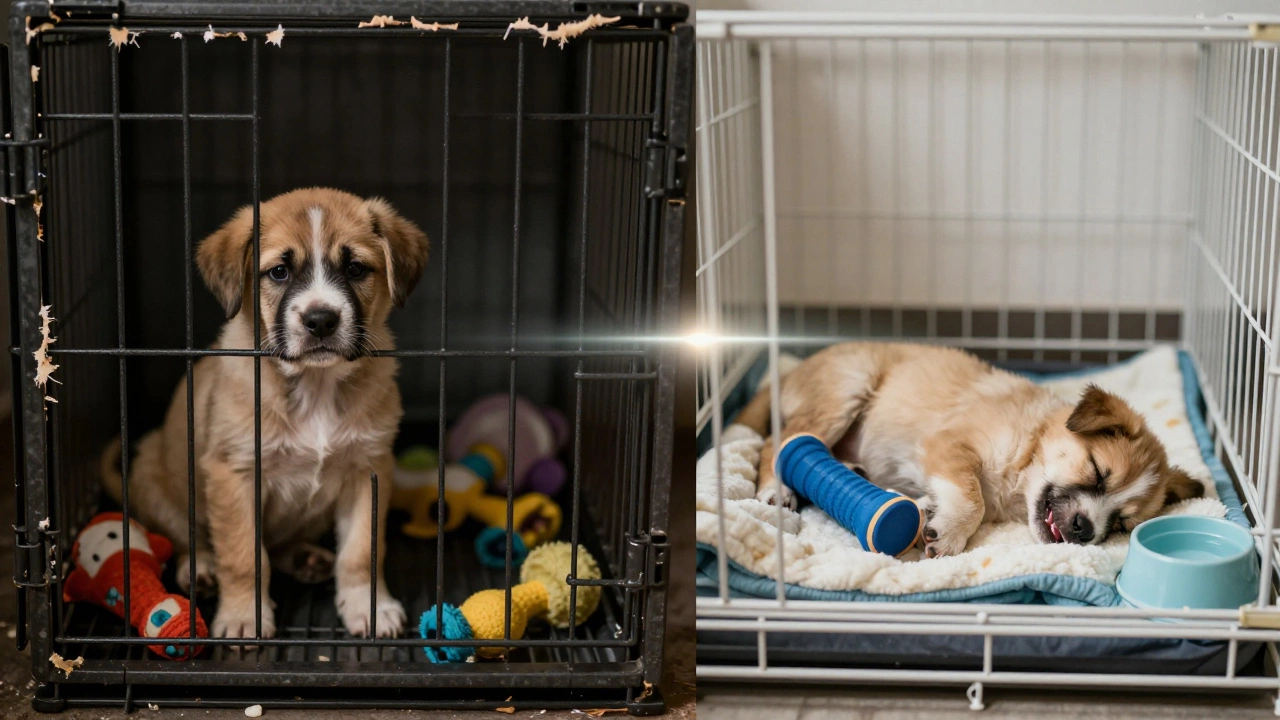
Don’t put toys that can be shredded. Don’t put anything with small parts. Don’t put a litter box in there. Puppies naturally avoid soiling their sleeping area. Don’t mess with that instinct.
What If My Puppy Whines?
Whining is normal. Especially at first. But how you respond matters.If he whines right after you put him in? Wait 5 minutes. If he’s still whining, check if he needs to go outside. If he does, take him out quietly, let him do his business, then put him back in. No fuss. No attention.
If he’s whining because he’s scared? Don’t let him out. That teaches him that whining = freedom. Instead, wait for a quiet moment-even if it’s just a 2-second pause-and then open the door. Reward silence, not noise.
It takes patience. But after a few days, the whining drops off. Most puppies settle in by day 3 or 4.
Alternatives to Crating All Day
If you can’t manage the crate schedule, don’t force it. There are other options.- Use a puppy-proofed room with a baby gate
- Set up a playpen with a pee pad (for emergencies only)
- Hire a dog walker to come midday
- Sign up for doggy daycare twice a week
One client in Rathmines uses a playpen with a comfy bed and a few toys. She hires a walker every weekday at noon. Her puppy is happy, house-trained, and never chewed a shoe. It’s not perfect. But it’s realistic.
When Not to Crate
There are times when crating does more harm than good:- Right after a meal (wait at least an hour)
- When your puppy is sick or in pain
- During thunderstorms or fireworks (some puppies panic in crates during loud noises)
- If your puppy has separation anxiety already
If your puppy howls, destroys the crate, or tries to escape, he’s not being "bad." He’s terrified. Crating him more will make it worse. Talk to a vet or a certified trainer.
Final Thought: It’s About Trust
Your puppy doesn’t care about your schedule. He cares about you. He wants to know you’ll come back. He wants to know he’s safe.Crating isn’t about controlling him. It’s about protecting him. Protecting him from boredom. From danger. From himself.
Do it right, and he’ll thank you by sleeping peacefully in his crate while you work. Do it wrong, and you’ll spend months undoing the damage.
Start small. Be consistent. Be kind. And remember-you’re not locking him away. You’re giving him a safe place to rest while you’re gone. That’s not cruelty. That’s love.
Can I leave my puppy in the crate overnight?
Yes, but only if he’s old enough and trained. Most puppies can sleep 6-8 hours through the night by 4-5 months old. Before that, they may need a potty break. Set up a routine: last walk before bed, crate with a Kong, quiet environment. Don’t rush it.
Should I cover the crate with a blanket?
Only if your puppy likes it. Some feel safer with a partial cover. Others get too hot or anxious. Never fully enclose the crate. Always leave at least one side open for airflow and visibility. Test it slowly.
Is a crate better than a playpen for daytime?
It depends. A crate is better for sleep and house training. A playpen is better for active time and giving your puppy more room to move. Many owners use both: crate for naps and playpen for when they’re home but busy.
My puppy pooped in the crate. What did I do wrong?
You probably left him too long. Puppies naturally avoid soiling their sleeping area. If he pooped, it’s because he had no choice. Check your timing. He likely needed a break every 3-4 hours. Clean the crate thoroughly with an enzymatic cleaner to remove the smell. Then reset the schedule.
How do I know if my puppy likes his crate?
He goes in on his own. He sleeps in it while you’re home. He doesn’t whine or scratch when you close the door. He might even choose it over his bed. That’s the sign you’ve done it right.