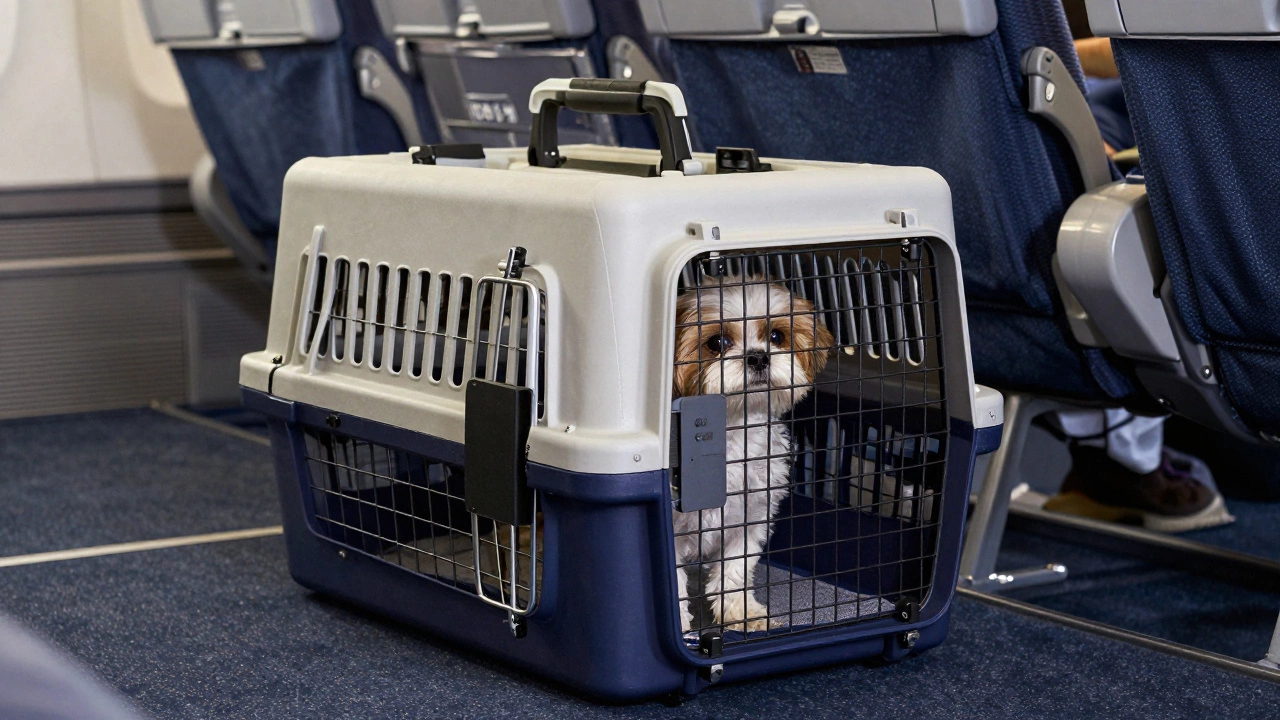
Airline Pet Carrier: What You Need to Know Before Flying with Your Pet
When you're planning a trip with your pet, the airline pet carrier, a secure, approved container designed to transport small animals safely during flights. Also known as pet travel crate, it's not just a box—it's your pet's lifeline in the air. Airlines don't allow just any carrier. They have strict rules based on size, material, ventilation, and how the carrier fits under the seat or in cargo. Skip the wrong one, and you could be turned away at the gate—or worse, put your pet at risk.
Not all carriers are made the same. A hard-sided carrier, a rigid plastic container with ventilation on multiple sides, often required for cargo travel is the go-to for checked luggage. It’s sturdy, protects your pet from bumps, and meets most airline standards. But if you’re bringing your pet into the cabin, you need a soft-sided carrier, a flexible, collapsible bag that fits under the seat in front of you. These are lighter and more convenient, but they must stay flat and not block the aisle. TSA allows both, but they’ll check for proper labeling, airflow, and whether your pet can stand, turn, and lie down comfortably inside.
Size matters more than you think. Many people buy a carrier that looks big enough—until they try to fit their dog inside. The rule? Your pet should be able to stand up without touching the top, turn around easily, and lie down on its side. If your dog’s nose touches the ceiling when standing, it’s too small. Airlines like Delta, United, and American all use this standard. And don’t forget the weight limit. Most airlines cap cabin carriers at 20 pounds total—pet plus carrier. Go over that, and you’ll be forced to check your pet, which changes everything.
What’s inside the carrier matters too. No toys with small parts. No loose bedding that can shift during turbulence. Just a soft towel or a vet-approved pad. Some owners add a familiar blanket with your scent—it helps calm your pet. But skip the food and water bowls inside. Airlines require them to be attached externally or filled after security. And always label the carrier clearly: your name, phone number, destination, and "Live Animal" on all sides. A simple mistake here can delay your pet or cause confusion during transfers.
You’ll also need to know when to book. Not every flight allows pets. Some routes have limits—only two pets per flight in the cabin. Book early, especially if you’re traveling during holidays. And don’t assume your vet’s note is enough. Airlines don’t require health certificates for cabin pets unless it’s international, but they do ask for proof of vaccination. Keep those records handy.
There’s a reason so many pet owners stress about flying. It’s not just the carrier—it’s the whole process. From TSA screening to baggage claim, every step has rules. That’s why you’ll find posts here on how TSA handles pets, what carriers actually pass inspection, and why some popular brands fail at the gate. You’ll also see real examples of what works and what doesn’t—from the $30 Amazon carrier that got someone kicked off a flight, to the $120 hard-sided crate that got a nervous pup through a cross-country trip without a single whine.
Whether you’re flying with a Chihuahua or a medium-sized terrier, the right airline pet carrier makes all the difference. It’s not about buying the cheapest or the fanciest. It’s about matching the right tool to your pet’s size, your airline’s rules, and your peace of mind. Below, you’ll find practical guides, real-life stories, and hard facts to help you get it right the first time—no guesswork, no last-minute panic.