Dog Carrier Size: How to Choose the Right Fit for Travel and Safety
When you’re planning to fly, drive, or take your dog on a trip, the dog carrier size, the physical dimensions that determine if your dog can stand, turn, and lie down comfortably inside. Also known as a pet travel carrier, it’s not just a box—it’s your dog’s safe space during transit. Get this wrong, and your dog gets stressed, cramped, or even denied boarding. Get it right, and your trip goes smoothly—no whining, no accidents, no last-minute panic at the airport.
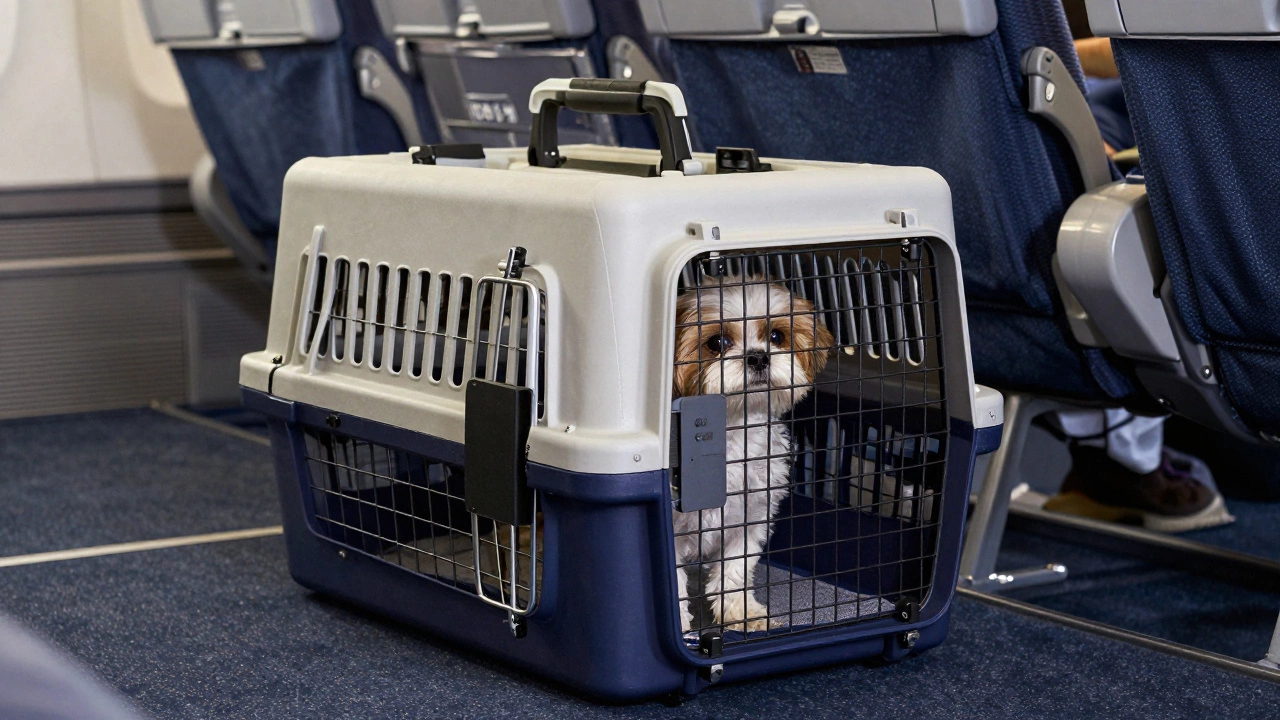
The TSA pet carrier, a carrier that meets U.S. Transportation Security Administration guidelines for in-cabin travel has strict rules: it must fit under the seat in front of you. That means length, width, and height all matter. Most airlines require the carrier to be no taller than 8.5 inches, but your dog’s height from floor to shoulder is what counts. If your dog can’t stand up straight without bending their neck, it’s too small. Same goes for turning around—if their paws touch the sides when they spin, it’s not big enough. A carrier that’s too big? That’s a problem too. Big carriers shift during travel, can tip over, and make your dog feel insecure. The sweet spot? A carrier where your dog can stand, turn, and lie down with a little room to stretch.
There’s also the dog carrier dimensions, the exact measurements you need to match your dog’s body size and the airline’s requirements. Measure your dog from nose to tail tip, then add 2–3 inches. Measure from floor to top of their head when standing. That’s your minimum height. For width, measure their shoulders at the widest point and add 1–2 inches. Don’t guess. Use a tape. And don’t assume your dog will fit because they’re "small." A 15-pound Shih Tzu and a 15-pound Chihuahua have very different body shapes. One might need a 19-inch carrier, the other a 21-inch. Also, check if the carrier is soft-sided or hard-sided. Soft carriers are more flexible for under-seat storage but offer less protection. Hard carriers are better for rough handling, especially on flights.
And don’t forget the dog travel carrier, a carrier designed specifically for moving your dog safely across different environments. It’s not just about size—it’s about ventilation, durability, and how easy it is to clean. Look for mesh panels on at least three sides. Avoid carriers with flimsy zippers or plastic doors that snap open under pressure. If your dog gets anxious, a carrier with a removable top makes it easier to calm them down without pulling them out by the legs.
Some people think bigger is better. But a carrier that’s too big turns into a cage. Your dog needs to feel tucked in, not lost. Think of it like a cozy sleeping bag—not a suitcase. And if you’re flying, always double-check the airline’s rules. United, Delta, and American all have slightly different size limits. TSA doesn’t approve carriers—you still need to follow the airline’s policy. What works for one might get you turned away at the gate.
What you’ll find below are real guides from pet owners and vets who’ve been there. From how to measure your dog correctly, to which carriers survived a cross-country flight with a nervous pup, to why some carriers fail in the cargo hold. No fluff. Just what actually works when your dog’s comfort—and safety—depends on it.