

Service Dog Etiquette Simulator
Instructions: You encounter a person with a working dog in a public space. Choose the best course of action for each scenario to see if you know the rules. Click an option to reveal the result. Reset to try again.
Score: 0/4
Scenario 1: The Café
You are sitting in a busy café. A customer enters with a large dog wearing a harness. The dog is focused on its handler. You are curious about the breed.
Scenario 2: The Airplane
You are boarding a flight. A passenger sits down with a dog at their feet. You want to ensure it's actually a service dog and not just a pet being smuggled in.
Scenario 3: The Grocery Store
You are shopping. A service dog team is blocking the aisle slightly while the handler looks for an item. The dog is calm but taking up space.
Scenario 4: The Curiosity Check
You confirmed the dog is a service animal. You still want to understand why they need it without violating privacy laws.
You’re sitting in a café, or maybe you’re boarding a plane for that long-awaited holiday. A person walks in with a dog at their side. The dog is calm, focused, and clearly working. Your curiosity spikes. Is it a guide dog? A therapy dog? Or just a very well-behaved pet? You want to ask, but you’ve heard whispers that asking the wrong thing is rude-or even illegal. So, what do you actually say?
It’s a common dilemma, especially if you love dogs and are used to greeting every pup you see on your travels. But when it comes to service dogs, the rules change completely. These animals aren’t there for cuddles; they are medical equipment on four legs. Getting this right isn’t just about politeness; it’s about respecting legal boundaries and ensuring the safety of people with disabilities.
If you are traveling with a service dog or simply crossing paths with one during your vacation, knowing the exact protocol can save everyone from an awkward-and potentially harmful-situation. Here is the breakdown of the only three questions you are legally allowed to ask, why those specific questions matter, and how to handle the interaction with grace.
The Legal Framework: Why Curiosity Has Limits
To understand the "three questions" rule, we first need to look at where these rules come from. In the United States, the Americans with Disabilities Act (ADA) sets the standard. While laws vary slightly by country-the Equality Act in the UK or the Disability Discrimination Act in Ireland follow similar principles regarding public access-the core concept remains the same globally: a service animal is a tool for independence, not a companion animal.
Service dogs are individually trained to do work or perform tasks for people with disabilities. This training distinguishes them from pets or emotional support animals. Because their primary job is to assist a human with a disability, any distraction can be dangerous. If a guide dog is pulled away from its task by a stranger trying to pet it, the handler could walk into traffic or miss a curb.
This is why the law restricts what businesses and the public can ask. The goal is to prevent harassment while allowing handlers to prove their right to access. You cannot demand proof of certification because, legally, there is no such thing as a federally recognized "certification" for service dogs in many jurisdictions. There is no registry you can check. This leaves us with the two permissible inquiries, plus one contextual question that often gets overlooked.
Question 1: "Is the dog a service animal required because of a disability?"
This is the foundational question. It establishes whether the animal falls under the legal definition of a service animal. Note the phrasing: it asks if the dog is *required* because of a disability. This separates a service dog from a therapy dog (which visits hospitals or schools for general comfort) or an emotional support animal (which provides comfort through its presence but is not trained to perform specific tasks).
Why does this distinction matter? Because only service animals have the right to go everywhere the public goes. If someone brings a regular pet into a restaurant, the owner can be asked to remove it. If they bring a service dog, they cannot. By asking this question, a business or individual confirms the legal status of the animal without prying into the handler’s private medical history.
When you ask this, keep your tone neutral. You are not challenging them; you are clarifying the situation. Most handlers will answer with a simple "Yes." If the answer is yes, the conversation effectively ends there regarding the dog’s status. You do not get to ask what kind of disability they have. That information is protected health data.
Question 2: "What work or task has the dog been trained to perform?"
This is the second pillar of the ADA guidelines. Once it is established that the dog is a service animal, the only other relevant piece of information is its function. This question focuses on the *behavior* of the dog, not the *condition* of the human.
For example, a handler might say, "He alerts me when my blood sugar drops," or "She helps me navigate crowded spaces by blocking passersby." These answers explain why the dog needs to stay close and why it shouldn’t be distracted. Understanding the task helps bystanders act appropriately. If you know a dog is alerting to seizures, you won’t try to call it over for a photo. If you know a dog is guiding a blind person, you won’t step between the dog and its handler.
This question also helps debunk myths. Many people assume all service dogs are guide dogs for the visually impaired. In reality, service dogs assist with hearing loss, PTSD, mobility issues, diabetes, and more. Asking about the task opens a window into the diverse ways these animals help people live fuller lives, fostering empathy rather than suspicion.
The Third Question: Contextual Safety and Allergies
Strictly speaking, the ADA lists only two permissible questions. However, in practical scenarios-especially in travel and hospitality-a third type of inquiry often arises: questions related to immediate safety, allergies, or space constraints. While you cannot ask about the dog’s breed or size as a way to exclude it, you can address genuine conflicts.
If you are in a tight aisle on a train and the dog is taking up significant space, you might ask, "Is there enough room for both of us here, or should I move?" This isn’t really a question about the dog’s status; it’s a logistical question about shared space. Similarly, if you have a severe dog allergy, you might need to inform staff, who then have protocols to manage seating arrangements. But note: you generally cannot ask the handler directly, "Does your dog shed?" or "What breed is that?" as a pretext to deny access. The focus must remain on the immediate environment, not the animal’s characteristics.
In the context of dog-friendly holidays, this third category often involves asking the venue staff, not the handler. For instance, "Where are the relief areas for service animals?" is a valid question for a hotel concierge. It shows you are aware of the needs of service dog teams and helps ensure the handler has a smooth experience.
What You Must Never Ask (Or Do)
Knowing what to ask is half the battle; knowing what to avoid is the other half. The most common mistake people make is treating a service dog like a pet. Here is a checklist of interactions to avoid:
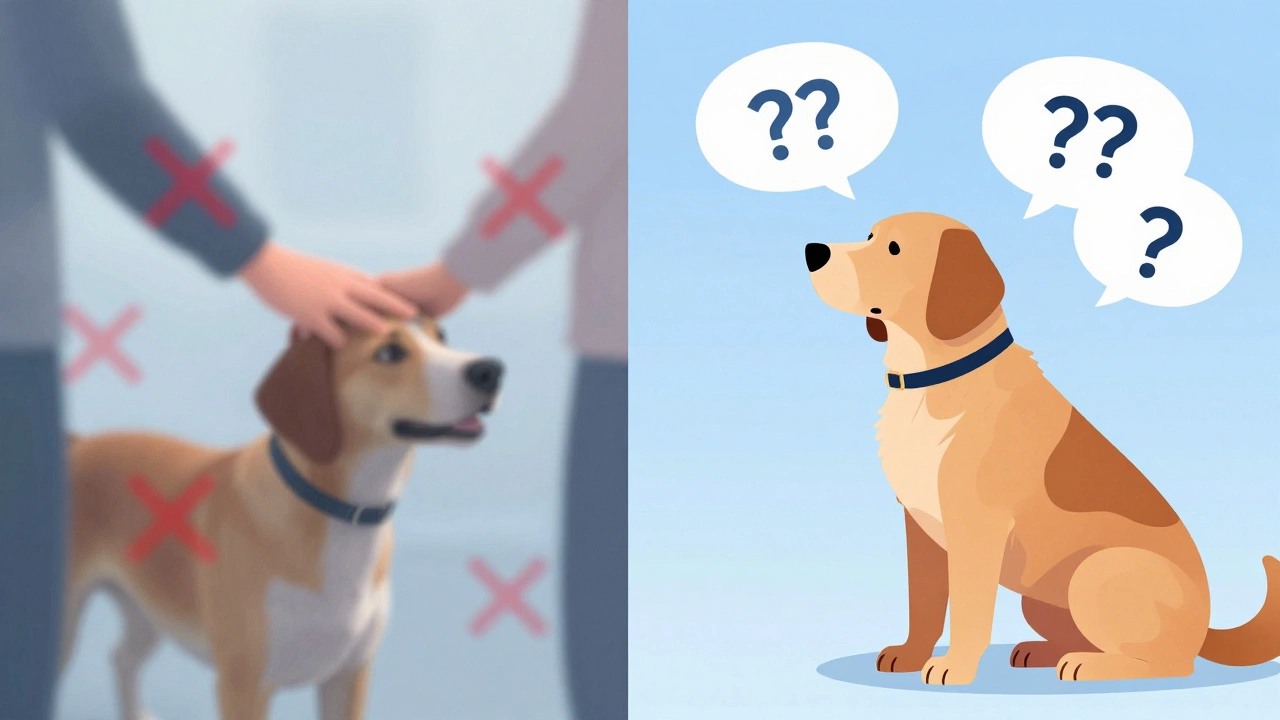
- Do not pet the dog. Even if the dog looks friendly, it is working. Petting breaks its focus. If you feel compelled to interact, wait until the dog is off-duty (usually indicated by the removal of the vest or harness) and always ask the handler first.
- Do not ask about the handler’s disability. "Are you disabled?" or "What’s wrong with you?" is invasive and irrelevant. The law protects their privacy for a reason.
- Do not demand documentation. As mentioned, there is no official registry. Asking for a certificate or ID card is a violation of federal law in the US and creates unnecessary barriers.
- Do not offer food or treats. This can disrupt the dog’s diet and training. Handlers have strict control over what their dogs eat.
- Do not startle the dog. Avoid loud noises, sudden movements, or whistling. These actions can distract the dog from critical tasks.
Imagine you are wearing noise-canceling headphones to block out distractions so you can read. Now imagine someone tapping you on the shoulder every five minutes to ask you a question. That is what it feels like for a service dog handler when strangers constantly engage with their animal. Respect the boundary.
Traveling with Service Dogs: A Practical Guide
If you are planning a trip and rely on a service dog, preparation is key. The Air Carrier Access Act (ACAA) in the US requires airlines to accommodate service animals in the cabin at no extra charge. However, recent updates have introduced new forms and requirements for longer flights. Always check the specific airline’s policy before booking.
Hotels and vacation rentals are another area where knowledge is power. Under the Fair Housing Act, landlords cannot charge pet fees for service animals. If you book an Airbnb, disclose the service animal in advance to ensure the host understands it is not a pet. This prevents last-minute surprises and ensures you have a place to stay.
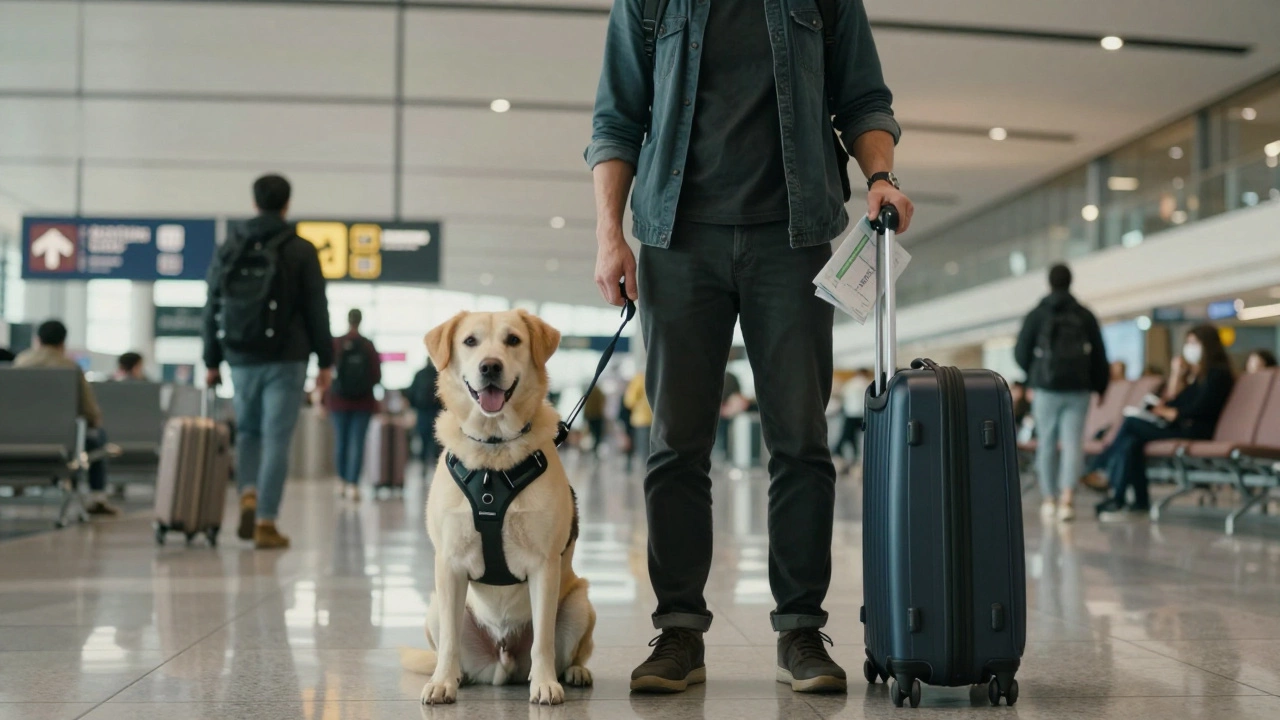
When navigating airports, train stations, or tourist sites, keep your dog’s gear accessible. A vest or harness signals to others that the dog is working, which can reduce unwanted interactions. It also serves as a visual cue for fellow travelers to give you space.
| Animal Type | Training Required? | Public Access (Stores/Restaurants) | Housing Rights |
|---|---|---|---|
| Service Dog | Yes, task-specific | Allowed everywhere | No pet fees/deposits |
| Emotional Support Animal (ESA) | No | Not allowed | No pet fees/deposits |
| Therapy Dog | Yes, socialization | Only by invitation | Treated as a pet |
| Pet | No | Restricted | Pet fees/deposits apply |
Creating a Culture of Respect
Understanding these three questions is more than just memorizing legal text. It’s about recognizing the dignity and autonomy of people with disabilities. When you refrain from petting a service dog or asking intrusive questions, you are contributing to a world where people with disabilities can participate fully in society without facing unnecessary hurdles.
Next time you see a service dog on your travels, take a moment to appreciate the partnership between the handler and the animal. Smile, nod, and let them do their job. If you have a genuine concern about the dog’s behavior-such as aggression or lack of control-you can report it to management, but do not confront the handler yourself. Let professionals handle disputes.
By mastering these simple interactions, you become part of the solution rather than the problem. You help create an environment where service dogs can work effectively, and their handlers can enjoy their holidays, meals, and daily activities with peace of mind.
Can I ask for a demonstration of the dog's skills?
No, you cannot demand a demonstration. Service dogs are trained to perform tasks quietly and discreetly. Asking a handler to show off their dog’s skills is distracting and disrespectful. The two permissible questions are sufficient to determine if the dog is a service animal.
What if the service dog is barking or behaving badly?
If a service dog is out of control (e.g., barking repeatedly, sniffing merchandise, or aggressive), the business can ask the handler to remove the dog. However, the handler still has the right to remain in the facility without the dog. The issue is the dog’s behavior, not the handler’s disability.
Are emotional support animals considered service dogs?
No. Emotional support animals provide comfort through their presence but are not trained to perform specific tasks related to a disability. They do not have the same public access rights as service dogs and are generally treated as pets in stores and restaurants.
Do service dogs need vests or identification tags?
No, federal law does not require service dogs to wear vests, ID tags, or specialized harnesses. However, many handlers choose to use them to signal that the dog is working and to deter unwanted interactions. You cannot refuse entry based on the absence of a vest.
What should I do if I accidentally pet a service dog?
Apologize sincerely and briefly. Say, "I’m sorry, I didn’t realize you were working," and step back. Do not make a scene or draw further attention to the incident. The handler likely appreciates the apology and will refocus the dog. Learn from the mistake and respect boundaries next time.