

Pet Insurance Selector
Find Your Best Coverage
Select your pet's age and health status to see which insurance type best protects them.
Your Recommendation
When you bring a pet into your life, you’re not just gaining a companion-you’re taking on a long-term responsibility. And one of the smartest moves you can make is getting pet insurance. But not all policies are the same. In fact, there are three main types of pet insurance you’ll see on the market, and choosing the wrong one could leave you paying thousands out of pocket when your pet needs care.
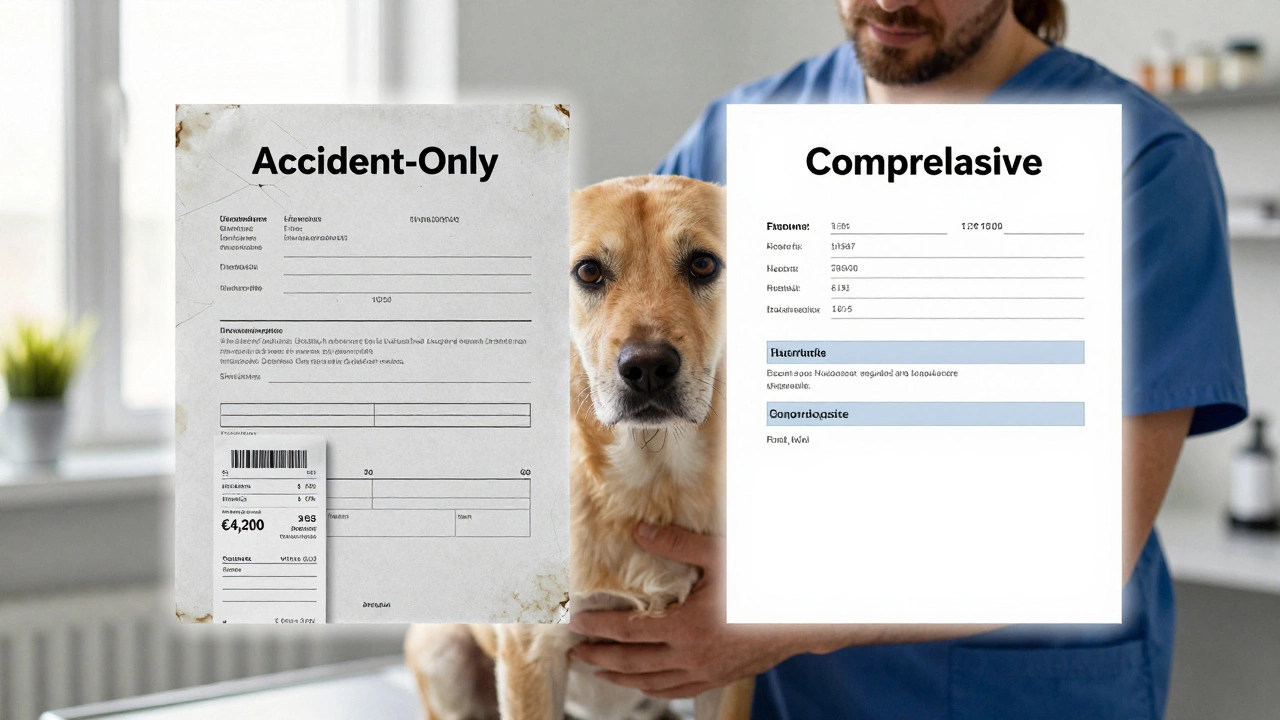
Accident-Only Insurance
This is the most basic type of pet insurance. It covers only injuries from accidents-things like broken bones, cuts from sharp objects, car accidents, or swallowing foreign objects. It doesn’t cover illnesses, infections, or chronic conditions. If your dog runs into the road and breaks a leg, this policy will help. If your cat develops diabetes or your rabbit gets a urinary tract infection? You’re on your own.
Accident-only plans are usually the cheapest. Monthly premiums can start as low as €10-€15 in Ireland. They’re a good fit for young, healthy pets with no history of illness, or for owners who want a safety net for emergencies but can’t afford higher premiums. But here’s the catch: most pets over age five will develop some kind of illness. If you only have accident coverage, you’re leaving yourself exposed to the most common-and expensive-vet bills.
Illness-Only Insurance
Illness-only policies flip the script. They cover diseases, infections, allergies, cancer, digestive issues, and other medical conditions-but they don’t cover accidents. This might sound odd at first. Why would anyone want coverage for sickness but not injuries? The answer lies in how pets age. As dogs and cats get older, illness becomes far more common than accidents. A 7-year-old Labrador is more likely to develop arthritis or kidney disease than to get hit by a car.
These plans are ideal for senior pets or breeds prone to genetic conditions. For example, Bulldogs often need help with breathing problems, and Persian cats frequently suffer from eye infections. If your pet has a known predisposition to illness, illness-only insurance can be a lifesaver. Premiums are higher than accident-only, usually €20-€35 per month, but they’re still cheaper than comprehensive plans. The downside? If your pet gets into a fight and needs stitches, you’ll pay the full cost.
Comprehensive Insurance
This is the gold standard. Comprehensive pet insurance covers both accidents AND illnesses. It’s the only type that gives you full protection. That means if your dog eats a toy and needs surgery, or your cat gets pancreatitis, or your rabbit develops dental disease-all of it’s covered. Most comprehensive plans also include optional add-ons like dental cleaning, physiotherapy, and alternative treatments like acupuncture.
In Ireland, comprehensive plans typically cost between €35 and €60 per month, depending on breed, age, and location. It’s the most expensive option, but it’s also the only one that protects you from the big, unexpected bills that can hit €2,000-€5,000 in a single visit. A 2024 survey by the Irish Veterinary Association found that 68% of pet owners who had comprehensive insurance avoided financial hardship after a major vet visit, compared to just 12% with accident-only coverage.
Many people think they can save money by skipping comprehensive coverage. But here’s what really happens: 8 out of 10 pets will need treatment for illness before they turn 10. And accidents? They don’t wait for you to be ready. A sudden fall, a toxic snack, a snake bite-all can happen in seconds. Comprehensive insurance isn’t just a luxury. For most pet owners, it’s the only way to ensure your pet gets the care they need without having to choose between their health and your bank account.
What’s Not Covered?
Even comprehensive plans have limits. Pre-existing conditions are almost always excluded. That means if your dog had a limp before you bought the policy, that injury won’t be covered. Same with chronic conditions like ongoing skin allergies or recurring ear infections. Some insurers also exclude routine care like vaccinations, spaying/neutering, or flea treatments-unless you pay extra for a wellness add-on.
Always read the fine print. Look for:
- Annual limits (some cap payouts at €3,000 or €5,000)
- Percentage reimbursement (70%, 80%, or 90%?)
- Waiting periods (often 14-30 days for illness)
- Breed exclusions (some companies won’t cover certain breeds like Rottweilers or Bulldogs)
Which Type Should You Choose?
There’s no one-size-fits-all answer, but here’s a simple guide based on your pet’s life stage:
- Under 2 years old: Accident-only might work if your pet is super active and healthy. But consider upgrading to comprehensive before age 3-before any hidden conditions show up.
- 2-7 years old: This is the sweet spot for comprehensive insurance. Your pet is still young, premiums are lower, and you’re covering the most likely risks.
- Over 8 years old: Illness-only can be a smart choice if your pet has no recent accidents but is prone to age-related issues. But if they’ve had injuries before, comprehensive is still the safest bet.
One thing’s clear: if you’re not sure, go comprehensive. The difference in monthly cost is often less than a weekly coffee. And if your pet needs emergency surgery? You’ll be glad you did.
How to Get the Best Deal
Shop around. In Ireland, companies like Petplan, VetsMediCover, and Animal Friends offer different structures. Some have lower excesses (the amount you pay before insurance kicks in). Others let you choose your reimbursement percentage. You can also save by insuring multiple pets-many companies offer multi-pet discounts of 10-15%.
Buy early. The younger your pet, the lower the premium, and the fewer exclusions you’ll get. Waiting until your pet is sick or injured means you’ll be turned down or charged more. Don’t wait for an emergency to start thinking about insurance.
Final Thought
Pet insurance isn’t about expecting the worst. It’s about making sure your pet gets the best care possible-no matter what happens. The three types exist to give you options, but for most pet owners, comprehensive coverage is the only one that truly protects both your pet and your peace of mind.