

Dog Food Safety Checker
Enter details below to assess the potential risk level of a specific food ingestion event.
Ingestion Details
Enter information to see risk assessment.
You’re sitting on the couch, sharing a slice of pizza or a piece of dark chocolate with your pup. They look at you with those big, pleading eyes, and you think, "Just one bite won't hurt." But here’s the harsh reality: that single bite could send you sprinting to the emergency vet at 2 AM. Chocolate is often cited as the most dangerous common human food for dogs, but it’s just the tip of the iceberg. The truth is, our kitchens are full of ingredients that are perfectly safe for us but potentially lethal for our canine companions.
Why do we keep doing this? Because we love them like family, and we want to share everything. But biology doesn’t care about your feelings. Dogs process chemicals differently than humans. What gives you energy might shut down their organs. This guide breaks down exactly what the most unhealthy foods are, why they’re dangerous, and how to spot the trouble before it starts.
The Big Bad Wolf: Chocolate and Caffeine
If there is one food that holds the title for "most famous killer," it’s chocolate. It contains methylxanthines, specifically theobromine and caffeine, which dogs metabolize much slower than humans. While a small piece of milk chocolate might just cause an upset stomach, baking chocolate or cocoa powder is a different beast entirely.
Think about concentration. A cup of cocoa powder has way more theobromine than a fun-size candy bar. If your dog eats baking chocolate, you’re looking at vomiting, diarrhea, rapid breathing, and in severe cases, seizures or heart failure. It’s not just about the type of chocolate; it’s about the weight of your dog versus the amount eaten. A Chihuahua eating half a candy bar is in far more danger than a Great Dane eating the same amount.
Caffeine falls into this same category. Coffee grounds, tea bags, and even some diet sodas can cause similar symptoms. If you spill your morning brew and your dog laps it up, don’t panic immediately, but monitor them closely. Restlessness and panting are early warning signs.
The Silent Killer: Xylitol (Sugar-Free Everything)
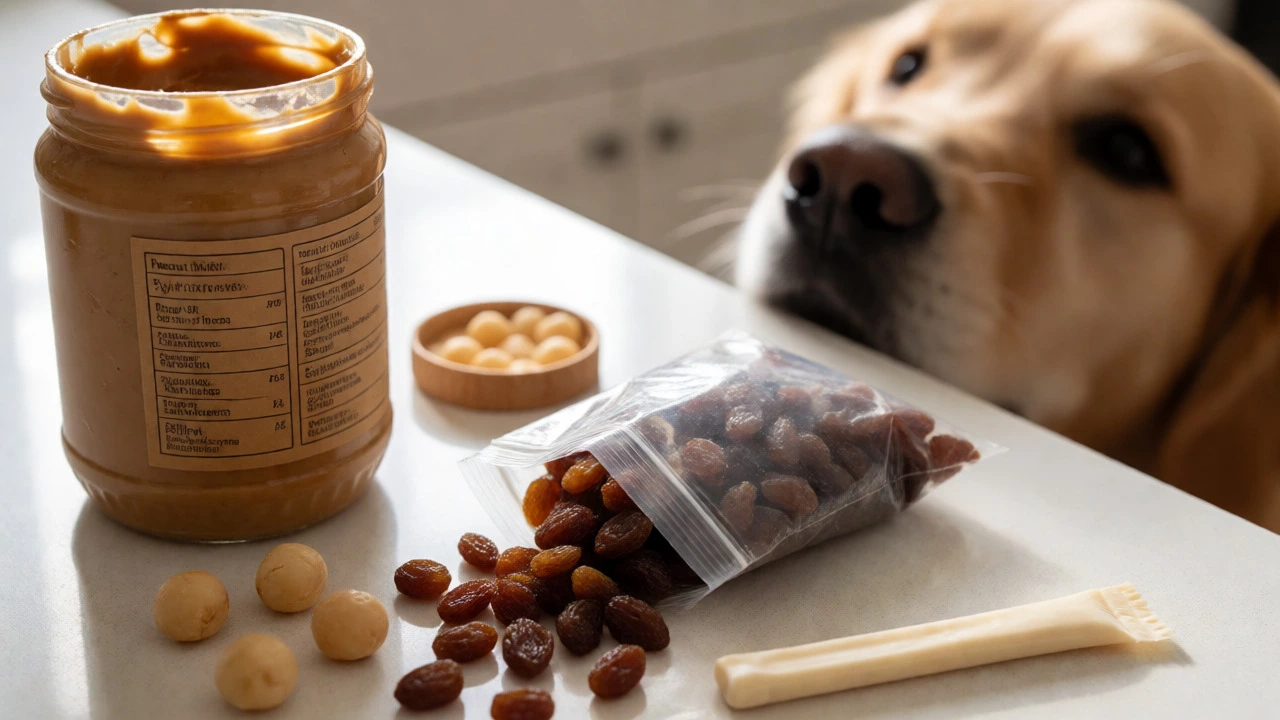
This is where things get tricky because it’s invisible. Xylitol is a sugar alcohol used as a sweetener in many "sugar-free" products. You find it in gum, mints, toothpaste, peanut butter, and baked goods. For humans, it’s harmless. For dogs, it triggers a massive release of insulin, leading to hypoglycemia (low blood sugar) within minutes.
The scary part? It doesn’t just lower blood sugar. High doses can cause acute liver failure. And here’s the kicker: you might not see symptoms right away. Your dog might seem fine for an hour, then suddenly collapse. Always check the ingredient list on any processed food you give your dog. If it says "sugar-free" or lists xylitol, keep it far out of reach. Peanut butter is a common culprit-many brands now use xylitol instead of sugar to cut calories.
Grapes and Raisins: The Mystery Toxin
We know grapes are bad, but we don’t fully know *why*. Unlike chocolate, where we know theobromine is the villain, the exact toxin in grapes remains unknown. However, the outcome is consistent and terrifying: kidney failure. Some dogs can eat a few raisins and be fine; others can go into renal failure after eating just a handful.
Because there is no known safe dose, veterinarians treat grape ingestion as an emergency regardless of quantity. Symptoms include vomiting, lethargy, and decreased urination. If your dog steals a bag of trail mix containing raisins, call your vet immediately. Don’t wait to see if they vomit. Time is tissue when it comes to kidneys.
Allium Vegetables: Onions, Garlic, and Leeks
Your kitchen staple trio-onions, garlic, and leeks-belongs to the Allium family. These vegetables contain compounds called N-propyl disulfide and thiosulfate. In dogs, these substances damage red blood cells, leading to hemolytic anemia. This means their red blood cells break apart faster than they can be replaced.
Garlic is actually six times more potent than onions, so even though people often say "a little garlic is okay," it’s risky. Powdered onion is particularly dangerous because it’s concentrated. You’ll find it in baby food, seasoned meats, and many pre-made sauces. Chronic exposure to small amounts can build up over time, causing weakness, pale gums, and brownish urine. Acute large doses can lead to immediate collapse.
Fatty Foods and Bones: Pancreatitis and Perforation
It’s not just about toxins. Sometimes, the structure of the food is the problem. Fatty table scraps, like bacon grease or fried chicken skin, are major triggers for pancreatitis. This is an inflammation of the pancreas that causes severe abdominal pain, vomiting, and dehydration. Small breeds are especially prone to this because their systems are smaller and less tolerant of sudden dietary changes.
Then there are bones. Cooked bones, particularly from chicken or pork, become brittle and splinter easily. A sharp shard can puncture the esophagus, stomach, or intestines. This isn’t just uncomfortable; it’s life-threatening. Raw bones are safer but still carry risks of bacterial contamination like Salmonella or E. coli. If you want to give your dog something to chew, stick to veterinary-approved dental chews or raw meaty bones under supervision.

Avocado: The Pit and The Persin
Avocados contain persin, a fungicidal toxin. In birds, persin is deadly. In dogs, it’s mostly mild, usually causing an upset stomach if they eat the flesh. However, the real danger is the pit. Avocado pits are large, smooth, and perfect for causing intestinal blockages. If your dog swallows a whole pit, surgery might be required to remove it. Also, avocado oil is high in fat, so too much can trigger pancreatitis.
Macadamia Nuts and Alcohol
Macadamia nuts are unique. They cause a temporary neurological condition in dogs, characterized by weakness in the hind legs, tremors, and hyperthermia (overheating). Symptoms usually appear within 12 hours and resolve within 48 hours, but it’s miserable for the dog. Even a small number of nuts can cause issues.
Alcohol is another obvious one, but people forget that it hides in unexpected places. Bread dough, certain cough syrups, and fermented fruits can produce ethanol in the gut. Dogs are more sensitive to alcohol than humans. Even a small amount can cause vomiting, disorientation, breathing difficulties, and coma.
| Food Item | Toxic Component | Primary Risk | Symptoms |
|---|---|---|---|
| Chocolate | Theobromine | Heart & Nervous System | Vomiting, seizures, heart failure |
| Xylitol | Sugar Alcohol | Liver & Blood Sugar | Hypoglycemia, liver failure |
| Grapes/Raisins | Unknown | Kidneys | Renal failure, lethargy |
| Onions/Garlic | N-propyl disulfide | Blood Cells | Anemia, weakness, pale gums |
| Macadamia Nuts | Unknown | Neurological | Weakness, tremors, overheating |
How to Handle a Dietary Disaster
So, your dog just ate something they shouldn’t have. What now? First, identify what was eaten and how much. Check the packaging if possible. Second, assess your dog’s size and current behavior. Are they acting normal? Vomiting?
Contact your veterinarian or an animal poison control center immediately. Do not induce vomiting unless instructed by a professional. Inducing vomiting incorrectly can cause aspiration pneumonia or further injury if the object is sharp. Have the following information ready:
- Type of food ingested
- Estimated amount consumed
- Time of ingestion
- Dog’s weight and age
- Any pre-existing health conditions
Prevention is easier than cure. Keep trash cans lidded. Store xylitol-containing products in cabinets, not on counters. When cooking, keep your dog out of the kitchen during prep. And always read labels on treats and human snacks before sharing.
Is all chocolate equally dangerous for dogs?
No. Darker chocolates contain higher concentrations of theobromine, making them more toxic. Baking chocolate and cocoa powder are the most dangerous, followed by semi-sweet, then milk chocolate. White chocolate has negligible amounts of theobromine but is high in fat and sugar, which can still cause pancreatitis.
Can my dog die from eating one grape?
It is unlikely for one grape to kill a medium-sized dog, but it is possible for very small dogs or highly sensitive individuals. Since the toxic dose varies widely and the mechanism is unknown, vets recommend treating any grape or raisin ingestion as a potential emergency to prevent kidney failure.
Is peanut butter safe for dogs?
Most peanut butter is safe, but you must check the label for xylitol. Many "light" or "sugar-free" brands use xylitol as a sweetener, which is toxic to dogs. Stick to natural peanut butter with only peanuts and salt as ingredients.
What should I do if my dog eats macadamia nuts?
Contact your vet. Macadamia nut toxicity typically resolves on its own within 24-48 hours, but supportive care may be needed. Watch for weakness in the hind legs, tremors, and elevated body temperature. Keeping the dog cool and hydrated is key.
Are cooked bones worse than raw bones?
Yes, cooked bones are generally worse because they become brittle and splinter easily, posing a risk of perforation in the digestive tract. Raw bones are softer and less likely to splinter, but they carry a risk of bacterial contamination like Salmonella. Always supervise chewing.