
Cat Calorie Calculator
Calculate Your Cat's Daily Calories
Determine the right amount of food for your cat based on weight and food type.
Your Cat's Daily Calorie Needs
Based on lbs
Ever watched your cat shove food into its mouth like it’s racing against a timer and wondered-do cats even know when they’re full? It’s a common question among cat owners, especially when you catch your furry friend digging into a second bowl right after finishing the first. The short answer? Some cats will stop when they’re full. Others? They’ll keep going until the bowl is empty-even if it means gaining weight, feeling sick, or worse.
Why Some Cats Never Say ‘Enough’
Cats don’t have the same internal ‘stop’ button humans do. Their wild ancestors hunted small prey multiple times a day-mice, birds, insects-and ate little by little. That evolutionary pattern stuck. Modern domestic cats still see food as something to grab whenever it’s available. Unlike dogs, who often pause after a meal, cats don’t have a strong natural satiety signal tied to stomach stretch. A 2021 study from the University of California, Davis, found that 62% of household cats continued eating even after their stomachs were physically full, especially when fed dry kibble. Dry food’s low moisture content and high carbohydrate levels can confuse their hunger cues. It doesn’t trigger the same hormonal response as wet food or real prey.What Happens When Cats Overeat?
Overeating isn’t just about weight gain. It leads to real health risks. Obese cats are three times more likely to develop diabetes, according to the American Association of Feline Practitioners. Joint pain, liver disease (hepatic lipidosis), and urinary tract issues also climb with extra pounds. And it’s not always obvious. A cat that looks plump might still be active, so owners miss the signs until it’s too late. Some cats will vomit after gorging. That’s their body’s last-ditch effort to reset. But vomiting doesn’t mean they’re learning. It just means they’re uncomfortable. And if they’re not vomiting, they’re quietly gaining fat-one extra kibble at a time.Do Cats Feel Full? The Science Behind the Appetite
Cats have hormones that signal fullness-leptin and ghrelin-but they don’t respond the same way as humans or dogs. Leptin tells the brain, “You’ve had enough.” Ghrelin says, “I’m hungry.” In cats, these signals are weaker. Their brains are wired to prioritize eating when food is present, not when energy needs are met. Also, cats don’t have a strong preference for variety. They don’t get bored of the same food the way we do. If you leave out a bowl of chicken-flavored kibble, they’ll eat it for hours. No dessert craving. No emotional eating. Just pure instinct: food = survival.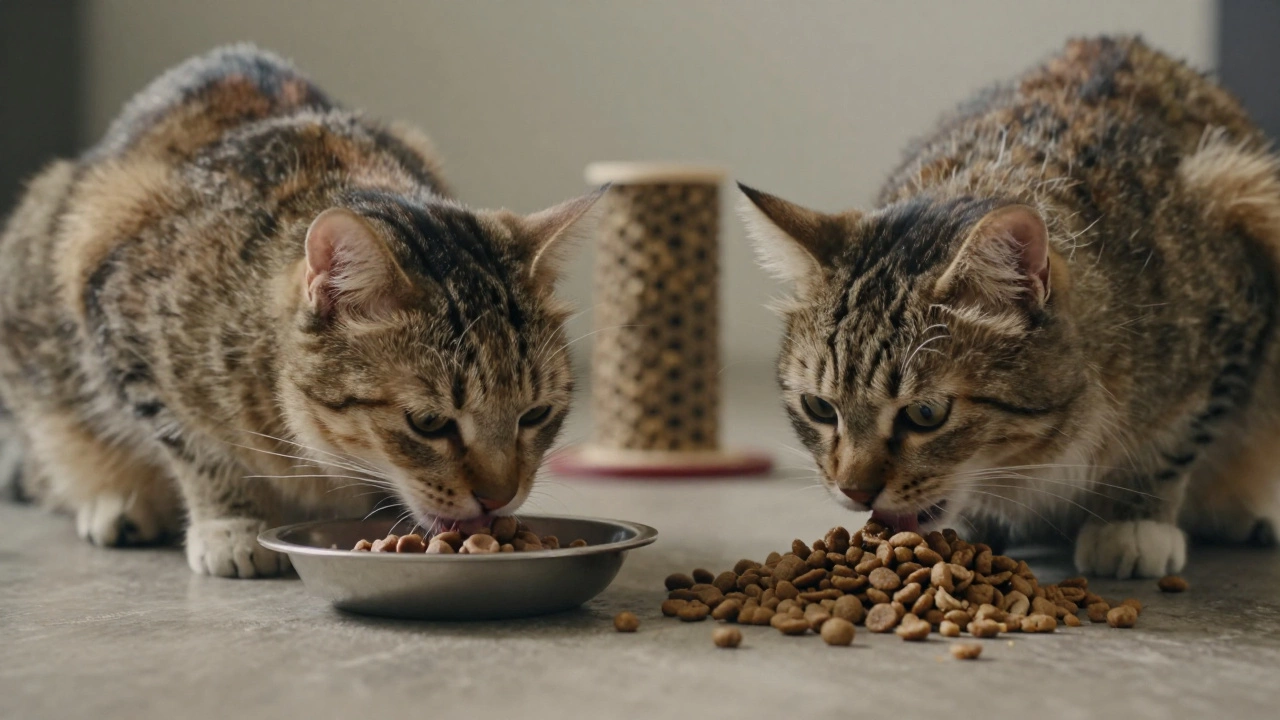
How to Tell If Your Cat Is Eating Too Much
Watch for these signs:- Finishing meals in under 30 seconds, then staring at the empty bowl
- Asking for food right after eating
- Neck or belly fat that jiggles when they move
- Difficulty grooming, especially around the rear end
- Less jumping or playing than usual
Feeding Strategies That Actually Work
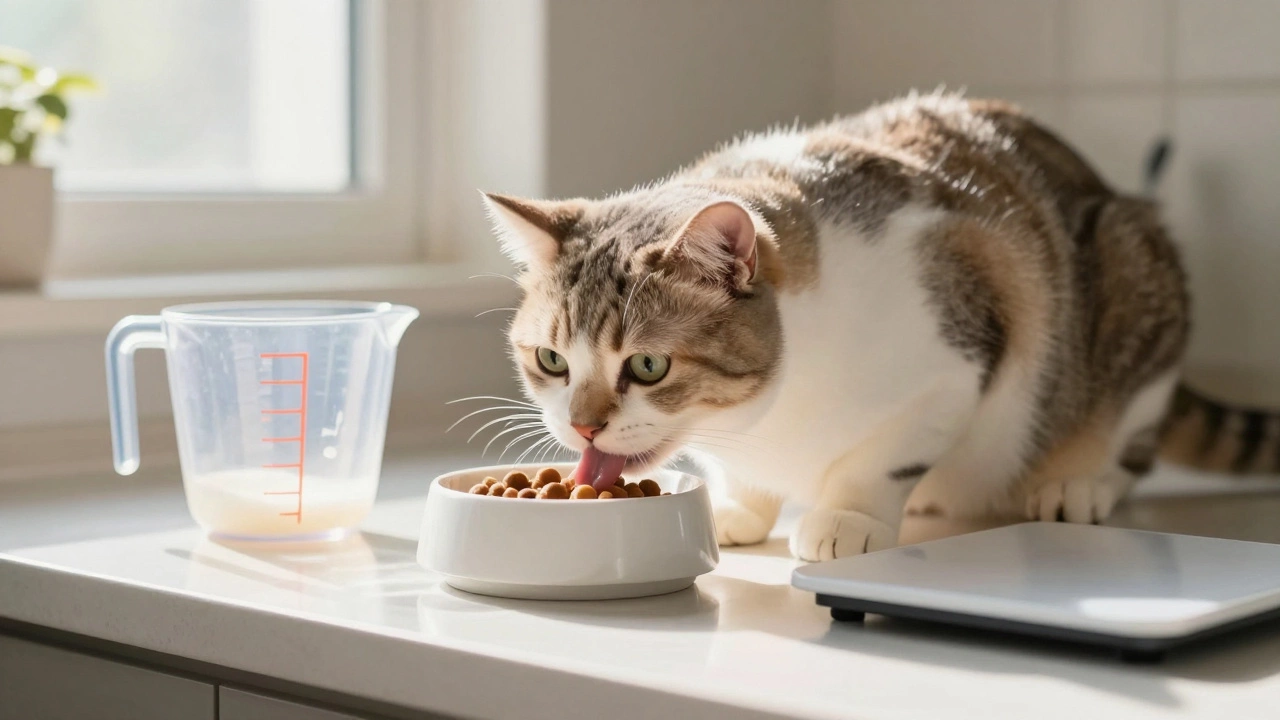
Stop leaving food out all day. Free-feeding is the #1 reason cats overeat. Here’s what works instead:- Use measured meals: Feed twice a day-morning and evening. Use a kitchen scale to measure portions. A standard 1/2 cup of dry food is often too much.
- Switch to wet food: Wet food is 70-80% water. It fills the stomach faster and keeps cats satisfied longer. Aim for at least one meal a day to be wet.
- Try puzzle feeders: These slow down eating and engage your cat’s hunting instincts. A simple muffin tin with kibble covered by tennis balls works great.
- Keep treats under 10% of daily calories: One small treat equals 10-15 calories. Too many and you’re undoing all your hard work.
- Don’t respond to begging: If your cat meows for food an hour after eating, ignore it. They’re not hungry. They’re trained to associate you with snacks.
What About Kittens and Senior Cats?
Kittens under 6 months need more frequent meals-three to four times a day. Their tiny bodies burn energy fast. But even then, don’t leave food out. Measure each portion. Senior cats (over 10 years) often lose muscle mass and metabolism slows. They may eat less, but some still overeat out of boredom or anxiety. If your older cat is gaining weight despite eating less, talk to your vet. Thyroid issues, arthritis, or dental pain can change appetite.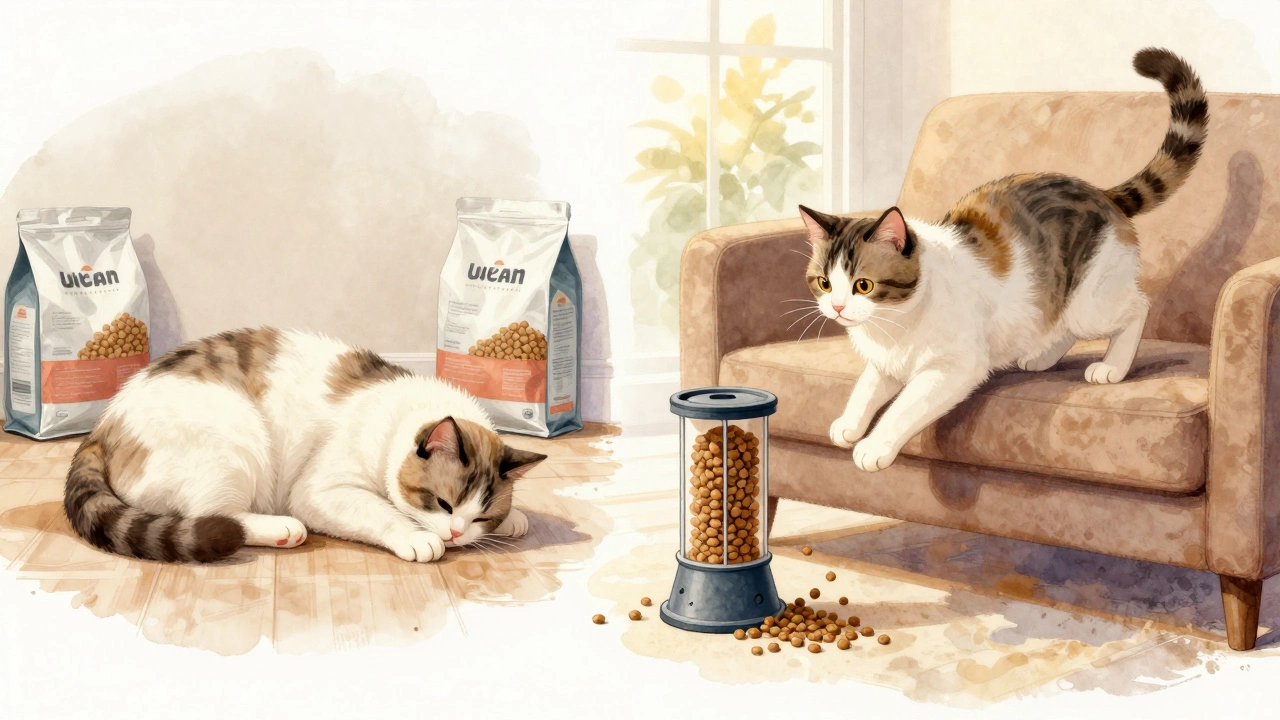
When to See a Vet
If your cat suddenly starts eating way more than usual, it could be a sign of illness. Hyperthyroidism, diabetes, or intestinal parasites can cause extreme hunger. Other red flags:- Weight loss despite increased appetite
- Excessive thirst or urination
- Constant vomiting or diarrhea
- Changes in coat texture or dullness
Real-Life Example: From Overfed to Fit
A cat named Miso in Dublin weighed 18 pounds-way over the healthy 10-12 range. Her owner thought she was just a “big-boned” cat. After switching to measured wet meals twice daily and adding a puzzle feeder, Miso lost 5 pounds in 4 months. Her energy improved. She started jumping on the couch again. And her vet said her liver enzymes returned to normal. It wasn’t about willpower. It was about structure.Final Thought: It’s Not About Willpower
Cats aren’t greedy. They’re responding to how we feed them. If you leave food out, they’ll eat. If you give them unlimited access, they’ll get fat. It’s not their fault. It’s ours. The key isn’t to make your cat say no. It’s to make sure they never have to.Do cats stop eating when they are full?
Some cats will stop when full, especially if fed wet food or on a strict schedule. But many won’t. Their biology evolved to eat whenever food is available, not based on fullness. Without portion control, most domestic cats will overeat, leading to obesity and health problems.
Why do cats keep eating even when they’re full?
Cats lack strong satiety signals tied to stomach stretch. Their ancestors hunted small prey frequently, so they evolved to eat quickly and often. Modern dry food, low in moisture and high in carbs, doesn’t trigger fullness hormones like leptin effectively. Plus, if food is always available, they learn to eat constantly.
Can cats get sick from eating too much?
Yes. Overeating leads to obesity, which increases the risk of diabetes, liver disease (hepatic lipidosis), arthritis, and urinary tract problems. Some cats vomit after gorging, but that’s a sign of distress-not a natural reset. Chronic overeating can permanently damage metabolism and organ function.
How much should I feed my cat each day?
Most adult cats need 20-30 calories per pound of body weight. A 10-pound cat needs about 200-300 calories daily. This can be split into two meals: one wet and one dry. Always check the calorie content on the food label-not just the cup measurement. A standard 1/2 cup of dry kibble can be 300+ calories-too much for most cats.
Should I free-feed my cat?
No. Free-feeding is the leading cause of feline obesity. Cats don’t self-regulate like humans. Leaving food out all day encourages constant snacking. Instead, feed measured meals twice a day. This mimics natural hunting patterns and helps prevent overeating.
Is wet food better for controlling cat appetite?
Yes. Wet food has high water content (70-80%), which fills the stomach faster and keeps cats satisfied longer. It also triggers stronger satiety signals than dry kibble. One meal a day of wet food can cut calorie intake by 20-30% without making your cat feel deprived.
What should I do if my cat begs for food after meals?
Ignore the begging. Cats learn quickly that meowing gets attention-and sometimes treats. If you give in, you’re training them to ask for food even when they’re full. Instead, offer playtime, petting, or a puzzle feeder. Boredom is often mistaken for hunger.
Can medical issues cause a cat to overeat?
Yes. Hyperthyroidism, diabetes, and intestinal parasites can cause extreme hunger. If your cat suddenly eats more, loses weight, drinks more water, or urinates frequently, see a vet. These aren’t behavioral issues-they’re medical emergencies.