
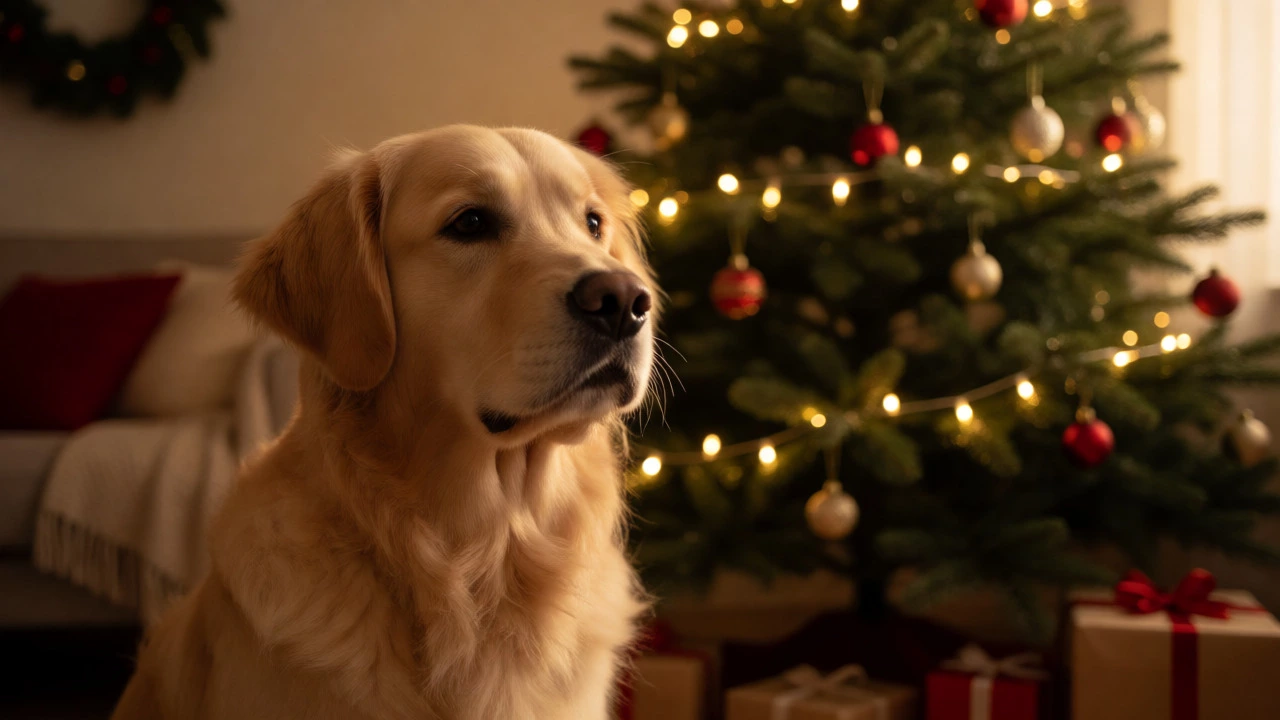
Dog Holiday Stress Predictor
Dogs don't understand holidays, but they feel the chaos. Use this tool to predict your dog's likely reaction to festive disruptions.
Likely Reaction
Recommended Actions:
You know that feeling when you start decorating the house for Christmas or setting up the Easter eggs, and suddenly your dog is glued to your side, staring at you with intense curiosity? Or maybe they’re hiding under the bed because of the fireworks on New Year’s Eve. It makes you wonder: can dogs recognize holidays? The short answer is no, not in the way we do. They don’t understand the concept of "Thanksgiving" or "Diwali." But here’s the twist-they absolutely recognize the changes associated with them. Your dog is a master observer of patterns, smells, and human energy. If you think they’re just being dramatic during the festive season, you might be missing out on some serious canine communication.
The Myth of Calendar Awareness
Let’s clear this up first. Dogs don’t look at a calendar and see a red circle around December 25th. They lack the abstract cognitive ability to grasp historical or cultural significance. A dog doesn’t care about the birth of Jesus or the mythological origins of Halloween pumpkins. What they care about is what happens to their routine. When you ask if they recognize holidays, you’re really asking if they notice the disruption to their daily life. And trust me, they notice everything.
Think about it from their perspective. Their world is built on consistency. Breakfast at 7 AM, walk at 8 AM, dinner at 6 PM. When a holiday rolls around, that schedule gets thrown off. You might sleep in, cook differently, have guests over, or stay up late. To a dog, these aren't "celebrations"; they are anomalies in the matrix. They respond to the anomaly, not the occasion.
Scent: The Holiday Signature
If there’s one thing dogs use to map their world, it’s smell. Human noses detect about 5 million scent receptors; dogs have up to 300 million. This superpower means they can identify specific chemical changes in your home before you even hang the lights. During holidays, our homes smell different. We bring in pine trees, cinnamon, cloves, chocolate, and roasted meats. These are strong, distinct olfactory markers.
Your dog isn’t thinking, "Ah, it’s Christmas time." They are thinking, "There is a large tree in the living room that smells like sap and dust, and the air smells like gingerbread." For many dogs, this new scent profile creates excitement because it often correlates with high-value treats (like turkey scraps) or new objects to investigate. However, for others, particularly those with anxiety, an overload of unfamiliar scents can be overwhelming. If your dog seems sniffy and restless, it’s likely their nose working overtime to process the new aromatic landscape.
Routine Disruption as a Trigger
Dogs thrive on predictability. Holidays are essentially a week-long experiment in unpredictability. Let’s break down why this matters using a simple cause-and-effect model:
- Change in Sleep Patterns: If you sleep in on Christmas morning, your dog wakes up confused. Did they miss breakfast? Is something wrong?
- Altered Exercise Levels: Maybe you’re too busy cooking to take the long evening walk. The dog has pent-up energy with nowhere to go.
- New People in the House: Guests mean strange voices, different body languages, and potentially less attention for the dog.
These disruptions trigger behavioral responses. A dog might become hyperactive because their usual outlet (the walk) was skipped. Or they might become clingy because the primary caregiver (you) is distracted by cooking or hosting. They aren’t celebrating; they are reacting to the shift in their environment’s stability.
Reading Human Emotions
Dogs are incredibly attuned to human emotional states. Studies suggest they can read facial expressions and tone of voice better than any other animal. During holidays, human emotions run high. There’s joy, yes, but also stress, frustration, and exhaustion. Have you ever snapped at someone while trying to wrap gifts? Your dog felt that tension.
If you are stressed about the perfect turkey or the gift budget, your dog picks up on your cortisol levels and your tense body language. They may try to "fix" the situation by bringing you a toy or sitting quietly by your feet. Conversely, if you are overly excited and loud, they might mirror that energy, leading to zoomies at midnight. They are essentially emotional mirrors. So, when you ask, "Do they know it's a special day?", the real question is, "Are they reflecting my mood?" Usually, the answer is a resounding yes.
Festive Sounds and Sensory Overload
Holidays come with a soundtrack. Jingle bells, carols playing on loop, the crackle of fireplaces, and-most notoriously-fireworks. While humans might enjoy the background music, dogs hear frequencies we can’t. High-pitched sounds from certain toys or electronic decorations can be irritating. Fireworks are a different beast entirely. The sudden, unpredictable bangs trigger a primal fear response in many dogs.
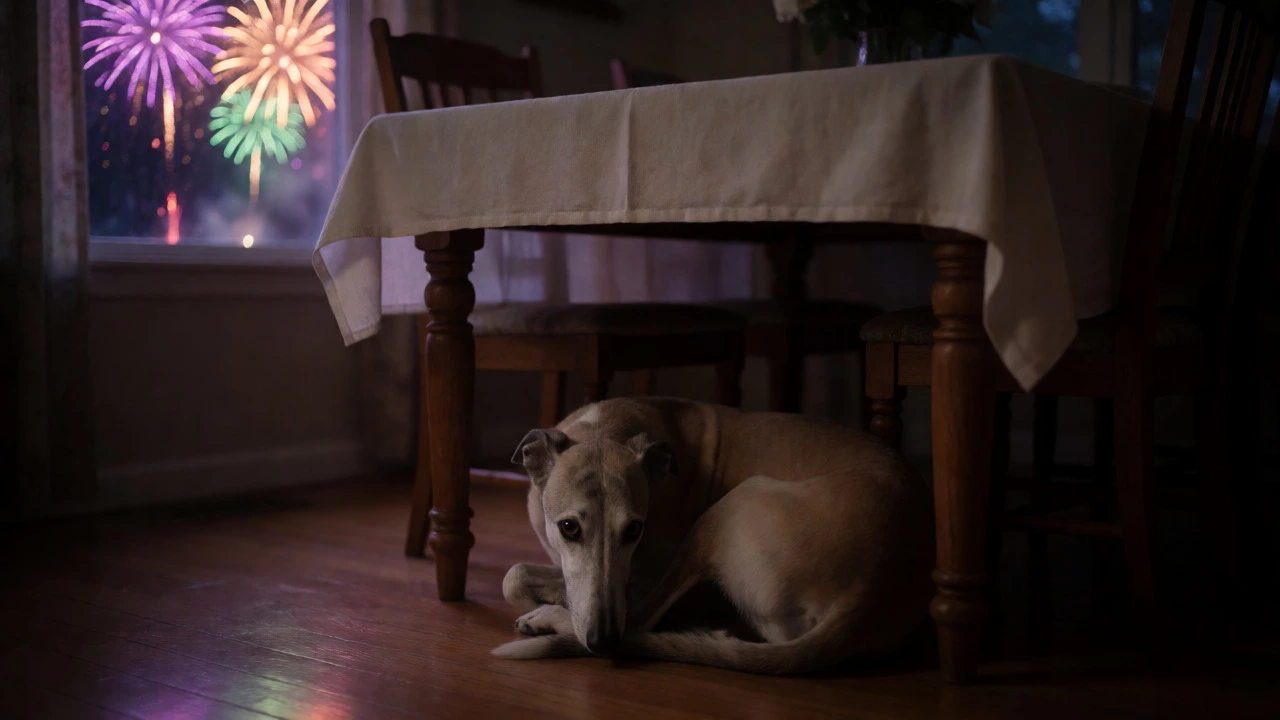
This isn’t them being "bad" or "scaredy-cats." It’s biology. In the wild, loud, unexplained noises signal danger. Even domesticated dogs retain this instinct. If your dog hides during Bonfire Night or New Year’s Eve, they aren’t recognizing the holiday; they are recognizing a threat. Creating a safe space-a crate covered with a blanket, away from windows-is crucial. Don’t force them to join the party if they want to opt-out.
Food Obsession: The Real Reason They Love Holidays
Let’s be honest. The main reason your dog loves the holidays is the food. Thanksgiving leftovers, Christmas pudding bits, Easter chocolate (dangerous for them!), and birthday cake crumbs. Dogs quickly learn to associate specific times of year with increased food availability.
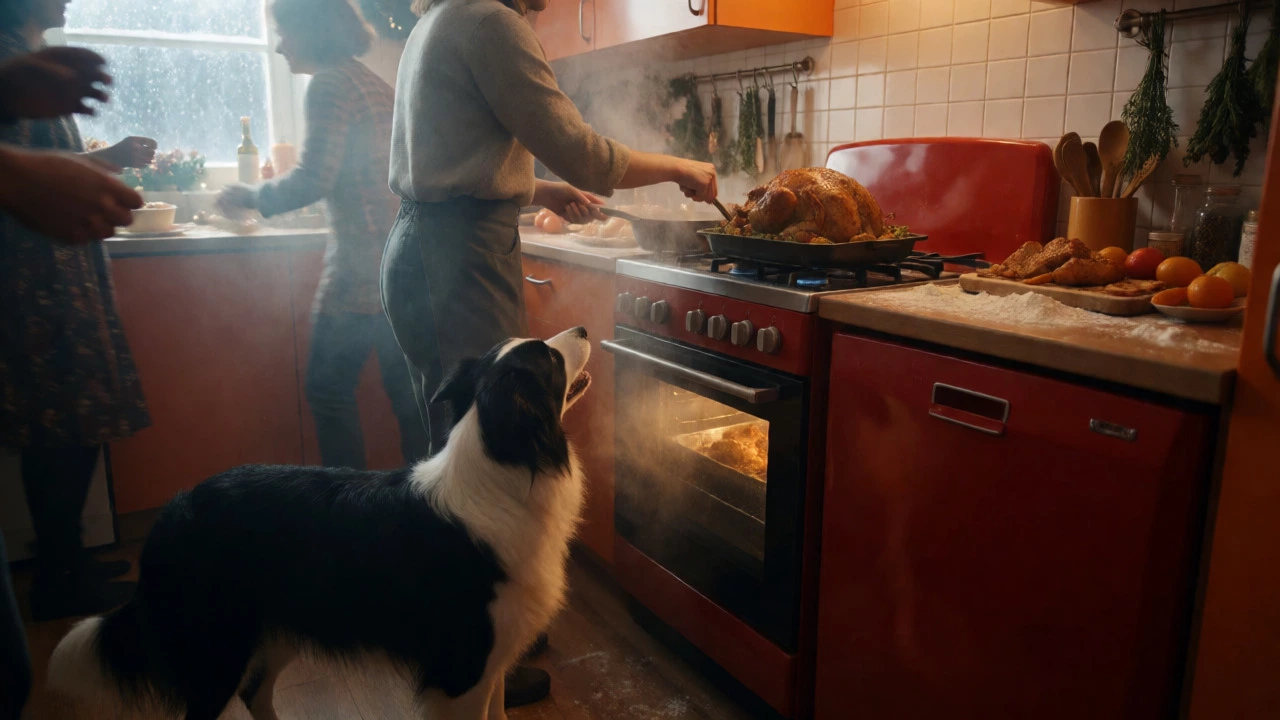
This is classical conditioning at its finest. The sight of the oven door opening + the smell of roasting meat = potential reward. Over years, this builds a positive association with the holiday period. They aren’t celebrating the harvest; they are anticipating the harvest’s byproducts. Be careful, though. Rich foods can upset their stomachs. A piece of plain turkey is fine; a slice of buttered pie crust is a recipe for a vet visit.
| Holiday Element | Dog Perception | Common Reaction |
|---|---|---|
| Decorations (Lights/Trees) | New obstacles, flashing lights, weird smells | Curiosity, chewing, or avoidance |
| Guests/Strangers | Unfamiliar scents, loud voices, changed routine | Barking, hiding, or excessive greeting |
| Fireworks/Firecrackers | Loud, unpredictable auditory threats | Panic, trembling, seeking shelter |
| Special Foods | High-value scent and taste opportunities | Begging, counter-surfing, excitement |
| Owner Stress | Tense body language, elevated heart rate | Clinginess or mirrored anxiety |
How to Help Your Dog Navigate the Festivities
Since we know they react to change rather than the holiday itself, the best strategy is management. You don’t need to hide all the fun, but you do need to buffer your dog from the chaos.
- Maintain Routine Where Possible: Try to keep feeding and walking times consistent, even if the content of the meal or walk changes slightly.
- Create a Safe Zone: Set up a quiet room or crate with their favorite bed and a chew toy. Teach them that this space is for decompression, not punishment.
- Desensitize Early: Play recordings of fireworks or crowd noise at low volume weeks before the event, pairing it with treats. Increase volume gradually.
- Exercise Before Events: A tired dog is a calm dog. Give them a long walk or play session before guests arrive or before the fireworks start.
- Watch the Diet: Stick to their regular kibble/wet food base. Limit table scraps to safe, plain options. Avoid chocolate, grapes, onions, and alcohol.
Individual Differences Matter
Not all dogs react the same way. A confident, social Labrador might love the extra attention and food drops from guests. A shy, sensitive Greyhound might find the same gathering terrifying. Breed tendencies play a role, but individual history matters more. A rescue dog with trauma might panic at raised voices, regardless of whether it’s a happy argument about politics or a joyful toast.
Pay attention to your specific dog’s body language. Ears pinned back, tail tucked, yawning when not tired, or lip-licking are signs of stress. Tail wagging isn’t always happiness-it can be appeasement or agitation. Learn to read the nuance. If your dog looks uncomfortable, give them an exit strategy. You don’t owe every guest a photo with your dog.
Conclusion: It’s About Connection, Not Calendars
So, can dogs recognize holidays? No. Do they feel the spirit of the season? Absolutely, through the lens of their senses and their bond with you. They notice the extra love, the extra food, the extra noise, and the extra stress. By understanding that their reaction is driven by environmental changes rather than cultural knowledge, you can help them navigate the festive season with less anxiety and more enjoyment. Keep it simple, keep them safe, and maybe share a bit of plain turkey. They’ll appreciate that more than any gift under the tree.
Why does my dog act differently during Christmas?
Your dog reacts to changes in routine, new smells (pine, spices), altered sleeping schedules, and increased human activity. They don't understand the holiday concept but respond to the disruption of their normal environment.
Is it safe to give my dog holiday leftovers?
Plain, cooked meats like turkey or chicken without skin or bones are generally safe. Avoid rich gravies, sauces, onions, garlic, grapes, raisins, and especially chocolate, which is toxic to dogs.
How can I stop my dog from barking at guests?
Provide exercise before guests arrive to lower energy levels. Create a safe space where they can retreat if overwhelmed. Reward calm behavior with treats and ignore jumping or excessive barking until they settle.
Do dogs know when it's their birthday?
Dogs don't understand birthdays as anniversaries. They recognize the pattern of receiving extra treats, cakes, or attention on that specific date, associating the date with positive reinforcement.
Should I let my dog eat Christmas ham?
Ham is very salty and fatty. Small amounts of lean, plain ham are okay for most healthy dogs, but it can cause pancreatitis or digestive upset in sensitive breeds. Water intake should be monitored due to salt content.