
Large Dog Flight Cost Estimator
Cost Breakdown
Select your travel options and click calculate to see an estimate.
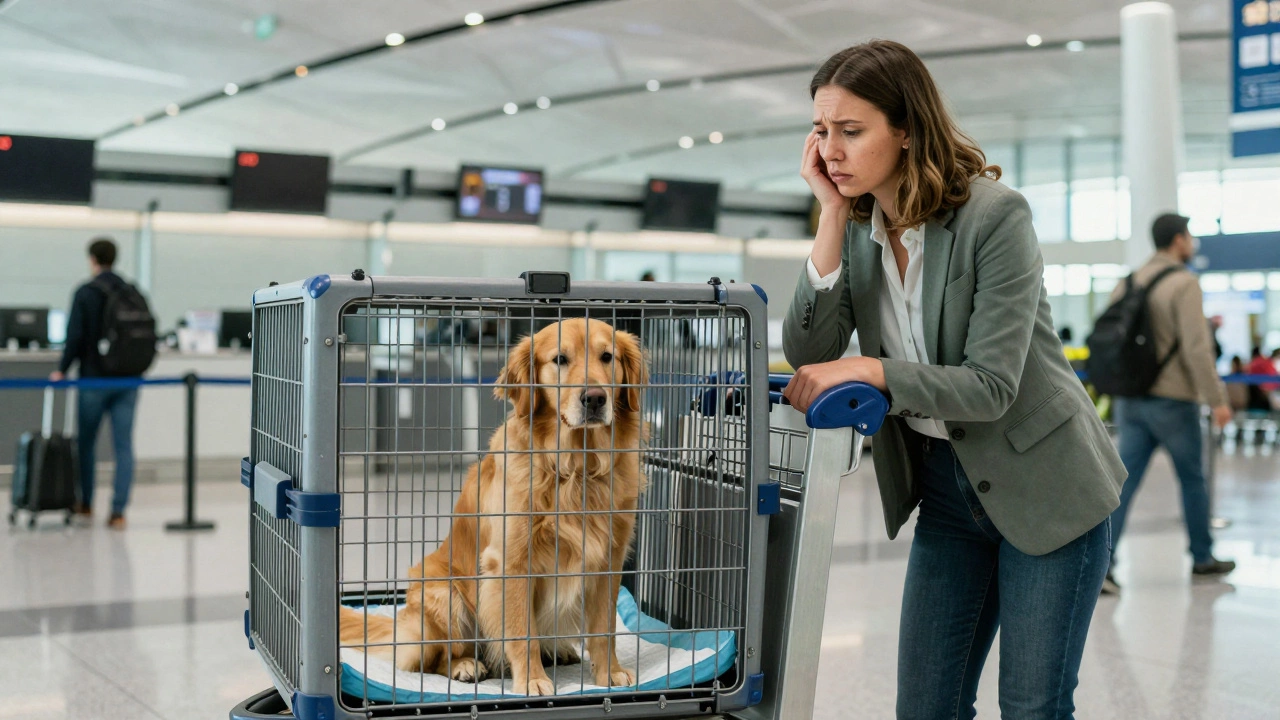
Imagine you’ve just booked that dream vacation to see the family or explore a new city. You pack your bags, but then reality hits: what about Barnaby? Your gentle giant, your 100-pound Golden Retriever mix, who has never been more than ten minutes away from home. The question isn’t just whether he can come; it’s how you keep him safe while navigating a maze of airline rules that change faster than weather patterns.
The short answer is yes, you can take a 100-pound dog on a plane. But the long answer involves understanding the difference between flying in the cabin and flying as cargo, knowing which airlines actually allow large breeds, and preparing for a process that is significantly more complex than traveling with a small terrier. If you don’t get the details right, you risk being turned away at the gate or, worse, putting your dog’s health at risk during the flight.
Why Weight Matters More Than Breed
Airlines don’t care if your dog is a Great Dane or a Mastiff. They care about weight and dimensions. For most major carriers, the limit for pets traveling in the cabin-the area where you sit-is strictly enforced. Typically, the combined weight of the dog and their hard-sided carrier must not exceed 15 to 20 pounds. This rule exists for safety reasons. In an emergency evacuation, every passenger needs to be able to move quickly, and a heavy carrier under a seat becomes a hazard.
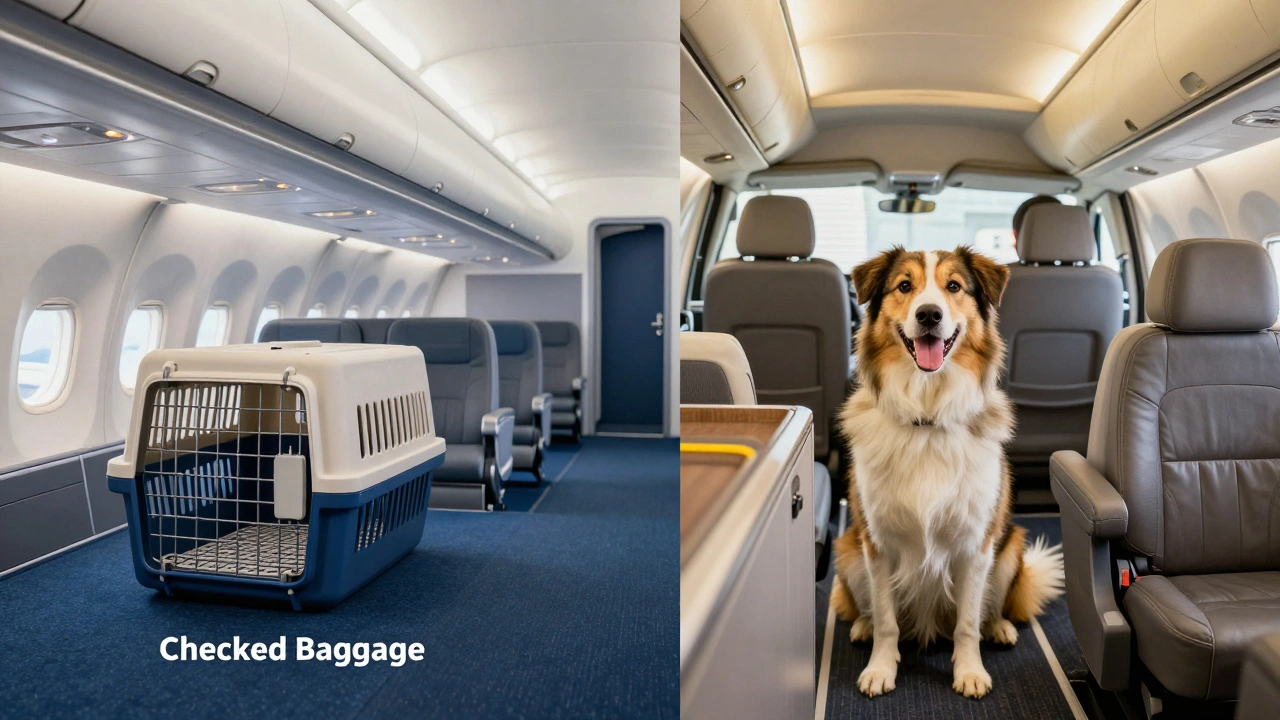
Since your dog weighs 100 pounds, the cabin option is effectively off the table. You cannot hide a 100-pound animal in a bag under a seat. This means your only viable options are flying as checked baggage (often called "cargo" by passengers, though technically distinct) or using a specialized pet relocation service. Understanding this distinction is crucial because the experience, cost, and regulations differ vastly between these two methods.
Can a 100-pound dog fly in the cabin?
No. Almost all airlines restrict cabin pets to those weighing under 15-20 pounds including their carrier. A 100-pound dog must travel as checked baggage or via a dedicated pet cargo service.
Cabin vs. Cargo: What’s the Difference?
When people say "cargo," they often imagine the cold, dark hold of the plane where luggage sits. While large dogs do travel in the pressurized, temperature-controlled hold, there are two ways to book this: as "Checked Baggage" or through a third-party "Pet Shipper."
Checked Baggage: This is when you book your dog’s ticket alongside your own human ticket with the same airline. Your dog travels on the same flight as you. This is generally the safest and most convenient option for domestic flights within countries like the US, UK, or EU. You drop off your dog at the check-in counter, and you pick them up at the baggage claim upon arrival. However, not all airlines offer this service, and many have stopped accepting pets as checked baggage due to liability concerns.
Pet Shippers: If the airline doesn’t accept checked pets, or if you are flying internationally with complex routing, you may need a professional pet shipper. These companies specialize in moving animals. They handle the paperwork, crate training, and logistics. Your dog might fly on a different flight than you, or even a different day. This adds stress and cost but ensures compliance with strict international regulations.
| Feature | Checked Baggage (Same Flight) | Pet Shipper (Dedicated Service) |
|---|---|---|
| Cost | $100 - $250 per way | $500 - $2,000+ depending on distance |
| Supervision | You are on the same plane | Professional handler manages transport |
| Flexibility | Limited to airlines that accept pets | Can use multiple carriers/routes |
| Best For | Domestic trips, simple routes | International moves, complex itineraries |
Airline Policies: Who Actually Lets Big Dogs Fly?
This is where the rubber meets the road. As of 2026, the landscape for large dog travel has shifted. Some legacy carriers have tightened restrictions, while others remain pet-friendly. You cannot assume that because an airline allows small dogs in the cabin, they will accept large dogs as cargo.
In the United States, United Airlines is one of the few major carriers that still accepts pets as checked baggage on most domestic flights. They require a health certificate issued within 10 days of travel and a specific IATA-compliant crate. Delta Air Lines, conversely, has restricted pet travel to certain routes and seasons, often banning brachycephalic (short-nosed) breeds entirely due to respiratory risks. Always call the airline directly. Do not rely on website FAQs, which are often outdated. Ask specifically: "Do you accept dogs over 40 pounds as checked baggage on this specific route?"
If you are traveling internationally, the rules become exponentially harder. Many European and Asian carriers have banned pets from the hold entirely, citing animal welfare concerns. In these cases, you must use a licensed pet relocation company. These companies know which airlines still accept animals and how to navigate customs. Trying to DIY an international move with a 100-pound dog is a recipe for disaster, involving potential quarantine periods and rejected entry.
The Crate: It’s Not Just a Box
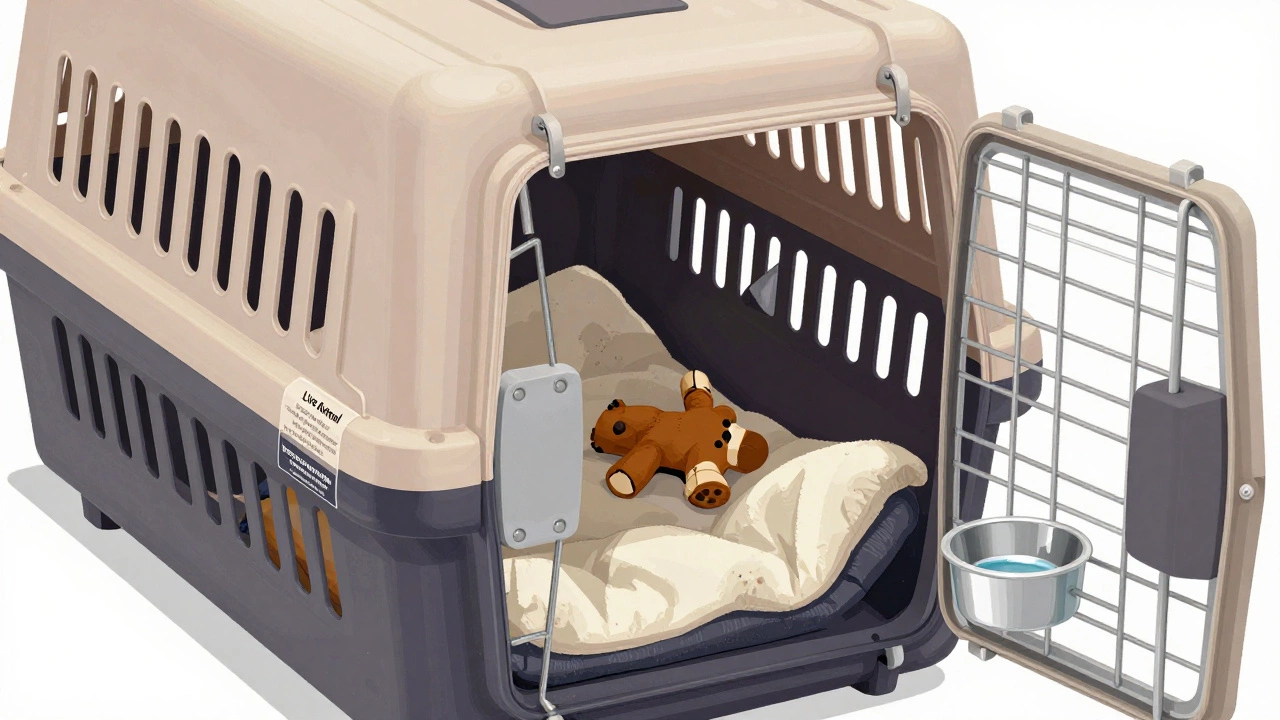
Your dog’s crate is their life support system during the flight. For a 100-pound dog, you cannot use a flimsy plastic kennel. You need an IATA-compliant, metal-barred crate that meets strict size and durability standards. The crate must be large enough for your dog to stand up, turn around, and lie down naturally. If you buy a crate that is too small, the airline will reject it at the counter.
Labeling is critical. Attach clear labels with your name, phone number, destination address, and a photo of your dog. Include a "Live Animal" sticker facing upward so handlers can see it immediately. Place food and water dishes inside the crate in a way that won’t spill during turbulence. Most importantly, line the bottom with absorbent pads. Accidents happen, and you want your dog to stay dry and comfortable.
- Size Check: Measure your dog’s height (from paw to top of head) and length (from nose to base of tail). Add 2-4 inches to each dimension for the crate size.
- Security: Ensure all doors latch securely. Use zip ties if necessary to prevent accidental opening.
- Comfort: Include a familiar blanket or toy with your scent, but remove anything that could be chewed off and swallowed.
Health and Safety: Preparing Your Giant
Flying is stressful for any dog, but for a large breed, the physical risks are higher. Brachycephalic breeds like Bulldogs, Pugs, and Boxers are particularly vulnerable to heatstroke and breathing difficulties in the hold. Even if your 100-pound dog is a healthy Labrador, you need to consult your veterinarian before booking.
You will need a health certificate. This document, signed by a licensed vet, confirms your dog is fit to fly. It must be issued within 10 days of departure for domestic flights. For international travel, the timeline can be weeks or months, involving rabies titers and microchip verification. Start this process early. Do not wait until the last minute.
Consider sedation carefully. Most veterinarians and airlines advise against sedating dogs for flights. Sedatives can affect breathing and blood pressure, especially at high altitudes. Instead, focus on calming techniques. Walk your dog extensively before the flight to tire them out. Use pheromone sprays like Adaptil on their bedding. If your dog is extremely anxious, ask your vet about natural calming supplements that do not depress the central nervous system.
Day-of-Flight Logistics: Avoiding Stress
Arrive at the airport early. At least three hours before departure. You need time to check in your dog, which happens at the special services counter, not the regular check-in desk. Bring copies of all documents: health certificate, vaccination records, and proof of ownership. Wear a vest or badge that says "I’m traveling with my dog" so other travelers know not to approach or distract your pet.
Feed your dog lightly the morning of the flight. A full stomach increases the risk of bloat, a serious condition in large breeds. Provide water, but let them drink moderately. When you hand over the crate, stay calm. Your energy transfers to your dog. Speak softly, reassure them, and leave quickly. Lingering at the gate will only increase their anxiety.
Alternatives to Flying
If the thought of sending your 100-pound dog into the cargo hold keeps you up at night, consider alternatives. Ground transportation is often safer and less stressful for both you and your pet. Services like Wag! Pet Taxi or local pet transport companies offer door-to-door van services for large dogs. While it takes longer, your dog stays in a climate-controlled vehicle, gets regular potty breaks, and remains visible to you or a driver throughout the journey. For distances under 800 miles, driving yourself is usually the best option. You control the environment, stop whenever needed, and keep your dog close.
Is it dangerous for a large dog to fly in cargo?
While rare, incidents do occur. Risks include temperature extremes, handling errors, and stress-related health issues. Choosing reputable airlines, proper crating, and avoiding extreme weather seasons minimizes these risks significantly.
How much does it cost to fly a 100-pound dog?
As checked baggage, expect to pay $100-$250 per way domestically. Using a pet shipper can cost $500-$2,000+ depending on distance and services included. International flights are significantly more expensive due to documentation and handling fees.
What documents do I need to fly with my large dog?
You typically need a current health certificate (issued within 10 days), proof of rabies vaccination, and sometimes a microchip registration. International travel requires additional permits, rabies titer tests, and country-specific import licenses.
Can I sit next to my dog in first class?
No. First-class seats do not allow extra space for large crates. Even in business class, policies rarely permit large dogs in the cabin. All dogs over 20 lbs must travel in the hold regardless of your ticket class.
Are there seasonal bans on pet travel?
Yes. Many airlines impose summer (June-August) and winter (December-January) bans on pet travel in the hold to protect animals from extreme temperatures. Check your airline's specific embargo dates before booking.