
Puppy Daily Routine & Activity Planner
Settings
Enter your puppy's details to generate a customized plan.
Your Puppy's Plan
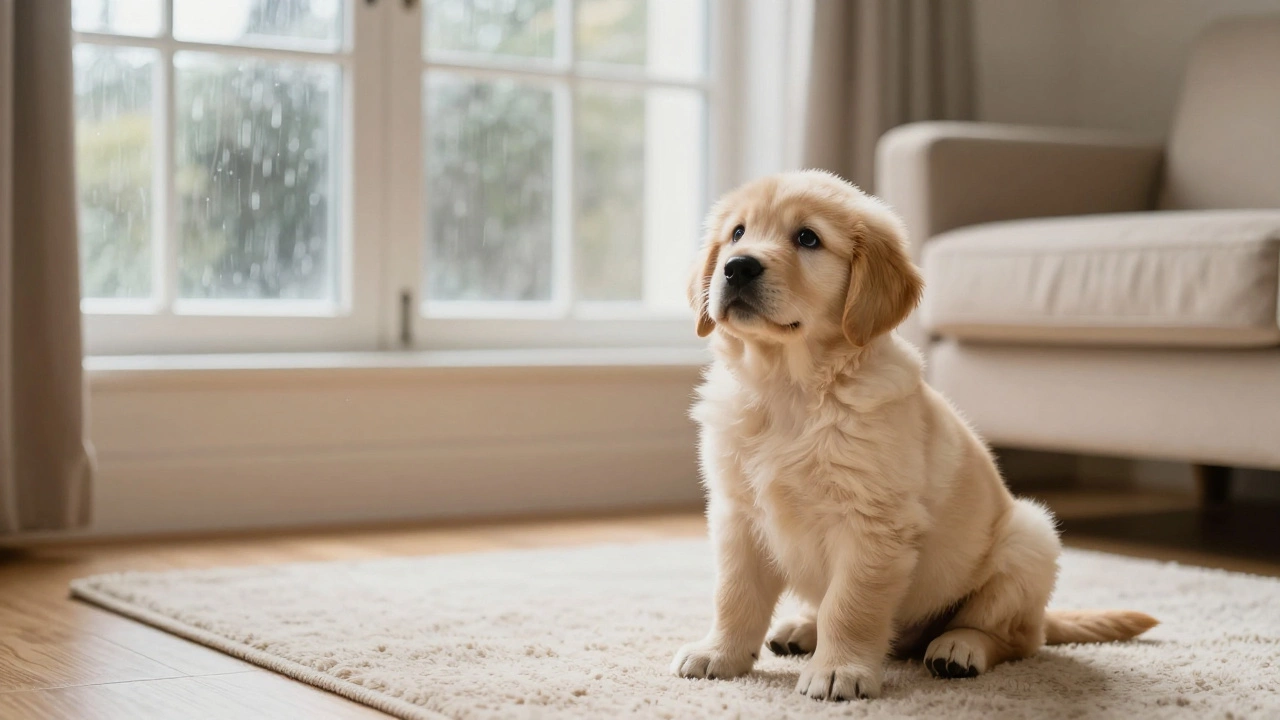
It is 10:30 AM on a Tuesday. You have just finished your morning meeting, and your puppy is staring at you with wide, expectant eyes. The silence in the house is heavy. Do you drop everything to chase a ball for another hour? The short answer is no. In fact, trying to entertain your dog non-stop can actually backfire, leading to overstimulation, anxiety, and an inability to settle down.
New owners often feel guilty if their puppy isn't actively playing or learning every minute of the day. But dogs are not children who need constant supervision and activity to be happy. They are animals that thrive on routine, rest, and mental satisfaction. Understanding how to balance active engagement with quiet independence is one of the most important skills you will learn as a dog owner.
The Myth of Constant Entertainment
There is a common misconception that a bored puppy is a bad puppy, so we must keep them busy. This leads to what trainers call "helicopter parenting." When you are always present, providing toys, treats, and attention, your puppy never learns to self-soothe. If they cannot handle being alone for even five minutes without whining or chewing the sofa, they will struggle when you leave for work or go out for dinner.
Dogs, including puppies, sleep significantly more than humans. An adult dog sleeps between 12 and 14 hours a day. Puppies? They can sleep up to 18 to 20 hours. That means for the majority of the day, your puppy should be resting. Trying to fill those gaps with forced play is exhausting for both of you. It creates a cycle where the puppy becomes hyperactive because they are overtired, and you become frustrated because you are constantly entertaining them.
Think about it this way: if you had to perform a task for eight hours straight without a break, how would you feel? Likely irritable and exhausted. Your puppy feels the same way. Boredom is not a state that requires immediate intervention with a toy; sometimes, it requires a nap.
Mental Stimulation vs. Physical Play
When people ask if they need to entertain their puppy, they usually mean physical play-fetch, tug-of-war, or running around the garden. While physical exercise is crucial, mental stimulation is far more tiring for a puppy. Ten minutes of intense nose work or puzzle solving can burn off as much energy as an hour of walking.
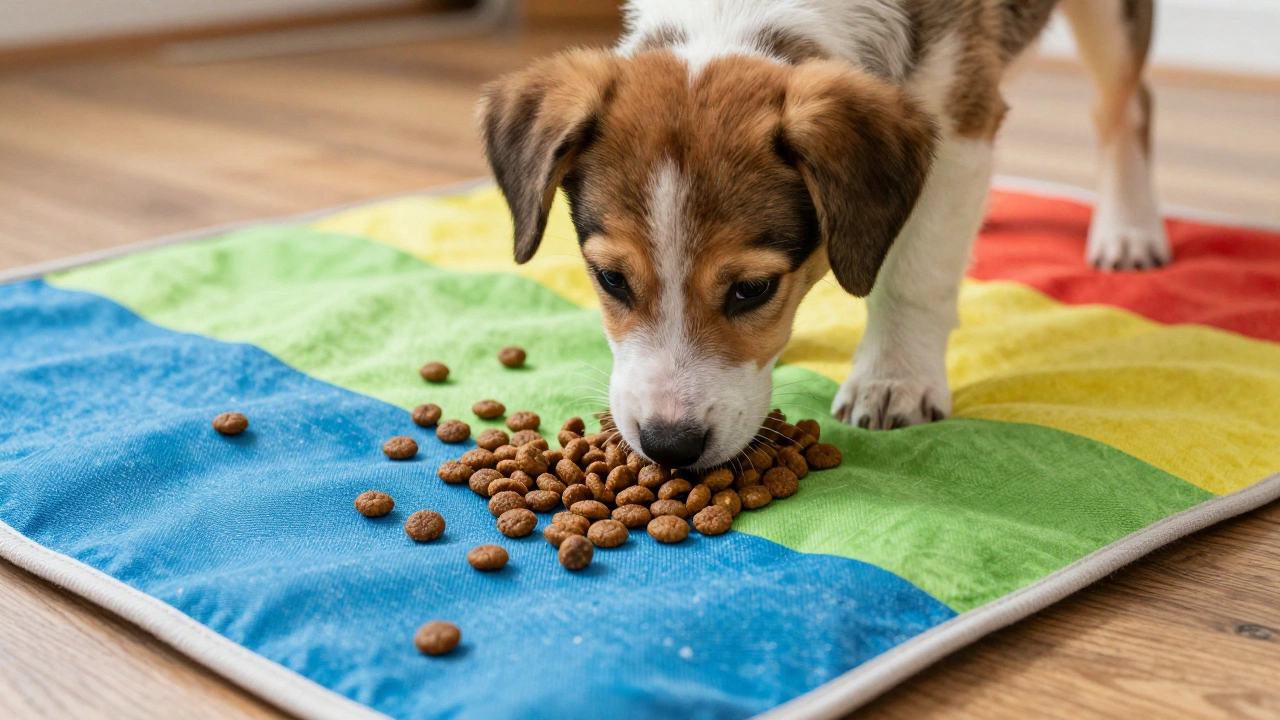
You don't need to be involved in every second of this. Mental enrichment can happen independently. For example, hiding kibble around the room forces your puppy to use their nose and brain. Once you set it up, you can step away. They are working hard, but they are doing it on their own terms. This builds confidence and teaches them that good things come from using their brains, not just from begging for attention.
Snuffle mats are a great tool here. These are fabric mats with hidden pockets where you can scatter dry food. Your puppy has to dig through the fabric to find the treats. It mimics foraging behavior, which is natural for dogs. It keeps them occupied for 15 to 20 minutes while you make coffee or check emails. It is entertainment, but it is passive for you and active for them.
The Role of Puppy Toys in Independent Play
Toys are not just for fetch games with you. They are tools for independence. The goal is to create a positive association with being alone. If your puppy only plays when you are holding the other end of the rope, they are dependent on you for fun. We want to shift that dynamic.
Rotate your toys. Do not leave all ten toys in the basket. Pick two or three, let your puppy play with them, then put them away. Bring different ones out the next day. Novelty keeps interest high. A chew toy that was boring yesterday might be fascinating today if it hasn't been seen in a few days.
Freeze chews are excellent for solo time. Stuff a Kong or a similar rubber toy with peanut butter (ensure it is xylitol-free) or wet food, then freeze it. It takes a long time to lick and chew, which releases endorphins and calms the nervous system. Your puppy is entertained, but they are also settling down. This is the sweet spot: engaged but calm.
| Type | Your Involvement | Puppy Energy Level | Best Time to Use |
|---|---|---|---|
| Active Play (Fetch/Tug) | High (You participate) | High (Excited) | Morning or after a nap |
| Mental Games (Hide & Seek) | Medium (You guide initially) | Medium (Focused) | Before meals or walks |
| Independent Play (Puzzle Toys) | Low (You observe) | Low to Medium (Calm) | When you need to work |
| Rest/Sleep | None | Very Low | After any activity |
Creating a Safe Space for Solitude
If you are not entertaining your puppy, where should they be? Crates or pens are not prisons; they are safe havens. Many puppies get into trouble not because they are bored, but because they are unsupervised in an open space. Without guidance, they explore the baseboards, the curtains, and your shoes.
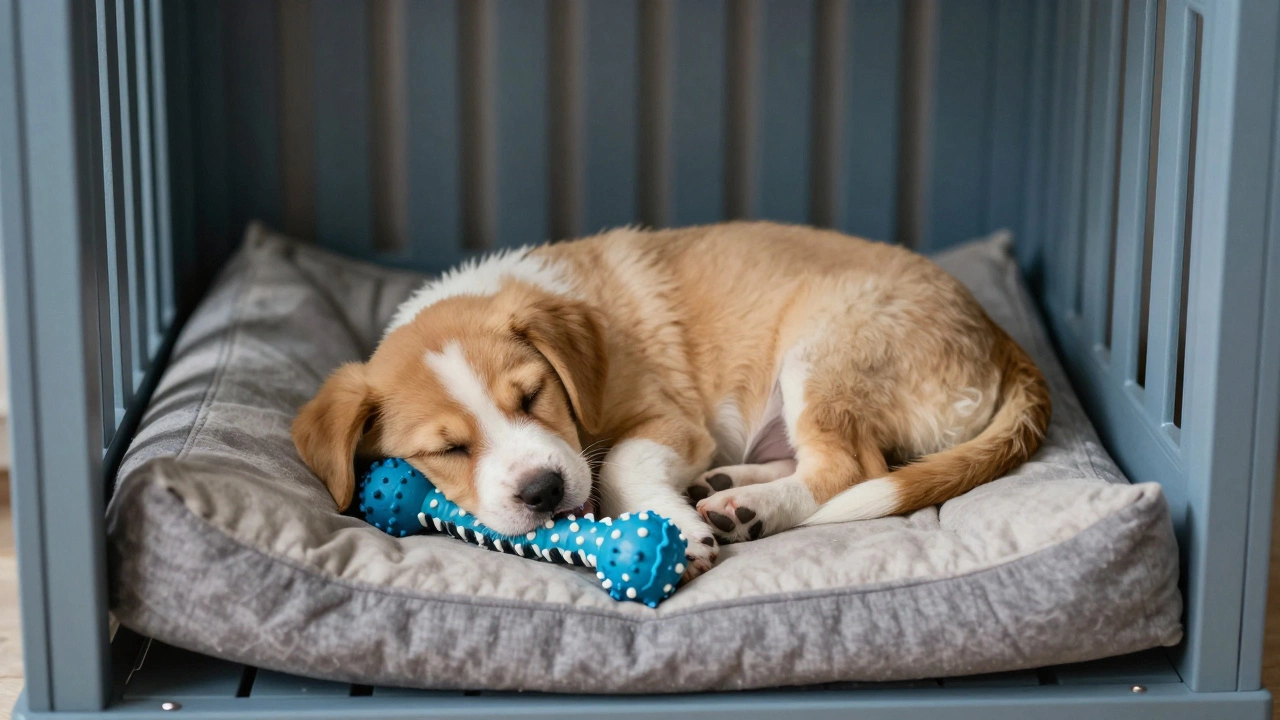
A crate or a gated area gives them boundaries. Inside this space, provide a comfortable bed, a water bowl, and a durable chew toy. When you put them there, do not make a big deal out of it. Give them the toy, close the gate, and walk away. Let them figure out how to entertain themselves. Start with short intervals-five minutes-and gradually increase the time. This teaches them that being alone is safe and boring in a good way.
In Dublin, where rain is frequent, indoor management is key. You cannot rely on the backyard for constant relief. A well-managed indoor space allows your puppy to decompress without destroying your home. It also prevents the formation of bad habits like jumping on counters or stealing socks.
Recognizing Signs of Overstimulation
How do you know if you are doing too much? Watch your puppy's body language. If they are panting heavily without exercise, licking their lips repeatedly, yawning, or turning their head away, they are stressed. These are calming signals. Ignoring them and continuing to play will lead to a meltdown.
Overstimulated puppies often bite harder during play and become difficult to control. They may start mouthing your hands aggressively. This is not aggression; it is frustration. They are saying, "I don't know what else to do with this energy." The solution is not more play. It is a timeout. Put them in their crate or pen for 10 minutes to reset. Silence and stillness are powerful tools.
If your puppy seems restless but not tired, try a low-key activity. Licking a frozen mat or chewing a raw bone (under supervision) can help channel that nervous energy. Avoid high-arousal games like tug if they are already wound up.
Building a Daily Routine
Puppies thrive on predictability. A structured day reduces anxiety and makes independent play easier. Here is a sample schedule for a young puppy:
- 7:00 AM: Wake up, potty break, breakfast.
- 7:30 AM: Short training session (5 minutes).
- 8:00 AM: Crate time with a chew toy (while you get ready).
- 9:00 AM: Active play session (10-15 minutes).
- 9:30 AM: Nap time in crate or pen.
- 11:00 AM: Potty break, light sniffing walk.
- 11:30 AM: Puzzle toy or snuffle mat (independent play).
- 12:30 PM: Lunch and long nap.
- 3:00 PM: Training or socialization practice.
- 3:30 PM: Active play.
- 4:00 PM: Evening nap.
- 6:00 PM: Dinner, family time, gentle play.
- 8:00 PM: Final potty break, bedtime.
Notice that active play sessions are short and spaced out. Most of the day is filled with naps and low-key activities. This structure ensures your puppy gets enough exercise and mental work without being overwhelmed. It also gives you breaks to breathe.
What to Do When You Are Busy
Life happens. You have deadlines, calls, and chores. You cannot always be available. That is okay. Your puppy does not need you to be their personal entertainer. They need you to be their leader. Leaders provide structure, not constant amusement.
If you are working from home, establish clear boundaries. Do not let your puppy interrupt every email. Teach them to settle on a mat nearby. Reward calm behavior with occasional treats, but do not engage in play unless you have planned for it. This teaches impulse control, a critical skill for adulthood.
Use background noise to help them relax. Classical music or white noise can mask outside sounds that might trigger barking or anxiety. It creates a calm atmosphere that encourages rest rather than alertness.
When to Seek Help
If your puppy cannot settle for more than a few minutes, destroys items despite having toys, or shows signs of severe separation anxiety (destruction, vocalization, elimination), you may need professional support. Consult a certified dog trainer or behaviorist. Early intervention is key. Separation anxiety is harder to fix as the dog ages.
Remember, every puppy is different. Some breeds, like Border Collies or Jack Russell Terriers, have higher energy levels and need more mental work. Others, like Bulldogs or Cavaliers, are content with less. Observe your individual dog and adjust accordingly. There is no one-size-fits-all approach, but the principle remains: rest is productive, and independence is a gift.
How many hours a day should I play with my puppy?
Aim for 15 to 30 minutes of active play per month of age, up to twice a day. For a 3-month-old puppy, that is about 15 minutes twice daily. The rest of their energy should be burned through walks, sniffing, and mental puzzles. Always follow play with a nap.
Is it okay to leave my puppy alone with toys?
Yes, but choose safe, durable toys. Avoid small parts that can be swallowed. Rubber toys like Kongs or thick ropes are good options. Supervise initially to ensure they don't destroy and ingest pieces. Never leave them with squeaky toys unsupervised if they are aggressive chewers.
Why is my puppy so hyper after playing?
Hyperactivity is often a sign of overtiredness, not excess energy. Puppies crash hard. If they are bouncing off the walls, stop the activity and put them in a quiet space to sleep. More play will only make it worse.
Can I use TV or radio to entertain my puppy?
Some puppies watch moving images on TV, but it is not a substitute for real interaction or mental work. It can help mask silence, but do not rely on it as primary entertainment. Ensure the volume is low to avoid startling them.
How do I teach my puppy to play alone?
Start by giving them a toy while you are nearby but ignoring them. Gradually move further away. Use high-value treats inside puzzle toys to motivate them. Keep sessions short and positive. Never force them to play if they are not interested.