
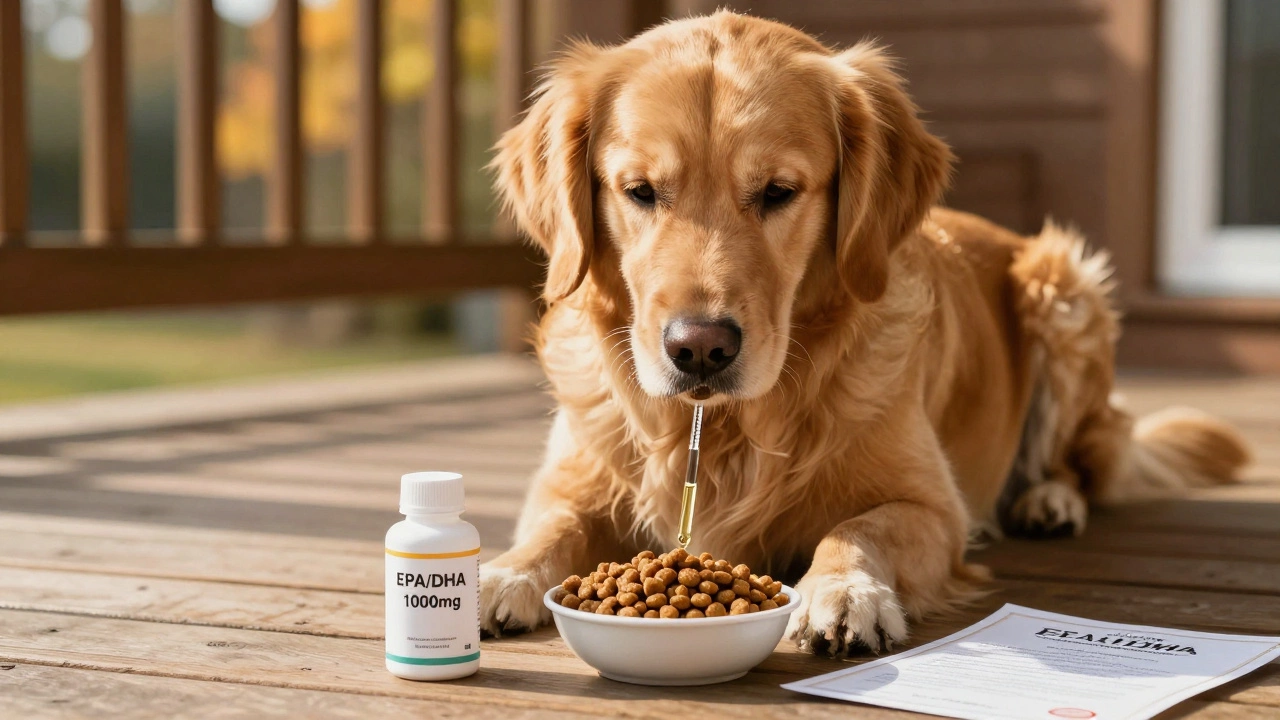
Every dog owner wants their pup to have a shiny coat, calm joints, and healthy skin. That’s why you’re probably staring at the supplement aisle, wondering: olive oil or fish oil? Both are sold as natural fixes for dry skin, itchy allergies, or stiff hips. But they’re not the same-and giving the wrong one could waste your money or even make things worse.
What fish oil actually does for dogs
Fish oil is packed with omega-3 fatty acids-specifically EPA and DHA. These aren’t just random nutrients. They’re anti-inflammatory powerhouses. If your dog has arthritis, seasonal allergies, or a dull, flaky coat, fish oil is the go-to. A 2023 study from the University of Missouri found that dogs with osteoarthritis showed noticeable improvement in mobility after 8 weeks of daily fish oil supplementation. Their owners reported less limping and more playtime.
Most fish oil supplements for dogs come from salmon, anchovies, or sardines. The best ones are molecularly distilled to remove mercury and PCBs. Look for products that list EPA and DHA amounts per serving-not just "fish oil" on the label. A typical dose for a 50-pound dog is about 1,000 mg of combined EPA/DHA daily. Always check with your vet before starting, especially if your dog is on blood thinners or has pancreatitis.
What olive oil does for dogs
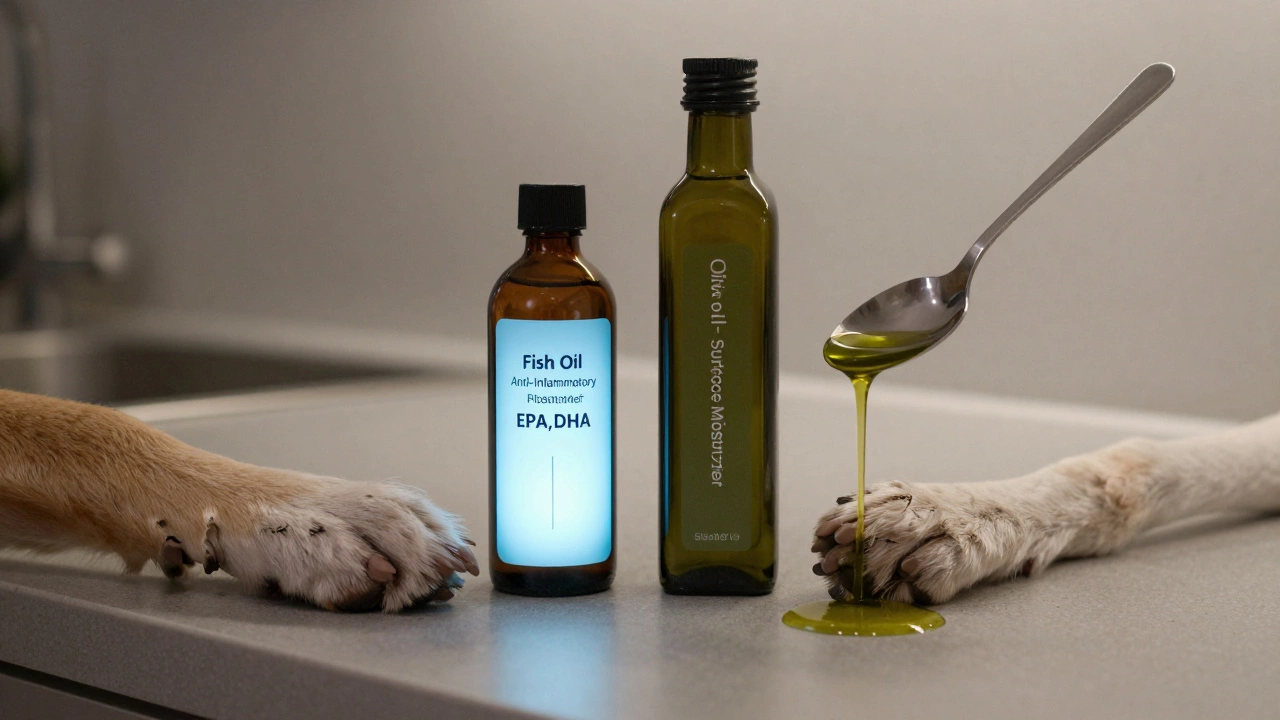
Olive oil is mostly monounsaturated fat-about 73% oleic acid. It’s great for humans, but for dogs? Its benefits are mostly surface-level. If your dog has dry skin or a brittle coat, a small amount of olive oil mixed into food might help a little. It’s not a magic fix, though. Olive oil doesn’t contain EPA or DHA. It won’t reduce inflammation in joints or calm allergic reactions. It’s more like a moisturizer you rub on your skin, not medicine you take for an infection.
Some owners use olive oil to help with mild constipation. A teaspoon for small dogs or a tablespoon for larger ones can act as a gentle lubricant. But if your dog is regularly constipated, that’s a sign of something deeper-diet, lack of fiber, or even a blockage. Olive oil won’t fix that.
Why fish oil wins for most dogs
Let’s say your dog is 7 years old and slows down on walks. Their coat used to gleam, but now it’s dull and sheds everywhere. They scratch more than usual, especially in spring. That’s a classic sign of inflammation and low omega-3 levels. Fish oil targets the root cause. Olive oil? It might make the coat look a little shinier for a week, but the scratching and stiffness stay the same.
Here’s what real dog owners report:
- After 6 weeks on fish oil: 82% saw reduced itching in dogs with environmental allergies (based on a 2024 survey of 1,200 dog owners by the American Veterinary Medical Association).
- After 12 weeks: 76% noticed improved mobility in dogs with mild arthritis.
- Coat shine improved in 90% of dogs within 4-6 weeks.
None of those results showed up with olive oil in controlled trials. Olive oil might help a dog with an extremely dry coat in winter-but even then, fish oil works faster and longer.

When olive oil might make sense
There are a few cases where olive oil is okay to use:
- Your dog refuses fish oil because of the smell or taste. Some brands add chicken or salmon flavor, but if yours won’t touch it, a teaspoon of olive oil once a day is better than nothing.
- You’re on a tight budget. Fish oil supplements can cost $20-$40 a month. Olive oil costs under $5 a bottle and lasts months. But know this: you’re trading effectiveness for cost.
- Your vet recommends it for short-term constipation relief.
Don’t use olive oil as a replacement for fish oil if your dog has joint pain, allergies, or heart issues. It won’t help. And don’t pour it on their food every day unless you’re counting calories. Olive oil is pure fat-9 calories per gram. That’s the same as butter. Too much can lead to weight gain or pancreatitis, especially in breeds like Miniature Schnauzers or Cocker Spaniels.
How to give it to them
For fish oil, use a liquid supplement designed for dogs. Measure with the dropper. Mix it into their food right before serving. Cold-pressed, unflavored versions work fine if your dog doesn’t mind the taste. If they gag, try a soft chew or capsule they can swallow whole.
For olive oil, use extra virgin, cold-pressed, and unrefined. No additives. One teaspoon for dogs under 20 pounds. One tablespoon for dogs over 50 pounds. Never give more than that daily. Start with half the dose for the first week to check for loose stools.
Store both in the fridge after opening. Fish oil goes rancid fast. If it smells fishy or sour, pitch it. Olive oil should smell like fresh olives-not paint thinner.
What not to do
Don’t give your dog human fish oil capsules unless they’re labeled for canine use. Some contain xylitol or other sweeteners that are deadly to dogs. Don’t use cod liver oil unless your vet says so-it has too much vitamin A, which can be toxic over time. Don’t mix fish oil and olive oil together thinking you’re doubling the benefit. You’re just adding unnecessary fat.
And don’t assume natural means safe. More isn’t better. Overdosing on fish oil can cause diarrhea, vomiting, or even blood clotting problems. Stick to vet-recommended doses.
What to look for on the label
When buying fish oil, check for:
- EPA and DHA content (not just "fish oil")
- Third-party testing (NSF, IFOS, or USP verified)
- Expiration date and storage instructions
- No artificial flavors or preservatives
For olive oil, just make sure it says "extra virgin" and "cold-pressed." Avoid anything labeled "pure" or "light"-those are refined and stripped of nutrients.
Bottom line: Choose based on your dog’s needs
If your dog has joint pain, allergies, or a dull coat-go with fish oil. It’s backed by science, vet recommendations, and real results.
If your dog is healthy, just needs a little coat shine, and you’re trying to save money? A small amount of olive oil won’t hurt. But don’t expect miracles.
And if you’re unsure? Talk to your vet. Bring the bottles. They can tell you exactly how much to give and whether your dog’s health issues need something stronger than oils-like prescription diets or medication.
One last thing: don’t rely on oils alone. A good diet, regular exercise, and routine vet checkups matter more than any supplement. Oils are helpers-not cures.
Can I give my dog both olive oil and fish oil together?
Yes, but only if your vet approves it. Giving both won’t improve results-it just adds extra calories. If you’re using olive oil for constipation and fish oil for joint health, space them out. Give olive oil in the morning and fish oil at night. Watch for loose stools or weight gain.
How long does it take for fish oil to work in dogs?
Most dogs show improvements in coat shine within 2-4 weeks. For joint mobility or reduced itching, it usually takes 6-8 weeks. Some dogs with severe inflammation may need 12 weeks. Consistency matters more than dose size.
Is fish oil better than flaxseed oil for dogs?
Yes. Flaxseed oil contains ALA, a type of omega-3 that dogs can’t convert well into EPA and DHA. Less than 5% becomes usable. Fish oil delivers EPA and DHA directly, so it’s far more effective. Stick with fish oil unless your dog has a fish allergy.
Can puppies have fish oil or olive oil?
Puppies can have fish oil in small, vet-approved doses-it supports brain and eye development. Olive oil is safe in tiny amounts for constipation, but not needed for healthy puppies. Always ask your vet before giving supplements to puppies under 6 months.
What if my dog won’t eat fish oil?
Try a flavored version-chicken, salmon, or peanut butter. If that doesn’t work, switch to fish oil soft chews. Some dogs will eat them like treats. If your dog still refuses, talk to your vet about alternative omega-3 sources like algae-based supplements (vegan-friendly and just as effective).
Can fish oil cause bad breath in dogs?
Sometimes. A mild fishy smell on the breath is normal. If it’s strong or accompanied by vomiting, diarrhea, or loss of appetite, stop the supplement and call your vet. It could mean the oil is rancid or your dog is sensitive to the dose.